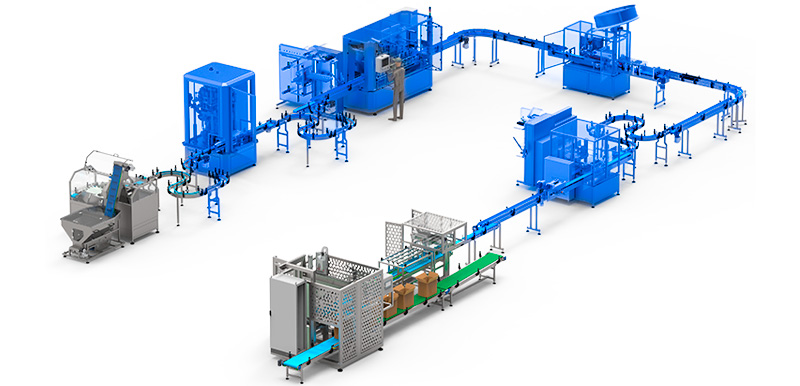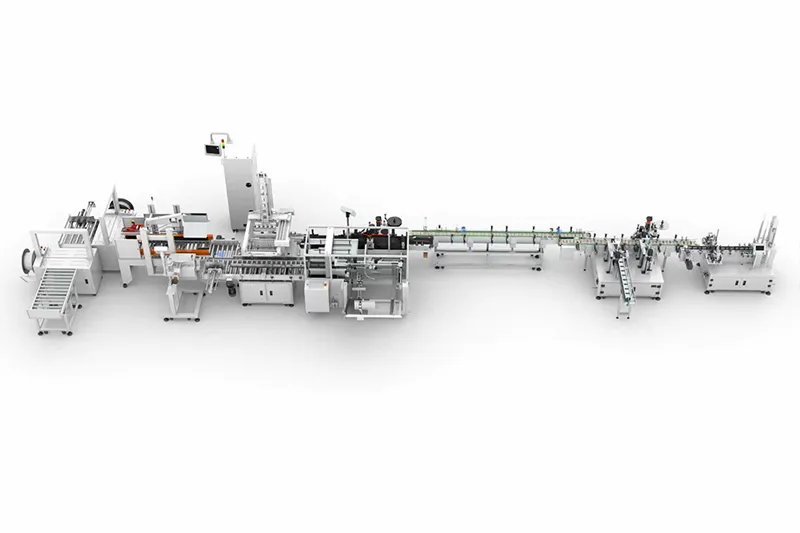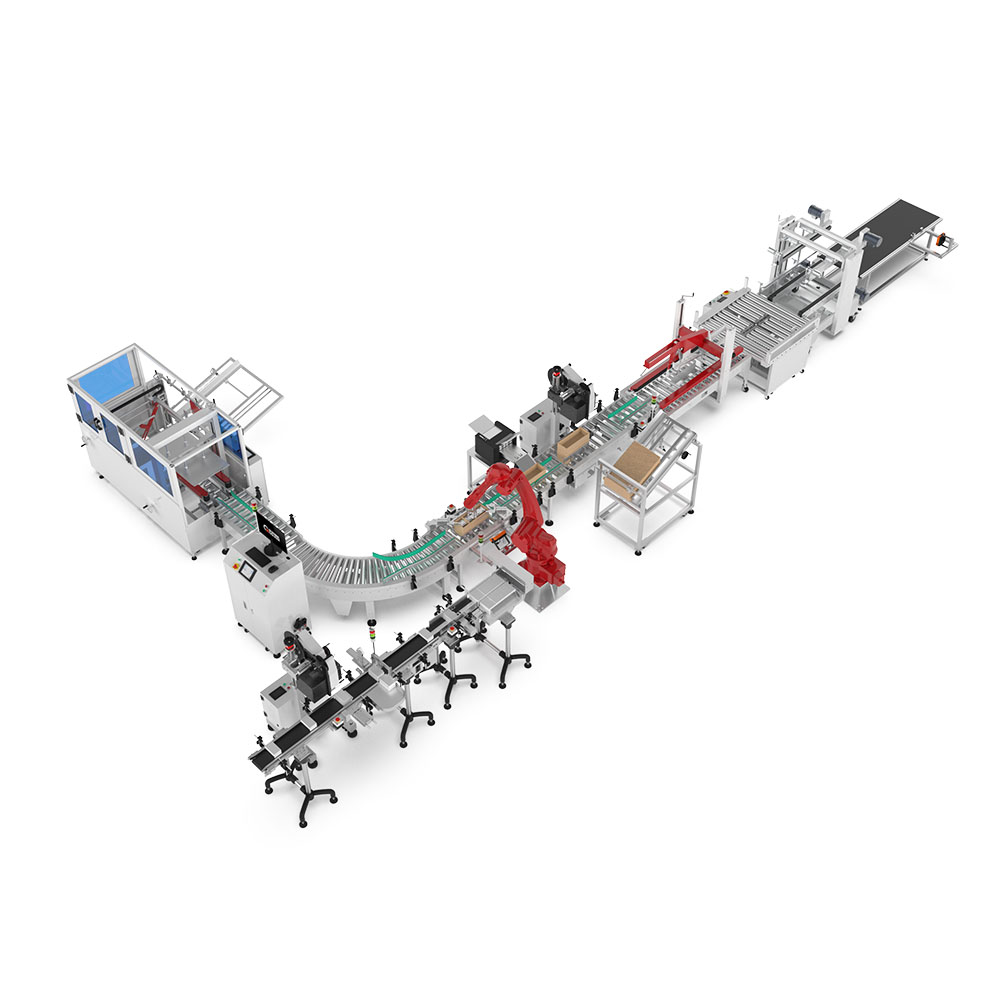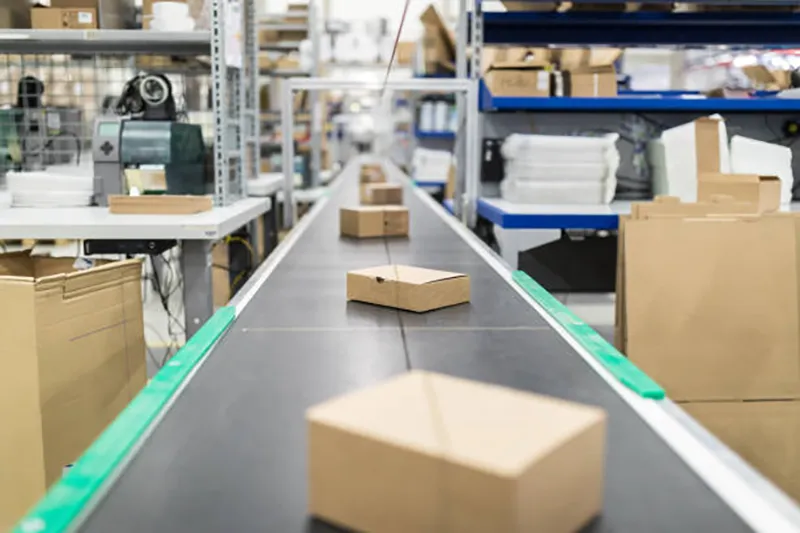
Building a fully automated packaging line from unboxing to palletizing is not simply about placing individual machines in a row. It requires precise spatial layout, continuous material flow analysis, and seamless PLC handshake integration. For plant engineers, the challenge lies in balancing the Takt Time across different specialized units—case erectors, robotic packers, sealers, and palletizers—to ensure zero bottlenecks.
While manual packaging creates unpredictable bottlenecks and limits throughput, transitioning to an automated line requires a strategic blueprint. This article serves as an engineer’s guide to building a turnkey packaging system. We will break down the crucial integration points, mechanical synchronization, and how a comprehensive solution provider like Joyda Totalpack architects these components into a unified, high-speed Industry 4.0 ecosystem.
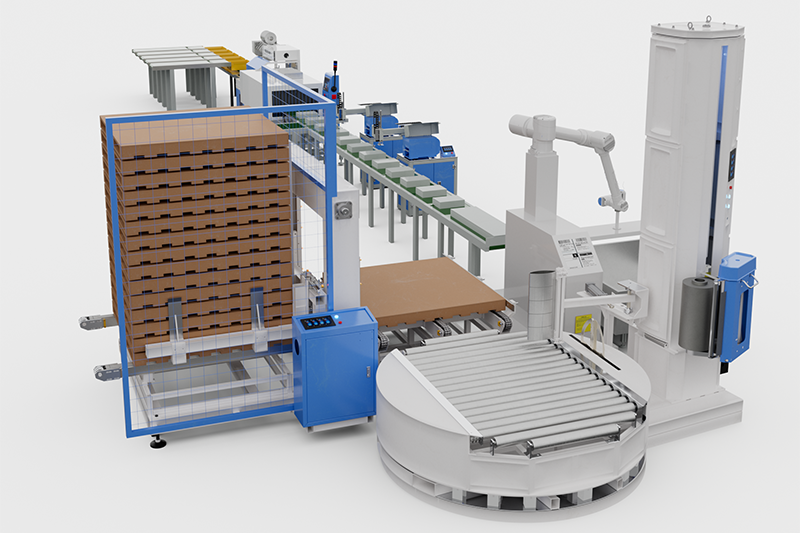
Table of Contents
- The Starting Point: Case Erecting & Unpacking
- Ensuring Accuracy: The Checkweigher
- The Assembly Stage: Auto-filling, Labeling & Sealing
- The Grand Finale: Palletizing & Stabilization
- Overall Benefits of a Fully Automated Packaging Line
1. The Starting Point: Case Erecting & Unpacking
In a high-throughput secondary packaging environment, the efficiency of your entire system dictates your profitability. It all begins with a flawless foundation: the automated case erector.
The first step for a fully automated packaging line is the Case Erector, which automatically forms flat corrugated blanks into perfectly squared, ready-to-fill boxes. This creates a uniform base for all subsequent processes, significantly boosting line speed and reducing the repetitive strain injuries associated with manual box assembly. At Joyda Total Pack, our case erectors provide the high-speed, consistent performance required to set the pace for an efficient, continuous line.
1.1 The Role of the Case Erector/Opener
The Case Erector is the foundational machine. It takes flat cardboard blanks and automatically folds them into 3D boxes, sealing the bottom flaps, often with hot-melt adhesive. For example, in a mobile phone line, it ensures every carton is perfectly square and consistent. Without this precision, later automated steps would fail. Joyda Totalpack ‘s case erectors provide high-speed, consistent performance, forming the base of an efficient line.
| Feature | Benefit for Automation |
| Automatic Folding | Eliminates manual assembly, boosts speed. |
| Bottom Sealing | Ensures structural integrity for filling. |
| Uniform Output | Critical for seamless machine interaction. |
| High Speed | Matches high-speed production lines. |
1.2 Benefits: Speed and Injury Reduction
Case erectors offer immediate benefits in speed and reducing repetitive strain injuries (RSIs). Manual case Erecting is slow and labor-intensive, creating bottlenecks. An automated erector processes dozens or hundreds of cases per minute, setting the pace for the entire line.
Repetitive motions in manual Erecting cause RSIs, leading to worker discomfort and absenteeism. Automating this task protects workers, improves ergonomics, and allows labor to be reallocated to more complex roles. For example, in a book packaging line, automation speeds up the process and frees workers from a monotonous, harmful task.
2. Ensuring Accuracy: The Checkweigher
Concerned about product consistency and compliance? The checkweigher is your essential guardian for precise weight.
A checkweigher is the critical “quality control checkpoint” in an automated line, precisely measuring each product’s weight. It ensures compliance, automatically rejects under- or overweight items, preventing costly errors, product giveaways, and potential fines.
2.1 The Checkweigher’s Role as Quality Control
The Checkweigher is vital for quality control, positioned after filling. It measures every item’s weight in real-time. This ensures compliance with net weight regulations, preventing legal issues and customer dissatisfaction. It also stops “product giveaway” (overweight packages) which wastes product, and “underweight” packages which damage brand reputation. For example, in a biscuit line, it ensures each pack has the exact weight, maintaining trust.
| Checkweigher Function | Direct Benefit |
| High-Speed Weighing | Maintains line speed. |
| Weight Compliance | Ensures regulatory adherence. |
| Underweight Detection | Prevents customer complaints. |
| Overweight Detection | Eliminates product giveaway. |
2.2 Ensuring Weight Compliance and Automatic Rejection
The checkweigher not only measures but also acts. It compares a product’s weight against pre-set tolerances. If outside the range, it automatically triggers a rejection mechanism (e.g., a pneumatic pusher) to remove the non-compliant package.
This automatic rejection is crucial for quality and efficiency. It eliminates slow, error-prone manual inspection. For instance, an underweight perfume bottle is immediately removed, preventing it from reaching the consumer. This ensures only perfectly weighted products proceed, guaranteeing consistent quality and protecting your brand.
3. The Assembly Stage: Auto-filling, Labeling & Sealing
Once the carton is erected and the product is verified, the core of the turnkey automation process begins. This assembly stage involves precise product insertion, clear identification, and secure closure, ensuring total product integrity before the box reaches the palletizer.
The assembly stage uses Auto-filling/Packing Machines for precise product insertion, Labeling Machines for accurate identification and branding, and Case Sealers (hot-melt or tape) for securely closing final packages, ensuring product integrity and presentation.
3.1 Auto-filling/Packing and Labeling Machines
Once the carton is erected, the synchronization between the conveyor and the auto-packer becomes critical. Joyda utilizes high-speed Delta or 6-axis robotic pick-and-place systems integrated with Machine Vision (2D/3D cameras). This allows the robot to dynamically track the position and orientation of products on a moving conveyor (Conveyor Tracking) without stopping the line.
Furthermore, the success of an auto-packer relies entirely on the End-of-Arm Tooling (EOAT). We design custom soft-vacuum grippers for delicate cosmetics and mechanical pinch-grippers for heavy textbooks, ensuring damage-free insertion. Following the packing, a Print-and-Apply labeler is pneumatically synchronized to stamp high-resolution barcodes dynamically, integrating with the factory’s WMS to ensure 100% routing compliance.
| Machine Type | Key Benefit |
| Auto-filler | Speed, accuracy, damage prevention. |
| Labeler | Compliance, brand recognition, traceability. |
| Case Sealer | Product integrity, tamper evidence. |
3.2 Introducing the Case Sealer for Secure Packaging
After filling and labeling, the Case Sealer closes and seals the top flaps of cartons, protecting the product and providing tamper evidence. It typically uses hot-melt adhesive or tape.
For example, after chocolates are cartoned, the case sealer applies hot-melt glue to the outer flaps for a secure, professional finish. Joyda Totalpack offers both hot-melt and tape sealers for reliability. A well-sealed package protects the product during transit and storage, presenting a professional image and ensuring it arrives in perfect condition.
4. The Grand Finale: Palletizing & Stabilization
Ready to turn individual packages into stable, transport-ready units? The final stages involve precise stacking and robust securing.
The final stage uses a Palletizing Robot to efficiently stack cases onto pallets in uniform patterns, followed by a Stretch Wrapper, which secures the load with stretch film. This ensures stable, safe, and transport-ready pallets, optimizing logistics and preventing damage during storage and transit.
4.1 The Palletizing Robot for Stable, Uniform Pallets
The Palletizing Robot acts as the master node at the end of the line. When building this cell, engineers must calculate the robot’s maximum payload capacity, reach, and the required cycle time. Joyda’s robotic cells utilize intuitive palletizing software that allows operators to easily configure complex Ti-Hi (Tie and High) stacking patterns on the HMI, ensuring tightly interlocked loads that prevent transit shifting.
Crucially, to maintain continuous line operation, we design these cells with Dual-Pallet Zones. When one pallet is full, the robot instantly pivots to begin stacking on the empty secondary pallet, while an automated safety light-curtain allows a forklift to remove the finished load without triggering an emergency stop (E-Stop). This intelligent spatial layout maximizes OEE and prevents upstream backups.
| Palletizing Robot Function | Key Advantage |
| Automatic Case Stacking | Eliminates manual labor, boosts speed. |
| Pattern Programming | Prevents load shifting, maximizes stability. |
| Versatility | Adaptable to diverse product lines. |
| High Throughput | Keeps pace with high-speed lines. |
4.2 The Stretch Wrapper for Secure Load Stabilization
After the palletizing robot stacks cases, the Stretch Wrapper prepares the load for transport. It automatically applies layers of stretch film around the entire pallet. This stabilizes the load, preventing shifting; protects against dust, moisture, and impacts; and provides tamper evidence.
For example, after a pallet of books is stacked, the stretch wrapper rotates the pallet, applying film tightly to create a robust unit. Joyda Totalpack’s stretch wrappers are efficient and apply film consistently, ensuring optimal load containment with minimal material. This final step is essential for safeguarding product integrity from factory to warehouse, minimizing shipping damage, and ensuring products arrive in pristine condition.
5. Overall Benefits of a Fully Automated Packaging Line
Looking for a comprehensive overview of the advantages of a fully automated packaging line? The benefits span efficiency, traceability, and significant ROI.
A fully automated packaging line offers unparalleled benefits: dramatically increased operational efficiency, enhanced product traceability, superior quality control, significant reductions in labor costs and material waste, and a strong return on investment. It transforms packaging into a streamlined, intelligent, and highly reliable process.
5.1 Unparalleled Efficiency and Traceability
The main benefits of an automated packaging line are efficiency and traceability. Integrating machines like case erectors, checkweighers, auto-fillers, labelers, case sealers, palletizing robots, and stretch wrappers creates a seamless, high-speed operation. Bottlenecks are gone, errors reduced, and throughput maximized. For example, a Joyda Totalpack line for sweeping robots can process hundreds of units per hour with consistent quality, far exceeding manual capabilities.
Automation also builds robust traceability. Sensors and software track every product’s journey. You know when a mobile phone batch was packaged, what materials were used, and machine performance. This is invaluable for quality control, recalls, and compliance, providing an auditable record for every product.
5.2 Significant ROI and Future-Proofing
Investing in an automated packaging line yields significant ROI. Reduced labor costs are a major factor, as machines handle repetitive tasks. Minimized material waste (due to precision) and optimized energy consumption cut operational expenses. Increased throughput and reduced downtime (thanks to predictive maintenance) boost production and revenue. For instance, a book packaging line achieves higher output with fewer errors, directly impacting profitability.
Beyond financial gains, an automated line future-proofs your operations. It offers flexibility to adapt to market changes, new products, and packaging trends. It also sets the stage for further integration with ERP systems and Industry 4.0 technologies, keeping your business competitive and agile.
Conclusion:
Building a fully automated packaging line is a strategic investment that transforms your operations into a cohesive, intelligent, and highly efficient system. From case Erecting and checkweighing, through auto-filling, labeling, and sealing, to robotic palletizing and stretch wrapping, every component works in harmony. This leads to increased efficiency, impeccable quality control, enhanced traceability, and a substantial return on investment. It eliminates bottlenecks, cuts costs, minimizes waste, and positions your business for growth.
Ready to Build Your Smart Packaging Line?
Transitioning from disjointed manual processes to a fully automated, Industry 4.0 packaging line doesn’t have to be overwhelming. As a premier manufacturer and integrator, Joyda Total Pack delivers end-to-end turnkey solutions tailored to your specific facility footprint and throughput goals.
[Talk to Our Automation Experts Today] – Share your current packaging challenges with us, and let our engineering team design a custom, high-speed line layout that guarantees a rapid ROI.
Frequently Asked Questions
1. What is a fully automated packaging line?
It connects every stage—case erecting, filling, labeling, sealing, checkweighing, robotic palletizing, and stretch wrapping—into one synchronized, PLC-controlled system that runs with minimal manual intervention.
2. Which machines are included in a turnkey line?
A typical line bundles a case erector, auto-filler or book packer, labeler, case sealer, inline checkweigher, robotic palletizer, and stretch wrapper, all handshaken through a shared control architecture.
3. How long does it take to build an automated line?
Lead time depends on scope, but most turnkey projects move from layout approval to commissioning in a few months, with recipe-driven changeovers letting you run new formats in under 15 minutes.
4. Can one line handle multiple product sizes?
Yes. Modular, servo-driven lines switch between formats (e.g., 12-pack to 24-pack, paperback to hardcover) via HMI recipes without lengthy mechanical rebuilds.
5. How does automation improve traceability?
Sensors and software log every package’s journey—materials used, machine performance, timestamps—giving you an auditable record for recalls and compliance.
Figures are typical/illustrative industry ranges, shared to help you scope your own line — validate against your actual product mix and throughput.
Reference Line Layout: A Takt-Time Budget (Example)
The table below shows typical speeds for a mid-volume secondary-packaging line, unboxing to palletizing. The slowest station sets the pace for the whole line.
| Station | Typical speed | Takt role |
|---|---|---|
| Case erector | 20–30 cpm | Pace-setter |
| Robotic packer | 20–28 cpm | Load-balanced |
| Checkweigher | up to 40 cpm | Non-binding |
| Case sealer | 20–30 cpm | Matched |
| Palletizer | 10–15 cyc/min | Buffer via accumulator |
If one station drifts below the pace-setter, an accumulator (spiral or slug) between stations protects the whole line from stopping. This buffer is the single most overlooked design choice in unboxing-to-palletizing layouts.