
Selecting mismatched equipment creates severe bottlenecks, forcing upstream primary processing machines to halt while secondary packaging catches up. The right carton packing production line is chosen not by absolute maximum speed, but by perfectly matching mechanical handling and digital integration to your specific product morphology and production rhythm.
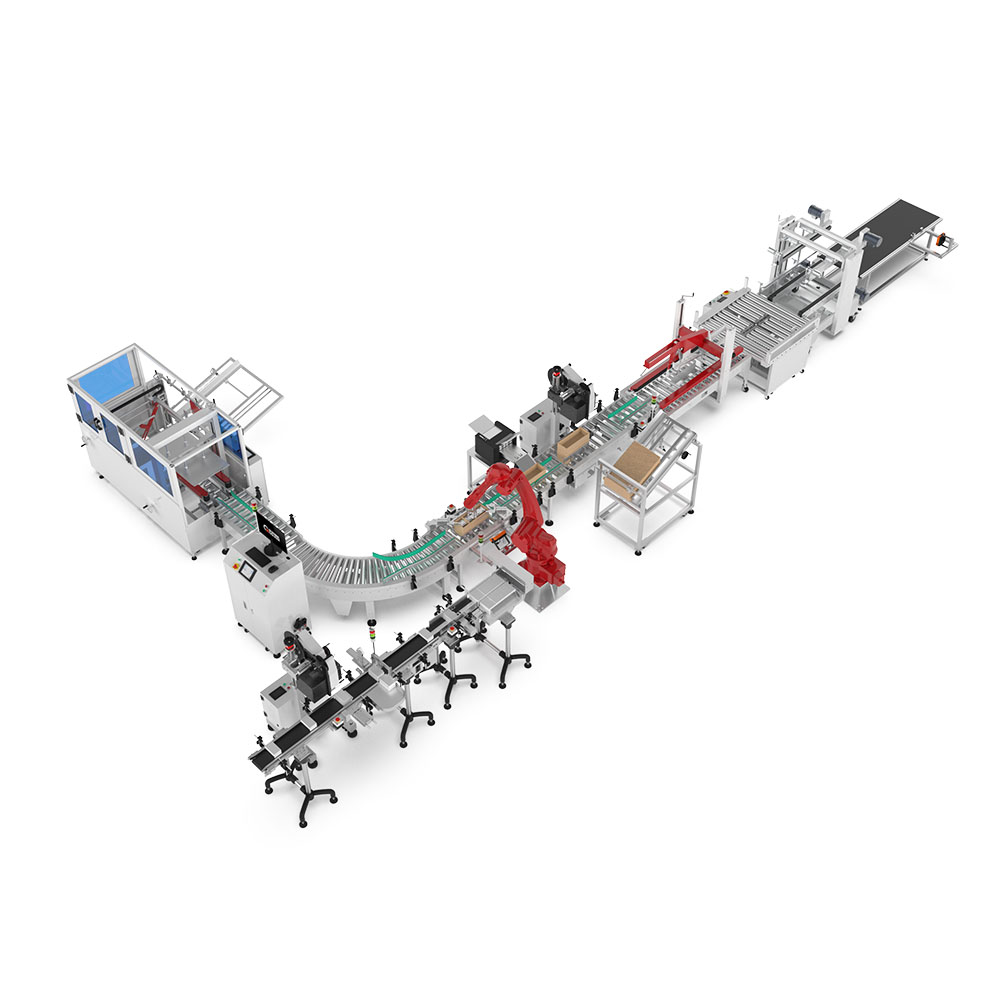
As a Chief Manufacturing Engineer, I frequently see procurement teams make the mistake of buying the “fastest” machine in the catalog, only to realize it destroys their fragile products or takes two hours to change over to a new box size. True end-of-line efficiency requires a holistic approach. In this guide, we will break down the five critical dimensions of system design to help you evaluate and select an automation framework that guarantees a measurable return on investment.
Table of Contents
- How Does Product Morphology Dictate the Packing Mechanism?
- Why is Case Specification Agility Critical for High-SKU Facilities?
- How Do You Synchronize Takt Time with Upstream Output?
- What Level of End-to-End Automation Does Your Facility Need?
- Why is Industry 4.0 Integration Mandatory for Scaling?
- Performance Benchmarks: Matching Speed to Industry Needs
- Real-World Case Study: Overcoming the High-Mix Packaging Bottleneck
- Conclusion
1. How Does Product Morphology Dictate the Packing Mechanism?
The physical characteristics of your primary product represent the foundational engineering variable in system design. You cannot force a fragile item into a high-speed rigid loader without suffering massive damage rates.
To select the correct carton packing production line, you must strictly align the loading module with your product type. Mechanical push-loading is engineered for high-speed, rigid items arranged in uniform patterns, whereas robotic pick-and-place gripping is essential for handling fragile, easily deformable products and diverse SKU structures.
Analyzing Loading Technologies by Product Type
Understanding how your product reacts to gravity, friction, and pressure dictates the end-of-arm tooling and the overall system architecture.
- Example 1: Rigid Cans and Bottles. If you are packaging aluminum cans or rigid PET bottles requiring cardboard dividers, a mechanical pusher system is highly efficient. The products are accumulated in a grid, and a servo-driven arm slides the entire batch into the erected carton simultaneously. This method excels in high-speed, single-format scenarios.
- Example 2: Flexible Pouches and Bags. Soft products like bagged snacks or liquid-filled pouches are highly deformable. If pushed mechanically, they will overlap and jam. Here, a robotic case packer utilizing soft-touch vacuum cups or padded mechanical grippers is required. The robot picks the bags and places them precisely into the carton, preventing product crush.
When evaluating a customized carton packing system, you must also consider internal case structures. If your glass bottles require layer pads or corrugated dividers inserted between rows, the system must feature auxiliary robotic arms to drop these partitions in real-time, which naturally impacts the overall cycle time.
2. Why is Case Specification Agility Critical for High-SKU Facilities?
In modern manufacturing, running a single box size indefinitely is rare. The ability to transition between different retail-ready and shipping case formats dictates your operational flexibility.
Facilities managing diverse product lines require an automatic carton packing production line engineered for rapid format switching. Systems with integrated parametric control and toolless adjustments minimize human intervention, seamlessly accommodating varying RSC dimensions and preventing extended downtime during frequent box type changeovers.
Mastering the High-Mix Packaging Floor
A line that takes an hour to change over is a liability if you only run three-hour batches. We evaluate specification agility through mechanical design and software execution.
- Example 1: Standard RSC vs. Custom Trays. Most facilities utilize Regular Slotted Containers (RSC), which require traditional tape or hot-melt glue sealing. However, if your marketing department shifts to shelf-ready tear-away trays, your erector and sealer must be capable of handling complex fold patterns without tearing the corrugated blanks.
- Example 2: Parametric Changeovers. In legacy systems, operators used wrenches to manually widen conveyor guide rails and adjust tape head heights. In an advanced Industry 4.0 setup, the operator selects a new recipe on the HMI. Servo motors automatically adjust the magazine width, robot pick coordinates, and sealer height in minutes.
If your facility executes multiple changeovers per shift, investing in a system with fully automated, recipe-driven parametric control will recover hundreds of hours of lost production time annually.
3. How Do You Synchronize Takt Time with Upstream Output?
A packing line that cannot keep pace with the primary filler is a primary cause of overall equipment effectiveness (OEE) degradation. Speed is irrelevant if it is not synchronized.
Your carton packing production line must possess a cycle time that perfectly matches or slightly exceeds your upstream bottleneck. If front-end production reaches 18,000 units per hour, the end-of-line system must process the exact corresponding volume continuously across three shifts to prevent catastrophic accumulation or line stoppages.
The Mathematics of Production Rhythm
We refer to this synchronization as maintaining the “Takt Time.” It is the heartbeat of the factory floor.
- Example 1: The Bottleneck Effect. Consider a beverage line outputting 18,000 bottles per hour. If they are packed in 12-packs, the carton line must reliably clear 1,500 cartons per hour (25 cartons per minute). If the packer maxes out at 20 cartons per minute, bottles will rapidly accumulate on the conveyor, eventually triggering an emergency stop on the primary filler.
- Example 2: Managing Order Fluctuations. Many facilities face peak-season order surges. A system designed only for average capacity will fail under pressure. High-efficiency automated systems utilize accumulation buffers—like spiral conveyors—that absorb temporary surges from the filler while the carton erector seamlessly catches up, ensuring continuous three-shift operations without operator burnout.
4. What Level of End-to-End Automation Does Your Facility Need?
Procuring a standalone packer often creates new bottlenecks immediately upstream and downstream of the machine. True efficiency requires looking at the entire end-of-line ecosystem.
Mid-to-large enterprises achieve the highest ROI by implementing complete end-of-line packaging automation rather than standalone units. A fully integrated system seamlessly connects automatic erecting, robotic loading, check weighing, labeling, and robotic palletizing into one continuous, touchless workflow.
Expanding the Scope of Integration
To eliminate labor dependency, the carton must flow from a flat blank to a wrapped pallet without human intervention.
- Example 1: Quality Assurance Integration. After the carton is packed and sealed, it must pass over an inline check weigher. If the system detects a weight anomaly (indicating a missing product), it triggers a pneumatic reject arm. This automated verification is critical for pharmaceutical or high-value electronics manufacturers.
- Example 2: Identification and Palletizing. Integrated systems ensure that print-and-apply labelers affix shipping barcodes precisely before the box reaches the robotic palletizer. Because the entire line shares a central PLC, the palletizer knows exactly which product is coming down the line and adjusts its stacking pattern automatically.
This turnkey approach guarantees that all modules communicate flawlessly, eliminating the integration software bugs commonly found when mixing equipment from multiple vendors.
5. Why is Industry 4.0 Integration Mandatory for Scaling?
Hardware limits how fast you can pack; software limits how fast you can grow. Without digital visibility, management cannot make informed capacity planning decisions.
For mid-to-large manufacturers, a carton packing production line must feature Industry 4.0 architecture to enable seamless ERP and MES synchronization. This digital integration facilitates real-time data visualization, remote monitoring, and predictive maintenance, transforming the packaging floor from a blind spot into a transparent, data-driven asset.
Connecting the Factory Floor to the Boardroom
Modern packaging is an IT function as much as it is a mechanical one.
- Example 1: ERP/MES Synchronization. When an order drops into the factory’s ERP system (like SAP), the packaging line automatically downloads the correct production parameters. Once the run is complete, the line reports the exact yield, scrap rate, and material consumption back to the MES, ensuring perfectly accurate inventory management.
- Example 2: Predictive Diagnostics. Instead of waiting for a motor to fail, IoT sensors monitor vibration and temperature. The remote monitoring dashboard alerts maintenance teams to impending wear weeks in advance, allowing for scheduled repairs and protecting the factory from unplanned downtime.
6. Performance Benchmarks: Matching Speed to Industry Needs
Different industrial sectors place vastly different demands on their packaging equipment. We can quantify these requirements using established automation benchmarks.
Following a complete automation upgrade, manufacturers typically experience a 50% to 70% reduction in manual labor and a 10% to 20% boost in OEE. However, the required operating speed of the carton packing production line varies heavily by sector, demanding customized engineering for optimal yield.
Sector-Specific Parameter Requirements
| Industry Sector | Target Operating Speed | Primary Technical Focus | Automated Upgrade Impact |
| Standard Beverage & FMCG | 20–30 cartons/min | Stable 24/7 continuous running | Front-end matching (18k+ units/hr) |
| Multi-SKU Daily Chemicals | 15–25 cartons/min | Rapid format changeovers | Changeover time reduced by 30%+ |
| Pharmaceuticals | 10–20 cartons/min | Inspection and batch traceability | Packaging consistency & compliance |
By mapping your product to these benchmarks, you can easily determine if a proposed system is over-engineered or under-powered for your specific market demands.
7. Real-World Case Study: Overcoming the High-Mix Packaging Bottleneck
To illustrate the value of matching equipment to product characteristics, we look at a recent deployment for a food manufacturing client dealing with complex bagged products.
A food enterprise struggling with manual bottlenecks upgraded to a customized carton packing system. By implementing a modular design, they reduced their SKU changeover time from over 40 minutes to just 10–15 minutes, stabilized output at 28 cartons per minute, and achieved a full return on investment in under two years.
The Transformation Process
The client produced three different specifications of bagged snacks. Their legacy process utilized a single, fixed loading machine.
- The Pain Point: Every time they switched bag sizes, operators spent over 40 minutes manually recalibrating the machine. During peak season, this downtime meant they could not fulfill order capacities.
- The Solution: We deployed a modular line featuring an auto-erector, robotic loading cell, top sealer, and robotic palletizer.
- The Results: The robotic grippers easily handled all three bag sizes without crushing the product. Changeovers were reduced to 10-15 minutes via HMI recipes. The line achieved a stable continuous speed of 24–28 cartons/min. Furthermore, by linking the line to their internal management system, labor dependency was drastically reduced, and peak-order capacity was fully secured.
8. Conclusion
Choosing the right carton packing production line is a highly strategic engineering decision. It requires looking past flashy speed ratings and deeply analyzing your product morphology, changeover frequency, and upstream production rhythm. By demanding a system that offers modular flexibility and deep Industry 4.0 digital integration, manufacturers can permanently solve end-of-line bottlenecks. An accurately specified system will not only reduce labor by up to 70% but will provide the consistent, high-yield OEE necessary to dominate a competitive market.
Frequently Asked Questions
1. How do I know if I need a robotic packer or a mechanical pusher?
If your product is rigid, uniformly shaped, and produced at very high speeds (like canned goods), a mechanical pusher is highly cost-effective. If your product is fragile, oddly shaped, bagged, or requires complex packing orientations (like alternating bottle directions), a robotic pick-and-place system is required.
2. Can an automatic line handle both RSC boxes and display trays?
Yes, but it requires specific engineering. A customized carton packing system can be fitted with dual-purpose erecting magazines and specialized folding plows to accommodate both standard shipping cartons and retail-ready tear-away trays.
3. What does “toolless changeover” actually mean?
It means an operator does not need wrenches or screwdrivers to switch the machine to a new box size. Instead, servo motors automatically move the guide rails, or components are swapped using quick-release pneumatic clamps, drastically reducing downtime.
4. How does the system handle a jam without damaging the machine?
Modern systems utilize torque-sensing servo motors and a network of photo-electric sensors. If a box is deformed and causes a jam, the system detects the resistance spike, instantly halts the specific module, and alerts the operator via the screen before any mechanical damage occurs.
5. We have limited floor space. Can these lines be made compact?
Yes. While end-to-end lines require space, customized systems can be engineered with U-shaped or L-shaped conveyor layouts to fit tight factory footprints, often taking up less room than a sprawling manual packing operation.
6. Will this system eliminate our entire packing staff?
It eliminates repetitive manual labor. Typically, labor is reduced by 50% to 70%. The remaining staff transition from physical packing tasks to technical supervisory roles—loading raw materials (corrugated blanks, glue) and monitoring the digital HMI.
7. How easily does the equipment integrate with existing upstream machines?
High-quality automated lines use standardized PLC communication protocols (like EtherNet/IP or PROFINET). This allows the new packing line to digitally “handshake” with your existing primary fillers, ensuring speeds are automatically synchronized.