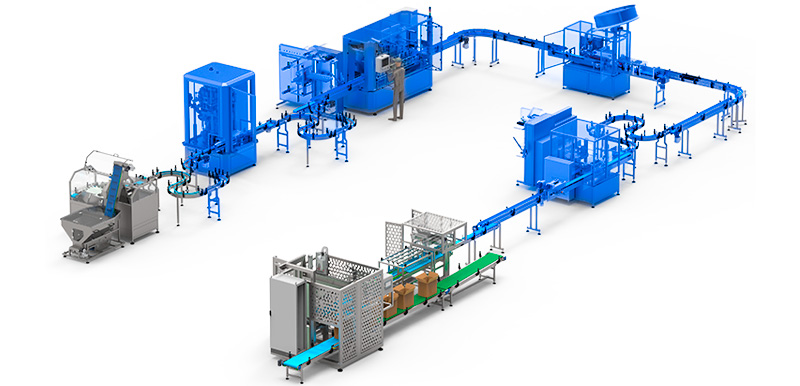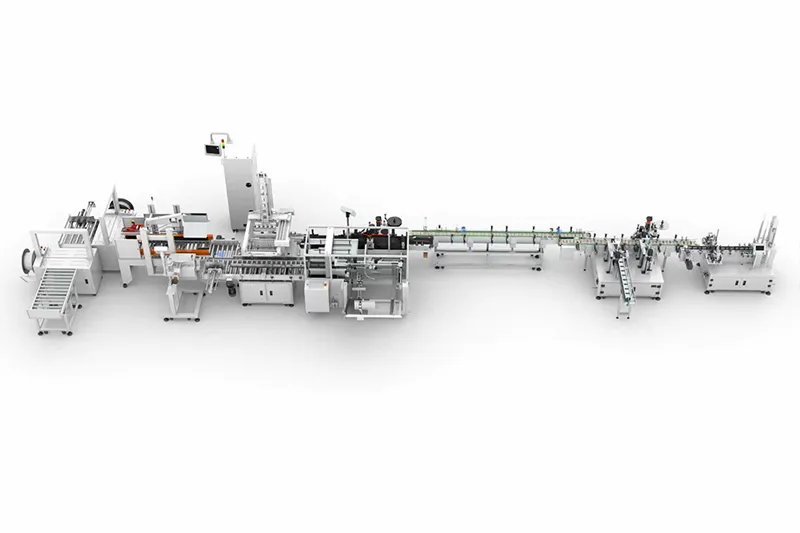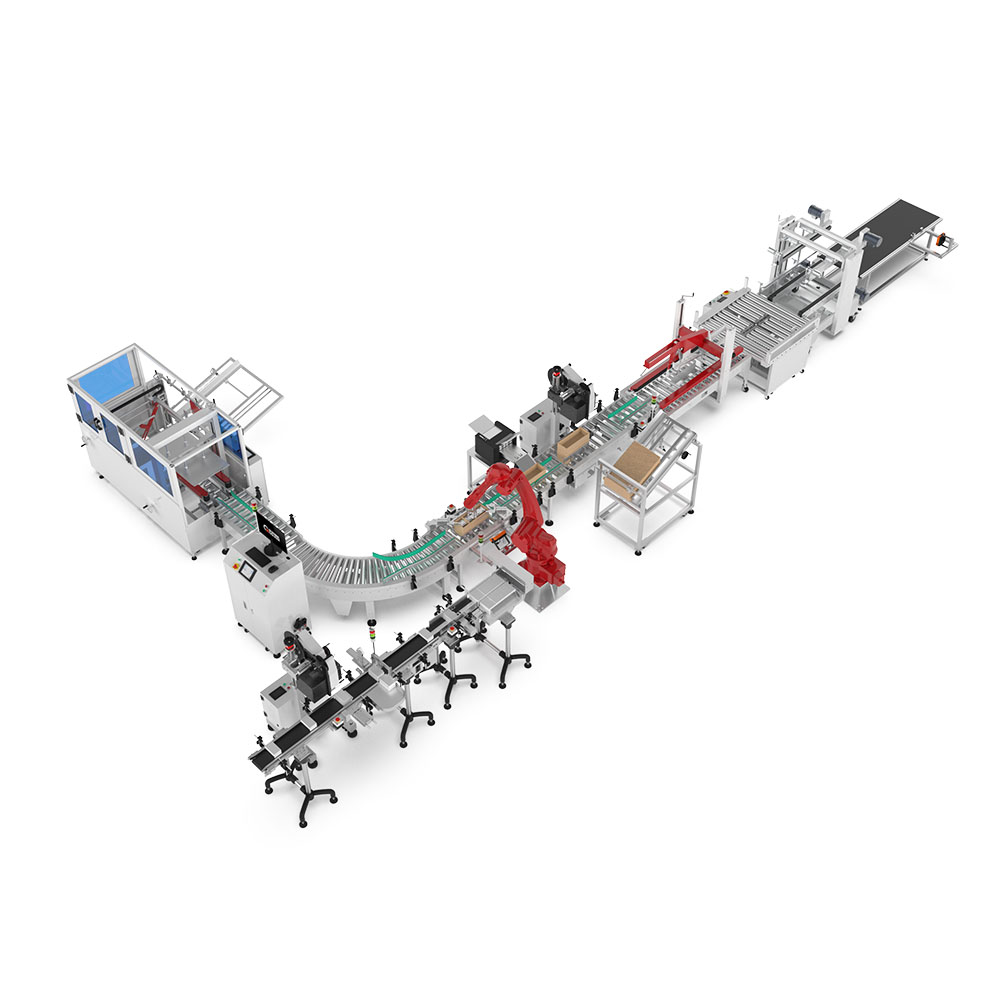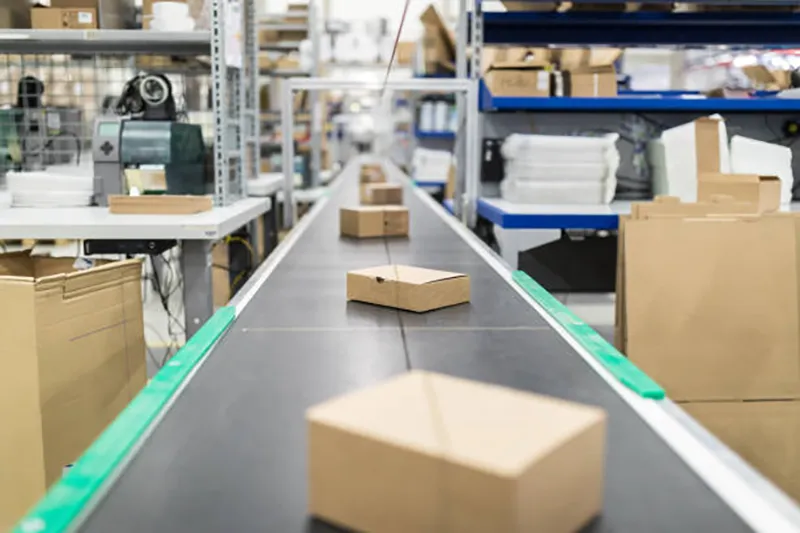
Your factory may already have automated machines, but hidden inefficiencies in workflow, frequent micro-stops, and a lack of production visibility can still severely limit your output. Merely installing faster equipment does not guarantee higher efficiency if the line suffers from uncoordinated material flow and delayed fault reporting. Industry 4.0 packaging automation improves overall production efficiency by connecting isolated machines into an intelligent ecosystem, providing real-time data visibility, automated material synchronization, and predictive maintenance to eliminate hidden downtime. In this comprehensive guide, we will explore 20 specific ways intelligent packaging systems help manufacturers maximize Overall Equipment Effectiveness (OEE) and increase capacity without building a new factory.
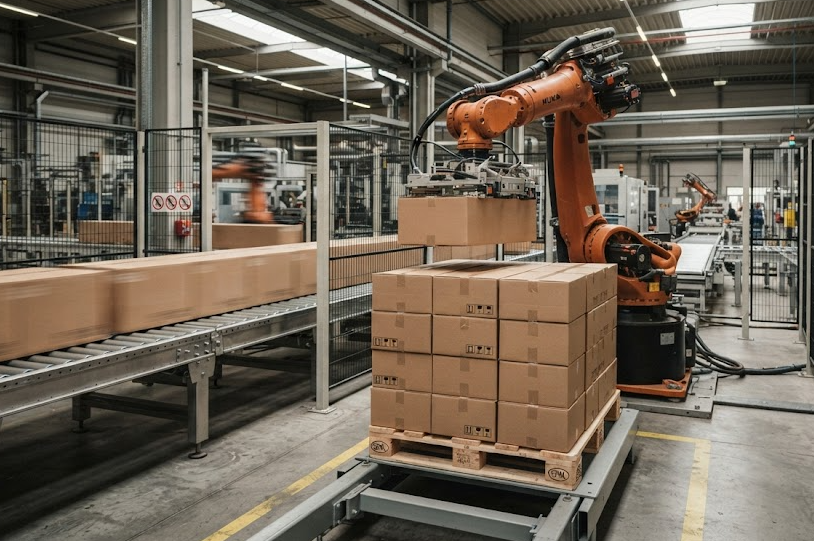
Table of Contents
- The Hidden Efficiency Losses in Traditional Packaging Lines
- Enhancing Visibility Through Real-Time Production Monitoring
- Eliminating Blind Spots with Automated Data Collection
- Optimizing Material Flow with Smart Equipment Integration
- Reducing Unplanned Stops via Predictive Maintenance
- Bridging Operations with MES Integration
- Maximizing Throughput with Robotics Automation
- Industry Application Scenarios: Sector-Specific Efficiency Gains
- Conclusion
1. The Hidden Efficiency Losses in Traditional Packaging Lines
Traditional packaging lines suffer from hidden efficiency losses because disconnected equipment, manual performance tracking, and delayed fault reporting obscure the root causes of production bottlenecks.
Many manufacturers face a frustrating reality: their packaging line is running, but efficiency is still low. When production managers cannot clearly see where production losses come from, they often blame machine speed. However, in most end-of-line operations, efficiency is lost not because the machine is slow, but because of poor equipment utilization, inter-process waiting times, and inefficient labor allocation.
Industry 4.0 shifts the paradigm from reactive troubleshooting to proactive optimization. By deploying a turnkey smart factory solution, manufacturers gain a connected packaging production line where data—not just the physical product—flows continuously. This data visibility allows engineers to systematically identify and eliminate the hidden inefficiencies holding back capacity.
2. Enhancing Visibility Through Real-Time Production Monitoring
Real-time production monitoring enhances efficiency by continuously tracking machine status, output, and alarms via IoT-enabled sensors, allowing managers to immediately identify and correct inefficient processes.
When a machine slows down in a traditional factory, managers often find out hours later when the shift ends. Industry 4.0 provides instant visibility, empowering teams to act immediately.
1. Instant Detection of Efficiency Drops
Smart manufacturing systems track throughput minute-by-minute. If a case packer’s speed drops below the set threshold, the system immediately flags the anomaly, allowing operators to intervene before a major backlog occurs.
2. Real-Time Equipment Status Tracking
By monitoring whether machines are in active, idle, or faulted states across the entire floor, production managers can instantly see which specific equipment is causing a holdup, eliminating the guesswork in troubleshooting.
3. Dynamic Cycle Time Measurement
Industry 4.0 systems measure the exact cycle time of every mechanical action. If a robotic palletizer begins taking milliseconds longer to pick a box, engineers are alerted to investigate the servo motor or suction cups before a fault occurs.
4. Continuous OEE Monitoring
Instead of calculating OEE on a whiteboard the next day, smart packaging lines display dynamic OEE scores on centralized HMIs. This gives shift supervisors a real-time pulse on availability, performance, and quality.
3. Eliminating Blind Spots with Automated Data Collection
Automated data collection replaces inaccurate manual reporting by pulling real-time performance, downtime, and quality metrics directly from the PLC, ensuring precise production analysis and decision-making.
Relying on manual records leads to delayed and often inaccurate data, masking true production constraints. Industry 4.0 automates this critical administrative task.
5. Elimination of Manual Reporting Errors
By connecting the PLC directly to the factory network, the system automatically logs exact production quantities. This eliminates human counting errors and ensures accurate inventory tracking.
6. Accurate Downtime Root Cause Logging
When a line stops, operators frequently log generic reasons like “machine jam.” Smart systems record the exact fault code (e.g., “Sensor B4 blocked”), providing engineering teams with accurate data to resolve recurring mechanical flaws.
7. Automated Quality Metric Tracking
Integrated vision inspection systems log every rejected carton and the reason for rejection (e.g., missing label, bad seal). This data helps identify upstream material defects or forming errors instantly.
8. Centralized Production Dashboards
Consolidating all equipment data into a single, highly visible dashboard allows plant managers to assess the health of the entire packaging hall at a glance, facilitating faster resource allocation.
4. Optimizing Material Flow with Smart Equipment Integration
Smart equipment integration optimizes material flow by intelligently linking case formers, packers, and sealers, synchronizing operational speeds to reduce inter-process waiting times and maximize overall line utilization.
A fast machine is useless if it spends half its time waiting for products. True efficiency requires harmony across all integrated equipment.
9. Seamless Material Flow Synchronization
In a turnkey smart factory solution, the case forming machine communicates directly with the product loading station. Cartons are erected exactly when products are ready, preventing conveyor jams and material starvation.
10. Reduction of Inter-Process Waiting Times
By eliminating isolated machine controls, Industry 4.0 systems ensure that products move continuously from sealing to labeling to palletizing without accumulating in buffer zones.
11. Dynamic Line Speed Adjustment
If an upstream filler slows down, the connected packaging line automatically scales back its speed to match. This prevents start-stop cycles, which cause heavy wear and tear on packaging machinery.
12. Coordinated Auto-Changeovers for Mixed SKUs
For lines handling multiple formats, centralized control allows recipe parameters to be sent to all machines simultaneously. Guides and servos auto-adjust, drastically reducing the changeover time between different production runs.
5. Reducing Unplanned Stops via Predictive Maintenance
Predictive maintenance improves packaging efficiency by utilizing IoT sensors to detect early signs of mechanical wear, enabling maintenance teams to replace components before catastrophic, unplanned shutdowns occur.
Unexpected downtime destroys production efficiency. Managing equipment health proactively is a core pillar of Industry 4.0.
13. Early Warning Systems for Mechanical Wear
Sensors tracking vibration, temperature, and servo torque can identify a failing bearing or dull cutting blade weeks before it breaks, triggering a maintenance alert.
14. Data-Driven Maintenance Scheduling
Instead of replacing parts based on a fixed calendar date (which wastes money) or waiting for them to break (which wastes time), predictive maintenance allows scheduling repairs precisely when component degradation reaches a critical threshold.
15. Prevention of Catastrophic Failures
By catching minor issues early, predictive algorithms prevent cascading mechanical damage, ensuring that a simple belt replacement doesn’t turn into a major motor overhaul.
16. Extension of Asset Service Life
Continuously running machines within their optimal, data-verified parameters reduces unnecessary stress, maximizing the long-term ROI of the packaging automation investment.
6. Bridging Operations with MES Integration
MES integration connects factory-floor execution with enterprise-level planning, allowing manufacturers to automate production scheduling, track orders in closed loops, and eliminate administrative bottlenecks.
A major source of inefficiency is the disconnect between business systems (ERP) and actual shop-floor machinery.
17. Seamless ERP/MES Production Scheduling
When an order is placed in the ERP, the MES pushes the production schedule directly to the packaging line. This eliminates the delay of printing and distributing manual work orders.
18. Closed-Loop Order Tracking
Managers can track the exact progress of an order in real-time. If a 10,000-carton run is 80% complete, logistics can be automatically notified to prepare outbound trucks, eliminating warehouse wait times.
7. Maximizing Throughput with Robotics Automation
Robotics automation maximizes packaging throughput by replacing inconsistent manual labor with high-speed, repeatable robotic handling, ensuring stable cycle times and continuous operation capability.
Labor shortages and rising wages make manual end-of-line operations unsustainable. Combining robotics with Industry 4.0 data unlocks peak capacity.
19. Robotic Stabilization of Cycle Times
Unlike human operators who fatigue over a shift, robotic case packers and palletizers execute their movements with absolute precision and consistent speed, guaranteeing reliable output forecasts.
20. Eradication of Manual Handling Bottlenecks
By deploying robotic material transfer systems, factories eliminate the inefficiencies caused by uncoordinated manual lifting, creating a continuous, highly automated flow from product loading to final palletizing.
8. Industry Application Scenarios: Sector-Specific Efficiency Gains
Industry 4.0 packaging solutions are engineered to solve specific operational bottlenecks: stabilizing high-volume output in Food & Beverage, enabling rapid changeovers in FMCG, and ensuring strict compliance in Pharmaceuticals.
When evaluating how to increase output without expanding your factory footprint, consider how intelligent packaging systems solve industry-specific challenges.
| Industry | Common Efficiency Challenge | Industry 4.0 Automation Solution | Recommendation / Benefit |
| Food & Beverage | High production volume; frequent micro-stops causing bottlenecks. | Real-time monitoring and synchronized line speed adjustment. | Highly recommended to maintain continuous throughput and prevent upstream product spoilage. |
| FMCG / Consumer Goods | Multiple SKUs requiring frequent, time-consuming format changes. | Coordinated auto-changeovers and flexible robotic handling. | Best for environments where reducing changeover downtime directly translates to higher daily capacity. |
| Pharmaceuticals | Strict tracking requirements; high cost of manual packaging errors. | Automated quality tracking and deep MES integration. | Essential for meeting regulatory compliance while maintaining high-speed operation. |
| Electronics | Complex schedules; need for flexible, small-batch packaging. | Seamless ERP/MES scheduling and dynamic workflow routing. | Suitable for high-mix, low-volume facilities requiring maximum operational agility. |
| Large-Scale Plants | Managing multiple lines with scattered, isolated equipment data. | Centralized production dashboards and turnkey ecosystem integration. | Required for plant managers needing unified visibility across the entire manufacturing floor. |
9. Conclusion
Achieving peak packaging efficiency requires more than just standalone machines; it requires a cohesive, data-driven strategy. By implementing Industry 4.0 packaging automation, manufacturers can eliminate the blind spots of traditional operations. Real-time production monitoring, automated data collection, predictive maintenance, and robotic integration work seamlessly to identify hidden efficiency losses, optimize workflows, and stabilize cycle times. For factories facing rising labor costs and the demand for higher output, upgrading to an intelligent packaging ecosystem is the most reliable path to maximizing capacity without the need for facility expansion.
Are hidden inefficiencies limiting your production capacity?
As a professional manufacturer and turnkey smart factory solution provider, JOYDA TECH specializes in designing intelligent packaging production lines that connect robotics, advanced machinery, and MES systems into one optimized workflow. Don’t let disconnected equipment hold your factory back. Contact our engineering team today to request a comprehensive production analysis and explore our customized Industry 4.0 packaging automation solutions.
Frequently Asked Questions (FAQs)
1. Our packaging line is running, but efficiency is low. How does Industry 4.0 fix this?
Traditional lines often suffer from hidden micro-stops and poor inter-machine coordination. Industry 4.0 fixes this by providing real-time data visibility, allowing you to instantly identify which specific machine or process is causing the bottleneck, rather than guessing.
2. Can we increase our production output without building a new factory?
Yes. By integrating smart equipment and predictive maintenance, Industry 4.0 maximizes the OEE of your existing footprint. Reducing downtime and optimizing material flow can often unlock 15% to 30% more capacity from your current floor space.
3. Why is automated data collection better than manual production reports?
Manual reporting is prone to human error and delays, often masking the true root cause of downtime. Automated data collection pulls precise metrics directly from the machine’s PLC in real-time, providing highly accurate data for immediate decision-making.
4. How does predictive maintenance reduce packaging line downtime?
Instead of waiting for a part to break and cause a sudden stoppage, predictive maintenance uses IoT sensors to monitor machine health. It alerts your team to mechanical wear early, allowing repairs to be scheduled during planned changeovers.
5. What is the value of partnering with a turnkey packaging automation provider?
A turnkey partner handles the complete solution—from mechanical design and robotic integration to software connectivity and data management. This eliminates the severe risks of equipment incompatibility and communication failures common when buying isolated machines from multiple vendors.
6. Will an Industry 4.0 packaging system help us overcome labor shortages?
Absolutely. By integrating automated carton forming, robotic case packing, and intelligent palletizing, the system eliminates repetitive manual labor. This not only solves staffing shortages but ensures your production output remains stable regardless of labor fluctuations.