To choose the right Industry 4.0 packaging solution, manufacturers must first evaluate their specific production bottlenecks, match the technology to their required automation tier, ensure seamless machine-to-machine connectivity, and select a turnkey supplier capable of complete mechanical and software integration. As manufacturing competition intensifies, factory owners recognize that purchasing isolated machines will not solve systemic challenges like labor dependencies or invisible production data. This comprehensive procurement guide helps factory managers and procurement teams evaluate system capabilities, assess digital data management, and select a qualified automation partner to guarantee a successful factory upgrade with a clear Return on Investment (ROI).
Table of Contents
- Evaluate Current Packaging Bottlenecks Before Investing
- Match the Solution to Your Required Automation Level
- Prioritize Equipment Connectivity and System Integration
- Assess Production Flexibility for Multi-SKU Operations
- Verify Digital Data Management Capabilities
- Ensure Future-Proof Scalability and System Expansion
- Select a Supplier with Complete Turnkey Project Capabilities
- Industry Application Guide: Matching Solutions to Manufacturing Needs
- Conclusion
1. Evaluate Current Packaging Bottlenecks Before Investing
Evaluating current packaging bottlenecks is the critical first step because applying an Industry 4.0 packaging solution to an undefined problem leads to poor ROI and ineffective automation deployments.
Before requesting quotes from an automated packaging system supplier, plant managers must conduct a rigorous internal audit. The goal of Industry 4.0 is not to automate every manual task blindly, but to engineer solutions for the specific processes that cause the most significant efficiency losses.
Manufacturers should analyze their current production reality by measuring:
- Production bottlenecks: Identify exactly where material flow stops. Is the carton erector starving the case packer, or is manual palletizing causing conveyor backups?
- Machine utilization (OEE): Calculate how much time your current machines spend actively packaging versus waiting for products, undergoing maintenance, or experiencing micro-stops.
- Labor dependency costs: Evaluate the direct costs and indirect risks (turnover, training, ergonomic injuries) associated with manual loading, taping, and pallet stacking.
Expert Decision Logic:
- Targeted station upgrades are recommended when your line has one obvious, measurable bottleneck (e.g., manual palletizing) while the rest of the line operates at high efficiency.
- A complete end-of-line packaging automation audit is strictly required when output fluctuates daily, labor costs are universally high, and production data is completely invisible to management.
2. Match the Solution to Your Required Automation Level
Matching the Industry 4.0 packaging solution to your required automation level prevents over-engineering and capital waste by aligning technology strictly with your factory’s current production scale and operational maturity.
Different factories require drastically different levels of Industry 4.0 implementation. Purchasing a highly complex, cloud-integrated system for a low-volume facility will destroy ROI, while applying basic mechanical automation to a high-volume smart factory will throttle its capacity.
When evaluating how to choose a smart packaging solution, categorize your needs into three tiers:
- Tier 1: Basic Automation Upgrade: Focuses on mechanical reliability. Recommended for factories that need automatic feeding, stable packaging execution, and immediate labor reduction at specific workstations.
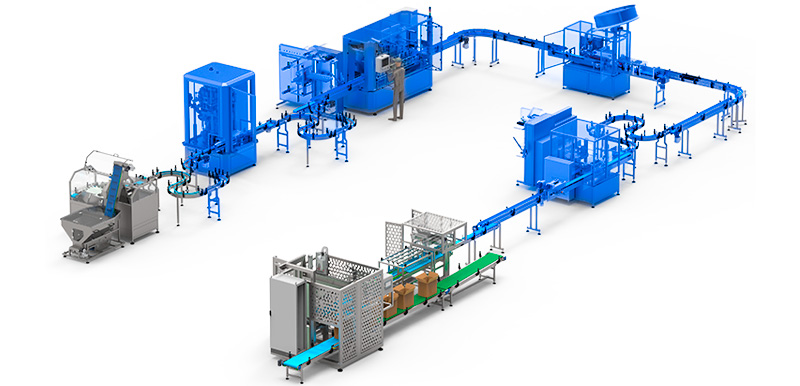
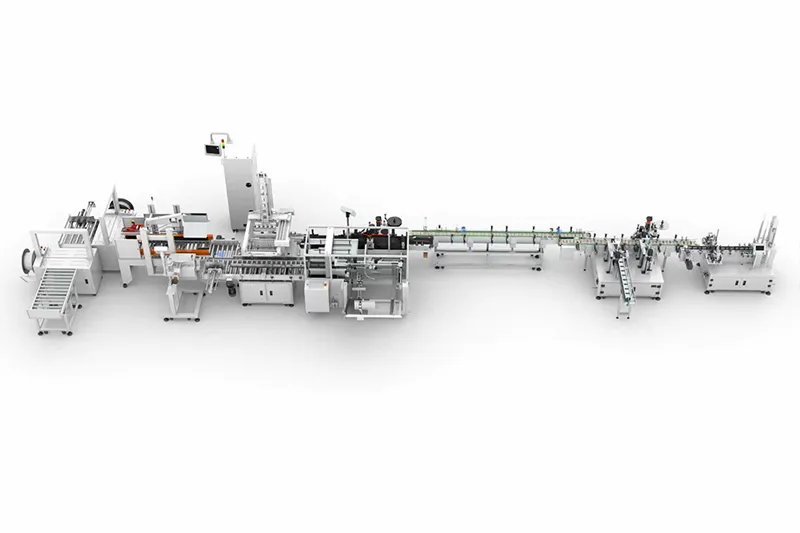
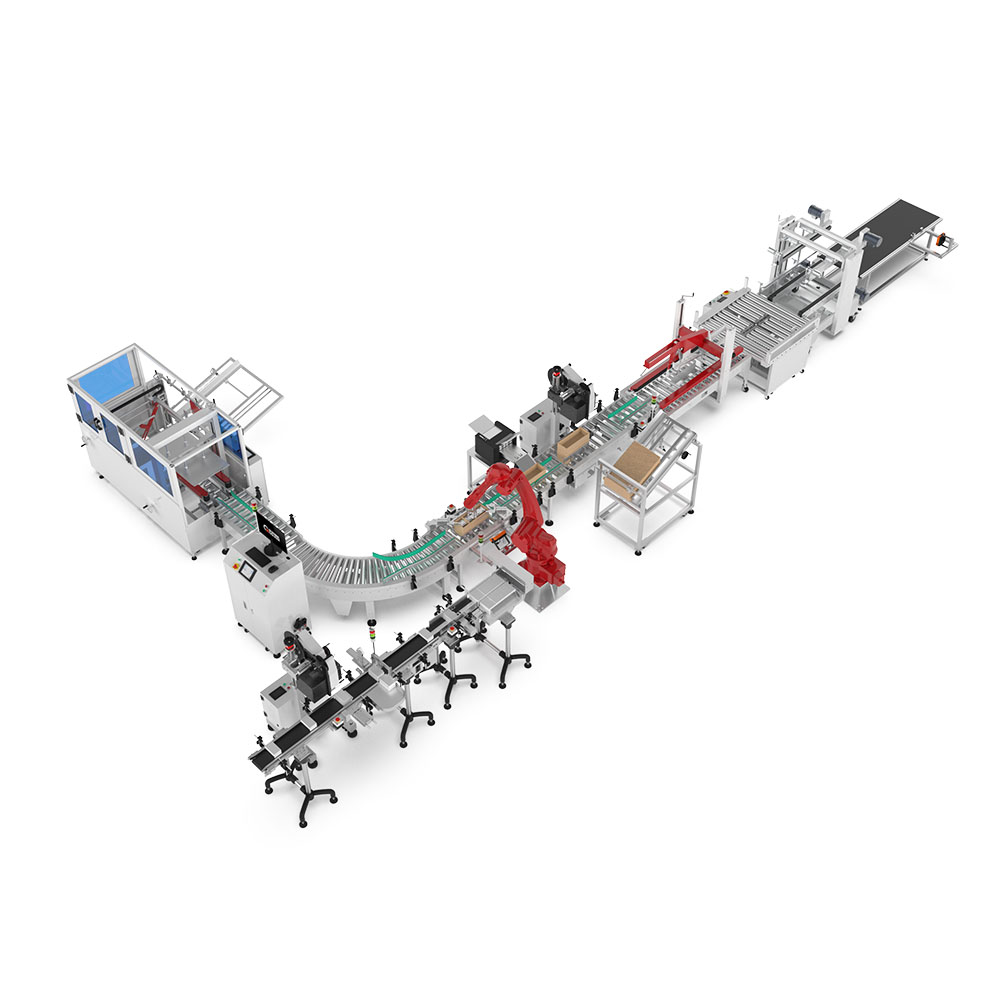
- Tier 2: Integrated Packaging Line: Connects multiple machines (case forming, product loading, carton sealing, labeling, and palletizing) into a synchronized workflow. Recommended for manufacturers requiring automated material flow and complete end-of-line automation without isolated operator intervention.
- Tier 3: Smart Factory-Level Integration: The highest tier. Suitable for larger manufacturers requiring real-time production monitoring, centralized data collection, deep equipment connectivity, and digital production management (MES/ERP integration).
3. Prioritize Equipment Connectivity and System Integration
Prioritizing equipment connectivity ensures seamless packaging line integration because independent machines lacking standardized communication protocols inevitably create data silos and mechanical bottlenecks.
A common, highly expensive mistake during industrial automation system selection is purchasing disjointed machines from different vendors. An advanced robotic case packer is practically useless if it cannot automatically synchronize its speed with an older carton sealer.
A viable Industry 4.0 packaging automation system must guarantee robust machine-to-machine (M2M) communication. Evaluate the solution based on its ability to provide centralized control via a unified PLC architecture. Connected systems allow manufacturers to regulate the speed of the entire packaging process dynamically, ensuring that upstream and downstream equipment operate in perfect harmony. If a downstream jam occurs, the intelligent network automatically pauses upstream feeding, preventing catastrophic product collisions and minimizing restart times.
4. Assess Production Flexibility for Multi-SKU Operations
Assessing production flexibility guarantees long-term efficiency for multi-SKU operations because an advanced Industry 4.0 packaging solution utilizes servo-driven modular designs to execute rapid changeovers without manual reconfiguration.
Modern manufacturers rarely produce a single item; they handle multiple products, different package sizes, and frequent order changes to meet volatile market demands. If an automated packaging system requires a mechanic to spend four hours manually adjusting rails and replacing pneumatic parts between runs, the factory loses all production efficiency gained by the machinery.
The selected smart manufacturing solution provider must deliver flexibility through digital recipe management.
- Standard manual adjustment is acceptable when production runs last for weeks and packaging formats rarely change.
- Servo-driven, automated changeover capability is strictly required when a factory executes daily SKU changes. With modular machine design and adjustable production parameters, operators simply select a new recipe on the HMI, and the entire packaging line physically adjusts itself in minutes.
5. Verify Digital Data Management Capabilities
Verifying digital data management capabilities is essential because a true smart factory solution for the packaging industry must deliver actionable real-time analytics and production output tracking, rather than just basic mechanical controls.
B2B buyers are shifting their focus: they no longer just want a machine that packs boxes; they need a system that tells them how efficiently it packs boxes. An Industry 4.0 solution must provide meaningful production information that empowers factory managers to make rapid, cost-saving decisions.
Important data functions to mandate in your RFQ include:
- Real-time production output tracking: Comparing actual yield against ERP shift targets live.
- Equipment status and downtime analysis: Automatically logging the exact fault codes (e.g., “Label roll empty”) rather than relying on vague manual downtime reports.
- Performance evaluation: Displaying real-time OEE metrics on centralized dashboards.
- Production history records: Archiving data for quality assurance and compliance tracing.
6. Ensure Future-Proof Scalability and System Expansion
Ensuring future-proof scalability protects your capital investment because a modular Industry 4.0 packaging automation system allows manufacturers to expand capacity and integrate new technologies without replacing their entire existing infrastructure.
When planning a packaging factory automation upgrade, you must ask: Will this system be obsolete in five years? Manufacturers frequently experience growing pains when they attempt to introduce a new product line, only to discover their proprietary packaging software cannot integrate with new equipment.
A future-proof system is built on open communication protocols (such as OPC UA) and modular mechanical frameworks.
- Closed, proprietary systems should be avoided because they lock you into a single vendor for every minor upgrade and often cannot communicate with modern MES/ERP networks.
- Modular, scalable systems are highly recommended because they allow you to seamlessly add additional robotic palletizers, introduce new vision inspection stations, or integrate existing legacy equipment as your production capacity demands grow.
7. Select a Supplier with Complete Turnkey Project Capabilities
Selecting a turnkey packaging automation solution provider is highly recommended over managing multiple independent vendors because a single integrator guarantees unified mechanical engineering, software compatibility, and clear project accountability.
For complex packaging production line optimization projects, choosing the right partner is arguably more important than choosing the individual machine components. Large B2B manufacturing enterprises frequently suffer from the “multi-vendor trap”: when an integrated line fails to operate correctly, the robotics supplier blames the conveyor manufacturer, and the software developer blames both. This lack of accountability leads to massive commissioning delays.
To mitigate this risk, partner with a supplier that offers complete project capability. A reliable turnkey integrator takes full responsibility for:
- Upfront engineering and factory layout design.
- Mechanical manufacturing and robotic integration.
- Automation programming and unified PLC control.
- MES integration for the packaging factory.
- Installation, commissioning, and comprehensive after-sales service.
8. Industry Application Guide: Matching Solutions to Manufacturing Needs
Aligning the automated packaging system with specific industry constraints guarantees operational success, as food manufacturers require high-speed stability while electronics plants demand high-precision traceability.
Evaluating application-specific requirements ensures that the chosen Industry 4.0 solution directly addresses the unique pain points of your sector. Use the decision framework below to match your industry with the appropriate automation strategy.
| Manufacturing Industry | Primary Production Requirements | Recommended Industry 4.0 Solution Profile | Key ROI Driver |
| Food & Beverage | High continuous volume, stable speed, strict hygiene, reduced manual handling. | Integrated packaging line featuring washdown-rated case sealing and high-speed robotic palletizing. | Maximizes throughput and ensures packaging consistency during peak seasonal demands. |
| Consumer Goods / FMCG | High SKU counts, frequent packaging changes, fast response to market shifts. | Flexible automation systems with servo-driven quick changeovers and centralized recipe management. | Drastically reduces changeover downtime, allowing for profitable short-batch runs. |
| Electronics & Components | High-precision handling, zero-defect packaging, strict quality traceability. | Smart packaging lines incorporating vision inspection, automated labeling, and deep MES data tracking. | Eliminates costly packaging errors and guarantees digital compliance tracking. |
| Large Manufacturing Plants | Multiple packaging lines, centralized data management, long-term scalability. | Turnkey smart factory packaging systems combining robotics, central control, and ERP connectivity. | Provides executives with plant-wide visibility and standardized, highly efficient workflows. |
9. Conclusion
Choosing the right Industry 4.0 packaging solution requires a strategic shift from purchasing isolated machinery to investing in a connected, intelligent production ecosystem. By rigorously evaluating your current packaging bottlenecks, ensuring seamless equipment connectivity, demanding multi-SKU flexibility, and verifying digital data management capabilities, you can build a scalable, future-proof operation. Most importantly, selecting a turnkey automated packaging system supplier eliminates integration risks and guarantees clear project accountability. When engineered correctly, an Industry 4.0 upgrade will significantly reduce your labor dependency, maximize machine utilization, and provide the real-time production visibility needed to thrive in a highly competitive manufacturing landscape.
Are you unsure where to start with your Industry 4.0 upgrade?
As a professional smart manufacturing solution provider, JOYDA TECH specializes in designing and implementing turnkey Industry 4.0 packaging solutions. From automated case packing and labeling to robotic palletizing and deep MES integration, we provide the engineering design, software connectivity, and complete project delivery your factory needs. Contact our expert team today to request a comprehensive factory evaluation and discover the exact ROI a customized packaging automation solution can deliver.
Frequently Asked Questions (FAQs)
1. How do we determine if our factory is ready for an Industry 4.0 packaging solution?
Start by evaluating your data and labor bottlenecks. If your factory struggles with high manual labor costs at the end of the line, frequent micro-stops, and a complete lack of real-time production visibility, you are a prime candidate for an Industry 4.0 automation upgrade to stabilize and track output.
2. Why should we choose a turnkey packaging automation solution over buying individual machines?
Buying individual machines from multiple vendors frequently leads to software incompatibility, physical material flow bottlenecks, and disputed supplier responsibility during commissioning. A turnkey solution provides unified engineering, a single point of accountability, and guaranteed system integration.
3. Will an Industry 4.0 packaging system accommodate our frequent product size changes?
Yes, provided you specify the need for a flexible system. Modern smart packaging lines feature modular designs and digital recipe management, allowing equipment (like case formers and sealers) to auto-adjust their physical dimensions via servo motors, drastically reducing manual changeover times.
4. How does equipment connectivity improve overall packaging line efficiency?
Connected equipment communicates in real-time. If a downstream palletizer is temporarily paused, the system automatically slows down the upstream case packer to prevent product jams and collisions. This synchronization ensures smooth material flow and higher overall equipment effectiveness (OEE).
5. Can an automated packaging line integrate with our existing ERP or MES software?
Absolutely. Top-tier Industry 4.0 solutions are designed with open communication architectures (such as OPC UA) that allow the packaging line’s master PLC to push real-time production data, inventory usage, and machine status directly into your facility’s MES or ERP system.
6. What is the typical ROI factor for an end-of-line packaging automation upgrade?
ROI is primarily driven by three factors: the immediate reduction in manual labor costs (especially for 24/7 operations), the significant increase in continuous throughput (by eliminating manual fatigue), and the reduction of unplanned downtime through predictive data monitoring.