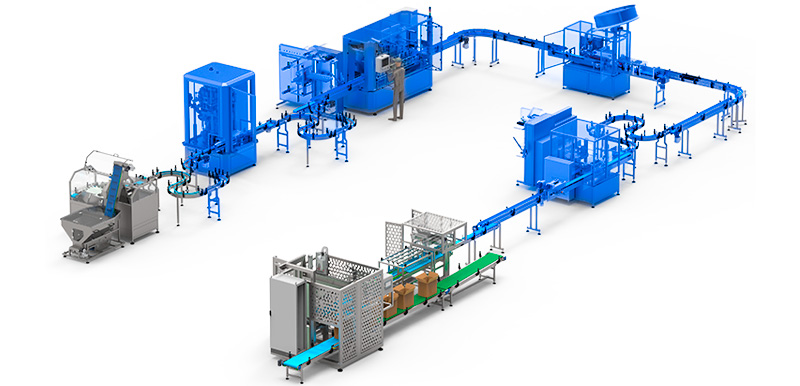
As bottled cooking oil manufacturers expand their production capacities, manual end-of-line operations often become the primary bottleneck restricting factory efficiency. Once the upstream filling and labeling processes are complete, relying on manual labor for bottle grouping, carton packing, sealing, and palletizing creates inconsistent quality, high labor dependency, and critical limitations on production speed. This technical article explores how transitioning to fully integrated, turnkey automated packaging solutions enables manufacturers to eliminate physical bottlenecks, stabilize continuous output, and achieve Industry 4.0 production standards without expanding their workforce.
Table of Contents
- The Impact of End-of-Line Automation on Cooking Oil Production
- Technical Workflow of an Automated Cooking Oil Packing Line
- Robotic Bottle Gripping: Preventing Deformation in PET Packaging
- Turnkey Systems vs. Standalone Machinery Integration
- Application Scenarios: Matching Solutions to Manufacturing Demands
- Selection Criteria for High-Performance End-of-Line Systems
- Conclusion and Final Recommendations
1. The Impact of End-of-Line Automation on Cooking Oil Production
End-of-line automation eliminates the dependency on manual labor and stabilizes throughput by seamlessly connecting bottle grouping, robotic case packing, carton sealing, and palletizing into a continuous workflow.
In the food manufacturing sector, upstream processes like liquid filling operate at extremely high speeds. When these high-speed streams meet a manual packing station, the production line instantly destabilizes. Operators struggle to match the machine’s pace, resulting in product accumulation, frequent line stoppages, and elevated risks of carton damage or incorrect bottle counts.
Modern manufacturing requires an integrated approach. By adopting automated bottled cooking oil packaging solutions, facilities replace disjointed, labor-intensive workstations with continuous mechanical workflows. This shift does more than just replace hands with machines; it establishes predictable production cycles. Plant managers can precisely calculate daily output, minimize the risk of workplace injuries caused by repetitive heavy lifting, and reallocate their human workforce to higher-value technical or supervisory roles.
2. Technical Workflow of an Automated Cooking Oil Packing Line
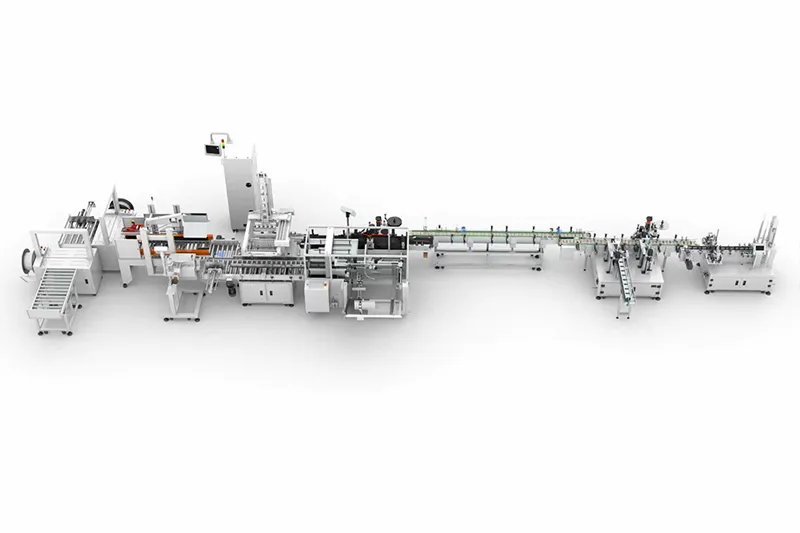
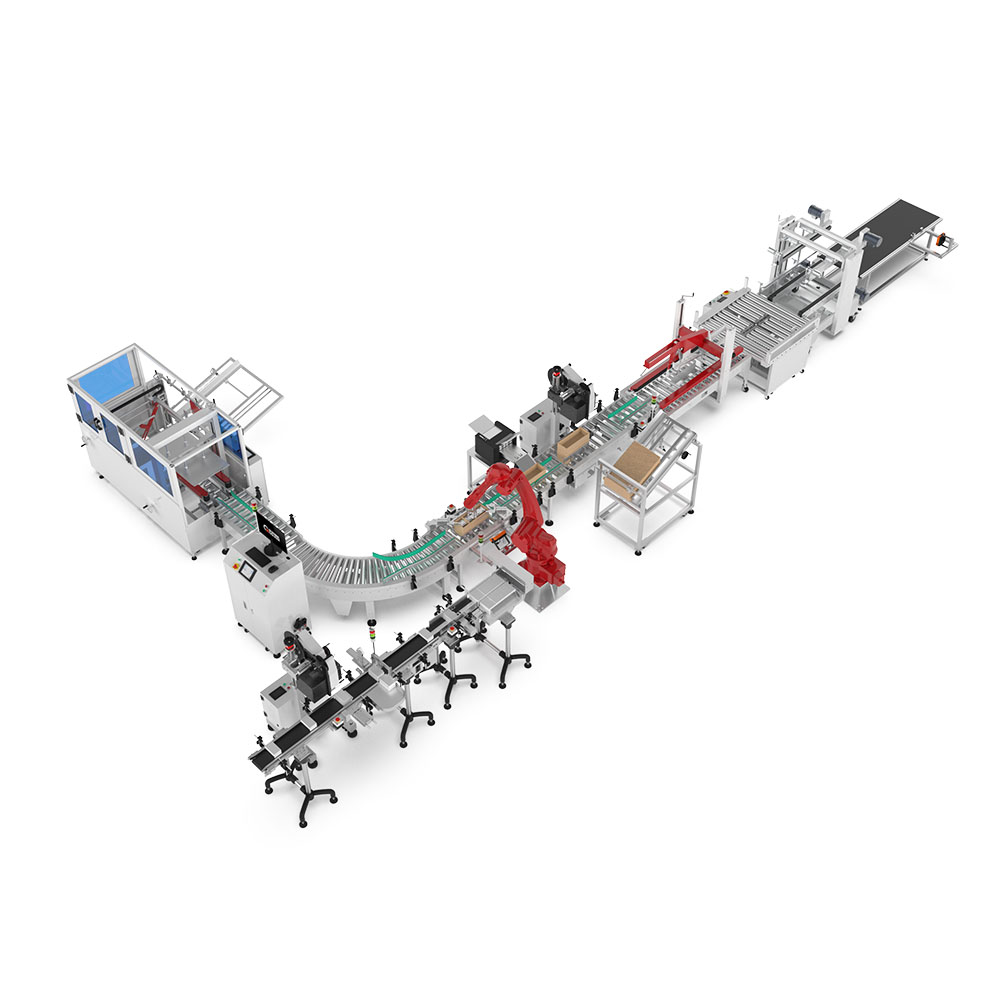
A high-performance packaging workflow transitions sequentially from bottle conveying and grouping to robotic case packing, automatic carton sealing, real-time labeling, and robotic palletizing.
Designing a resilient automated cooking oil packing line requires synchronizing multiple distinct mechanical modules so they operate as a single unified system.
The standard technical sequence includes:
- Bottle Conveying & Grouping: Filled and capped bottles are transferred from upstream conveyors. Automated diverters and grouping mechanisms organize the bottles into specific configurations (e.g., 2×3 or 3×4 matrices) while maintaining stable product positioning to prevent tipping.
- Robotic Case Packing: Industrial robots equipped with customized end-of-arm tooling pick the grouped bottles and accurately place them into erected corrugated cartons. This eliminates the drop-impact associated with manual loading.
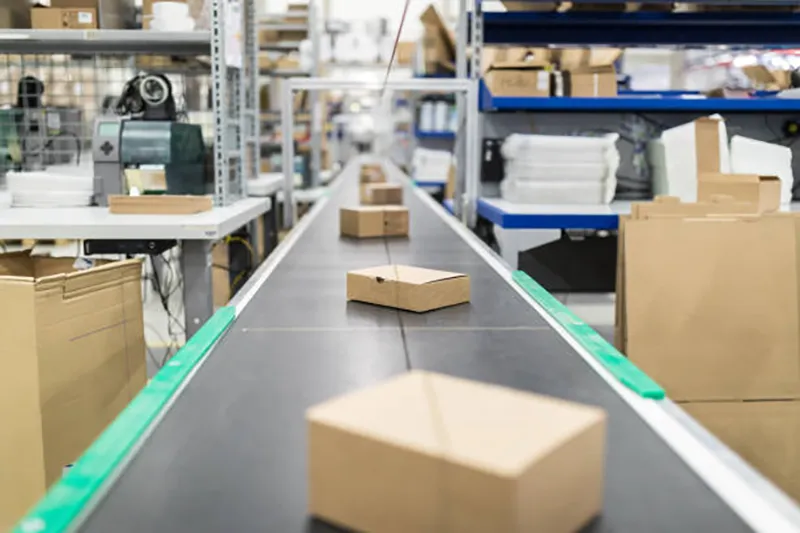
- Automatic Carton Sealing: The loaded cartons proceed to the sealing station, where mechanical plows fold the top flaps and apply tape or hot-melt glue. This ensures strict structural integrity for warehouse stacking.
- Labeling and Traceability: High-speed applicators apply logistics labels or barcodes to the sealed cartons, syncing with production databases to ensure accurate tracking.
- Robotic Palletizing: Finally, a heavy-duty robotic arm picks the finished cartons and arranges them onto pallets according to programmed stacking patterns, drastically accelerating warehouse preparation efficiency.
3. Robotic Bottle Gripping: Preventing Deformation in PET Packaging
Specialized robotic bottle gripping technology is required for cooking oil handling to ensure stable positioning and prevent the squeezing, denting, or deformation of lightweight PET bottles during high-speed case loading.
One of the most complex engineering challenges in cooking oil packaging is handling the product safely. Cooking oil is frequently packaged in thin-walled PET bottles to reduce material costs. During automated transfer, applying too much lateral pressure will dent the bottle, force oil up against the cap seal, and potentially cause micro-leaks. Conversely, applying too little pressure will result in bottles slipping out of the gripper during the high-speed arc of the robotic arm.
To solve this, advanced turnkey cooking oil packing solutions utilize precision-engineered tooling. Rather than relying on simple pneumatic clamping, these systems deploy customized gripping heads that conform to the exact geometry of the bottle’s neck or rigid shoulder structure. This isolates the gripping force away from the weak sidewalls of the PET container, guaranteeing safe, high-speed transfers and ensuring the product arrives in the carton in pristine retail condition.
4. Turnkey Systems vs. Standalone Machinery Integration
Turnkey end-of-line systems provide significantly higher long-term value than standalone machines by reducing project coordination risks, eliminating transition bottlenecks, and natively integrating digital software controls.
When upgrading a facility, procurement teams often face the choice between purchasing individual pieces of equipment (e.g., a separate case packer and a standalone palletizer) or investing in a complete turnkey system. Purchasing standalone equipment forces the manufacturer to act as the system integrator, which introduces massive mechanical and software compatibility risks.
| Evaluation Metric | Manual / Standalone Packaging | Integrated Turnkey End-of-Line System | Engineering Impact / Decision Value |
| System Synchronization | Poor. Conveyor speeds and PLC logic frequently clash. | Excellent. All modules share a unified control architecture. | Turnkey systems prevent product pile-ups and micro-stops. |
| Labor Dependency | High (5-10 operators per shift). | Low (1-2 supervisory operators). | Automation shields the factory from labor shortages and rising wages. |
| Project Implementation | High Risk. Multiple vendors blame each other for delays. | Low Risk. Single-source provider handles mechanical & digital FAT. | Single-source integration accelerates the commissioning timeline. |
| Product Protection | Inconsistent manual handling leads to carton damage. | Precision robotic handling eliminates drop shocks and bottle squeezing. | Automated systems protect profit margins by reducing scrap rates. |
| Footprint Efficiency | Large, disjointed floor space required. | Compact, linear layouts designed for continuous flow. | Maximizes throughput per square meter of factory space. |
5. Application Scenarios: Matching Solutions to Manufacturing Demands
Export-oriented suppliers prioritize structural carton sealing and reliable palletizing, while multi-SKU food facilities require flexible automation capable of executing rapid changeovers for different bottle sizes and carton formats.
Different segments of the edible oil market require specific automation capabilities to address their unique logistical and operational challenges.
- Large Bottled Cooking Oil Manufacturers: Facilities producing vast quantities of standard vegetable or sunflower oil rely on heavy-duty robotic case packing and palletizing to run continuously across multiple shifts, maximizing overall equipment effectiveness (OEE).
- Food & Beverage Production Facilities: Plants that pack multiple SKUs (e.g., 1L corn oil, 5L bulk vegetable oil, and specialty blends) must prioritize system flexibility. They require end-of-line systems with recipe-driven HMIs and quick-change tooling to switch between bottle sizes with zero mechanical downtime.
- Export-Oriented Cooking Oil Suppliers: For products facing ocean freight or long-distance trucking, the packaging line must focus on rugged output. These systems require advanced carton sealing modules and highly precise robotic palletizers to ensure the load remains structurally sound during turbulent transit.
- Factories Upgrading from Manual Packaging: Operations that have heavily invested in automated liquid filling but still manually pack cartons can achieve massive and immediate ROI by deploying end-of-line automation to bridge the gap between processing and logistics.
6. Selection Criteria for High-Performance End-of-Line Systems
Manufacturers must evaluate packaging solutions based on their capability to seamlessly integrate with upstream filling lines, handle multiple SKUs flexibly, and deliver a lower Total Cost of Ownership (TCO) over the equipment’s lifecycle.
Selecting the right cooking oil carton packing system requires looking beyond the initial capital expenditure. Professional buyers evaluate suppliers based on long-term operational resilience and engineering competence.
Key criteria include:
- Seamless Upstream Integration: The supplier must possess the engineering expertise to mechanically and digitally connect the new packaging line with your existing filling machines, labelers, and inspection systems to prevent bottlenecks.
- Production Flexibility: Demand systems that handle future product expansion. The line must accommodate changes in carton configurations or bottle dimensions without requiring total equipment replacement.
- Industry 4.0 Readiness: The equipment should feature smart control software capable of communicating with your factory’s ERP/MES systems to provide real-time data on production output, material consumption, and predictive maintenance alerts.
- Lower Total Cost of Ownership: Evaluate how the system reduces repetitive manual labor, lowers unexpected mechanical downtime, minimizes product damage during handling, and simplifies daily maintenance routines.
7. Conclusion and Final Recommendations
For bottled cooking oil manufacturers, the end-of-line packaging stage is no longer just an operational necessity; it is a critical zone for massive efficiency gains. Clinging to manual case packing or disjointed standalone machines artificially limits the throughput capacity of highly efficient upstream filling lines.
By implementing a fully integrated, turnkey automated packaging system, food manufacturers can eliminate labor bottlenecks, protect fragile PET packaging from deformation, and ensure robust carton sealing and palletizing for global distribution. When evaluating your next automation upgrade, prioritize solutions that offer end-to-end synchronization, flexible product handling, and native smart factory integration to secure long-term operational dominance.
If your facility is ready to break through its current production ceiling and transition to a highly stable, Industry 4.0-ready packaging workflow, we invite you to contact our engineering team to discuss a customized turnkey automation solution tailored to your specific plant layout and capacity requirements.
FAQs
1. How does robotic case packing handle different sizes of cooking oil bottles?
Robotic case packers utilize customizable, quick-change end-of-arm tooling and programmable HMI recipes. When a production run changes from 1L to 5L bottles, the operator selects the new recipe, and the robot automatically adjusts its spatial coordinates and gripping parameters to accommodate the new format.
2. Why is grouping equipment necessary before case packing?
Upstream filling lines discharge bottles in a single continuous file. Grouping equipment physically organizes these individual bottles into the exact matrix required for the carton (e.g., 3 columns of 4 bottles) so the robotic arm can pick the entire load simultaneously, ensuring high-speed efficiency.
3. What prevents PET oil bottles from crushing during automated handling?
Advanced automated systems grip the bottles by their most rigid points—typically the neck ring or reinforced shoulder—rather than applying lateral pneumatic pressure to the thin sidewalls. This isolates the kinetic force and prevents deformation or seal compromise.
4. Can an automated end-of-line system connect to my current ERP software?
Yes. Modern turnkey EOL packaging solutions are designed with Industry 4.0 architecture. The system’s master PLC can be configured via standard industrial protocols (like OPC UA) to push real-time production counts, equipment status, and fault logs directly to your facility’s ERP or MES platforms.
5. How does robotic palletizing improve warehouse operations?
Robotic palletizers eliminate the slow, physically dangerous task of manual heavy lifting. They follow programmed stacking algorithms to create perfectly square, highly stable pallets that interface flawlessly with automated guided vehicles (AGVs) and automated storage and retrieval systems (AS/RS) in modern warehouses.