Relying on manual labor for book fulfillment exposes operations to rising wage costs and inconsistent packaging quality, directly eroding profit margins. While many facility managers hesitate at the initial Capital Expenditure (CAPEX) of an Industry 4.0 solution, the hidden Operating Expenses (OPEX) of manual processes—material waste, slow changeovers, and labor turnover—often cost much more in the long run.
The Core ROI Formula for Packaging Automation: To accurately evaluate an automated book packaging system, engineers and financial officers must calculate the Payback Period and Total Cost of Ownership (TCO). The fundamental formula is: ROI (%) = [(Annual Savings – Annual Operating Costs of Machine) / Total Capital Investment] × 100
A well-engineered system typically delivers a payback period of 12 to 18 months by increasing production efficiency by over 40%, reducing direct labor costs by 30%, and optimizing material utilization to 93%. This article breaks down exactly how to quantify these metrics and calculate the financial returns of upgrading your end-of-line packaging.
Table of Contents
- The Rising Cost of Manual Packing in a Digital Age
- What Constitutes a Modern Book Packaging System?
- Analyzing Efficiency: Speed vs. Flexibility
- The Material Advantage: Reducing Waste from 18% to 7%
- Labor and Safety: Beyond Just Headcount Reduction
- Real-World Case Study: Achieving End-to-End Automation
- Sustainability and Energy: The Overlooked ROI Factor
- Checklist for Selecting a System Integrator
1. The Rising Cost of Manual Packing in a Digital Age
The publishing and logistics sectors are facing a dual challenge: the demand for faster, smaller-batch delivery and the reality of a shrinking workforce.
With global manufacturing labor costs rising by an average of 5% to 8% annually, maintaining a manual packaging line is no longer a sustainable strategy for high-volume logistics centers. An automated book packaging system acts as a hedge against inflation, stabilizing operational costs while meeting the 19% CAGR (Compound Annual Growth Rate) of the Industry 4.0 market.
The Hidden Costs of “Status Quo”
It is easy to calculate the cost of a machine. It is harder to calculate the cost of not having one. In manual operations, we frequently observe:
- Inconsistent Throughput: Output drops during shift changes or fatigue.
- Over-packaging: Operators tend to use excessive shrink film “just to be safe,” wasting tons of material annually.
- Damage Rates: Manual handling during palletizing increases the risk of drops and corner damage.
2. What Constitutes a Modern Book Packaging System?
To evaluate ROI, we must first define what we are buying. It is not just a shrink tunnel; it is an integrated ecosystem.
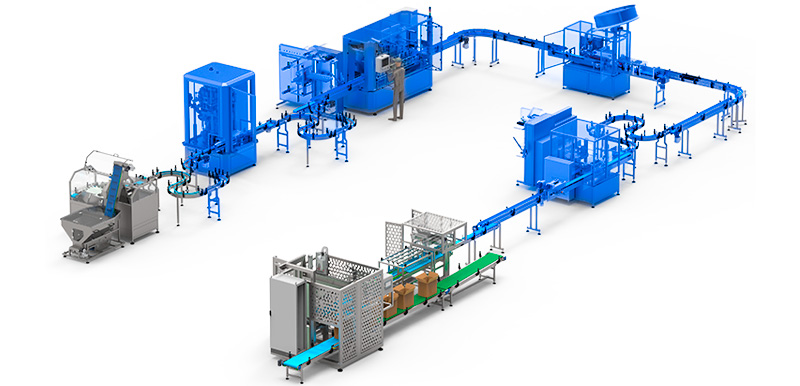
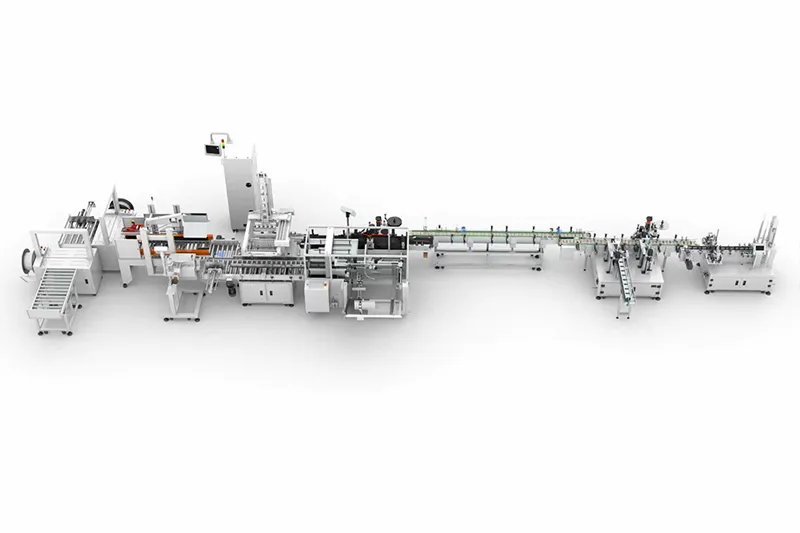
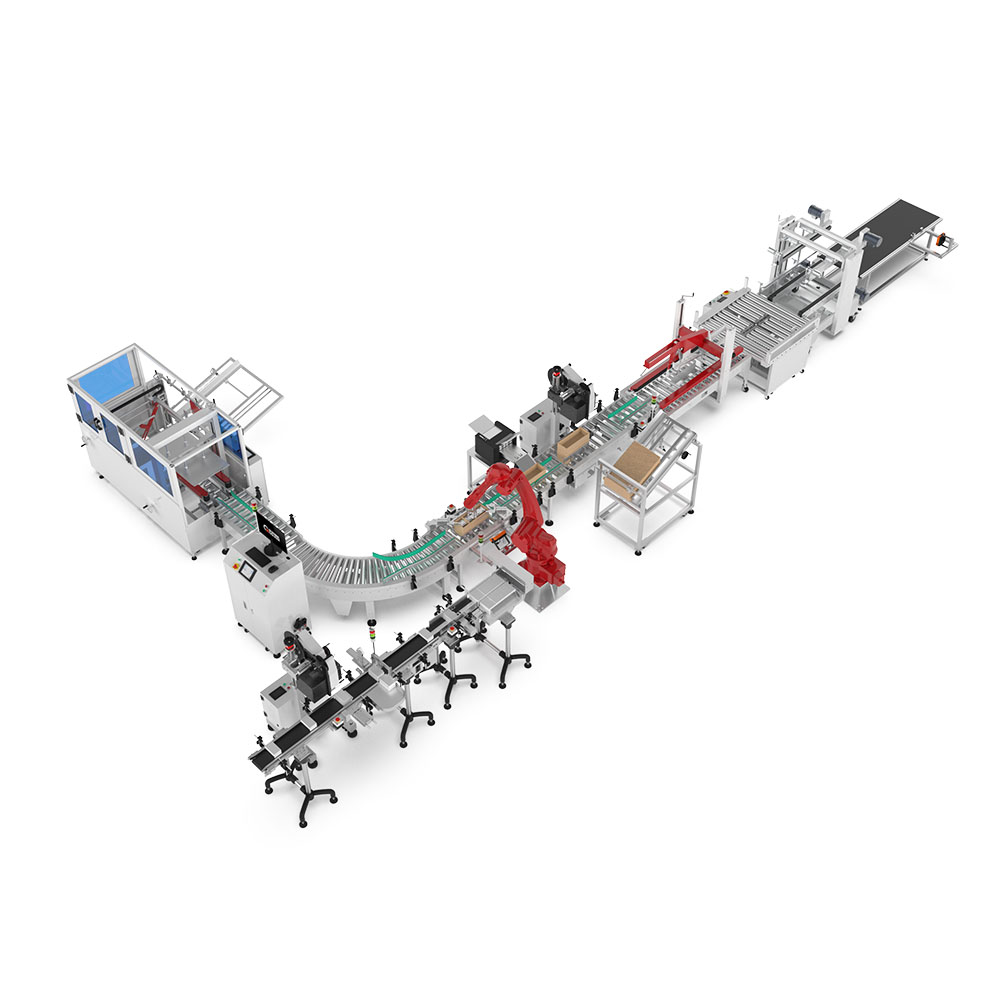
A comprehensive book packaging system integrates conveying, heat cutting and sealing, shrink wrapping, automatic check weighing, labeling, and robotic palletizing into a unified workflow. By utilizing modular design and intelligent software, these systems achieve high-precision, high-throughput production that eliminates bottlenecks associated with disjointed manual stations.
Key Components of the Line
When designing these solutions at Joyda, we treat the line as a single organism:
- Infeed & Conveying: Smart pacing to prevent jams.
- Heat Sealing & Shrink: Precision temperature control for tight, professional finishes.
- Verification: Automatic check weighers and labeling units ensure 100% order accuracy.
- End-of-Line: Robotic palletizers that stack boxes with consistent geometry.
3. Analyzing Efficiency: Speed vs. Flexibility
- Analyzing Efficiency: Driving Up Your OEE (Overall Equipment Effectiveness) When calculating ROI, raw speed is irrelevant if the machine is constantly down for adjustments. In modern packaging, the true metric of efficiency is OEE (Availability × Performance × Quality). Today’s automation doesn’t just run fast; it maximizes uptime through flexibility.
Modern automated book packaging lines are engineered to boost overall production efficiency by more than 40% while managing high-mix, low-volume e-commerce orders. Advanced PLC controls and servo-driven adjustments allow for rapid SKU switching, enabling the system to transition between different book formats (from thin paperbacks to thick hardcovers) without lengthy mechanical downtime.
Quantifying the Value of Quick Changeovers In modern publishing fulfillment, batch sizes are shrinking.
- Manual Changeover: Recalibrating manual sealing stations and palletizing patterns can take 45–60 minutes per shift.
- Automated Changeover: Joyda systems utilize recipe-driven HMI software to achieve fully automated changeovers in under 15 minutes.
- The ROI Impact: Saving 45 minutes of downtime daily on a line running at 30 units per minute translates to an additional 1,350 packages shipped per day, directly increasing daily revenue and maximizing OEE.
4. The Material Advantage: Reducing Waste from 18% to 7%
One of the most immediate contributors to ROI is material savings. This is pure profit that is often ignored in the initial budget.
Automated packaging systems utilize sensors to measure product dimensions in real-time, cutting film and sealing packages with millimeter precision. This technological upgrade typically improves raw material utilization rates from a manual average of 82% to over 93%, significantly cutting the annual spend on consumables like shrink film and corrugated board.
Cost Comparison: Manual vs. Automated Material Use
| Cost Factor | Manual Process | Automated System | Improvement |
| Film Overlap | High (human estimation) | Precise (sensor controlled) | ~11% Savings |
| Re-work Rate | 3-5% (poor seals) | < 0.5% (consistent heat) | Reduced Waste |
| Consumable Budget | Variable/Unpredictable | Fixed/Predictable | Better Forecasting |
By reducing the “tail” on shrink wrap and optimizing box sizes, high-volume facilities save tens of thousands of dollars annually on plastic alone.
5. Labor and Safety: Beyond Just Headcount Reduction
While reducing headcount is a primary driver, the quality of the work environment is equally critical for long-term stability.
Implementing a fully automated line can reduce direct labor costs by 30% or more, but equally important is the reduction in workplace injuries related to repetitive strain and heavy lifting. By assigning dangerous tasks like heat sealing and heavy palletizing to robots, companies improve safety compliance and reduce insurance liabilities.
The Shift in Workforce Roles
We are not just removing operators; we are upskilling them. Instead of five people manually wrapping and lifting heavy boxes:
- Manual Scenario: High turnover, back injuries, fatigue-related errors.
- Automated Scenario: One skilled technician monitoring the HMI (Human-Machine Interface) and managing material replenishment.
- Result: Lower turnover costs and a more reliable production schedule.
6. Real-World Case Study: Achieving End-to-End Automation
- Theory is useful, but hard financial data validates the investment. Let’s look at how these calculations apply to a real-world deployment.
Joyda recently implemented a turnkey automated book packaging line (integrating wrapping, check-weighing, labeling, and robotic palletizing) for a major educational distribution hub. By running the ROI numbers before installation, we projected a 16-month payback. The actual results exceeded expectations.
The Financial Breakdown & Outcome:
- The Challenge: The client needed to triple output during the back-to-school peak season (August/September) without incurring the $80,000+ cost of hiring and training temporary seasonal labor.
- Labor Savings: Reallocated 4 manual packers per shift across two shifts. (Estimated Annual Saving: $240,000)
- Material & Waste Reduction: Precise sensor-controlled film cutting reduced annual shrink wrap usage by 12%, and automatic weight verification eliminated $15,000 in annual return-shipping penalties. (Estimated Annual Saving: $38,000)
- The ROI Result: The client achieved full ROI in exactly 14 months. After the payback period, the $278,000 in combined annual savings went directly to the company’s bottom line. Additionally, the soft-touch robotic grippers reduced product damage claims by 95%.
7. Sustainability and Energy: The Overlooked ROI Factor
European and North American markets are increasingly scrutinized for their carbon footprint. Your machinery choice plays a role here.
Modern servo-driven packaging systems are designed for energy efficiency, capable of reducing energy consumption by more than 20% compared to older pneumatic or hydraulic systems. Coupled with the reduction in plastic waste through precision cutting, automation directly supports corporate sustainability goals while lowering utility bills.
Energy Efficiency Metrics
- Smart Standby: Systems now automatically power down conveyors and heat tunnels during gaps in production.
- Servo Motors: We use servos that consume power only when moving, unlike continuously running AC motors.
- ROI Impact: In regions with high electricity costs, the energy savings alone can cover the maintenance budget of the machine.
8. Checklist for Selecting a System Integrator
If you determine that the ROI (Labor Savings + Material Savings + Efficiency Gains) justifies the investment, the final step is choosing the right partner.
When evaluating suppliers for a book packaging system, prioritize those who offer modular hardware and open software architecture. Ensure the vendor can demonstrate real-world experience with soft-product handling (like books) and provides local support for critical components like thermal cutters and robotic arms.
What to Ask Your Vendor:
- Integration: Can this system talk to my WMS (Warehouse Management System) for automatic label generation?
- Scalability: Can I add a second palletizing robot later if my volume doubles?
- Tolerances: What is the specific tolerance for the check weigher? (Crucial for detecting missing inserts/CDs in books).
- Support: Do you offer remote diagnostics to fix software issues without a site visit?
Frequently Asked Questions
1. What is the ROI formula for book packaging automation?
ROI (%) = [(Annual Savings − Annual Operating Costs of the Machine) / Total Capital Investment] × 100. Savings come from labor reduction, material optimization, and fewer returns.
2. How long is the typical payback period?
Well-engineered book lines usually pay back in 12–18 months by lifting efficiency 40%+, cutting direct labor ~30%, and raising material utilization to 93%.
3. How much labor cost can automation save?
A fully automated line typically removes 30%+ of direct labor and reallocates staff to higher-value supervision and replenishment roles.
4. Does automation reduce material waste?
Yes—sensor-controlled film cutting and precise sealing commonly lift raw-material utilization from ~82% to 93%+, eliminating giveaway.
5. What should I look for in a system integrator?
Prioritize modular hardware, open software architecture, proven soft-product handling, and local support for thermal cutters and robotic arms.
Figures are typical/illustrative industry ranges, shared to help you scope your own line — validate against your actual product mix and throughput.
Worked Example: 2-Year Payback for a Book Fulfillment Line
A concrete model for a plant shipping ~6,000 book parcels/day. Swap in your own wage and damage numbers.
| Line item (annual) | Manual | Automated |
|---|---|---|
| Direct labor | $180,000 | $54,000 |
| Damage / rework | $36,000 | $9,000 |
| Material waste | $22,000 | $11,000 |
| Throughput gain (value) | — | +$40,000 |
Net annual saving ≈ $204,000 against an installed cost often in the $250k–$400k range — a payback commonly inside 24 months for high-SKU book fulfillment.