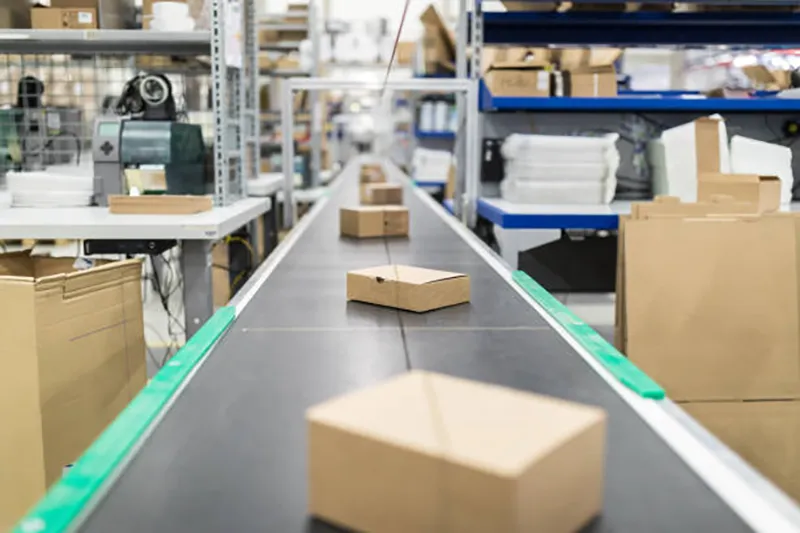
Investing in the wrong packaging equipment creates rigid bottlenecks that restrict your factory’s ability to scale with market demand. The cost of a system that cannot adapt to new box sizes or communicate with other machines far exceeds its initial purchase price. To choose a high-efficiency carton packing production line, prioritize Industry 4.0 readiness, modular flexibility, and end-to-end integration. A superior system not only automates erecting, filling, and sealing but syncs with check weighers and robotic palletizers, enabling 24/7 continuous throughput and reducing labor costs by over 30%.
As a Chief Manufacturing Engineer, I regularly consult with procurement teams who mistakenly focus only on the top-speed specifications of a machine. True efficiency in a high-SKU environment is determined by how quickly a line recovers from a changeover and how intelligently it handles workflow data. This guide breaks down the technical criteria for evaluating and selecting an automated carton packing system that actually delivers on its ROI promises.
Table of Contents
- Moving Beyond Speed: Redefining High Efficiency
- Evaluating Industry 4.0 Readiness and Data Connectivity
- Modular Flexibility: Surviving High-SKU Environments
- End-to-End Integration Capacity
- The Data Matrix: Key Performance Metrics to Evaluate
- Real-World Applications: From Books to Beverages
- Auditing Your Facility Before Procurement
- Conclusion
1. Moving Beyond Speed: Redefining High Efficiency
- When evaluating automated carton packing, procurement teams often fixate on theoretical maximum speed (Cycles Per Minute – CPM). However, in a real factory setting, raw speed is irrelevant without high OEE (Overall Equipment Effectiveness). A machine running at 200 CPM with frequent micro-stops is mathematically less productive than a stable machine operating at a continuous 120 CPM.
True high efficiency is defined by the balance of Availability, Performance, and Quality. For a manufacturing engineer, this means scrutinizing the machine’s MTBF (Mean Time Between Failures) and MTTR (Mean Time To Recovery). When selecting a line, you must evaluate the rigidity of its frame (e.g., welded stainless steel vs. bolted aluminum) and its servo-driven continuous motion capabilities to maintain a steady takt time across 24/7 three-shift operations without mechanical degradation.
2. Evaluating Industry 4.0 Readiness and Data Connectivity
A modern packaging line should function as the digital nervous system of your end-of-line operations. If a machine cannot report its own health, it is already obsolete.
When assessing a carton packing production line, demand Industry 4.0 readiness. This means the system must feature advanced PLC networking, IoT sensors, and centralized SCADA dashboards.
- Predictive Maintenance: Smart sensors track motor vibration and pneumatic pressure, alerting your maintenance team to wear and tear before a component fails.
- Workflow Monitoring: Real-time data connectivity systems allow managers to track OEE (Overall Equipment Effectiveness), yield, and scrap rates instantly from a remote tablet.
Without this connectivity, you are relying on reactive maintenance, which guarantees unexpected and expensive downtime.
3. Modular Flexibility: Surviving High-SKU Environments
- Today’s consumer market demands a massive variety of packaging sizes. Your equipment’s mechanical architecture must adapt instantly to prevent changeover bottlenecks. In high-SKU environments, a top-tier automated carton packing line must feature modular, fully automated kinematics.
Servo-Driven Toolless Changeovers (Automated Recipe Management): Look for systems where every critical adjustment point is controlled by absolute encoders and multi-axis servo motors (such as Allen-Bradley, Siemens, or Beckhoff drives), rather than relying on manual hand-cranks or rigid pneumatic cylinders. By utilizing HMI-stored recipe parameters, the operator simply selects a new SKU, and the machine automatically repositions its guide rails, flap folders, and robotic end-effectors within 3 to 5 minutes. This digital changeover drastically reduces reliance on skilled mechanics and guarantees 100% repeatable precision.
4. End-to-End Integration Capacity
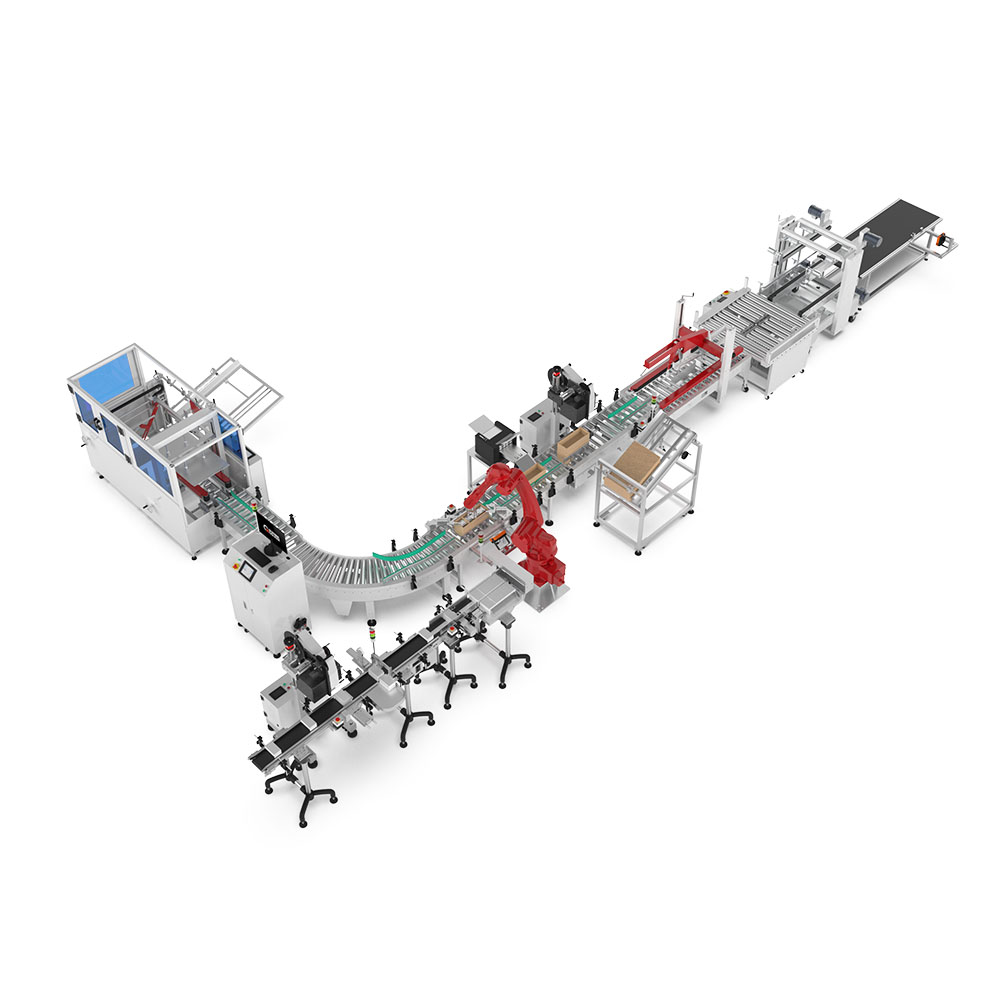
An isolated machine is a bottleneck waiting to happen. An ideal solution not only erects, fills, and seals cartons automatically but integrates physically and digitally with your entire facility.
You must evaluate the line’s capability to sync with upstream and downstream processes.
- Upstream Synchronization: The carton erector must communicate with your primary filling or wrapping machines to ensure it never starves them or causes a backlog.
- Downstream Integration: The outfeed must connect seamlessly with inline check weighers (to eject underweight boxes automatically) and robotic palletizers. This creates a closed-loop system where no human hands are required from the moment the product is boxed to the moment the pallet is wrapped.
5. The Data Matrix: Key Performance Metrics to Evaluate
To build a solid business case for procurement, you need hard numbers. Industry benchmarks show massive, measurable gains when transitioning from manual handling to high-efficiency automated solutions. Use the following metrics to evaluate potential equipment vendors.
Performance Evaluation Matrix
| Evaluation Metric | Manual/Legacy Packing | High-Efficiency Automated Line | Impact on ROI |
| Operational Throughput | 10–30 units/minute | Hundreds of units/min | Massive capacity increase without expanding footprint. |
| Labor Cost Reduction | Baseline (High dependency) | 30%+ Reduction | Reallocates human capital from repetitive labor to technical roles. |
| Continuous Run | Subject to breaks/fatigue | 24/7 Capability | Ensures peak-season demand targets are consistently met. |
| Material Utilization | High waste (tape/glue overuse) | Optimized consistency | Drastically reduces consumable costs and corrugated scrap. |
| Quality Control | Visual spot-checks | 100% Inline inspection | Eliminates shipping errors and return logistics costs. |
6. Real-World Applications: From Books to Beverages
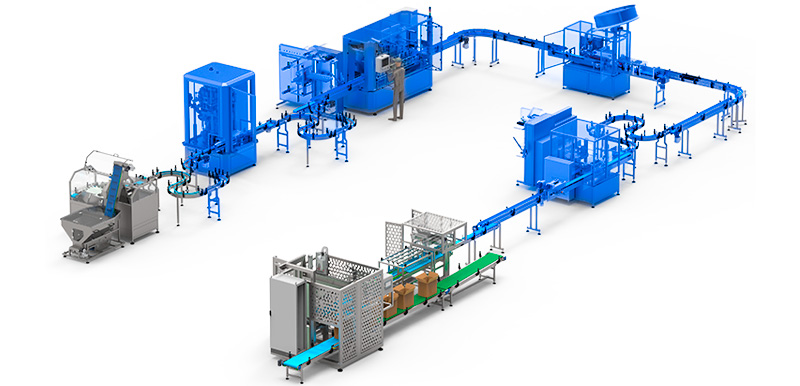
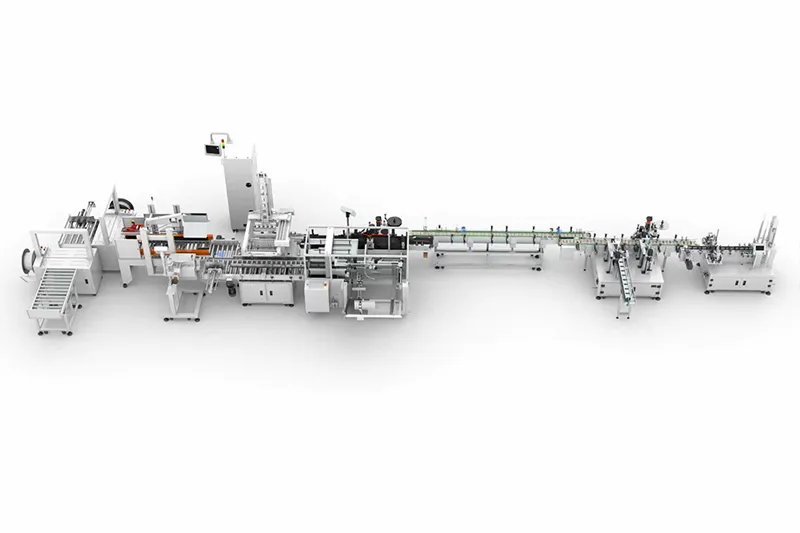
To understand how these criteria perform under pressure, we look at JOYDA Totalpack’s carton packing solutions. Positioned as part of a broader suite of smart packaging lines, these systems combine robotics, software, and predictive analytics to optimize efficiency across radically different industries.
- Book Packaging Vertical: Books are heavy, dense, and feature variable spine thicknesses. JOYDA’s modular automation allows the robotic loaders to gently handle delicate covers, while the smart line instantly adjusts to different carton depths, maintaining high throughput despite frequent product variation.
- Juice Bottle Packaging Vertical: Beverage packaging demands high-speed, continuous motion to prevent liquid sloshing. The turnkey design supports integration with real-time data systems, ensuring the rapid loading of glass or PET bottles without impact damage, while communicating directly with the end-of-line palletizer.
These use cases underscore how a truly flexible carton packing system can support diverse production requirements without compromising on speed.
7. Auditing Your Facility Before Procurement
- Before drafting a URS (User Requirement Specification) or sending an RFP to a vendor, you must conduct a rigorous engineering audit of your facility to ensure the new packaging line integrates seamlessly.
- Map the V-Curve (Line Balancing): Identify your true bottleneck. Determine if your packaging equipment needs to over-speed by 15-20% compared to your upstream filler to create a “V-Curve” that pulls product efficiently without causing upstream accumulation.
- Calculate Changeover Frequency vs. Downtime: Measure your exact SKU volatility. If you run 5 format changes per shift, specifying premium multi-axis servo automated changeovers will yield a much faster ROI than accepting a cheaper machine with manual crank adjustments.
- Define IT/OT Architecture Protocols: Assess your factory’s network. Specify required communication standards upfront—such as PackML (ISA-TR88.00.02) for machine state models or OPC UA / MQTT for SCADA integration—so the vendor designs the PLC logic to plug directly into your existing MES/ERP infrastructure.
- Establish FAT/SAT Criteria: Clearly outline your Factory Acceptance Test (FAT) and Site Acceptance Test (SAT) performance guarantees (e.g., maintaining 98% OEE over a 24-hour continuous run with specific corrugated board grades) before signing the purchase order.
8. Conclusion
Choosing a high-efficiency carton packing production line is not simply a matter of buying the fastest machine available. It is a strategic infrastructure upgrade. By demanding Industry 4.0 data connectivity, modular changeover capabilities, and total end-to-end integration, you future-proof your facility. The right automated solution will not only process hundreds of units per minute but will optimize material utilization, reduce your labor dependency by over 30%, and provide the 24/7 reliability required to dominate your market.
Frequently Asked Questions (FAQ)
1. What exactly does “modular flexibility” mean in carton packing?
Modular flexibility means the machine’s components (like robotic grippers or carton magazines) can be quickly swapped or digitally adjusted to handle different product sizes and shapes, rather than being permanently welded or bolted for a single specific box size.
2. How does an automated line improve material utilization?
Automated lines use precise servos and sensors to fold flaps with perfect 90-degree angles and apply the exact millimeter of glue or tape required. This eliminates the “over-taping” common in manual packing and reduces the corrugated scrap rate caused by misfolded, jammed boxes.
3. Will our existing staff be able to operate an Industry 4.0 line?
Yes. While the backend technology is advanced, the user interface (HMI) is designed to be intuitive. Your operators will shift from physical labor to technical supervision, often requiring just a few days of vendor-provided training to learn how to select recipes and monitor alarms.
4. Can an automated carton packer connect to our existing ERP system?
High-efficiency lines equipped with Industry 4.0 capabilities generally support open communication protocols (like OPC UA), allowing them to feed real-time production and inventory data directly into systems like SAP or Oracle.
5. How do these systems handle product jams or defective cartons?
Smart systems use torque-sensing servo motors and vision sensors. If a box is deformed or a jam is imminent, the machine will instantly pause the affected module to prevent damage, alert the operator via the SCADA screen, and highlight the exact location of the issue for quick clearance.
6. What is the typical ROI timeline for a fully automated carton packing line?
While it varies based on local labor costs and shifts run, most high-volume facilities experience a full return on investment within 18 to 24 months, driven primarily by the 30%+ reduction in labor costs and the massive increase in daily throughput.
7. Do we need to halt production completely to install a new line?
Installation requires some downtime, but experienced vendors use a “turnkey” approach. The equipment is built and tested at the vendor’s facility (Factory Acceptance Test) before shipping, which minimizes the actual integration and commissioning time on your factory floor to just a few days or over a weekend.