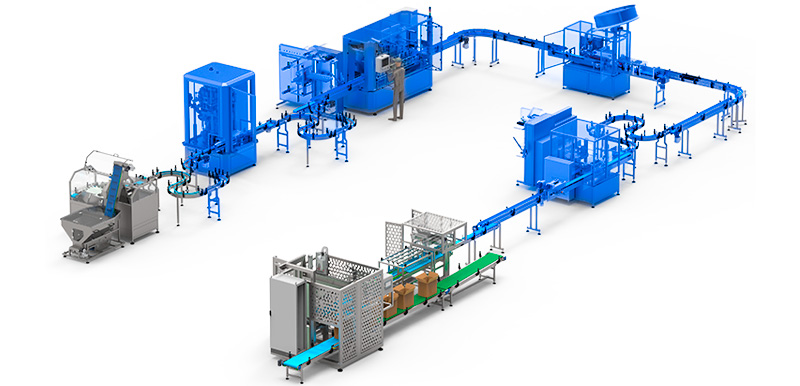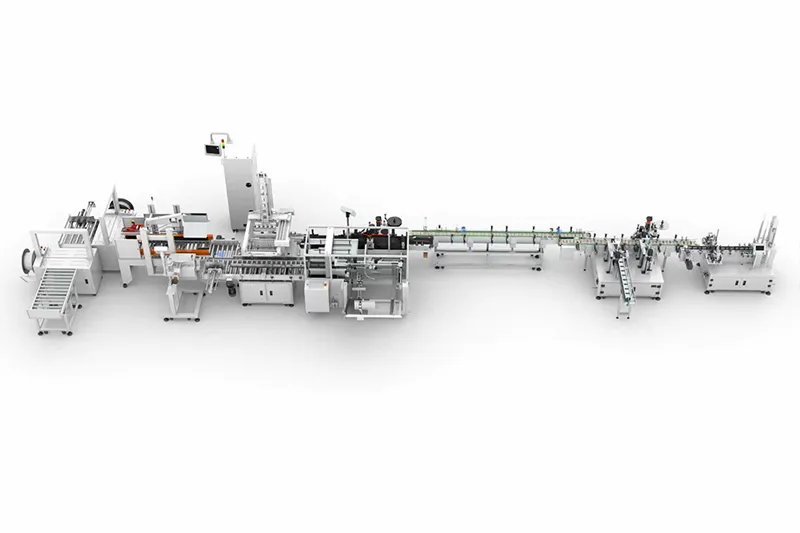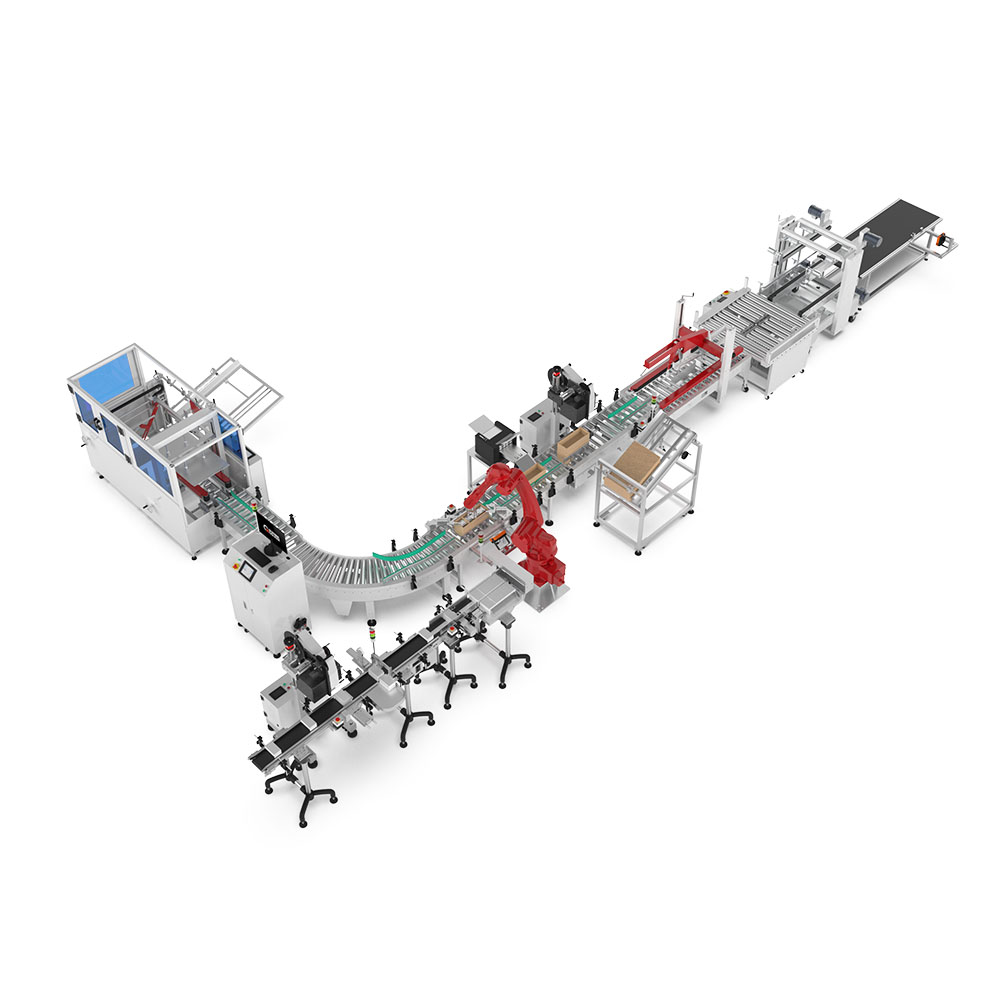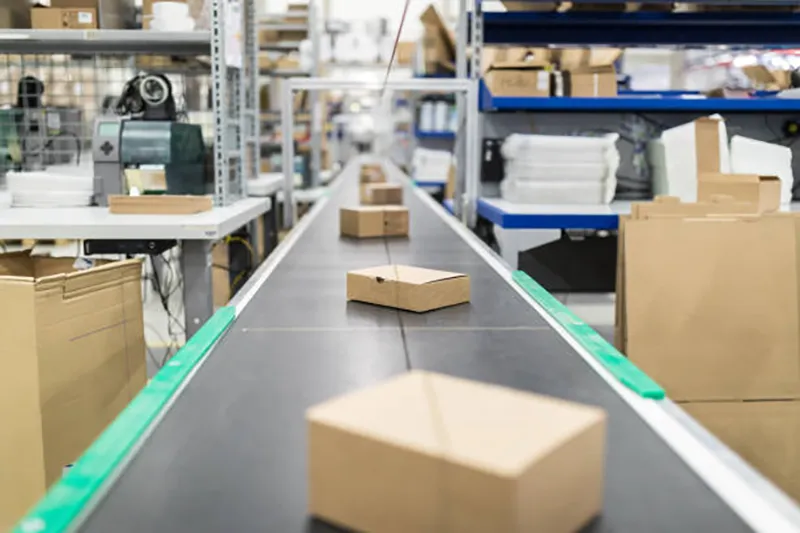
A turnkey carton packing production line is a fully integrated end-of-line packaging automation system that seamlessly combines carton forming, product loading, sealing, labeling, inspection, and robotic palletizing into one continuous workflow. Modern manufacturers face rising labor costs and inconsistent manual packaging quality, making multi-vendor standalone machines a high-risk investment. By transitioning to a unified turnkey solution, facilities eliminate integration bottlenecks and drastically reduce labor dependency. In this guide, we will explore the core components, automated workflows, and Industry 4.0 integration of custom carton packing systems to help you select the right automation strategy for your factory.
Table of Contents
- Why Transition to a Turnkey Carton Packing Production Line?
- Core Components of a Complete Carton Packing System
- Standard Workflow of an Integrated Packaging Line
- Industry 4.0 and Smart Manufacturing Integration
- Industry Application Scenarios and Technical Considerations
- Turnkey Solutions vs. Standalone Machines: A Technical Comparison
- Key Supplier Evaluation Criteria for Packaging Automation
- Conclusion
1. Why Transition to a Turnkey Carton Packing Production Line?
Transitioning to a turnkey carton packing production line eliminates the risks of multi-vendor equipment incompatibility by providing a single, cohesive system that reduces labor costs, ensures packaging consistency, and maximizes Overall Equipment Effectiveness (OEE).
Traditional manual carton packing operations often struggle with unstable labor availability, inconsistent packing quality, and low production efficiency. As production demands increase, relying on human operators for repetitive, high-speed packing becomes a bottleneck. Furthermore, attempting to automate by purchasing independent packaging machines from different suppliers often leads to complex integration issues, software communication failures, and prolonged commissioning times.
A turnkey packaging solution solves these industrial challenges by offering complete end-of-line packaging automation designed, manufactured, and integrated by a single expert partner. This approach ensures that every mechanical component and software interface is perfectly synchronized. The primary goal is not just to replace manual labor, but to create a highly stable, scalable production environment capable of sustaining high-volume output with minimal operational variance.
2. Core Components of a Complete Carton Packing System
A complete carton packing system includes an automatic carton forming machine, a product feeding system, an automated packing unit, a carton sealer, continuous conveyors, labeling and printing stations, vision inspection systems, and robotic palletizers.
A turnkey carton packing production line is custom-engineered to match the specific product type, packaging format, production speed, and factory layout of the manufacturer. Below is a detailed technical breakdown of the essential components that make up a robust end-of-line packaging system.
| System Component | Core Function | Technical & Production Value |
| Automatic Carton Forming Machine | Automatically opens, folds, and forms flat carton blanks into usable boxes. | Prevents carton jamming and ensures continuous supply without manual prep. |
| Product Feeding System | Transfers products from upstream production equipment into the packaging station. | Synchronizes upstream output with packaging speed to prevent bottlenecks. |
| Automatic Carton Packing Machine | Places products into cartons with accurate positioning and stable operation. | Eliminates human handling errors and prevents product damage during loading. |
| Carton Sealing Machine | Automatically folds carton flaps and applies adhesive tape or glue sealing. | Provides consistent, secure closures required for safe logistics and transport. |
| Conveyor System | Connects different stations and ensures continuous material flow. | Acts as the mechanical backbone, keeping OEE high by preventing material stagnation. |
| Labeling & Printing System | Applies labels, barcodes, production information, and traceability codes. | Ensures compliance with logistics standards and tracks product data natively. |
| Inspection System | Uses sensors or vision technology to detect packaging errors. | Rejects defective packages automatically, safeguarding brand quality. |
| Robotic Palletizing System | Automatically stacks finished cartons for storage and transportation. | Handles heavy, repetitive lifting at the end of the line, readying goods for warehouse storage. |
Mechanical Synchronization
The technical advantage of a turnkey system lies in its synchronized machine operation. When a single manufacturer designs the line, the transition points between the carton forming machine, the packing machine, and the sealer are engineered to match exact cycle times, dramatically reducing the risk of product jams and equipment downtime.
Automated Handling Technologies
Modern end-of-line packaging utilizes advanced robotic and servo-driven handling. This replaces manual labor with precise mechanical movements, which is particularly crucial for fragile components or high-speed consumer goods that require exact spatial positioning inside the carton.
3. Standard Workflow of an Integrated Packaging Line
The standard workflow of a turnkey carton packing line follows a synchronized sequence: Product Feeding → Carton Forming → Product Loading → Carton Closing → Sealing → Inspection → Labeling → Palletizing.
A complete packaging line connects isolated operations into one continuous, intelligent workflow. This continuous flow is critical for reducing manual handling and achieving stable output.
- Product Feeding & Carton Forming: The process begins simultaneously. As upstream production delivers the final product into the feeding system, the carton forming machine pulls a flat blank from the magazine, erects it, and seals the bottom.
- Product Loading: Products are actively grouped, collated, and precisely dropped or pushed into the waiting open carton.
- Closing & Sealing: The loaded carton advances to the sealing station where the top flaps are folded and sealed via tape or hot melt glue.
- Quality Inspection: Weight checkers or machine vision systems scan the sealed carton to verify contents, correct sealing, and confirm label placement.
- Palletizing: Finally, a robotic arm picks the verified cartons and arranges them on a pallet according to pre-programmed stacking patterns, ready for dispatch.
This streamlined workflow ensures that the manufacturer avoids the trap of isolated automation, where one fast machine simply creates a bottleneck for the next slow, manual process.
4. Industry 4.0 and Smart Manufacturing Integration
Smart carton packing production lines support digital monitoring, centralized data collection, and ERP/MES connectivity, ensuring the system is ready for future factory automation upgrades and predictive maintenance.
The modern packaging industry is shifting rapidly from simple mechanical automation to intelligent packaging ecosystems. A high-quality turnkey solution must include sophisticated digital architecture to track, manage, and optimize production.
PLC and HMI Control Architecture
A unified Programmable Logic Controller (PLC) combined with an intuitive Human-Machine Interface (HMI) provides centralized operation control. Instead of operators walking between machines to adjust parameters, the entire line is controlled from a single master dashboard. This enables quick recipe changeovers, parameter adjustment, and centralized fault diagnosis.
Industrial Data Management & Traceability
Smart production lines continuously log production data. Every carton packed, inspected, and palletized is tracked. This equipment status monitoring ensures that production managers have real-time visibility into line performance, allowing for immediate corrective actions if cycle times drop.
ERP/MES Connectivity
For scalable smart manufacturing goals, the packaging line must communicate with the factory’s broader network. Integration with Enterprise Resource Planning (ERP) or Manufacturing Execution Systems (MES) allows for automated production scheduling, remote monitoring, and predictive maintenance capabilities, transforming the packaging line into a data-driven asset.
5. Industry Application Scenarios and Technical Considerations
Turnkey packaging solutions are customized based on application demands: high-speed loading for consumer goods, precision positioning for electronics, continuous hygienic operation for food and beverage, and flexible SKU changeovers for e-commerce.
Different manufacturing sectors face unique end-of-line packaging challenges. Evaluating these scenarios helps determine the specific engineering requirements of your turnkey line.
Consumer Goods Packaging
- Products: Household products, daily-use goods, retail items.
- Application Requirements: These facilities require high-speed carton loading and strict appearance consistency to meet retail standards.
- Solution Logic: A turnkey line heavily featuring servo-driven robotic loading and high-speed rotary carton formers is recommended. This provides stable output for mass production, significantly reduces labor dependency, and improves packaging uniformity.
Electronics & Industrial Components
- Products: Electronic accessories, small mechanical parts, precision components.
- Application Requirements: Components are sensitive to shock and require accurate product positioning and highly reliable carton sealing to prevent transit damage.
- Solution Logic: Precision pick-and-place automated handling is essential here to reduce product damage risk. Robust labeling systems are also integrated to improve packaging traceability for high-value components.
Food & Beverage Industry
- Products: Bottled products, packaged food, consumer packaged goods.
- Application Requirements: Environments require hygienic operations, continuous production capability, and integration with upstream filling equipment.
- Solution Logic: Stainless steel, washdown-rated conveyor systems and automated carton loading ensure hygienic, hands-free operation, drastically reducing operator involvement while handling continuous, high-volume flow.
E-commerce & Logistics Fulfillment
- Products: Online retail products, mixed SKU shipments.
- Application Requirements: The system must handle flexible carton sizes, fast changeover times, and highly variable packaging efficiency demands.
- Solution Logic: Intelligent systems with rapid auto-adjusting guides and vision-guided robotic loading are highly suitable. This supports changing market demands, reduces fulfillment bottlenecks, and elevates warehouse automation levels.
6. Turnkey Solutions vs. Standalone Machines: A Technical Comparison
Turnkey carton packing production lines are recommended for high-volume facilities requiring continuous automated flow, whereas standard standalone machines are only suitable for low-speed, manual-assisted stations.
Procurement teams often weigh the cost of buying standard machines individually against investing in a customized turnkey production line. The right decision depends heavily on production scale and factory layout constraints.
| Evaluation Factor | Turnkey Packaging Production Line | Standalone Packaging Machines | Selection Recommendation |
| System Integration | Fully integrated mechanical & software control. | Disjointed; requires manual transfer or custom engineering. | Turnkey is recommended when minimizing integration risk and project management overhead is a priority. |
| Customization | Engineered to specific product dimensions, factory space, and capacity. | Standardized specifications; limited flexibility for non-standard items. | Turnkey is strictly preferred for multi-SKU production and unique factory layouts. |
| Labor Dependency | Requires minimal supervision; virtually zero manual handling. | High reliance on operators for feeding, transferring, and palletizing. | Turnkey is highly suitable for facilities facing severe labor shortages or rising wages. |
| OEE & Throughput | High OEE due to synchronized, continuous workflows. | Prone to bottlenecks and manual handling delays. | Turnkey is required for high-speed, 24/7 manufacturing operations. |
7. Key Supplier Evaluation Criteria for Packaging Automation
When selecting a turnkey supplier, professional buyers must evaluate the provider’s one-stop integration capabilities, custom engineering expertise, and comprehensive after-sales support to guarantee long-term system reliability.
Choosing the right automation partner is as critical as selecting the equipment itself. At JOYDA TECH, we advise procurement and engineering teams to focus on the following decision-making triggers:
- One-Stop Turnkey Integration: Can one supplier handle the complete project? Choose a provider capable of handling equipment design, manufacturing, integration, and commissioning. This reduces equipment compatibility risks and significantly shortens the installation cycle.
- Customized Solution Expertise: Avoid suppliers who only push standard machinery. Ensure the manufacturer can engineer a system that fits your exact product dimensions, carton specifications, and factory footprint.
- Engineering Support & After-Sales Capability: Evaluate the supplier’s commitment post-installation. A reliable turnkey supplier provides deep engineering consultation, installation support, comprehensive operator training, and ongoing technical assistance to minimize downtime and maximize equipment lifecycle value.
8. Conclusion
Moving from standalone equipment to a fully automated, turnkey carton packing production line is a strategic investment in manufacturing stability. By integrating carton forming, precision loading, sealing, and robotic palletizing into a unified, Industry 4.0-ready ecosystem, manufacturers can overcome labor shortages, eliminate manual inconsistencies, and achieve scalable production. When evaluating options, prioritize one-stop suppliers who offer deep customization and robust engineering support, ensuring your packaging line delivers maximum operational efficiency from day one.
Ready to upgrade your end-of-line packaging?
As a professional packaging automation manufacturer and turnkey solution provider, JOYDA TECH specializes in designing and implementing intelligent carton packing production lines tailored to your factory’s exact requirements. Contact our technical team today to request a project consultation, evaluate layout compatibility, or discuss a customized turnkey automation quote.
Frequently Asked Questions (FAQs)
1. What is the main difference between a turnkey packaging line and standalone packaging machines?
A turnkey packaging line is a fully integrated, synchronized system provided by a single supplier, connecting forming, packing, sealing, and palletizing into one automated workflow. Standalone machines require manual transfer of goods between disparate stations and run the risk of software and mechanical incompatibilities.
2. How does a customized carton packing line handle different product sizes?
Custom turnkey lines utilize servo-driven adjustments, flexible robotic end-of-arm tooling (EOAT), and recipe-driven PLC controls. This allows operators to perform fast, automated changeovers to accommodate multiple SKUs and carton sizes on the same line.
3. Will an automatic carton packing system reduce our factory’s labor costs?
Yes. By automating repetitive tasks like erecting cartons, loading products, sealing boxes, and stacking heavy pallets, manufacturers can significantly reduce the headcount required at the end of the line, reallocating human labor to higher-value operational tasks.
4. Can a turnkey carton packing line integrate with our existing ERP/MES systems?
Modern smart packaging production lines are Industry 4.0 ready. They feature advanced industrial data management capabilities that allow for seamless integration with ERP and MES systems for real-time production tracking, remote monitoring, and automated data collection.
5. How much factory floor space is required for a turnkey packaging solution?
Space requirements vary entirely based on the required production speed and application. However, a major advantage of working with a turnkey provider like JOYDA TECH is that the system is custom-engineered to optimize and fit within your existing factory layout constraints.
6. What kind of after-sales support should I expect for a complete production line?
A reputable turnkey provider should offer comprehensive lifecycle support, including initial engineering consultation, on-site installation and commissioning, in-depth operator training, fast spare parts availability, and ongoing remote or on-site technical assistance to prevent downtime.