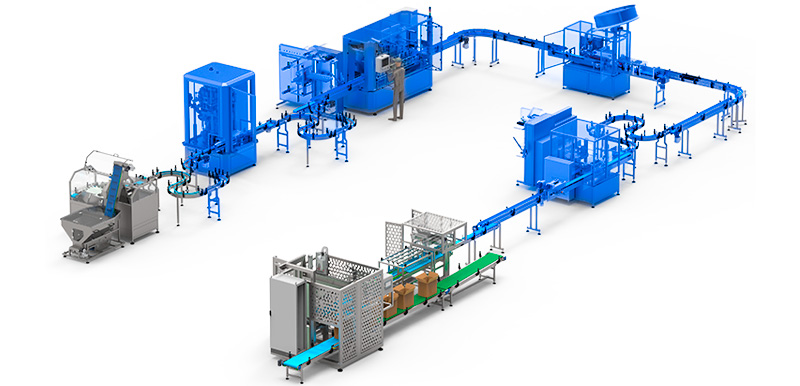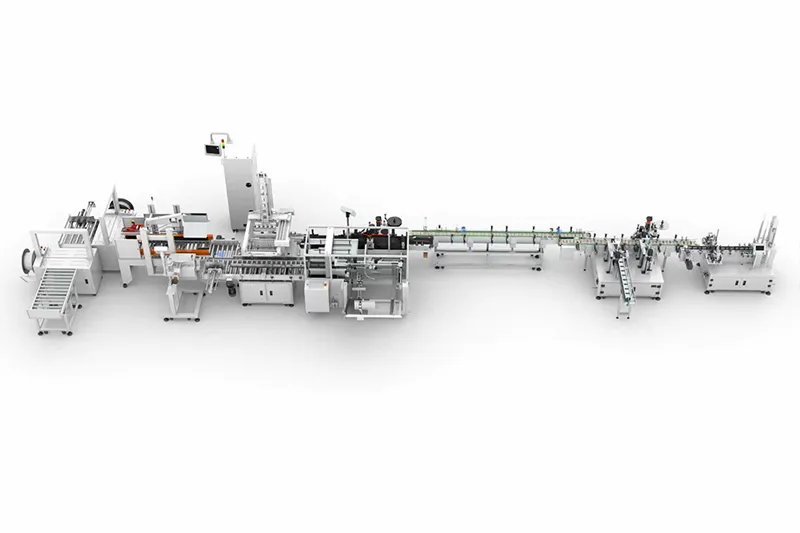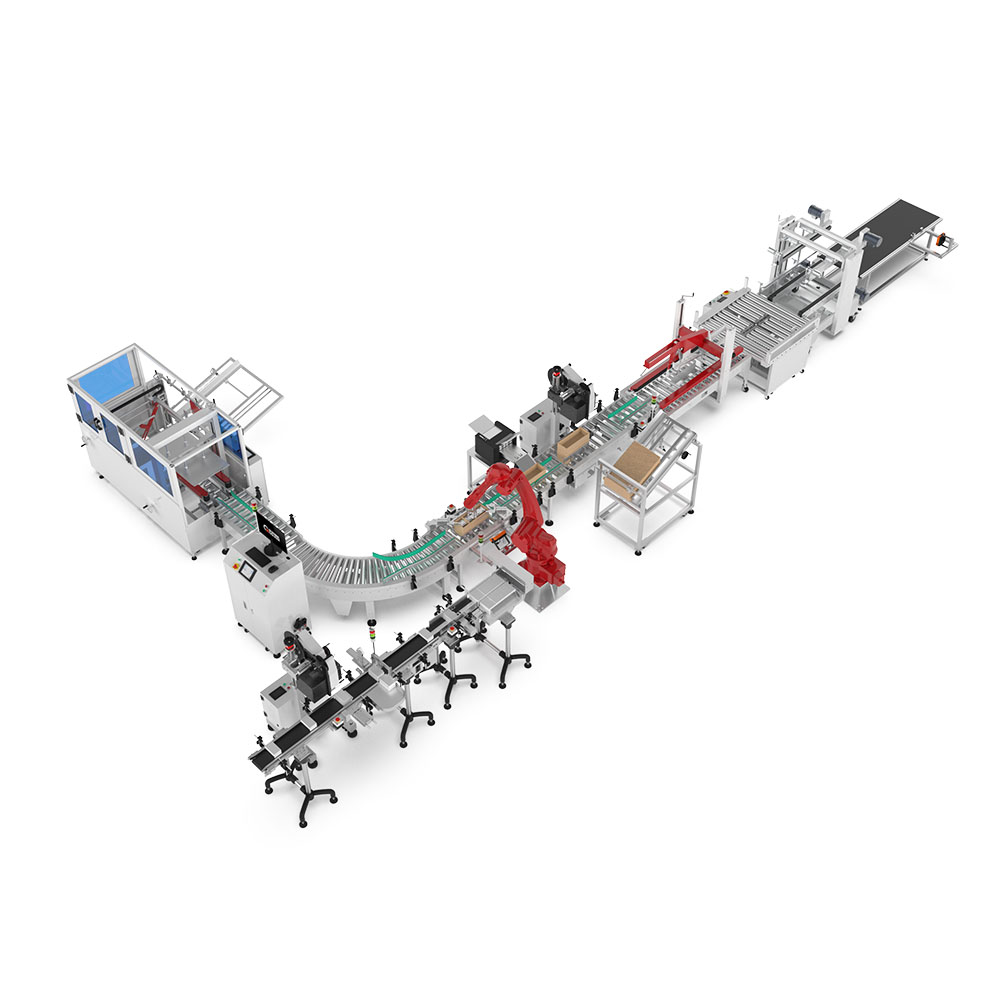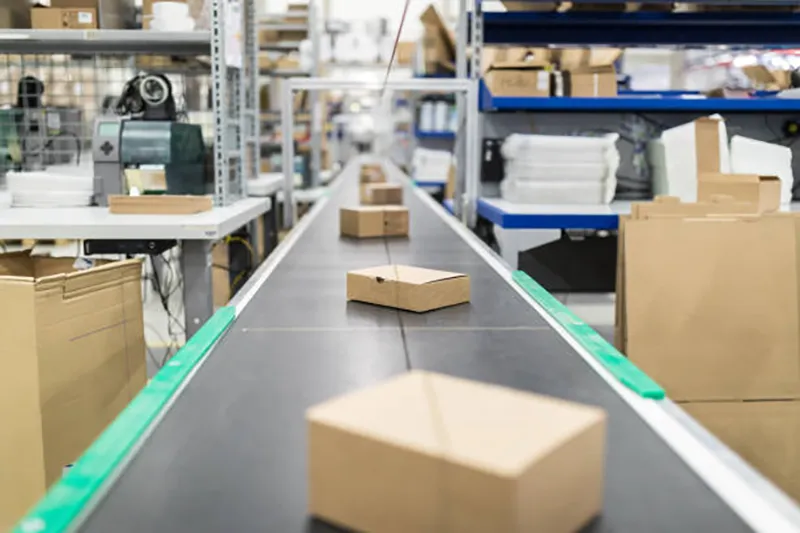
In high-volume manufacturing, End-of-Line (EOL) packaging is often the most critical bottleneck. Relying on manual case assembly, sealing, and palletizing creates severe constraints on line speed, limits throughput, and introduces unpredictable ergonomic liabilities. True End-of-Line automation is not just about replacing human hands with standalone machines; it is about engineering a seamless, synchronized material flow from the final product inspection down to the warehouse-ready pallet.
This Ultimate Guide to EOL Automation explores the technical architecture required to build a fully integrated system. We will break down the mechanical and software components—from high-speed case erectors and servo-driven sealers to complex robotic palletizing cells and automated wrappers. By understanding how to synchronize these units using centralized PLC controls and intelligent buffering, plant engineers can maximize their Overall Equipment Effectiveness (OEE) and achieve a rapid, measurable Return on Investment (ROI).
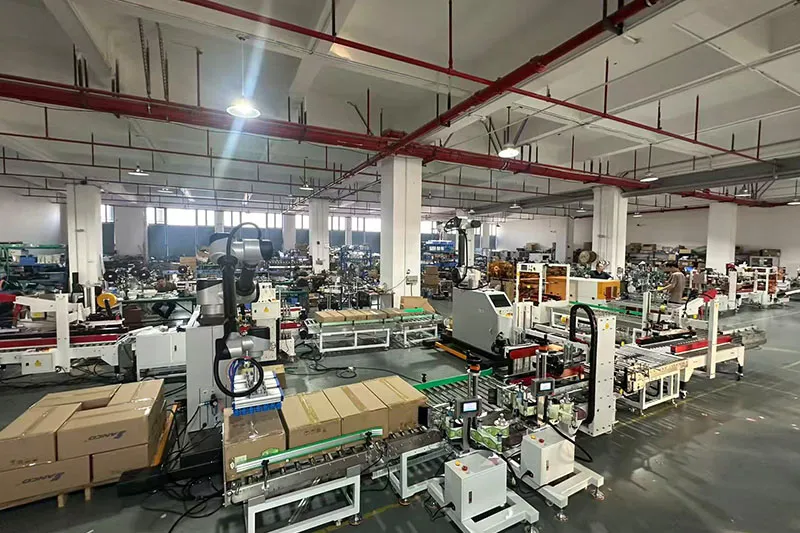
Table of Contents
- Automating Case Preparation: The Case Erector
- Securing the Product: The Case Sealer
- The Powerhouse: Robotic Palletizing
- Ready for Shipment: TheAutomatic Stretch Wrapper
- Cumulative ROI of End-of-Line Automation
1. Automating Case Preparation: The Case Erector
Tired of slow, manual box assembly? The case erector is your solution for fast, consistent case preparation.
The Case Erector automates the process of taking flat cardboard blanks and forming them into open, bottom-sealed boxes, ready for product filling. This machine eliminates manual labor, ensures uniform case dimensions, and significantly increases the speed and efficiency of the initial packaging stage.
1.1 From Flat Blanks to Sealed-Bottom Boxes
The journey of end-of-line automation begins with the Case Erector. This essential machine takes flat, pre-cut cardboard blanks (often called “knock-down flats”) and automatically erects them into three-dimensional boxes. The process involves precise folding along pre-scored lines and then securely sealing the bottom flaps, typically using hot-melt adhesive or adhesive tape. The result is a perfectly formed, open-top box, ready to receive products from upstream filling or packing machines. For example, in a beverage bottling plant, the case erector rapidly prepares cartons to hold multiple bottles, ensuring each carton is consistently square and robust. Joyda Totalpack’s case erectors are designed for high-speed operation and consistent output, providing a reliable foundation for the entire end-of-line process.
| Case Erector Function | Benefit |
| Automatic Folding | Eliminates manual assembly, boosts speed. |
| Bottom Sealing | Ensures structural integrity for filling. |
| Uniform Output | Critical for seamless downstream automation. |
| High Speed | Matches throughput of high-volume lines. |
2. Securing the Product: The Case Sealer
How do you ensure your products are securely enclosed and ready for the next step? The case sealer provides the final, crucial seal.
The Case Sealer automatically closes and seals the top and/or bottom flaps of filled product cases, ensuring product integrity and tamper evidence. It offers consistent, strong seals using either tape or hot-melt glue, significantly boosting speed and reliability compared to manual methods.
2.2 Benefits: Consistency, Strength, and Speed
Automating case sealing delivers significant benefits in consistency, strength, and speed. Manual sealing is slow, inconsistent, and prone to errors, leading to poorly sealed cases that can open during transit, resulting in product damage or loss. An automated case sealer ensures every case is sealed with uniform pressure and adhesive application, creating a consistently strong and reliable closure. This consistency is vital for maintaining product integrity and presenting a professional image. Furthermore, automated sealers operate at much higher speeds than manual methods, keeping pace with high-volume production lines and eliminating bottlenecks. For instance, a pharmaceutical company relies on the consistent, strong seals provided by an automated case sealer to ensure product safety and regulatory compliance, knowing that each case is securely closed.
3. The Powerhouse: Robotic Palletizing
Ready to transform your labor-intensive palletizing into a flexible, precise, and gentle operation? Robotic palletizing is the answer.
Robotic palletizing offers unparalleled flexibility, precision, and gentle handling compared to older mechanical systems, efficiently stacking various box sizes into complex, stable pallet patterns. These robots eliminate manual labor, reduce injuries, and optimize pallet loads for safe transport and storage.
3.1 Contrasting with Old Mechanical Palletizers
For decades, conventional layer palletizers dictated EOL layouts with their massive footprints and rigid mechanical changeovers. Today, robotic palletizing cells—utilizing either high-speed 4-axis delta robots or heavy-payload 6-axis articulated arms—represent the pinnacle of flexible automation.
The true versatility of a Joyda robotic palletizer lies in its custom End-of-Arm Tooling (EOAT). Whether using pneumatic vacuum grippers for delicate displays or mechanical clamping tools for heavy, wet cases, the EOAT is engineered specifically for the product’s center of gravity and fragility.
3.2 Handling Various Box Sizes and Complex Pallet Patterns
Unlike mechanical systems that require hours of retooling, robotic systems handle diverse SKU portfolios dynamically. Through intuitive HMI software, operators can instantly call up pre-programmed Ti-Hi (Tie and High) stacking algorithms. The robot automatically calculates interlocking patterns, optimizing pallet stability and trailer cube utilization without any physical machine adjustments.
Furthermore, modern robotic palletizing is deeply integrated with industrial safety standards. These cells utilize Category 3 / PLd safety architectures, including interlocking perimeter fencing, muting light curtains, and safety laser scanners. This allows forklifts to safely remove finished pallets from one zone while the robot continuously stacks on a secondary pallet, ensuring zero interruption to the upstream case sealers.
4. Ready for Shipment: The Automatic Stretch Wrapper
How do you ensure your perfectly stacked pallets remain stable and protected during transit? The stretch wrapper provides the final, critical layer of security.
Automatic stretch wrappers provide consistent load stability for palletized products, significantly improving safety during transport and storage while reducing film waste. They ensure every pallet is securely wrapped, protecting products from damage, dust, and moisture, and optimizing material usage.
4.1 Consistent Load Stability, Improved Safety, and Reduced Film Waste
The final step in end-of-line automation is securing the palletized load with a Stretch Wrapper. This machine automatically applies layers of stretch film around the entire pallet, binding all the individual cases together into a cohesive, stable unit. The benefits are multifaceted:
- Consistent Load Stability: Automated wrappers apply film with consistent tension and overlap, ensuring every pallet is wrapped identically. This prevents cases from shifting or falling during transport, a common cause of product damage and workplace accidents.
- Improved Safety: Stable loads are safer to handle, reducing the risk of injuries during forklift operations or manual handling.
- Reduced Film Waste: Modern stretch wrappers are designed to optimize film usage, applying only the necessary amount with precise tension. This minimizes material costs and environmental impact compared to inconsistent manual wrapping.
For example, a distribution center shipping fragile electronics relies on automatic stretch wrappers to ensure each pallet arrives intact, protecting valuable goods and preventing costly returns. Joyda Totalpack’s stretch wrappers are engineered for efficiency and reliability, providing the ultimate protection for your products.
5. Cumulative ROI of End-of-Line Automation
Still seeing end-of-line automation as just an expense? It’s a strategic investment with compounding returns.
Automating the entire end-of-line process—case erecting, sealing, and palletizing—delivers significant cumulative ROI by drastically reducing labor costs, minimizing product damage, improving throughput, enhancing workplace safety, and optimizing material usage, leading to a rapid and substantial return on investment.
5.1 The Power of an Integrated System
The true power of an EOL solution is not derived from the individual speed of a case erector or a stretch wrapper, but from the system integration. In a Joyda Totalpack turnkey line, these machines do not operate as isolated islands; they communicate continuously via industrial networks (such as PROFINET or EtherNet/IP).
- Dynamic Buffering (PLC Handshaking): If the stretch wrapper is changing film, it sends a signal upstream. The robotic palletizer slows down, and the case sealer utilizes an accumulation conveyor to buffer the boxes, preventing a catastrophic line jam and protecting the upstream filler’s takt time.
- WMS/MES Connectivity: An integrated line automatically scans barcodes at the case sealing stage, verifies weight, and pushes the finished pallet data directly to the warehouse management system (WMS).
- Compounding ROI: By connecting erecting, sealing, and palletizing into one closed-loop data environment, factories do more than just reduce direct labor by 50-70%. They eliminate end-of-line micro-stops, completely eradicate human stacking errors, and guarantee a 100% accurate, digitally traceable dispatch. This system-wide OEE improvement ensures the entire capital investment typically pays for itself within 18 to 24 months.
Conclusion:
End-of-line automation, encompassing case erecting, sealing, and palletizing, is no longer a luxury but a strategic imperative for businesses aiming to maximize efficiency and profitability. By replacing strenuous, time-consuming manual tasks with integrated, high-performance machinery—from case erectors and sealers to robotic palletizers and stretch wrappers—you can achieve unparalleled consistency, speed, and product integrity. This comprehensive approach not only delivers significant cumulative ROI through reduced labor, waste, and damage but also enhances workplace safety and prepares your operations for future growth.