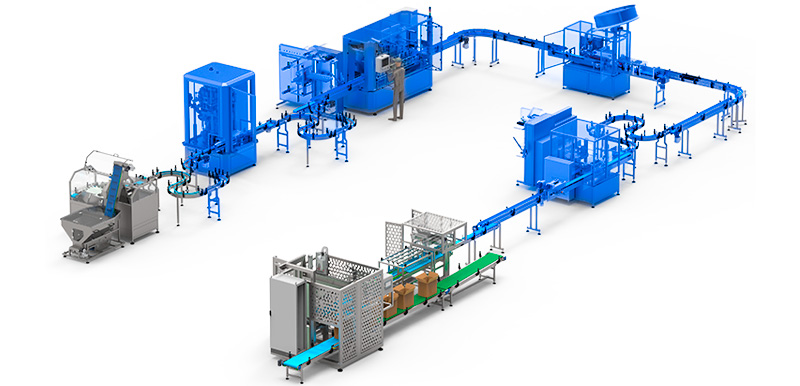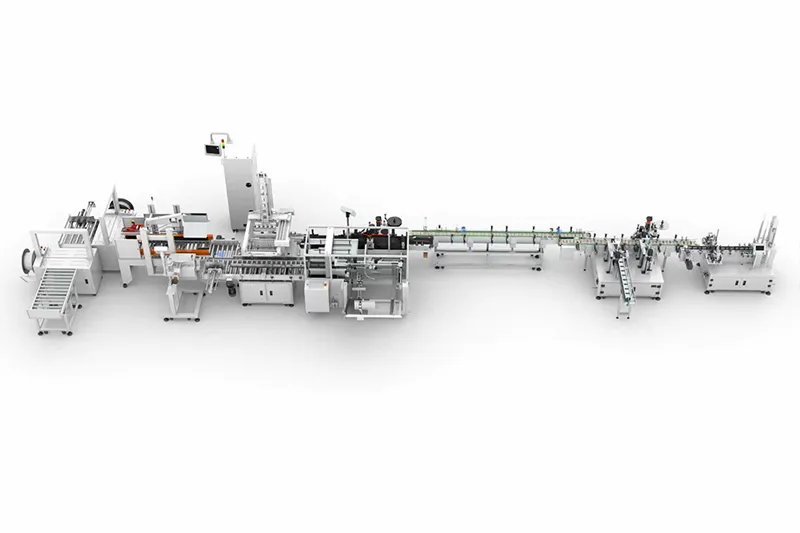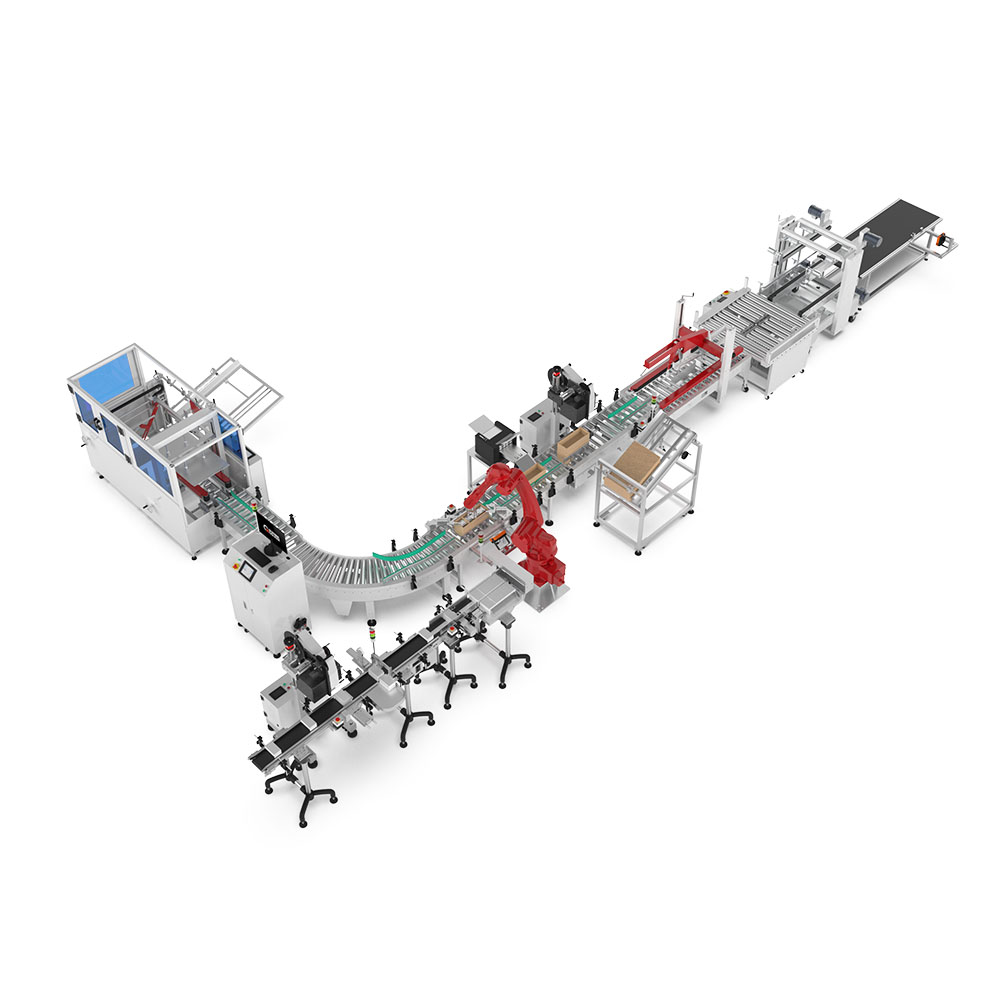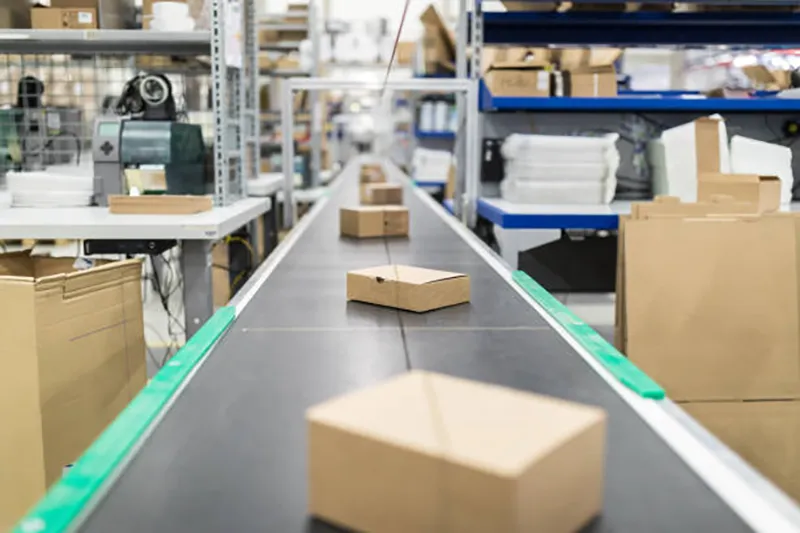
A complete and efficient packaging system operates like a well-conducted orchestra, where each component—from case erectors and checkweighers to cartoning machines, labelers, case sealers, robotic palletizers, and stretch wrappers—plays a vital, integrated role. This seamless automation, orchestrated by central control systems, streamlines output, ensures quality, and maximizes efficiency from start to finish.
Imagine a symphony orchestra where every instrument plays its part in perfect harmony, creating a beautiful, cohesive sound. A modern, efficient packaging line operates in much the same way. Each machine, from the moment a product enters the line until it’s ready for shipment, plays a vital role, contributing to a seamless flow of production. Without proper coordination, the entire process can fall out of tune, leading to bottlenecks, errors, and wasted resources. This guide will introduce you to the essential components of a complete packaging system, highlighting how Joyda Totalpack integrates these elements to create a perfectly orchestrated, high-performance solution for your business.
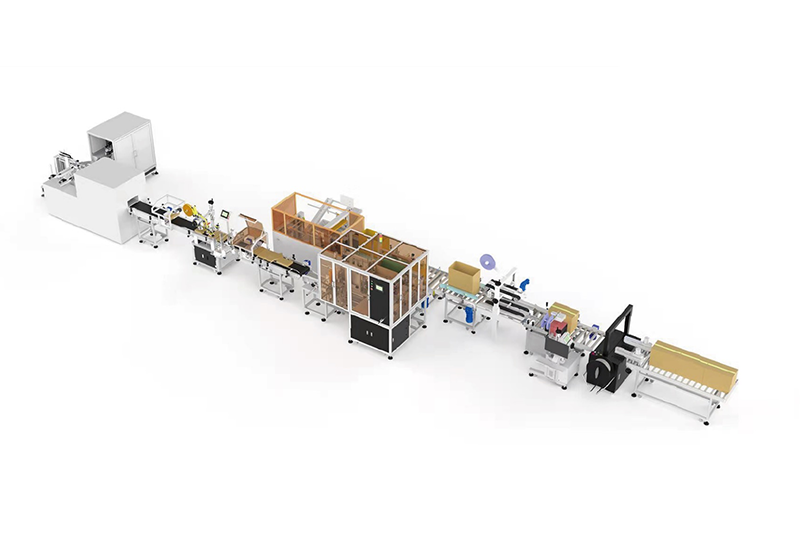
Table of Contents
- The Beginning & Middle of the Line
- The Power of End-of-Line Automation
- The Secret Sauce: Integration and Control
- Seamless Integration: The Key to True Efficiency
The Infographic Flow:
Case Erector → Checkweigher → Cartoning/Filling Machine → Labeling Machine → Case Sealer → Palletizing Robot → Stretch Wrapper
1. The Beginning & Middle of the Line
In a high-throughput manufacturing environment, the secondary packaging journey must start with absolute precision. A completely automated line relies on flawless case erecting and precise weight verification to set a stable, continuous baseline for the entire system, ensuring every subsequent module operates without interruption.
The beginning and middle of a packaging line involve core processes: the Case Erector forms boxes, the Checkweigher ensures product weight accuracy, the Cartoning/Filling Machine inserts products, the Labeling Machine applies identification, and the Case Sealer securely closes the packages, all contributing to product integrity and readiness.
1.1 Core Packaging Modules: Engineering the Front & Middle Line
The initial and intermediate stages of a packaging line are crucial for establishing a stable Takt Time. A truly efficient system utilizes high-performance, servo-driven modules:
- Servo-Driven Case Erectors: Moving beyond pneumatic cylinders, modern erectors utilize multi-axis servo drives to extract corrugated blanks and form perfect 90-degree angles at high speeds. This rigid geometric consistency is absolutely mandatory to prevent jams in downstream robotic loading stations.
- Dynamic Checkweighers: Positioned post-filling, these modules use high-frequency load cells and electromagnetic force restoration (EMFR) technology to measure weights dynamically in milliseconds. They automatically trigger pneumatic rejectors for non-compliant items, driving the Cost of Poor Quality (COPQ) to zero and eliminating product giveaway.
- Automated Cartoning & Filling: Depending on the payload, integration relies on high-speed volumetric fillers or Delta robotic pick-and-place systems equipped with custom End-of-Arm Tooling (EOAT) and machine vision, ensuring damage-free insertion without slowing the conveyor.
- Print-and-Apply Labelers: Operating via high-resolution thermal transfer, these machines apply serialized barcodes and lot numbers dynamically. They sync directly with the factory’s WMS to ensure 100% compliance with traceability regulations like 21 CFR Part 11.
- Continuous-Motion Case Sealers: Utilizing either precisely metered hot-melt adhesive or tamper-evident tape, these sealers close the master cartons securely. Intelligent side-belts self-adjust to varying carton widths, ensuring zero bottlenecks in high-SKU environments.
These machines form the backbone of the packaging process, ensuring products are correctly contained, verified, and identified before the final stages.
| Machine Type | Primary Role | Example Application |
| Case Erector | Forms and seals bottom of empty boxes. | Preparing cartons for bottled beverages. |
| Checkweigher | Verifies product weight, rejects non-compliant. | Ensuring accurate weight of snack bags. |
| Cartoning/Filling | Inserts product into primary packaging. | Filling detergent into bottles. |
| Labeling Machine | Applies product information and branding. | Adding ingredient labels to food jars. |
| Case Sealer | Closes and seals filled cases. | Sealing boxes of books for shipment. |
2. The Power of End-of-Line Automation
How do products transition from individual packages to ready-to-ship units? End-of-line automation is the key.
End-of-line automation, primarily driven by the Palletizing Robot and Stretch Wrapper, is the culmination of the packaging process, transforming individual cases into stable, secure, and transport-ready pallet loads. This prepares goods efficiently for warehousing, distribution, and global shipment.
2.1 End-of-Line Execution: Robotic Kinematics and Load Stabilization
The final stage of a complete packaging system consolidates individual SKUs into warehouse-ready, secure pallet loads. This requires precise mechanical execution to ensure safety and minimize consumable costs.
- Robotic Palletizing Cells: Utilizing 4-axis or 6-axis articulated robotic arms, these cells take over the heavy lifting. Guided by HMI-programmed Ti-Hi (Tie and High) stacking algorithms, the robot precisely interlocks cases to maximize structural stability and trailer cube utilization. Integrated with Category 3 / PLd safety light curtains, these cells allow forklifts to safely remove finished pallets without interrupting the continuous stacking process.
- Automated Stretch Wrappers with Pre-Stretch Technology: Once stacked, the pallet is secured by an automatic wrapper. Instead of just wrapping film, Industry 4.0 wrappers feature powered Pre-Stretch film carriages (stretching the film up to 250% to 300% before it hits the load). This engineering feat not only ensures maximum load containment force to prevent transit shifting but also slashes consumable film costs by over 40% compared to manual wrapping.
3. The Secret Sauce: Integration and Control
What truly makes a packaging line efficient, beyond just having great machines? It’s how they all work together.
The true ROI of an efficient packaging system lies in the seamless integration of all mechanical components via a centralized control architecture. This digital “secret sauce” orchestrates the entire line, ensuring synchronized operation, rapid fault tracing, and optimized overall equipment effectiveness (OEE).
3.1 Synchronized IT/OT Architecture and PLC Handshaking
Deploying high-performance machines is meaningless if they operate as isolated data silos. The defining characteristic of a turnkey packaging line is its IT/OT (Information Technology / Operational Technology) Network Topology.
By networking every machine via industrial protocols like PROFINET, EtherNet/IP, or EtherCAT, the entire line operates through a synchronized master PLC framework.
- Closed-Loop PLC Handshaking (Dynamic Buffering): If the robotic palletizer needs 10 seconds to swap pallets, it sends a digital handshake upstream. The case sealer instantly responds by utilizing an accumulation conveyor to buffer the boxes, preventing line jams and ensuring the upstream filler never stops.
- SCADA & Edge Computing: Using standards like OPC UA, real-time machine data is pushed to a central SCADA dashboard. Plant managers can instantly track OEE, micro-stops, and yield rates.
- Global Recipe Management: When switching SKUs, an operator selects a new recipe on the master HMI. This pushes the new parameters (box dimensions, target weights, label data) across the network to every machine simultaneously, reducing changeover times from hours to mere minutes.
- Predictive Maintenance Analytics: IoT sensors track motor torque and pneumatic cycles, triggering automated alerts before mechanical degradation impacts production.
Joyda Totalpack excels in providing comprehensive system integration, ensuring that all components work together flawlessly, often with custom-developed software that integrates seamlessly with client ERP systems. This level of integration is what truly unlocks maximum efficiency and reliability.
| Integration Aspect | Benefit for Efficiency |
| Centralized Control | Single point of command for the entire line. |
| Machine Communication | Prevents bottlenecks, optimizes flow. |
| Real-time Data | Enables quick problem-solving and process improvement. |
| Recipe Management | Fast and accurate product changeovers. |
4. Seamless Integration: The Key to True Efficiency
What’s the ultimate takeaway for building a high-performing packaging line? It’s about the whole being greater than the sum of its parts.
While each component in a packaging line is vital, their seamless integration and synchronized operation, orchestrated by intelligent control systems, are what truly create maximum efficiency. This holistic approach ensures a smooth, high-throughput, and reliable packaging process from start to finish.
4.1 The Whole is Greater Than the Sum of Its Parts
In the world of packaging automation, it’s easy to focus on the impressive capabilities of individual machines. However, the ultimate truth is that a packaging line’s true efficiency and performance are not determined by the strength of its individual components, but by how seamlessly they are integrated and how effectively they work together. A powerful palletizing robot is only as efficient as the case sealer feeding it, and a high-speed filler is limited by the speed of the case erector.
Joyda Totalpack understands that the “orchestra” must be perfectly conducted. Our expertise lies not just in manufacturing robust individual machines but in designing and integrating complete, turnkey packaging solutions. We ensure that every component communicates, every transition is smooth, and every process is optimized. This holistic approach eliminates bottlenecks, reduces manual intervention, minimizes errors, and maximizes throughput, ultimately delivering a packaging system that is reliable, scalable, and truly efficient. It’s this seamless integration that transforms a collection of machines into a powerful, unified production engine.
Conclusion:
Building a complete and efficient packaging system is like conducting a finely tuned orchestra, where each component plays a vital role in perfect harmony. From the initial case erection and precise checkweighing, through accurate cartoning, labeling, and secure case sealing, to the powerful end-of-line automation of robotic palletizing and stretch wrapping—every step is critical. However, the true magic lies in the seamless integration and central control that orchestrates these machines into a cohesive, high-performance system. This holistic approach ensures streamlined output, consistent quality, and maximum efficiency from start to finish.
Let Joyda Total Pack Orchestrate Your Production Line
Stop letting disconnected machines and manual bottlenecks disrupt your factory’s rhythm. As a premier provider of turnkey secondary packaging solutions, Joyda Total Pack designs, manufactures, and integrates every component under one unified digital control system.
[Request a Systems Integration Audit Today] – Contact our engineering team with your facility’s layout and target throughput. Let us compose a customized, high-speed packaging solution that guarantees seamless efficiency from the first box to the final pallet.
Frequently Asked Questions
1. What are the core components of a packaging system?
Case erector, filler/packer, labeler, case sealer, checkweigher, palletizer, and stretch wrapper—unified by controls.
2. How do the components work together?
PLC handshakes and accumulation buffers let each stage match the line rhythm, preventing bottlenecks.
3. Why is integration more important than speed?
Raw speed means nothing if machines are isolated; synchronized flow is what delivers stable throughput.
4. What role does Industry 4.0 play?
IoT and analytics turn the system into a self-optimizing, predictable line rather than disconnected islands.
5. How do I choose a packaging system provider?
Look for one partner that configures, integrates, and supports the whole line—not piecemeal vendors.
Figures are typical/illustrative industry ranges, shared to help you scope your own line — validate against your actual product mix and throughput.
Component Mix by Plant Profile
Not every plant needs every module. Match the build to the volume tier:
| Plant profile | Recommended core modules |
|---|---|
| Low volume / high mix | Erector + semi-auto packer + sealer |
| Mid volume | + checkweigher + robotic palletizer |
| High volume | + vision inspection + stretch wrapper + MES link |
Over-building a low-volume line wastes capital; under-building a high-volume one creates the bottlenecks this guide set out to remove.