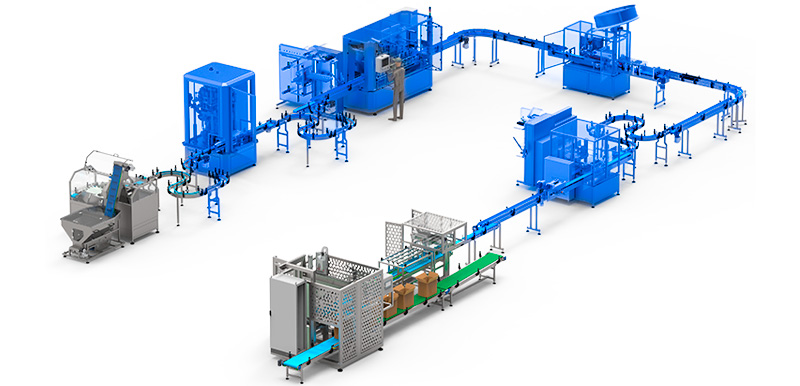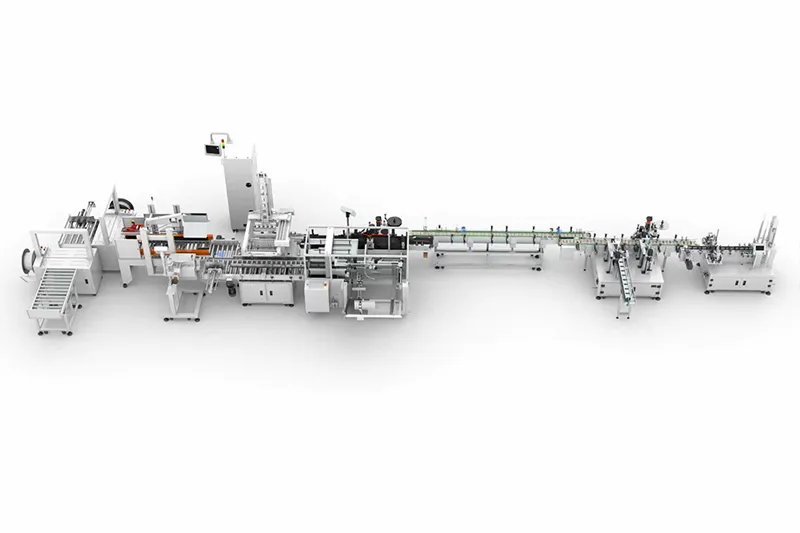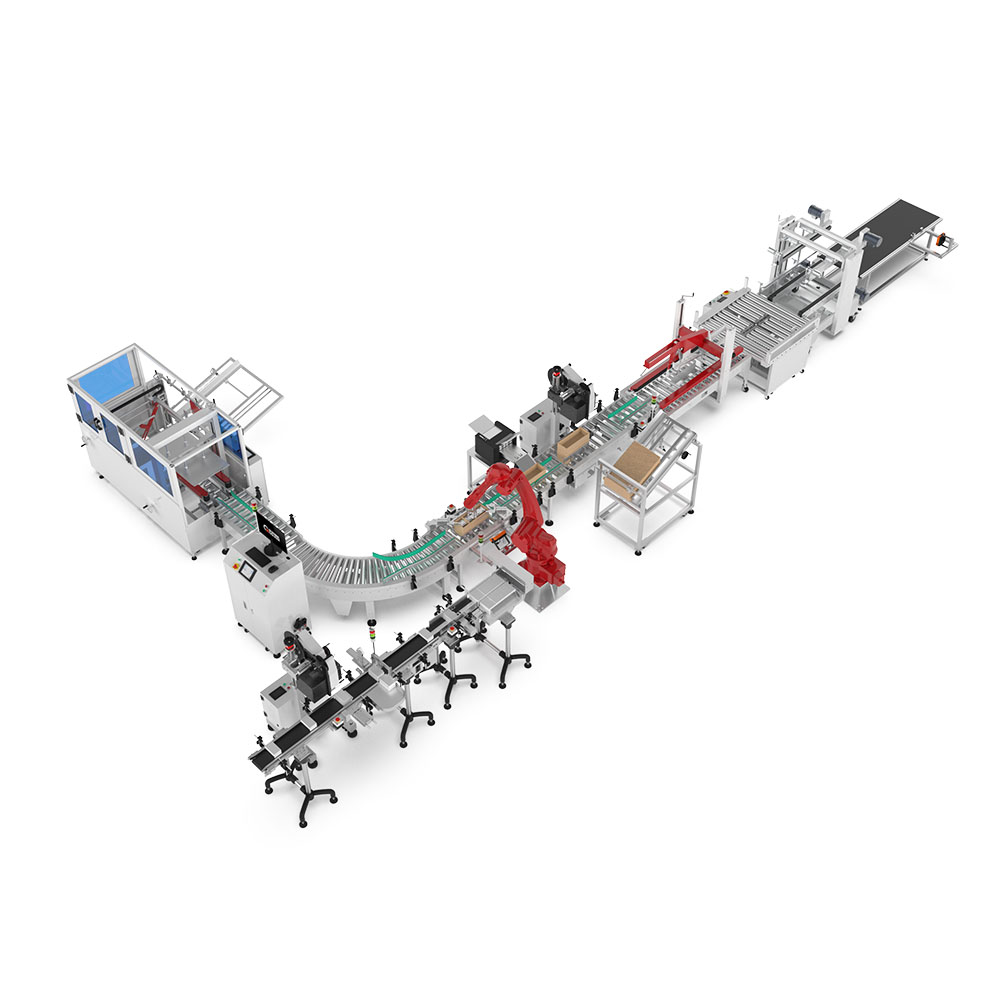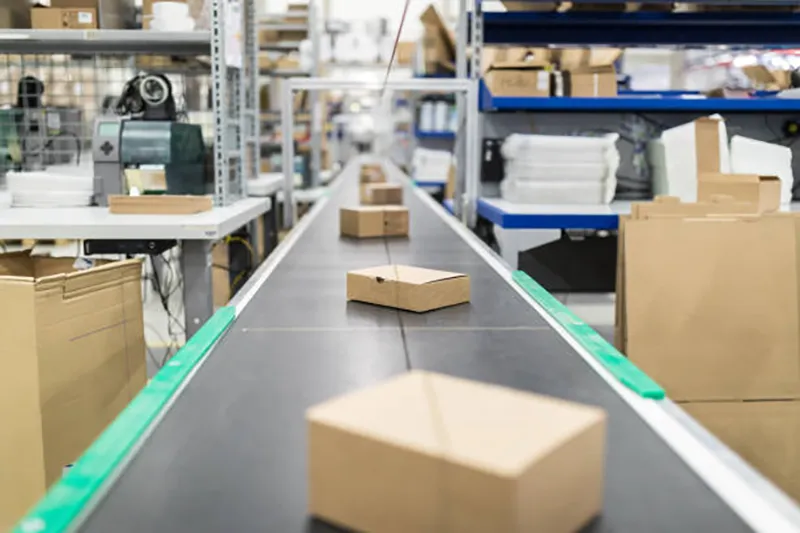
Manual packaging lines often struggle with labor-intensive processes leading to high error rates, increased costs, and bottlenecks in production. These issues aggravate as demand scales, causing inefficiencies and waste. Industry 4.0 introduces smart automation, integrating AI, robotics, and data connectivity to streamline operations, boost productivity, and reduce costs effectively.
Picture your packaging floor overwhelmed by manual tasks: workers fatigued after long shifts, cases misaligned, and products damaged from rushed handling. These real-world headaches slow output and inflate costs. Industry 4.0 shifts this by connecting machines for smarter decisions—but how do you implement it without overwhelming your team or budget? Let’s break down the challenges and proven fixes step by step.
Table of Contents
- What Challenges Do Manual Packaging Lines Face in Modern Industries?
- How Does Industry 4.0 Enable Smart Automation in Packaging?
- What Productivity Gains Come from AI-Integrated Packaging Systems?
- How Do Robotic Palletizers Boost End-of-Line Efficiency?
- What Factors Should Businesses Consider for Adopting Turnkey Industry 4.0 Solutions?
1. What Challenges Do Manual Packaging Lines Face in Modern Industries?
Rising demand and labor shortages hit manual packaging hardest, turning small errors into major bottlenecks that erode profits and frustrate teams daily.
Manual packaging lines grapple with labor shortages, high error rates from human fatigue, inconsistent quality control, and excessive material waste. These issues result in downtime, increased operational costs, and scalability limitations, making it hard for businesses to meet modern production volumes without compromising efficiency or safety.
1.1 Labor Dependence and Cost Escalations
When seasonal peaks hit food and beverage lines, manual packing exposes cracks: workers tire, speeds drop, and turnover spikes. Theoretically, humans adapt to irregularities, but practically, this means 30-50% throughput drops during overtime, as seen in juice bottle packing where fatigue causes fumbles.
In cooking oil facilities, manual spills added 15% waste from misaligned pours. Egg sorters faced 5-10% breakage from hand-handling fragile shells, hiking reject costs.
Economically, labor eats 40-60% of budgets; operationally, variable paces create backups. Test it yourself: Run a time-motion study—clock tasks over 8 hours, tally errors with a checklist. You’ll spot 20-25% defects post-lunch.
Quick Audit Steps:
- Map your line: Note stations taking >2 minutes per cycle.
- Track shifts: Compare morning vs. evening output.
- Calculate costs: Labor hours x wage + waste value.
| Challenge | Impact on Productivity | Quick Test Method |
| High Turnover | 20% downtime from retraining | Review hiring logs last 6 months |
| Fatigue Errors | 25% defect rise after 4 hours | Log errors by shift hour |
| Scalability Limits | Can’t spike 50% volume | Simulate peak day manually |
Cross-training helps short-term, but for lasting relief, audit reveals where automation fits without full overhauls.
1.2 Inconsistent Quality and Waste Management
Human eyes miss defects as shifts drag—error rates double after four hours from variability. Speed vs. precision trade-off? Faster packing means 8% misseals in book lines; carton folds waste 10% materials from imprecision.
Plastic parts labeling saw 12% QR code fails, forcing rework. Sustainability suffers too—extra scraps balloon footprints.
Test: Deploy defect logs pre/post-shift via free apps. Lean mapping pinpoints waste: 90% reductions possible with auto-checks, like vision systems dropping juice line rejects.
Waste Reduction Steps:
- Log defects daily by type (e.g., misalignment).
- Spreadsheet patterns: Correlate with worker hours.
- Benchmark: Aim <2% industry standard.
- Pilot fix: Add lights or breaks first.
| Waste Source | Typical Rate | Lean Fix |
| Misalignment | 8-12% | Jigs/templates |
| Overpacking | 10% materials | Measure templates |
| Rejects | 5-10% fragile goods | Visual aids |
Spot these, and you’ll cut costs 15-20% before big changes.
2. How Does Industry 4.0 Enable Smart Automation in Packaging?
Manual fixes like better training only patch symptoms—Industry 4.0‘s connectivity roots out causes for reliable flow.
Industry 4.0 enables smart automation through IoT connectivity, AI-driven decision-making, and robotic integration, allowing real-time data exchange and predictive maintenance. This transforms packaging lines by automating repetitive tasks, optimizing workflows, and ensuring seamless interoperability between machines for higher productivity.
2.1 Integration of IoT and Data Connectivity
IoT links machines into a live network, predicting jams before they halt lines—setup complexity trades for 40% less downtime. Sensors on conveyors flag issues instantly.
Carton folders adjust vacuum cups via data, slashing setup 40%. Book sealers sync with downstream, upping output 25%.
Technically, analytics forecast needs; costs drop 30% on maintenance. Traceability improves recalls. Start small: Add sensors to one conveyor, dashboard via free tools like Node-RED.
Pilot IoT Steps:
- Pick bottleneck (e.g., conveyor).
- Install $50 sensors (vibration/current).
- Log data 1 week.
- Alert on thresholds.
| IoT Element | Core Function | Measurable Win |
| Sensors | Jam detection | Egg line halts cut 50% |
| Protocols | Data sync | Oil labeling packs match 100% |
| Dashboards | Predictions | Parts maintenance down 30% |
Scale after proving 20% gains—builds buy-in.
2.2 Role of Robotics in Automation
Robots tackle variability humans can’t, like shaped parts—upfront costs offset by 50% speed gains, ROI in 18 months.
Juice grippers hit accuracy without slips; washer arms + CCD sort flawlessly.
Ergonomics cut injuries; test via free sims (e.g., RoboDK trial). Assess payloads: 5-20kg common?
Robot Rollout Checklist:
- Video manual tasks 1 day.
- Match types: Delta for picks, arms for stacks.
- Link to conveyors (PLC basics).
- Train 2 staff on monitoring (1 day).
| Robot Style | Best For | Speed Boost |
| Delta | High-speed pick | 2x manual |
| Articulated | Shapes vary | 50% throughput |
| Gantry | Volumes high | 24/7 steady |
Frees workers for oversight, not grunt work.
3. What Productivity Gains Come from AI-Integrated Packaging Systems?
AI turns data into actions, but without specifics, gains stay vague—focus on measurable jumps like 30-50% throughput.
AI-integrated systems deliver productivity gains by enabling predictive control, optimizing resource allocation, and minimizing errors through machine learning. This results in up to 30-50% throughput increases, reduced waste by 20%, and enhanced quality assurance in packaging operations.
3.1 Predictive Maintenance and Downtime Reduction
Algorithms scan vibrations for failures—privacy vs. 40% less stops. Oil lines flag seals early, save 15% time.
Labelers predict ink; egg weighers reject smartly.
Neural nets crunch data; repairs drop 25%. Log machine stats, try open-source ML (TensorFlow Lite).
DIY Predict Steps:
- Free sensors on key motors.
- Excel trends first.
- Add basic scripts for alerts.
| AI Tool | Targets | Downtime Cut |
| Vibration Scan | Seals/bearings | 40% |
| Anomaly Spot | Weights off | 90% errors |
| Tweaks Live | Speeds | 20% flow |
Proven in pilots: One station first.
3.2 Optimization of Resource Allocation
Genetic algorithms tune on-the-fly—compute load for 18% less strapping waste in parts.
Books: Optimal film cuts; cartons: Packer-erector balance.
Eco: Less scrap; costs 15-25% down. Sim tools (AnyLogic free tier) forecast.
Alloc Steps:
- 1-month usage logs.
- Simple optimizer script.
- KPI track: Waste pre/post.
- Audit Tip: Baseline tape/sheet use, remeasure quarterly.
Quantifies ROI fast.
4. How Do Robotic Palletizers Boost End-of-Line Efficiency?
End-of-line backups kill flow—palletizers fix stacking chaos with 40-60% speed.
Robotic palletizers boost efficiency by automating stacking with precision, handling diverse loads, and integrating with upstream systems. This leads to 40-60% faster operations, reduced labor needs, and improved safety in packaging lines.
4.1 Precision Handling and Speed Enhancements
Vision aligns layers—custom vs. versatile grippers. Eggs: 20 cases/min; oil H-conveyors smooth.
Damage down; time manual vs. robot cycles ( stopwatch test).
Gripper Guide:
- Product test: Fragile? Vacuum.
- Payload calc: Weight x layers.
- Cycle benchmark.
| Type | Handles | Gain |
| Arm | Irregular | 50% stack speed |
| Gantry | Bulk | Layer perfect |
| Collab | Human mix | Safety up |
Baseline your ends first.
4.2 Integration with Stretch Wrappers
Software syncs wrap post-stack—complexity for stable loads, 30% faster.
Flat washers: Post-strap wrap. Mock runs test.
Integrate How-To:
- Flow map.
- Protocol match (Ethernet/IP).
- Sensor cal.
- 10-cycle trial.
Prevents tip-overs, cuts labor 70%.
5. What Factors Should Businesses Consider for Adopting Turnkey Industry 4.0 Solutions?
Jumping in blind risks mismatches—prioritize fit for 2x ROI.
Businesses should consider customization flexibility, integration ease, ROI timelines, and vendor support. Prioritizing these ensures seamless transition, cost savings, and scalability in implementing Industry 4.0 packaging solutions.
5.1 Customization and Scalability Options
Modular beats rigid—bespoke costs vs. growth. Juice adds vision; eggs storage.
Project 2-year volumes. RFP: “Adapt carton to oil?”
| Key | Weigh | Check |
| Mods | Add-ons easy | Labeler plug test |
| Flex | Industries swap | Book-to-egg sim |
| Future | AI-ready | Upgrade paths |
Define needs: Throughput? Products?
5.2 Vendor Support and Implementation Timeline
Expertise speeds 50% launches—dependence vs. self-run. End-to-end cuts multi-supplier hassles.
Vet Steps:
- Credentials: 10+ years similar?
- Cases: Your industry?
- SLAs: 48-hour response?
- RFQ Musts: Pilot option, global installs, training included.
Timeline: 3-6 months realistic.
Conclusion
Tackling manual packaging woes with Industry 4.0—IoT sync, AI predictions, robotic ends—delivers 30-50% productivity jumps by slashing errors, waste, and labor traps. Test audits reveal your gaps; pilot one fix like sensors or palletizers for quick wins. For turnkey setups fitting juice, eggs, or parts lines, evaluate modularity and support to scale confidently, hitting sustainable efficiency without the hype.
Frequently Asked Questions
1. How does Industry 4.0 transform productivity?
By replacing reactive, isolated machines with connected, self-optimizing ones that hold stable throughput.
2. What changes from manual to smart?
Manual checks become sensors; scheduled maintenance becomes predictive; silos become live data.
3. Does it improve quality?
Real-time inspection and self-correction cut defects and rework versus manual sampling.
4. How does it affect labor?
Headcount shifts from repetitive handling to supervision and analysis—often improving retention.
5. What is the first step to transform?
Instrument one bottleneck module, prove the gain, then extend the connected architecture line-wide.
Figures are typical/illustrative industry ranges, shared to help you scope your own line — validate against your actual product mix and throughput.
Phased Roadmap: Manual → Smart (4 Steps)
You do not flip a switch. A low-risk path most plants can follow:
| Step | Action | Outcome |
|---|---|---|
| 1 | Connect one station (PLC + OPC UA) | First live data |
| 2 | Add checkweigher + vision | Quality visibility |
| 3 | Robotic palletize end-of-line | Labor relief |
| 4 | Link MES / dashboard | Closed-loop control |
Each step pays back on its own, so you never bet the whole budget on a single “big bang” upgrade.