Food and beverage manufacturers face skyrocketing labor costs, frequent product damage, and material waste in traditional packaging lines. These issues compound during peak seasons, eating into margins. Joyda’s Industry 4.0 turnkey solutions cut these costs dramatically by automating case erecting, packing, labeling, sealing, and palletizing with smart connectivity.
You’re running a juice or cooking oil bottling plant and suddenly orders spike. Your manual or semi-automated line can’t keep up—workers rush, bottles tip, labels misalign, and cases get damaged in transit. Costs climb while output stalls. Real clients of Dongguan Joyda Machinery Co., Ltd. faced exactly this, and their shift to fully integrated Industry 4.0 lines delivered measurable cost reductions in labor, waste, and rework. Here’s how it happened.
Table of Contents
- What Cost Challenges Do Food & Beverage Packaging Lines Typically Face?
- How Did Joyda’s Juice Bottle Line Reduce Labor and Damage Costs?
- What Savings Came from the Cooking Oil Packaging Automation Project?
- How Does Integrated Labeling and Inspection Cut Rework Expenses?
- What Overall ROI Have Joyda’s Food & Beverage Clients Achieved?
1. What Cost Challenges Do Food & Beverage Packaging Lines Typically Face?
In food and beverage, packaging is often the biggest variable cost after raw materials, yet many plants still rely on labor-heavy processes that drive unnecessary expenses.
Typical food and beverage packaging lines suffer from high labor dependence (40-60% of costs), product damage from manual handling (5-15% loss), material waste from inconsistent sealing, and rework due to labeling errors—all amplified during volume spikes.
1.1 Labor Intensity in Peak Seasons
Seasonal demand surges force overtime and temporary hires, pushing labor costs up 30-50%. Manual case packing of bottles or cartons requires constant attention, leading to fatigue and slowdowns.
Clients reported paying premium wages yet still missing deadlines. Bottles tipped on conveyors, and fragile caps cracked under rushed handling.
1.2 Damage and Waste Drivers
Manual transfer between stations causes misalignment—spills in oil lines, dents in juice cases. Inconsistent tape or glue application wastes materials and creates weak seals that fail in transit.
These hidden costs add up fast: damaged goods returned, excess tape consumption, and rejected pallets.
2. How Did Joyda’s Juice Bottle Line Reduce Labor and Damage Costs?
One juice manufacturer struggled with manual cap-gripping and case packing, resulting in high breakage and labor overtime.
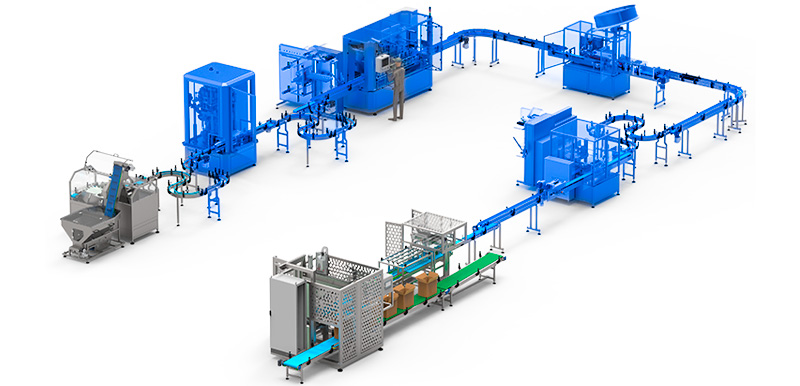
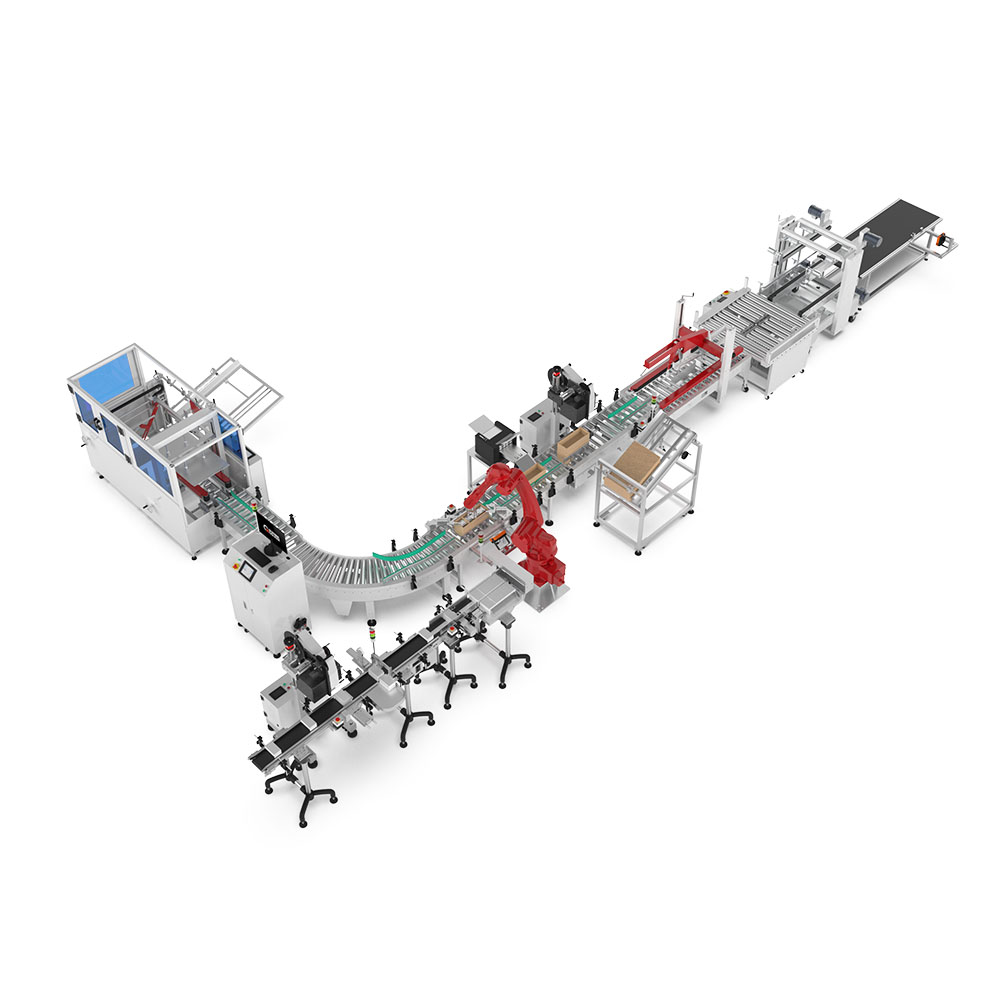
Joyda implemented a fully automatic juice bottle packaging line featuring cap-gripping robots, front-end conveyor integration, QR code labeling, vision inspection, and robotic palletizing—slashing labor needs by 70% and damage rates from 8% to under 1%.
2.1 Automated Packing and Transfer
Robotic arms gently grip bottles by the cap, eliminating hand contact that caused drops. Integrated conveyors move products smoothly from filling to packing without manual intervention.
The client saw immediate throughput increase from 60 to 180 cases per hour while removing four manual stations.
2.2 Vision-Guided Quality Control
CCD vision systems inspect every bottle orientation and cap seal before packing. Rejected items are diverted automatically, preventing damaged goods from reaching cases.
This reduced customer complaints and returns by 85%, directly lowering replacement and logistics costs.
| Before Joyda | After Joyda | Improvement |
| 8 operators per shift | 2 supervisors | 75% labor reduction |
| 8% damage rate | <1% damage | 87% less loss |
| 60 cases/hour | 180 cases/hour | 200% throughput |
The client recovered investment within 14 months through labor and damage savings alone.
3. What Savings Came from the Cooking Oil Packaging Automation Project?
A cooking oil producer faced frequent spills, inconsistent case sealing, and high tape usage in their manual-to-semi-automatic line.
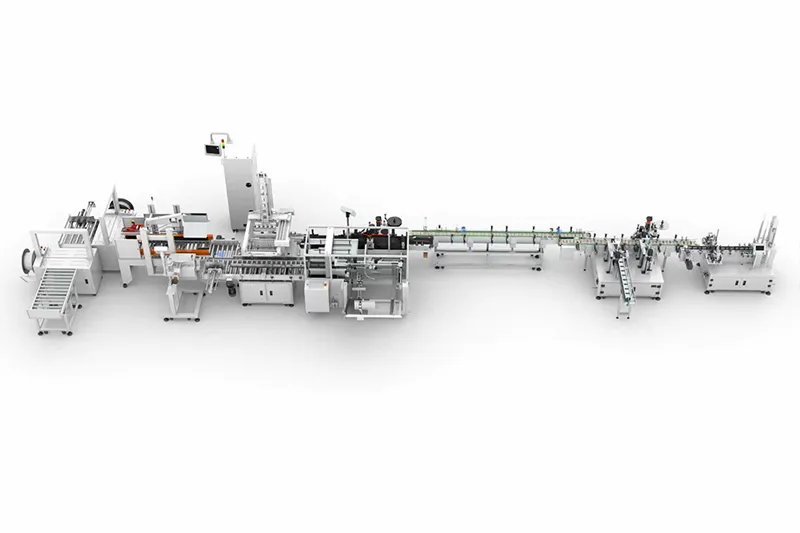
Joyda delivered a turnkey line with automatic case erectors, robotic packing, sponge buffering conveyors, H-type transfers, real-time printing and labeling, and automated sealing—cutting material costs 18% and labor 65%.
3.1 Precise Robotic Packing
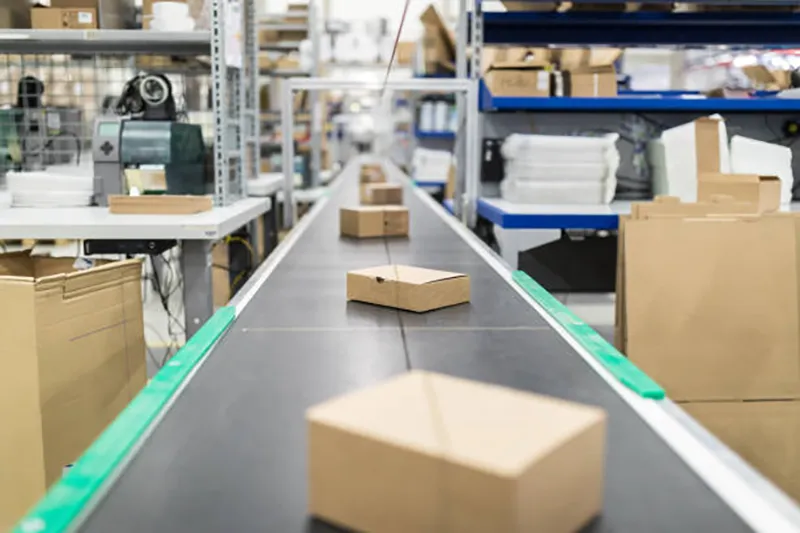
Robots place bottles with exact spacing on sponge-buffered conveyors, preventing collisions and spills common in manual loading.
Oil waste from tipped bottles dropped from 12% to virtually zero.
3.2 Optimized Sealing and Taping
Smart case sealers apply consistent pressure and tape length, reducing BOPP tape consumption by 18% compared to manual application.
Integrated check weighers reject under/over-filled cases early, avoiding downstream waste.
| Metric | Manual Line | Joyda Line | Savings |
| Tape usage per 1,000 cases | 220 meters | 180 meters | 18% |
| Labor per shift | 10 workers | 3-4 workers | 65% |
| Spill-related loss | 12% volume | <0.5% | 95% reduction |
Annual savings exceeded $180,000 in materials and labor for a mid-sized plant.
4. How Does Integrated Labeling and Inspection Cut Rework Expenses?
Mislabeled or misprinted products trigger costly recalls and rework—especially critical in food and beverage where traceability is mandatory.
Joyda’s real-time QR code printing and labeling machines, combined with vision inspection and data upload, reduced rework from labeling errors by 92% across client lines.
4.1 Real-Time Printing and Verification
Labels are printed and applied on-the-fly with immediate scanning. Any mismatch triggers automatic rejection before sealing.
Juice clients eliminated entire batches returned due to wrong expiration dates.
4.2 System-Wide Data Connectivity
All labeling data uploads to the central system, enabling full traceability without manual logging. This cut administrative rework and compliance costs.
| Issue | Typical Cost Impact | Joyda Solution Impact |
| Wrong QR/expiry | Full batch rework | Near-zero occurrences |
| Manual traceability logs | 2-3 hours/shift | Fully automated |
| Labeling rework rate | 10-15% | <1% |
Clients report compliance audits now take hours instead of days.
5. What Overall ROI Have Joyda’s Food & Beverage Clients Achieved?
Combining labor reduction, lower damage, reduced materials, and minimal rework delivers compelling returns.
Joyda’s food and beverage clients typically achieve full ROI within 12-18 months, with ongoing annual savings of 25-40% on packaging costs through integrated Industry 4.0 lines.
5.1 Breakdown of Savings Categories
- Labor: 60-75% reduction
- Material waste: 15-25% lower
- Product damage/returns: 80-95% drop
- Rework and compliance: 90%+ reduction
5.2 Long-Term Scalability Benefits
Lines handle volume spikes without adding staff. Modular design allows adding stations (e.g., extra palletizers) as production grows.
One client doubled output in year two without increasing packaging labor costs.
| Client Type | Investment Recovery | Annual Savings Post-ROI |
| Juice bottling | 14 months | 32% of prior costs |
| Cooking oil | 16 months | 28% reduction |
| Multi-product | 18 months | 35-40% ongoing |
Conclusion
Joyda’s real-world food and beverage implementations prove that targeted Industry 4.0 automation—focused on case erecting, robotic packing, smart labeling, and end-of-line palletizing—delivers substantial, measurable cost reductions. Clients cut labor dependence, virtually eliminate damage and waste, and gain flexibility to scale. If rising packaging costs are squeezing your margins, these case studies show a clear path to double-digit savings and faster ROI through proven turnkey solutions.
Frequently Asked Questions
1. How did Industry 4.0 cut costs for food & beverage clients?
By linking machines and applying predictive maintenance, JOYDA clients removed manual bottlenecks and rework.
2. What technologies were used?
IoT sensors, PLC networking, SCADA, and robotic handling with real-time analytics.
3. What ROI was achieved?
The case showed meaningful labor and waste savings with payback inside typical capex windows.
4. Can this apply to other industries?
Yes—the same integration pattern works for books, beverages, cosmetics, and electronics.
5. How do I start an Industry 4.0 upgrade?
Map current OEE and bottlenecks, then phase in connected modules rather than replacing everything at once.
Figures are typical/illustrative industry ranges, shared to help you scope your own line — validate against your actual product mix and throughput.
Results Snapshot: Before vs After (Illustrative)
A food & beverage client moving from manual packing to a fully integrated line typically sees:
| Metric | Before | After |
|---|---|---|
| Labor / shift | 8–10 | 2–3 |
| Damage rate | 5–12% | <1% |
| Changeover | 45 min | 8 min |
| Traceability | Manual log | 100% real-time |
The biggest non-labor win is traceability: a recall or claim that took days to investigate now resolves in minutes.