For mid-size packaging plants, the choice between robot palletizing and manual stacking is a decision between operational stability and labor dependency. Manual stacking often leads to bottlenecks, high turnover, and inconsistent pallet quality. Robotic palletizing integrates into Industry 4.0 workflows to eliminate these risks, reducing unplanned stoppages by 30–50% and maintaining a consistent rate of 10–15 cycles per minute regardless of shift length.
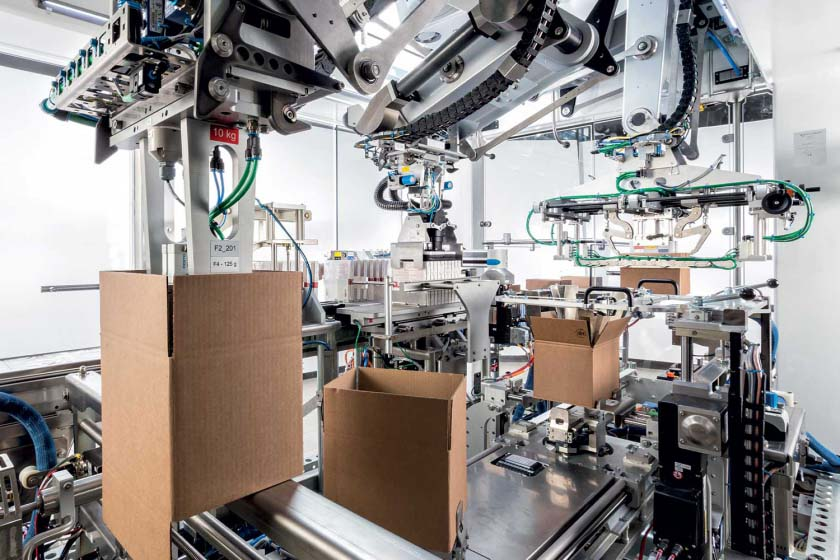
At Joyda Machinery, we recognize that mid-size facilities face a unique challenge: you have enough volume to outpace manual labor, but you require more flexibility than a massive, rigid automation line. Transitioning to a robotic system is not just about replacing hands with grippers; it is about stabilizing your “takt time” and securing your end-of-line data.
- The Labor Trap: Why Manual Stacking Scales Poorly
- Defining Robot Palletizing in an Industry 4.0 Framework
- Throughput Comparison: Cycles Per Minute and Consistency
- Reducing Rework: The Impact of Inline Quality Control
- Maintenance Evolution: Predictive vs. Reactive Strategies
- Case Study: Regional Food Manufacturer’s ROI
- Integration Checklist: Can Your Facility Support Automation?
- Conclusion
1. The Labor Trap: Why Manual Stacking Scales Poorly
In many mid-size plants, the packaging line is often upgraded first, leaving the stacking process as a manual bottleneck.
Manual stacking is inherently labor-intensive, inconsistent, and highly vulnerable to fatigue-induced disruptions. As line speeds increase to meet demand, manual operators struggle to maintain the required pace, leading to “pallet lean,” product damage, and increased safety risks from repetitive heavy lifting. For a facility running multiple shifts, the cost of recruitment, training, and potential workplace injuries often exceeds the amortized cost of a robotic solution.
2. Defining Robot Palletizing in an Industry 4.0 Framework
To evaluate the investment, it is important to understand that modern palletizing is more than just stacking boxes.
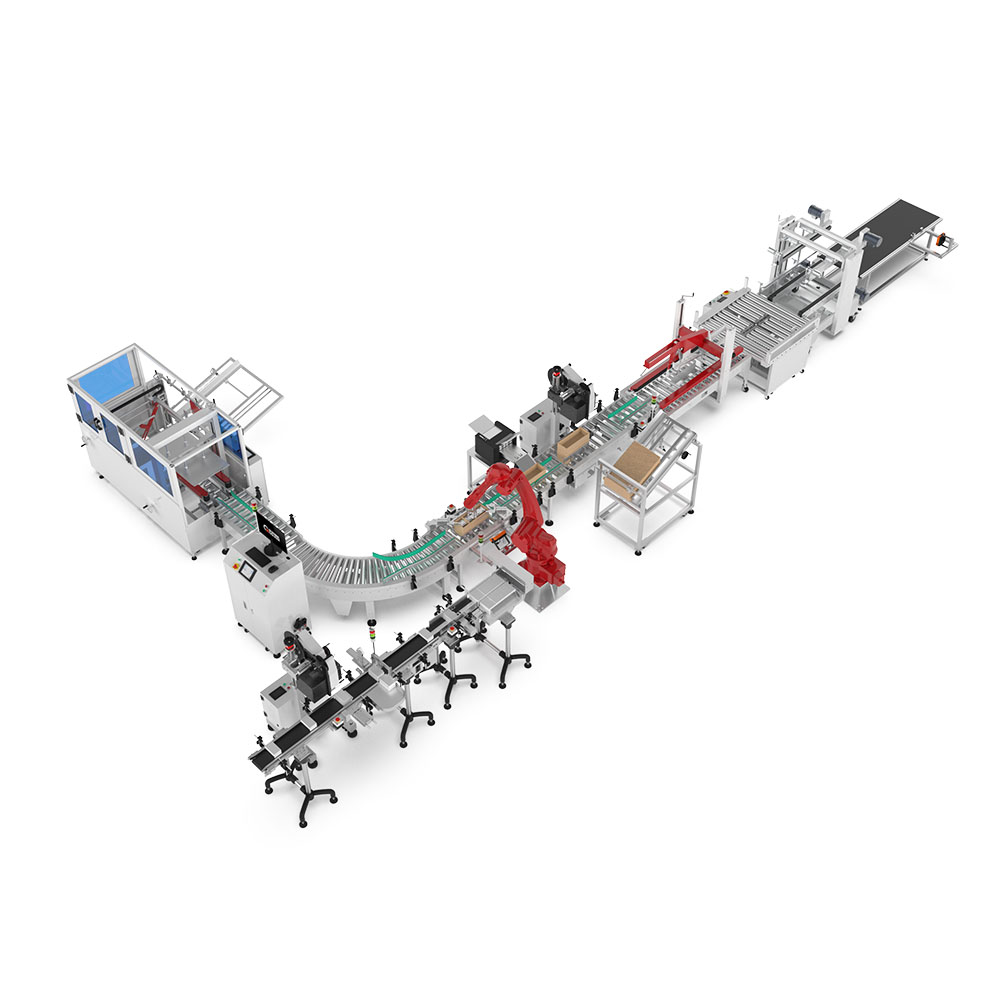
Robot palletizing serves as an integral component of end-of-line automation, connecting packaging, quality control, and pallet stacking into a seamless, data-driven workflow. Within an Industry 4.0 framework, these robots do not work in isolation; they communicate with upstream conveyors and downstream wrappers to provide real-time visibility and standardized reporting, ensuring the entire line operates at a coordinated rhythm.
The Connectivity Advantage
- Centralized Control: Robotic systems can be monitored via SCADA dashboards, allowing production managers to track pallet counts and machine status remotely.
- Standardized Geometry: Unlike manual stacking, a robot ensures every box is placed with millimeter precision, which is critical for the stability of pallets during long-distance shipping.
3. Throughput Comparison: Cycles Per Minute and Consistency
When we look at the raw data, the performance gap between a human and a robot becomes clear over the course of an eight-hour shift.
Typical automated palletizing robots in industrial settings can handle 10–15 cycles per minute or more, maintaining this rate 24/7 without pauses. Manual stacking rates may match this in short “sprints,” but human performance inevitably fluctuates due to fatigue and environment. Robotic systems provide a predictable daily output, which is essential for accurate logistics planning and meeting strict shipping windows.
Performance Comparison Table
| Metric | Manual Stacking | Robot Palletizing |
| Average Speed | 5–8 cycles/min (sustained) | 10–15+ cycles/min |
| Consistency | Variable (Decreases with fatigue) | Constant (100% uptime) |
| Accuracy | ±10–20mm variance | ±0.5mm precision |
| Shift Availability | Limited by labor shifts | 24/7 continuous operation |
In our Books Packaging System, we apply these palletizers to handle heavy, dense bundles. By replacing manual stacking, the system achieves a higher throughput while ensuring that delicate book covers are not damaged by inconsistent handling.
4. Reducing Rework: The Impact of Inline Quality Control
A major “hidden cost” in packaging is the rework required when a pallet is rejected by a customer or damaged in the warehouse.
Automated inspection and weighing modules embedded in automated lines can lower rework and error rates by 25–35% relative to manual operations. When robotic palletizers are integrated with automated check-weighers and vision sensors, the system ensures that only 100% accurate cartons reach the pallet. This indirectly benefits pallet quality and significantly increases customer satisfaction by eliminating shipping errors.
Two Angles of Quality Analysis:
- Theoretical Basis: By utilizing sensors to verify carton weight before the robot picks it, we prevent the palletizing of “short-count” boxes.
- Practical Impact: For a mid-size manufacturer shipping 50 pallets a day, a 25% reduction in errors can save thousands of dollars monthly in return logistics and administrative overhead.
5. Maintenance Evolution: Predictive vs. Reactive Strategies
The strategic value of a robotic system extends into how you manage your facility’s uptime.
In a fully automated packaging line with Industry 4.0 integration, unplanned stoppages can be reduced by 30–50% through predictive maintenance. Rather than waiting for a component to fail (reactive), robotic systems monitor motor torque, temperature, and cycle counts to alert maintenance teams before a breakdown occurs. This transition from “fixing” to “managing” ensures that the line remains a high-yield asset.
- Example 1: A vibration sensor on the robot’s main axis identifies a bearing wear pattern two weeks before a failure would have occurred.
- Example 2: Automated grease dispensers maintain the robotic joints based on actual cycle counts rather than a fixed calendar date.
6. Case Study: Regional Food Manufacturer’s ROI
Real-world implementation proves that the shift from manual to robotic is transformative for mid-size plants.
A regional food manufacturer recently upgraded from multiple independent packing stations to a full Industry 4.0 integrated packaging line, including robotic palletizing. The impact on their labor structure was immediate: they reduced their manual palletizing staff from 8 per shift to just 2 supervisory roles. These remaining staff members now focus on quality oversight and replenishing consumables rather than heavy lifting.
Key Outcomes:
- SKU Flexibility: The manufacturer achieved faster SKU changeovers via the HMI (Human-Machine Interface), allowing them to switch between different box sizes and stack patterns in under five minutes.
- Predictable Output: The system provided early maintenance warnings, preventing a potential shutdown during their peak seasonal demand.
- Result: The factory now maintains a stable, high-yield output that is no longer dependent on the volatility of the local labor market.
7. Integration Checklist: Can Your Facility Support Automation?
Before moving from manual to robot, you must assess your facility’s infrastructure.
- Floor Space: Do you have the necessary footprint for the robot and the safety guarding/light curtains?
- Upstream Stability: Is your case sealer providing a consistent flow of boxes? Robots thrive on rhythm.
- Utility Requirements: Do you have the required 480V power and clean, dry compressed air for pneumatic grippers?
- Technical Staff: Do you have (or are you willing to train) a technician to handle basic HMI operations and system resets?
8. Conclusion
For mid-size packaging plants, robot palletizing is no longer a luxury reserved for the Fortune 500. It is a strategic necessity for those looking to scale. By integrating robotic stacking into an Industry 4.0 framework, you solve the chronic issues of labor fatigue and inconsistent throughput. The data is clear: a 30–50% reduction in downtime and a significant decrease in rework rates provide a compelling ROI that manual stacking simply cannot match.
Frequently Asked Questions (FAQ)
1. Is robot palletizing too expensive for a mid-size plant?
While the initial CapEx is higher than hiring staff, the ROI typically occurs within 18–24 months when factoring in labor savings, reduced insurance premiums, and increased throughput.
2. How difficult is it to change stacking patterns for new products?
Modern robotic systems use “Pallet Patterns” software. You can create or select a new pattern via the HMI touchscreen without needing to write a single line of code.
3. What is the typical footprint of a robotic palletizer?
A standard single-cell robotic palletizer typically requires an area of roughly 4m x 4m, including safety fencing.
4. Can a robot handle multiple lines at once?
Yes. High-reach robots can often be configured to palletize from 2 or 3 separate production lines simultaneously, further increasing their value.
5. What happens if the robot breaks down?
With Industry 4.0 predictive maintenance, most issues are flagged before a breakdown. However, most systems include a manual bypass mode or are backed by 24/7 remote support to ensure minimal downtime.
6. Can robots handle heavy loads?
Absolutely. Industrial robots can handle payloads from 10kg to over 1,000kg, depending on the model, far exceeding human lifting capacities.
7. Does the system integrate with my existing ERP?
Yes. Joyda’s solutions are designed to communicate with standard ERP systems to provide real-time inventory and production data.
Would you like me to create a “Palletizing ROI Calculator” worksheet to help you estimate the exact payback period for your specific facility’s labor costs and throughput?
Frequently Asked Questions
1. Robot or manual palletizing—which is better?
For mid-size plants with steady or growing volume, robots win on consistency, safety, and labor cost.
2. What payload can robotic palletizers handle?
Configurable cells cover cartons, bags, and totes; size the robot to max case weight and reach.
3. How much labor can be saved?
One cell often replaces 1–2 manual stackers per shift, reallocating them to supervision.
4. Are robotic palletizers flexible?
Recipe-driven patterns (Ti-Hi) switch between SKUs in minutes without mechanical changeover.
5. What is the ROI of robotic palletizing?
Savings come from labor, fewer drop injuries, and tighter loads that cut transit damage.
Figures are typical/illustrative industry ranges, shared to help you scope your own line — validate against your actual product mix and throughput.
Breakeven Math: Robot vs Manual Palletizing
A simple way to see when robotics pays for itself:
| Factor | Manual | Robot |
|---|---|---|
| Labor (1 shift) | 2 operators | 0.3 operator |
| Cycles/min | 4–6 | 10–15 |
| Injury / claim risk | High | Low |
| Breakeven | — | ~18–30 mo |
For multi-shift plants the breakeven collapses toward the low end, because the labor saving compounds across every shift.