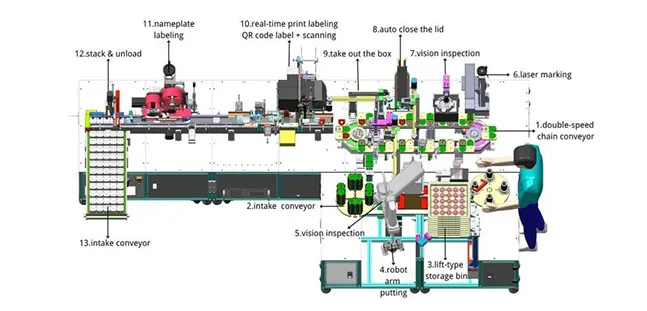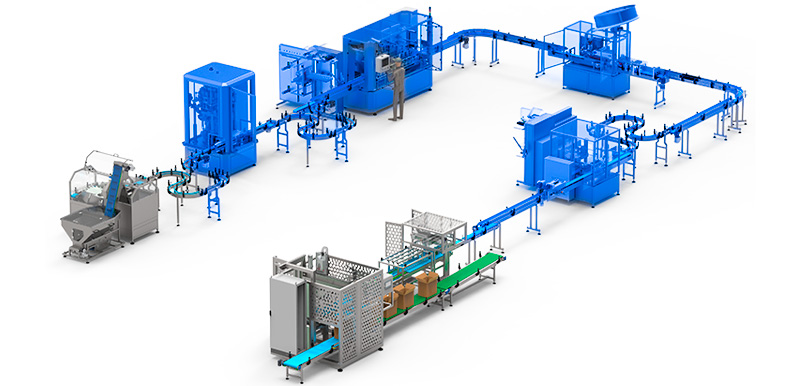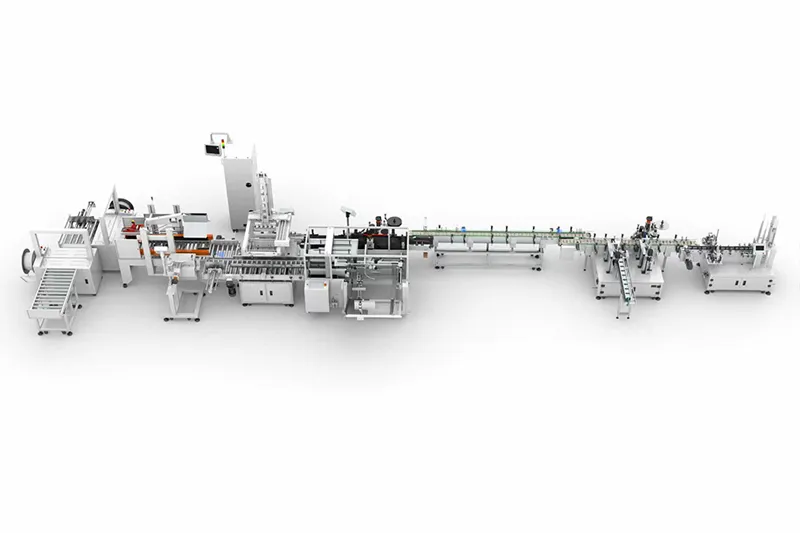
Scoping a high-volume flat washer packing production line starts with one deceptively simple step: counting. Flat washers are not bolts or nuts—their thin, oil-coated, overlapping geometry defeats the photo-eyes and vibratory bowls built for hardware. Running them through a generic small-parts packer produces silent inventory giveaway, short-count returns, and chronic rework. Choosing an automatic flat washer packing machine built for small parts counting is what separates a line that protects your margin from one that quietly eats it. A dedicated flat washer counting machine is engineered around exactly those failure modes. This buyer-focused guide lays out the twelve commercial reasons the dedicated machine pays for itself, the self-test thresholds that tell you when to deploy one, and the five questions that separate a real washer counter from a relabeled generic packer.
Table of Contents
- Why Generic Packers Miscount Flat Washers
- The 4 Hidden Losses of Small Parts Counting Flat Washers on Generic Machines
- Top 12 Reasons an Automatic Flat Washer Packing Machine Pays for Itself
- When Do You Actually Need a Dedicated Counter? (Self-Test Thresholds)
- 5 Questions to Ask Any Supplier Before Buying
- Adding a Dedicated Counter to a Full Line: Cost and Payback
- Conclusion
Why Generic Packers Miscount Flat Washers
Before the twelve reasons, understand the physics. A flat washer is a thin disc with a high surface-area-to-thickness ratio and, in most production batches, a film of stamping oil or rust-preventative coating. Three behaviors routinely break generic counting:
- Oil-Induced Shingling: Two oily washers stick together like wet coins and pass a single photo-eye as one part. The packer believes it counted 500; the bag holds 499—or 501 if the pair later separates.
- Edge Deformation in Generic Chutes: Sharp stamped edges catch on standard guide rails, bending the washer and corrupting both count and part quality.
- Bowl Overload Flooding: A forklift-dumped hopper can raise local pressure at the feeder inlet by 30% to 40%, bridging the track and spilling parts onto the floor.
A flat washer packing production line built as one system neutralizes these behaviors at the feeder. A standalone generic packer does not.
The 4 Hidden Losses of Small Parts Counting Flat Washers on Generic Machines
Engineering teams often discover the cost of generic counting only after a customer complaint. The four losses below are the ones that actually hit the P&L:
- Short-Count Returns: A shingled pair misread as one washer means every affected bag is short. On a 500-piece M8 kit at a 1.8% shingling rate, that is roughly 9 washers short per 500,000-bag annual run—about 9,000 washers of unplanned giveaway plus the return-shipping and restocking cost.
- Deformation Rejects: Generic chutes that bend washers create a reject stream your customer never ordered. Rejected parts cannot be silently reintroduced without re-counting, which doubles handling labor.
- Jam and Spill Downtime: Bowl overload from an unmetered hopper stalls the line. Every unplanned stop costs the throughput of the entire downstream bagging and cartoning sequence, not just the feeder.
- Manual Recount Labor: The fallback “solution” is a second operator re-checking counts by hand. At a fully burdened $18 to $28 per hour, one part-time rechecker drains $37,000 to $58,000 per year from the line’s contribution margin.
The gap is visible side by side:
| Evaluation Factor | Generic Small-Parts Packer | Dedicated Flat Washer Counter |
|---|---|---|
| Counting accuracy on oily washers | ±2% to ±5% (shingling blind spot) | ±0 pieces (vision-verified, zero-minus) |
| Sustainable speed | 15 to 25 bags/min (stalls on oil) | 50 to 60 bags/min |
| Changeover between sizes | 25 to 40 minutes | 5 to 10 minutes |
| Annual giveaway at 12M bags | 1.2% to 1.8% | <0.1% |
| Line integration (upstream handshake) | None (standalone) | OPC-UA / Ethernet/IP ports |
Top 12 Reasons an Automatic Flat Washer Packing Machine Pays for Itself
Each reason below is framed as a commercial outcome—what it removes from your cost stack or adds to your reliability—not as a feature bullet.
1. It Eliminates Oil-Shingling Giveaway at the Source
A dedicated machine pairs a dimpled polyurethane bowl lining with angled air-knife jets and a mechanical wiper set to 1.5× nominal thickness. That three-stage separation breaks the surface tension that makes oily washers stick. The giveaway that generic packers hide (1.2% to 1.8%) collapses to under 0.1%.
Decision note: If your annual washer volume exceeds 5 million bags, even a 1% giveaway recovery funds the dedicated machine inside a single year.
2. It Stops Double-Counting on Photo-Eyes
Single-beam photo-eyes cannot tell a shingled pair from one washer. Area-scan vision algorithms measure the geometric silhouette of every falling washer and divert overlapping pairs at the reject gate before sealing. The result is a true zero-minus count, not an estimated one.
3. It Protects Washer Flatness
Sharp stamped edges deform in generic guide chutes, producing rejected or out-of-spec parts. A dedicated counter routes washers through low-impact, polished guide tracks that hold thickness tolerance within ±0.05 mm, preserving the flatness your customers specify.
4. It Sustains 50 to 60 Bags per Minute
A generic packer tuned for dry fasteners typically stalls at 15 to 25 bags per minute once oil enters the bowl. A dedicated washer feeder holds 50 to 60 bags per minute because the track and air-knife are calibrated for the washer’s mass and coating, not adapted from a bolt profile.
Decision note: At 60 bags/min versus 20, a dedicated counter triples throughput on the same floor space—often deferring a second production shift.
5. It Delivers Exact-Count Kits (Zero-Minus Tolerance)
Distributors reselling 50-, 100-, or 500-piece kits cannot tolerate a short count. Vision counting guarantees ±0 pieces, whereas a generic packer’s ±2% means 10 missing washers on a 500-piece kit—a guaranteed complaint.
6. It Removes Manual Recount Labor
Because the count is verified inline, the second operator previously assigned to hand-rechecking bags is no longer needed. That is 0.5 to 1 fully burdened FTE recovered, worth $18,000 to $58,000 per year depending on shift pattern.
7. It Avoids Customer Line-Down Chargebacks
Automotive and aerospace tier-1 buyers impose line-down penalties when a short-count kit stops their assembly line. Those charges commonly run $2,000 to $10,000 per event. A dedicated counter’s zero-minus accuracy is the cheapest insurance against them.
8. It Provides Triple Verification, Not a Single Sensor
A purpose-built washer counter combines optical counting, in-line checkweighing, and vision rejection into one quality gate. Broken, folded, or foreign slugs are caught at the reject arm, not by your customer’s receiving inspection.
9. It Runs Quiet Enough for the Floor
Generic packers often exceed 85 dB at the bowl. A dedicated counter with a sound-dampened hood operates below 75 dB, keeping your cell inside occupational-noise compliance without ear protection zones.
10. It Changes Over in 5 to 10 Minutes
Modular interchangeable bowls and quick-release forming collars let one machine cover M3 to M24 washers. Changeover drops from the 25 to 40 minutes a generic packer needs to a sub-10-minute recipe swap—critical when you run 10+ SKUs per day.
Decision note: If you change washer size more than three times per shift, changeover time—not speed—is your real bottleneck. Prioritize quick-release tooling over a higher peak rate.
11. It Integrates Into a Full Line by Design
A standalone generic packer has no handshake. When the downstream case packer jams, the counter keeps dumping washers onto the floor. A dedicated counter ships with OPC-UA or Ethernet/IP ports and a single HMI recipe, so it pauses upstream on any downstream fault—exactly the architecture a complete flat washer packing line requires.
12. It Cuts Quality-Claim and Recall Exposure
For safety-critical washers (brake, suspension, structural), a miscount is a compliance event, not a nuisance. A dedicated counter’s audit-grade log of every rejected part and every sealed count is defensible evidence in a traceability dispute.
When Do You Actually Need a Dedicated Counter? (Self-Test Thresholds)
Not every washer packer needs the full dedicated treatment on day one. Use this threshold table to place your operation:
| Your Situation | Recommendation | Reasoning |
|---|---|---|
| Under 5,000 bags/shift, single SKU | Manual or semi-auto packer acceptable | Giveaway and labor cost too small to justify automation |
| 5,000 to 15,000 bags/shift, 3 to 10 SKUs | Dedicated counter strongly recommended | Giveaway recovery + labor saving already funds it |
| Over 15,000 bags/shift, multi-SKU | Dedicated counter inside a full line | Throughput and changeover dominate |
| Any exact-count kit to automotive/aerospace | Dedicated counter mandatory | Zero-minus tolerance is a contract requirement |
| Measured giveaway above 1% | Dedicated counter mandatory | Recovery alone pays it back within 12 months |
5 Questions to Ask Any Supplier Before Buying
A “washer counter” label on a generic packer is easy to fake. These five questions expose the difference:
- What is your anti-overlap method? Accept only a combination of dimpled track lining, air-knife separation, and a mechanical wiper at 1.5× thickness. A single photo-eye is not an answer.
- Do you offer triple verification (count + weigh + vision)? If the machine cannot reject a shingled or broken pair before sealing, it is not purpose-built for washers.
- What is the noise level with the hood closed? Insist on a documented sub-75 dB figure, not a marketing claim.
- What size range and changeover time do you support? Demand M3 to M24 coverage with under 10-minute changeover via quick-release tooling.
- What integration ports ship standard? Require OPC-UA or Ethernet/IP and a unified HMI recipe so the counter can later bolt into a full line without replacing controls.
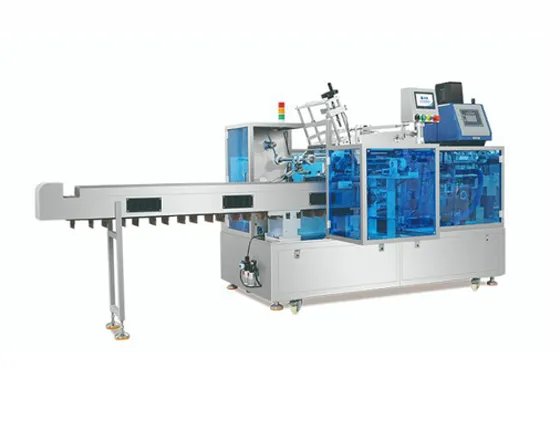
Adding a Dedicated Counter to a Full Line: Cost and Payback
When you already run, or plan to run, a complete system, the dedicated counter is one station among ten. The incremental business case is straightforward:
| Line Element | Generic Counter | Dedicated Counter | Annual Impact |
|---|---|---|---|
| Equipment premium | Baseline | +$15,000 to $30,000 | One-time |
| Giveaway at 12M bags (1.2%) | ~$58,000 lost | Recovered | +$58,000 |
| Manual recount labor | 1 FTE (~$26,000) | Removed | +$26,000 |
| Quality-claim avoidance | Variable | Reduced | +$10,000 to $40,000 |
| Total annual benefit | — | — | ~$94,000 to $124,000 |
Against a $15,000 to $30,000 premium, the dedicated counter pays back in roughly 4 to 9 months before any quality-claim reduction is counted. For the full economic model across all ten stations, see our breakdown on manual vs. automatic flat washer packing ROI.
For the quality-gate dimension—how vision inspection catches the defects a counter alone cannot—review our guide on vision inspection for fastener counting accuracy. And when you are ready to specify the whole system, our flat washer packing machine buyer’s guide walks the full selection sequence.
Conclusion
A flat washer is the worst-case part for a generic packer and the best-case justification for a dedicated counter. The twelve reasons above all trace back to one physics fact: thin, oily, overlapping discs defeat single-sensor counting. Specifying a machine engineered for that behavior—dimpled anti-shingle feeding, vision-verified zero-minus counting, quiet modular changeover, and native line integration—recovers giveaway, labor, and chargeback exposure fast enough to pay back in under a year. Use the threshold table to confirm you are in the “dedicated” zone, then put the five supplier questions to any vendor before you sign.
As a dedicated one packaging partner and end-of-line solutions integrator, JOYDA helps fastener distributors, hardware OEMs, and contract packagers configure, integrate, and commission washer counting and bagging workflows tailored to your exact SKU mix. Download our “Flat Washer Counter Selection Checklist”—or send us your washer dimensions, bag weights, and daily volume today, and we will return a matched configuration and quotation within 48 hours.
FAQ
What counting accuracy can a dedicated flat washer counter achieve?
A purpose-built washer counter with vision verification delivers zero-minus accuracy (±0 pieces) on small kits, versus the ±2% to ±5% a generic photo-eye packer typically shows on oily washers. Triple verification (count + weigh + vision) keeps rejects below 0.05% of good packs.
Can one dedicated machine handle both M3 and M24 washers?
Yes, with modular interchangeable bowls and quick-release forming collars covering roughly M3 to M24. Expect a 5 to 10 minute changeover between size families. Running extreme spreads (tiny M3 kits and heavy M20 bulk) on a single collar compromises speed, so dual bowl sets are the better practice for mixed volume.
How long does changeover take between washer sizes?
A dedicated counter with quick-release tooling changes over in 5 to 10 minutes. A generic packer adapted to washers usually needs 25 to 40 minutes because its bowl rail and bag length were not designed for the swap.
Does a dedicated counter integrate with my existing bagger?
It should. Specify OPC-UA or Ethernet/IP ports and a unified HMI recipe so the counter pauses upstream when the bagger or case packer faults. Standalone generic packers lack this handshake and will keep dumping washers during a downstream jam.
What does a flat washer counting machine cost?
A dedicated washer counting and bagging machine typically carries a $15,000 to $30,000 premium over a generic small-parts packer, depending on vision tier, noise hood, and integration ports. Given giveaway recovery and labor savings, that premium usually pays back in 4 to 9 months.
Will it count oily, stainless, or zinc-plated washers?
Yes. For carbon steel washers, magnetic elevation plus oil drainage handles the coating. For stainless or zinc-plated (non-ferrous) washers, specify a cleated-belt or centrifugal elevator instead of magnetic. Always send 50 kg of your oiliest production washers for a factory acceptance trial—never clean demo parts.
How do I verify the supplier’s counting claim at FAT?
Require a continuous 2-hour trial at target speed using your oiliest, thinnest production washers. Verify counting accuracy on three separate bag sizes, confirm the checkweigher reject rate, and document OEE, film consumption, and changeover time in the FAT report. Treat any trial on clean parts as invalid for acceptance.
Can I start with a dedicated counter on a manual line?
Yes. A dedicated counter paired with a semi-auto bagger is a valid entry point if you run under 15,000 bags per shift, and it is the natural first phase of an automatic flat washer packing machine rollout. Engineered with the same PLC architecture as a full line, it lets Stations 8 to 10 (case erector, strapper, palletizer) bolt on later without replacing the core controls.