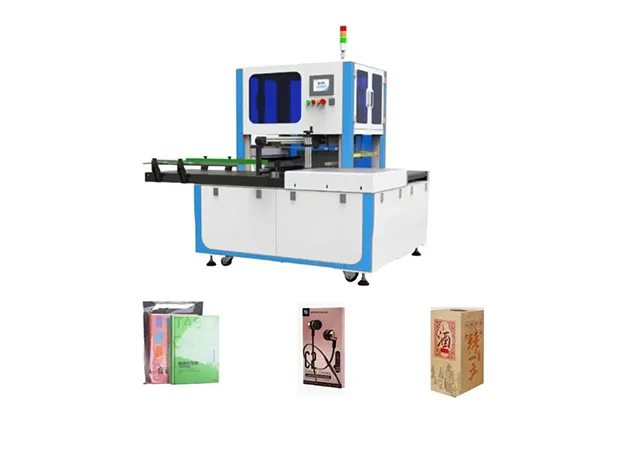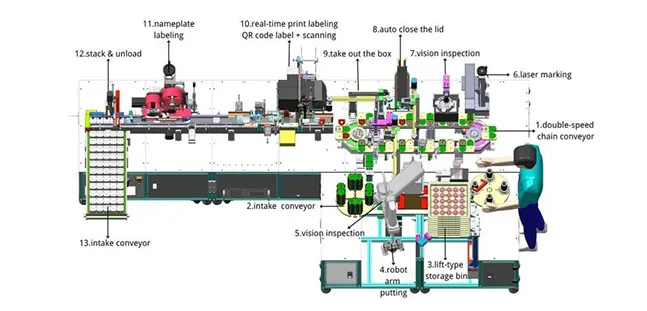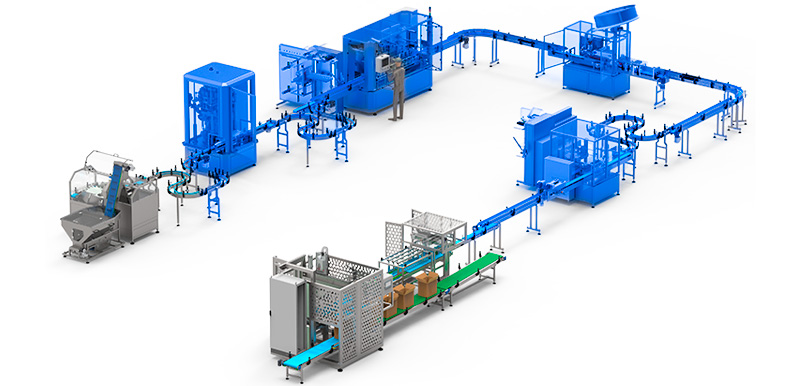
Flat washer packing defects—missing pieces, oil-shingled over-counts, unpunched stamping slugs, warped profiles, and mixed sizes—bleed fastener suppliers through emergency sorting fees, rejected shipments, and lost OEM accounts. Deploying a high-speed vision inspection system fastener counting packaging accuracy solution is the only reliable way to catch dimensional, surface, and count defects before sealed bags reach your customer’s receiving dock, acting as the core verification brain inside the 10-station workflow detailed in our complete flat washer packing production line guide.
Table of Contents
- What Defect Costs Actually Cost You
- The Top 10 Defects Vision Inspection Catches
- Vision vs Manual Re-Inspection: The Cost Comparison
- Closed-Loop Rejection: Why Detection Without Removal Does Not Pay
- Four Hard Acceptance Metrics for Any Vision System
- Where to Place Vision in a 10-Station Line
- Conclusion
1. What Defect Costs Actually Cost You
Most equipment vendors pitch CCD vision counting as a standalone counting box, waving “99.99% counting accuracy” as a marketing gimmick while leaving defective parts to flow straight into finished cartons. In real B2B fastener operations, an isolated camera that only triggers a flashing red tower light does not protect your margin. Vision only pays back when engineered as a closed-loop quality gate inside the packaging line—combining optical detection, mechanical diverter rejection prior to bagging, dynamic checkweighing verification, and automated lot reporting directly to your MES (manufacturing execution system).
When an unverified flat washer line ships short counts, unpunched center slugs, or mixed-OD parts to an automotive tier-one or appliance assembly plant, the financial damage multiplies far beyond the value of the steel washers:
| Defect Cost Category | Typical Commercial Penalty | Operational Trigger |
|---|---|---|
| OEM Line-Down Penalty | $2,000 to $10,000 per event | Unpunched washer slug or wrong OD jams an automated assembly torque gun at the customer plant |
| Return Freight & Restocking | $8 to $20 per master carton | Customer QA rejects an entire pallet after finding 3 short-count bags during incoming inspection |
| Scrap of Contaminated Batch | $300 to $1,200 per batch | Good washers and printed barrier film discarded because tearing open sealed polybags costs more than the parts |
| Third-Party Containment Sorting | $45 to $85 per billable hour | Mandatory on-site 100% inspection billed back to your account after a quality escape |
| Lost Account Revenue | $150,000 to $500,000+ per year | Vendor scorecard downgrade to conditional status and removal from next annual RFQ |
Consider a mid-sized fastener supplier running 10 million bags per year across two shifts. Without closed-loop vision, experiencing just 4 OEM line-down claims ($24,000 total), 25 rejected pallets requiring two-way freight and restocking ($12,500), 18 internally scrapped batches ($14,400), and 300 hours of third-party containment sorting ($19,500) drains $70,400 in direct cash penalties annually—before accounting for a single lost customer contract.
2. The Top 10 Defects Vision Inspection Catches
Standard photoelectric beam sensors only see whether an object broke a light beam; they cannot measure geometry, thickness, hole concentricity, or surface integrity. Below are the ten flat washer packing defects that ruin B2B profitability, what each failure costs, and how integrated vision stops it.
2.1 Oil-Induced Washer Shingling and Double Counting
Stamping oils and rust-preventative films create capillary adhesion between flat washers (OD 5 to 60 mm, thickness 0.5 to 8 mm), causing two overlapping washers to slide off the vibratory track together. A basic single-beam photo-eye registers the pair as one part, inflating your bag count without warning.
A 1.5% over-count giveaway on an 8-million-bag annual run of stainless M10 washers gives away $46,000 per year in unpaid metal inventory.
A 2,000 scans/sec line-scan CCD camera paired with a 6000 K collimated LED backlight captures the 2D silhouette and fall time of every part in mid-air at the counting chute. When the vision processor detects a silhouette length or thickness profile exceeding single-part tolerances by more than 15%, it flags the batch and diverts the charge into a recirculation bin before it reaches the bagger.
2.2 Short Counts from Sensor Bounce and Split Drops
When a flat washer tumbles end-over-end down a wide drop chute, oil droplets or secondary edge reflections can double-trigger a conventional infrared sensor, making the counter register two pieces when only one washer fell—resulting in a short-count bag.
Shipping short retail or OEM kits triggers immediate customer back-charges of $1,500 to $4,000 per incident plus mandatory 100% lot auditing.
High-speed CCD vision counting uses multi-plane object tracking algorithms that reconstruct the complete 2D area of the falling washer across consecutive scan lines. Oil droplets and dust specks below the programmed pixel area threshold (for example, anything under 3 square millimeters) are digitally filtered out, locking in 99.99% counting accuracy at speeds up to 120 bags per minute.
2.3 Stamping Burrs and Unpunched Center Slugs
Die wear during high-speed punch-press stamping produces washers with sharp perimeter rollover burrs or completely unpunched center holes (blind washers where the inner slug remains attached).
A single blind washer fed into a customer’s automated bolt-and-washer assembly spindle stalls the station and triggers a $2,000 to $10,000 line-down penalty.
Mounted above a glass rotary disk or transparent conveyor belt after the vibratory bowl, a 2.0-megapixel area-scan camera with 5500 K bottom backlighting measures inner diameter (ID) clear-aperture area and outer edge perimeter roughness. Any washer with a blocked ID or burr protrusion exceeding 0.15 mm is blown off the track by a 2-millisecond high-pressure air nozzle within 15 milliseconds of detection.
2.4 Cupped, Warped, and Deformed Washer Profiles
Thin flat washers (0.5 to 1.5 mm thick) frequently warp or cup during heat treatment and bulk tumbling. While they have the correct weight and outer diameter, cupped washers fail to seat flat under bolt heads and jam narrow feeder confinement rails.
Deformed washers jamming the entrance of your VFFS (vertical form fill seal) forming collar cause 15-minute mechanical clear-outs three times per shift, costing $29,000 per year in lost packing uptime and torn film.
Side-mounted telecentric profile cameras positioned at the linear exit track inspect part flatness and vertical height across a 0.05 mm threshold. Warped washers standing taller than their nominal thickness specification are ejected back into a scrap tote before reaching the counting head.
2.5 Mixed Outer Diameter (OD) or Inner Diameter (ID) Sizes
When operators dump leftover totes of M8 washers into an M10 bulk hopper—or when upstream plating subcontractors mix parts in drying centrifuges—off-size washers enter the packaging stream.
An OEM receiving M10 assembly bags contaminated with 0.4% M8 washers rejects the entire 40-carton shipment, costing $600 in return freight and $3,200 in manual sorting labor.
Dual-axis vision inspection measures both OD and ID simultaneously to +/- 0.08 mm across the full 5 to 60 mm washer range. Even if an M8 heavy washer happens to weigh the exact same 3.2 grams as a thin M10 washer—fooling a checkweigher—the optical camera instantly spots the 2 mm diameter mismatch and trips the pre-bag reject gate.
2.6 Interlocking and Chain-Linked Split or Wave Washers
When packing lines switch from standard flat washers to split lock washers or wave washers, open ends frequently hook together like chain links. Both parts fall as an entangled cluster into the primary bag.
Chain-linked washers create simultaneous over-count giveaway in one bag and jam customer bowl feeders downstream, resulting in $300 to $1,200 per batch in rework and customer credits.
The vision algorithm calculates the outer bounding box and aspect ratio alongside internal hole geometry. Entangled twin washers display a figure-eight silhouette with nearly double the surface area, prompting the closed-loop diverter flap above the flat washer counting and bagging machine to route the cluster into a separation tray rather than sealing it into film.
2.7 Foreign Stamping Scrap and Tramp Metal Contamination
Bulk washer bins routinely carry punching scrap, broken tap fragments, tumbling media stones, and wire ties from heat-treatment baskets. Because small metal slugs weigh only 0.5 to 2 grams, they easily hide inside a 500-gram bulk bag weight tolerance.
Foreign sharp metal fragments slice open polybags during ocean transit and ruin customer brand reputation, leading to $5,000+ retail vendor chargebacks.
Vision software enforces circularity and concentricity indices (comparing the outer circle center to the inner circle center). Crescent-shaped stamping crescent moons, square metal chips, and ceramic tumbling stones fail circularity checks immediately and are diverted into a tramp-metal waste chute before counting.
2.8 Rogue Parts Pulled from Shared Multi-SKU Feeder Bowls
On multi-lane hardware kit lines where bowls switch between hex nuts, flange bolts, and flat washers across shifts, a single hex nut wedged in a bowl crevice can break loose hours later during a pure flat washer run.
A rogue hex nut mixed into a sealed flat washer bag halts automated customer kitting lines and forces a $1,200 quarantine hold on the entire production lot number.
Using 3D contour matching and thickness-to-diameter ratios, the counting camera differentiates a 6-sided polygon or threaded shank from a smooth circular washer instantly. The accumulation memory bucket purges the contaminated batch via a pneumatic bottom reject door without stopping the main VFFS film feed.
2.9 Surface Scratches, Rust Spots, and Missing Zinc Plating
High-spec architectural, marine, and automotive fasteners cannot ship with bare unplated steel spots, white zinc corrosion, or deep stamping die gouges.
Shipping corroded or unplated washers triggers immediate quality failure notifications (8D corrective action reports) and $4,500+ air-freight replacement expenses to keep the buyer’s assembly plant running.
Adding a 6500 K coaxial ring light above a 5-megapixel area-scan camera highlights surface reflectivity differences. Unplated dark spots, red rust oxidation, and deep scratches scatter light away from the lens, registering as dark pixel clusters against the bright zinc-plated ring and triggering instant pneumatic air-jet ejection.
2.10 Unreadable, Smudged, or Missing Bag Lot Codes
Even when the washers inside the pouch are 100% defect-free, an empty thermal transfer ribbon roll, clogged printhead pixel, or oil smudge on the polybag renders the customer barcode or 2D DataMatrix code unreadable.
Major hardware retailers and automotive distribution centers fine suppliers $2.50 to $4.00 per non-compliant bag; a 5,000-bag lot with unscannable barcodes generates a $15,000 chargeback.
A compact downstream smart camera mounted immediately after the TTO (thermal transfer overprinter) or laser marker grades every printed barcode to ISO/IEC 15415 standards while integrating fastener packaging traceability with laser and QR coding. If contrast drops below Grade B or a digit is missing, the line automatically diverts that single finished bag at the post-bagger reject table and pauses the printer for ribbon servicing.
3. Vision vs Manual Re-Inspection: The Cost Comparison
When defects slip through basic photoelectric counters, operations managers typically station 0.5 to 1 full-time operator at the end of the line to visually inspect bags and spot-weigh samples on a bench scale. Manual human inspection suffers from visual fatigue after 20 minutes of staring at shiny metal parts, letting 4% to 8% of actual defects escape to the customer while burning $37,000 to $58,000 per year in fully burdened wages.
| Evaluation Metric | Manual Operator Re-Inspection | Integrated CCD Vision Quality Gate | Commercial Advantage for Buyer |
|---|---|---|---|
| Defect Detection Rate | 92.0% to 96.0% (drops after 2 hours of visual fatigue) | 99.9% to 99.99% continuous optical verification | Eliminates human fatigue errors across 24/7 shifts |
| Escape Rate to Customer | 0.5% to 1.2% of defective packs reach receiving docks | <0.01% when paired with inline dynamic checkweigher | Prevents $2,000 to $10,000 OEM line-down penalties |
| Annual Direct Labor Cost | $37,000 to $58,000/year (0.5 to 1 FTE at $18 to $28/hr) | $0 added operator labor (fully automated closed loop) | Immediate 9- to 14-month capital payback from labor alone |
| Inspection Cost per 1,000 Bags | $4.20 to $7.80 per 1,000 bags | $0.18 to $0.35 per 1,000 bags (power and wear parts) | Reduces quality assurance unit cost by over 92% |
| Line Throughput Impact | Caps output at 18 to 25 bags/min due to manual handling | Runs 30 to 120 bags/min (adds <0.3 sec cycle overhead) | Protects maximum VFFS bagger speed without bottlenecks |
The financial math is straightforward: paying an operator $22 per hour to visually check bags and weigh random samples neither protects your customer accounts nor scales with automation. At 94% human detection efficiency, a line generating a 1.5% raw upstream shingling or slug defect rate still leaks 900 bad bags per million shipped—more than enough to trigger three or four major customer claims every year.
By contrast, an integrated vision gate inspects 100% of washers at up to 2,000 scans per second without slowing down the VFFS bagger. You eliminate $37,000 to $58,000 in annual inspection wages while dropping your customer escape rate below 100 parts per million.
4. Closed-Loop Rejection: Why Detection Without Removal Does Not Pay
Buying a standalone vision sensor that only sounds an audible buzzer when it sees a double washer creates a massive shop-floor loophole: busy operators simply press the reset button and let the defective bag travel straight into the master carton. True closed-loop quality rejection removes the human decision entirely through two physical mechanical stages and an automated MES data link.
First, pre-sealing rejection saves packaging film and rework labor. When the line-scan counting camera or optical track camera detects a double-shingled washer, unpunched center slug, or wrong OD size during the count cycle, the master PLC actuates a high-speed pneumatic diverter flap on the intermediate memory bucket above the forming tube. The contaminated sub-batch dumps directly down an enclosed waste chute into a locked quarantine tote in less than 250 milliseconds, while the feeder immediately refills a clean batch for the waiting bagger. You waste zero packaging film and never have to slice open a sealed bag.
Second, post-sealing rejection catches bag-level failures. Once the VFFS jaws seal the pouch, the finished bag travels across a dynamic strain-gauge checkweigher (+/- 0.2 to 0.5 g resolution) and under a barcode verification camera. If a bag fails weight tolerance or carries an unscannable QR code, a synchronized pneumatic pusher arm or air-blast nozzle sweeps the pack off the conveyor into a locked reject bin, keeping false rejects under 0.1% of good packs.
Finally, every single reject event writes a time-stamped record—including defect type, camera image snapshot, lot number, and lane ID—via OPC-UA or Ethernet/IP to your plant network. Connecting your vision gates into an Industry 4.0 small parts packing line gives quality managers automated shift-level OEE dashboards and defect Pareto charts, proving to automotive auditors that every rejected pack was physically accounted for before master cartons were sealed.
5. Four Hard Acceptance Metrics for Any Vision System
Before signing off on a vision-equipped defect detection washer system, write these four quantitative engineering criteria directly into your purchase contract and pre-shipment acceptance protocol:
- False Reject Rate (Target <0.1%, Maximum Acceptable <0.3%): If a poorly tuned camera kicks out 3% of good washers because harmless oil sheen or minor zinc color variations fool the threshold, your operators will bypass the vision system within a week. Demand a documented false reject rate below 0.1% (and strictly under 0.3% on heavily oiled parts) across a continuous 2,000-piece test run covering your full washer range (OD 5 to 60 mm, thickness 0.5 to 8 mm).
- True Defect Detection / Recall Rate (99.9% to 99.99%): Never accept a vendor’s brochure claim without a seeded-fault stress test. During pre-shipment testing, deliberately mix 50 painted defective washers (10 blind unpunched slugs, 10 cupped parts, 10 wrong-OD washers, 10 double-glued shingled pairs, and 10 cut crescent scraps) into 10,000 good production washers. Require the system to detect and physically divert at least 49 to 50 of the seeded defects into the reject chute.
- Cycle Time Impact (<0.3 Seconds Added Overhead per Bag): Image processing and pneumatic memory-bucket gating must occur in parallel with VFFS film pulling and jaw sealing. Specify in writing that activating full optical vision inspection and closed-loop diverter gating must add less than 0.3 seconds to the cycle and must not reduce net line throughput below your target 30 to 120 bags per minute.
- Native MES and Data Integration Capability (OPC-UA / Ethernet/IP): Verify that the vision controller does not lock defect statistics inside a proprietary local monitor. Require standard industrial communication protocols (OPC-UA, Profinet, or Ethernet/IP) that output real-time good count, reject count by defect category, false-reject ratio, and batch traceability logs directly to your master PLC and plant ERP/MES.
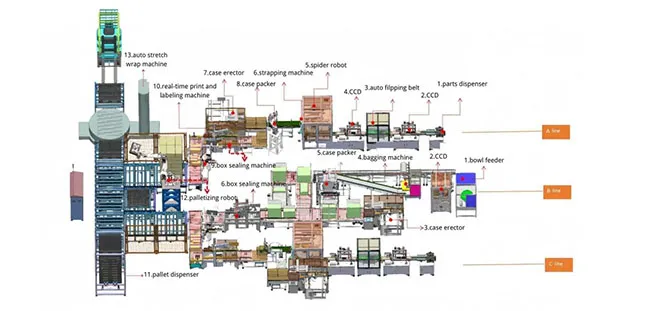
6. Where to Place Vision in a 10-Station Line
A single camera cannot inspect metal surface defects, count free-falling parts, and read external bag barcodes all at once. When configuring a turnkey flat washer packing production line, we engineer vision and weight verification across four distinct quality gates matching the ten core stations:
- Gate 1: Post-Feeder Linear Track or Glass-Disk Pre-Check (Between Stations 2 and 3): Positioned immediately after the PU-lined vibratory bowl, a 2 MP to 5 MP area-scan camera with a 5000 to 6500 K backlight and coaxial ring light inspects individual washers lying flat before they enter the counting drop chute. This gate blows off unpunched center slugs, burrs, wrong ID/OD sizes, and rusted parts at up to 1,200 parts per minute.
- Gate 2: Free-Fall Optical Line-Scan Counting Gate (Station 3): As separated washers drop off the feeder discharge chute into twin-stage memory buckets, a 2,000 scans/sec line-scan CCD array counts pieces and detects mid-air oil shingling or split drops. Any over-count or double-stacked drop triggers the pneumatic waste-chute flap before parts enter Station 4 (the VFFS bagger).
- Gate 3: Post-Bagger Print Verification and Dynamic Checkweighing (Stations 5 to 7): Immediately after TTO or laser coding on the bag film, a smart barcode camera verifies ISO print quality and OCR lot characters. Seconds later, the sealed bag crosses Station 7 (the dynamic checkweigher with +/- 0.2 to 0.5 g resolution), where a pneumatic pusher diverter removes any weight-deviant or misprinted pack.
- Gate 4: Pre-Cartoning Case Verification (Between Stations 8 and 9): Before the automatic case sealer tapes and straps the 15 kg to 25 kg corrugated box, an overhead area camera and master roller scale verify that the exact layer count of bags is seated flat inside the carton and that no loose film tails stick out of the flaps.
7. Conclusion
Treating vision inspection as a standalone counter box leaves your plant exposed to $2,000 to $10,000 OEM line-down penalties, $37,000+ in manual re-inspection labor, and chronic oil-shingling giveaway. When engineered as a closed-loop quality gate inside your line—combining 2,000 scans/sec optical detection, automatic pre-sealing and post-sealing mechanical rejection, and real-time MES defect reporting—vision stops all ten flat washer defects before they leave your floor.
As your dedicated one packaging partner and end-of-line solutions integrator, JOYDA configures, integrates, commissions, and supports complete vision-verified flat washer packaging lines tailored to your exact defect risks and speed targets. Ship us 5 kg of your oiliest, most challenging production washers (including known defective samples) today, and our engineering team will return a documented Vision Quality Verification Report—complete with detection rates, cycle speeds, and a turnkey line integration proposal—within 48 hours of sample receipt.
FAQ
Can a CCD vision counting system handle heavily oiled carbon-steel flat washers without blinding the lens?
Yes, provided the optical chamber is engineered specifically for oily hardware. We isolate the 1.2 to 5 MP camera and 6000 K LED backlight behind oleophobic (oil-repellent) tempered optical glass shields swept continuously by a positive-pressure air curtain, and mount the optics outside the direct vertical drip zone so stamping oil never fouls the lens during multi-shift operation.
What is the difference between a standard photoelectric sensor and a CCD line-scan vision counter?
A basic photoelectric sensor only detects whether an object blocks a single light beam, meaning two overlapping oily washers or an unpunched stamping slug register as one good washer. A CCD line-scan vision camera captures 2,000 high-resolution cross-sectional slices per second to calculate exact 2D area, length, inner hole presence, and fall velocity—separating double parts and filtering out oil droplets.
Do I need both optical vision inspection and an inline dynamic checkweigher?
For high-volume OEM and retail suppliers, pairing both technologies creates a bulletproof two-stage firewall. Upstream vision counting catches geometric defects (wrong OD/ID, unpunched holes, and exact piece counts on light washers) and diverts bad batches before wasting bag film, while the downstream dynamic checkweigher (+/- 0.2 to 0.5 g resolution) verifies the sealed pouch weight and guarantees 100% compliance before cartoning.
Will adding vision inspection slow down my flat washer bagging machine speed?
No. Because image processing takes less than 2 milliseconds per part and pre-count batches are staged inside dual-stage pneumatic memory buckets above the VFFS forming collar, vision inspection operates concurrently with bag sealing. It adds less than 0.3 seconds of cycle overhead and maintains full line speeds of 30 to 120 bags per minute.
What range of flat washer sizes can one vision inspection station handle?
A single wide-field line-scan counting station and adjustable linear track camera can inspect flat washers ranging from 5 mm to 60 mm in outer diameter (OD) and 0.5 mm to 8 mm in thickness. Switching optical tolerances between an M4 washer and an M24 structural washer takes less than 30 seconds by selecting the stored SKU recipe on the master HMI touchscreen.
What happens to the washers rejected by the pre-bagging vision gate?
When the counting camera detects a double-shingled drop or an over-count in the staging bucket, the pneumatic diverter flap routes those clean washers down a closed stainless chute into a side collection tote. Operators simply pour clean over-counted washers back into the bulk floor hopper, whereas washers ejected at Gate 1 for dimensional defects (burrs or blind holes) drop into a locked scrap bin.
How does the vision system report defect data to our plant ERP or MES?
The vision processor communicates directly with the master line PLC over Ethernet/IP, Profinet, or OPC-UA protocols. At the end of every lot or shift, the system automatically pushes a structured data packet to your MES containing total good bags packed, total rejected cycles, a Pareto breakdown of defect types (over-count, wrong OD, blocked ID, barcode fail), and time-stamped image logs of rejected parts.
How many sample washers do I need to send JOYDA for a vision quality verification test?
Send 3 kg to 5 kg of your standard production washers in their actual shop-floor surface condition (do not wash or dry them if they normally run coated in stamping oil), along with 30 to 50 known defective pieces such as unpunched slugs, cupped washers, or mixed sizes. Our applications team will film a live closed-loop detection and rejection test and provide a full verification report within 48 hours of arrival.