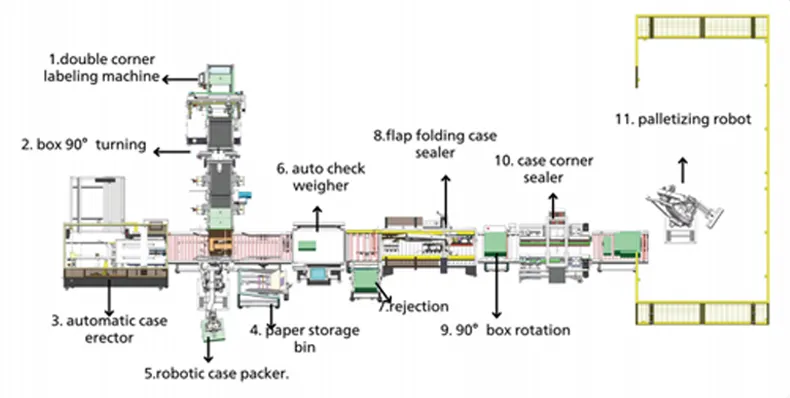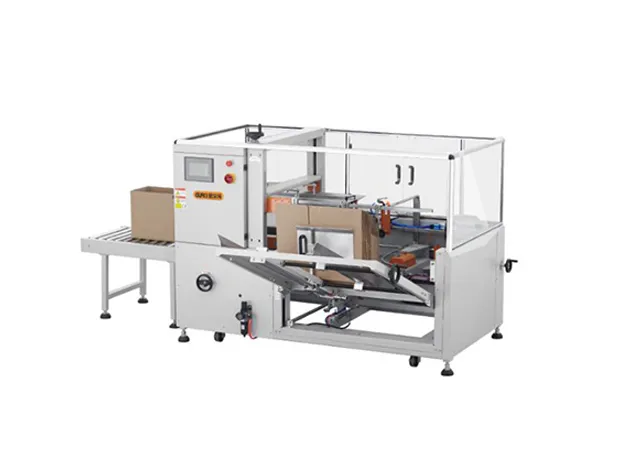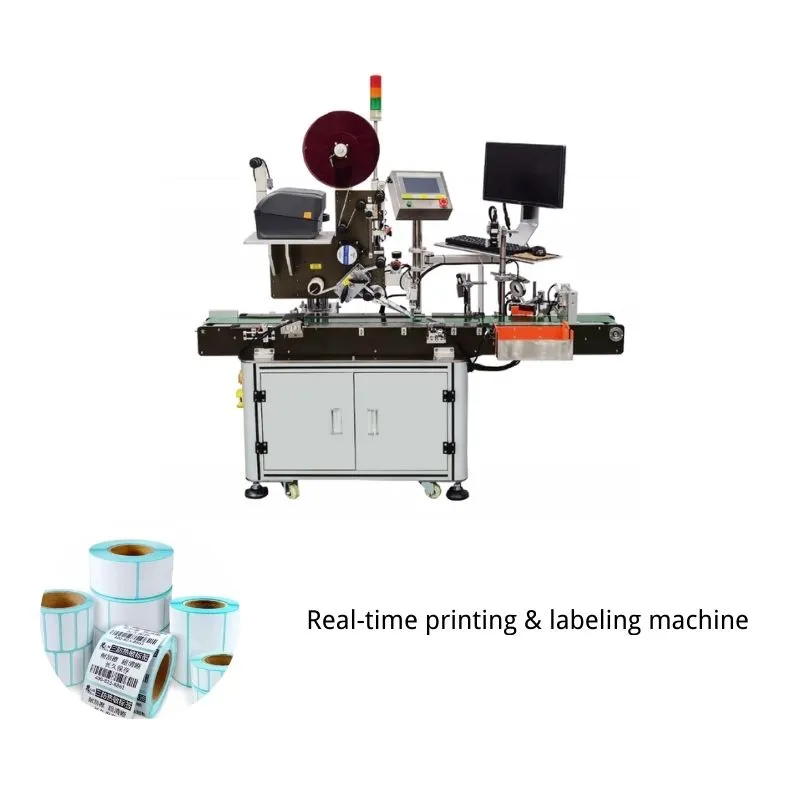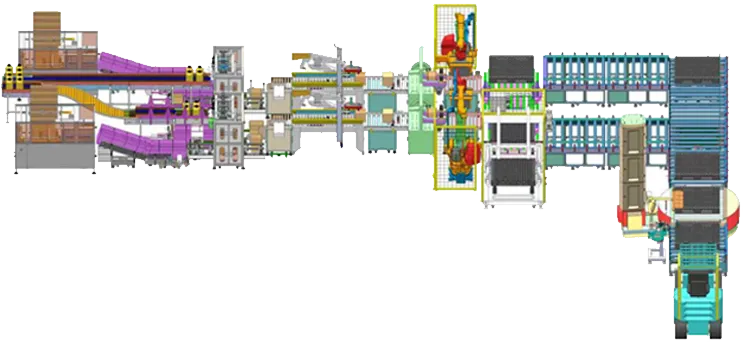
A bowl feeder vs flexible feeder decision is usually made for an assembly cell. This article discusses only the counting station of a plastic parts packing line: the point where loose parts are separated, counted and dropped into a bag. A plastic parts packing production line uses feeding to serve a count, not to place a component into an assembly, so the decision criteria are different. In short: a bowl feeder is a dedicated tool for one part family; a vision-guided robot is a flexible tool for many part families.
Where this shows up in real plants. Feeder comparisons are written for modern assembly cells handling many part numbers, where the decision starts by defining the component, how it is presented and what counts as accepted. In a plastic parts packing line the same hardware sits at a counting station instead. Connectors, clips, caps and small housings arrive from injection molding in batches, often with cosmetic surfaces, transparent or reflective finishes, and look-alike part numbers that differ only in a rib or a colour. That is why the choice is driven by changeover frequency and part finish, not only by feed rate.
Table of Contents
- Which Feeder Fits a Multi-SKU Plastic Parts Packing Line?
- Decide by SKU Count and Changeover Frequency
- Decide by Part Geometry and Surface Grade
- Judge the Counting Station, Not the Assembly Station
- Compare Damage Risk on Fragile Plastic Parts
- Match the Choice to Line A, B or C
- Bowl Feeder vs Flexible Feeder: Run a Feedability Test
- Compare Three-Year Cost, Not Just Unit Price
- Include Line Clearance in the Decision
- Request a Free Feedability Test
1. Which Feeder Fits a Multi-SKU Plastic Parts Packing Line?
Use a bowl feeder when one part family runs for long periods and the geometry feeds reliably in a fixed orientation. Use a vision-guided robot when many SKUs share one line, when parts change shape often, or when surface finish makes hard tooling risky.
Most published comparisons already cover speed, stability, changeover time and a total cost matrix. We will not repeat those tables. Instead, this guide gives you the three checks those comparisons leave out: counting-station accuracy, damage on plastic surfaces, and a feedability test on your own parts.
A bowl feeder moves parts along a fixed track using vibration and a shaped tool; its strength is a stable, repeatable rate for one part family, and its limit is that a new geometry usually needs new tooling. A flexible feeder presents parts on a surface and lets vision pick them; it handles variety better and needs less dedicated tooling. Both feed parts, but only one feeds them in a way a counter can verify.
What this means for plastic parts: put the chosen feeding method into the packing line RFQ as a named line item. If it is left out, two suppliers may quote two different feeders at the same “line” price.
2. Decide by SKU Count and Changeover Frequency
Count the SKUs that will share the line, then count how many times per shift the line switches. A line with three SKUs switched once a week is a different problem from a line with forty SKUs switched eight times a day.
Ask how many recipes the HMI stores and how long a full switch takes, including clean-out and first-piece approval.
What this means for plastic parts: a dedicated bowl tool per SKU adds storage, handling and clean-out time to every switch. Measure the real changeover baseline before you decide, because tooling swap time often dominates the number in a brochure.
3. Decide by Part Geometry and Surface Grade
List shape, size, weight, centre of gravity and whether the part nests, rolls or clings. Note the surface finish grade: a visible cosmetic part needs gentler handling than a hidden clip.
Transparent, shiny, soft and easily bent parts behave differently in a vibratory bowl and under a camera. Record both.
What this means for plastic parts: carry the results into the FAT/SAT challenge samples. A feeder that passes with rigid sample parts but fails with soft production parts has not been specified correctly.
4. Judge the Counting Station, Not the Assembly Station
In assembly, a feeder must present one part in one orientation. In a counting station, it must deliver a stream of separated parts that the counter can verify. The useful measures are count accuracy, the rate of overlapping parts, and the false reject rate.
An overlapping pair counted as one part is a count error, not a placement error. A camera that sees a reflection as a second part is a false reject, not a miss.
What this means for plastic parts: ask for the reject reason log from a trial, split into overlaps, reflections and wrong parts. This is the same data you need to prevent counting and mix-up errors downstream.
5. Compare Damage Risk on Fragile Plastic Parts
Hard tooling can mark polished surfaces, and repeated vibration can whiten edges or create dust. Ask the supplier to run your highest-finish parts and count the marks.
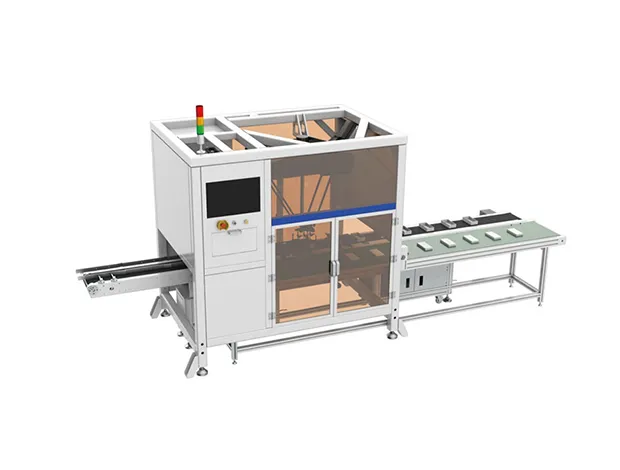
What this means for plastic parts: set an acceptable mark rate in the trial, using your own visual standard. A low unit price is not a saving if the line scraps parts that your customer can see.
6. Match the Choice to Line A, B or C
The A, B and C configurations of the plastic parts line use different feeding hardware. Use this matrix to connect the feeder choice to the line you are buying.
| Line type | Feeding hardware | Best fit | Main trade-off |
|---|---|---|---|
| A line | Spider robot with CCD | Many SKUs, frequent switches, cosmetic parts | Higher capital cost |
| B line | Bowl feeder with CCD | One part family, long runs | Dedicated tooling per SKU |
| C line | Robot with CCD, extended stations | Mixed counts plus more downstream work | Larger footprint |
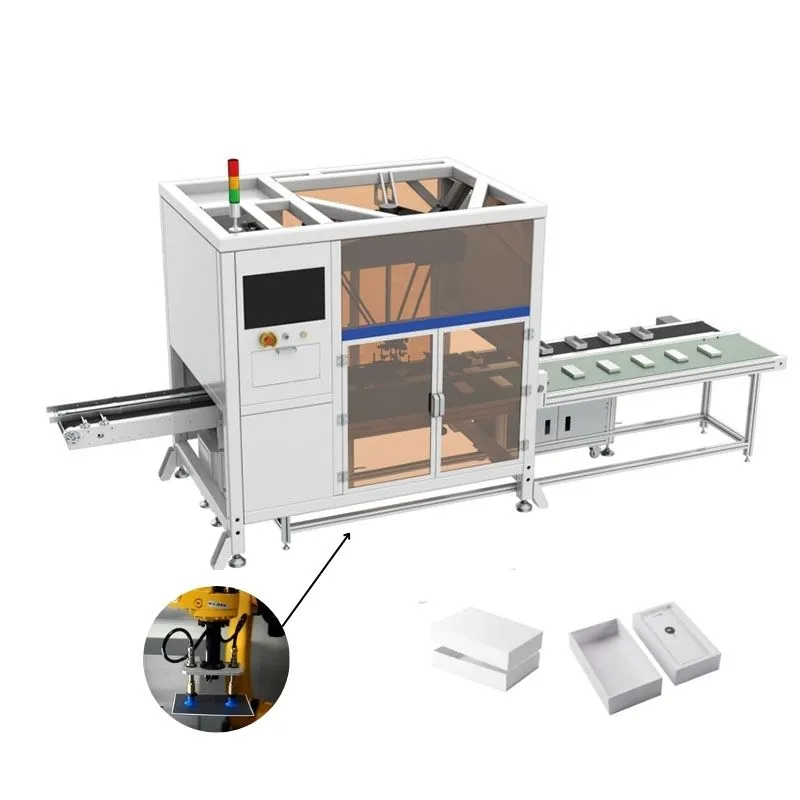
Compare them on counting-station dimensions rather than on generic speed: how overlapping parts are separated, how a transparent or reflective part is seen, whether a soft part is marked, and how quickly the station proves it is empty before the next SKU. A faster feeder that cannot be cleared is a slower line.
What this means for plastic parts: ask each supplier to mark which line type the quoted price covers, then price the three-year cost of tooling, changeovers and spares for that exact configuration.
7. Bowl Feeder vs Flexible Feeder: Run a Feedability Test
Send 200–300 real parts per SKU and ask for a recorded trial. The test should cover: feed rate at target speed, jam frequency, overlapping pairs, orientation faults, mark rate on cosmetic parts, behaviour of transparent and shiny parts, static cling, and clean-out time between two similar SKUs.
Define acceptance before the test: the count accuracy required, the maximum false reject rate, the number of consecutive good bags and the feedability of each representative sample. Ask for an application-specific assessment rather than a catalogue comparison, and record which samples were accepted and which were not.
What this means for plastic parts: film the trial from the infeed and keep the reject log. The same clip also helps your layout review, because it shows how much space operators need around the feeder.
8. Compare Three-Year Cost, Not Just Unit Price
Add tooling per SKU, changeover labour, spares, cleaning time and scrap to the purchase price. A flexible robot costs more on day one but can be cheaper when forty SKUs share one line. Some plants use a hybrid: a bowl feeder for the high-volume part family and a robot for the long tail of SKUs. Industry trend articles point to more SKUs per line over time, so price the option to add the second feeding method later.
Two questions buyers always ask are whether a flexible feeder is automatically better for many products and whether a bowl feeder is always cheaper. The honest answer depends on SKU count, changeover frequency and surface grade; price the three-year cost including tooling, cleaning time and scrap, then decide.
What this means for plastic parts: use accepted bags per shift, not nameplate speed, as the output figure. That is the number that drives the packing-stage payback.
9. Include Line Clearance in the Decision
A feeder with many pockets, guides and chutes has more places for the previous SKU to hide. Ask how the whole feeding path is cleaned, how long it takes, and how the clean-out is verified.
What this means for plastic parts: require a first-piece check after every switch and a signed clearance sheet. Two similar parts in different colours are the case that a quick visual check misses most often.
10. Request a Free Feedability Test
For a bowl feeder vs flexible feeder decision, send your part samples, the SKU list and the count rule. A useful result is a short report with the trial numbers, the recommended line type and the exceptions found on your parts.
JOYDA configures and integrates counting, bagging, labelling and palletising equipment as one packaging solution. Send your samples to sales01@joydatech.com, or message +86 137 1326 8688 on WhatsApp, and request a feedability test and a recommended multi-SKU packaging line configuration.
FAQ 1. Is a bowl feeder always cheaper than a vision-guided robot?
On day one, usually yes. Over three years, a line with many SKUs can be cheaper with a robot because you avoid dedicated tooling and long changeovers.
FAQ 2. How many SKUs justify a flexible feeder?
There is no fixed number. Compare the number of switches per shift and the cost of tooling per SKU against the higher capital cost.
FAQ 3. Can transparent or shiny plastic parts be counted reliably?
They can, but they need a trial. Reflections and light passing through a part can look like a second part to a camera, so the lighting and reject logic must be tested with your parts.
FAQ 4. What is a feedability test?
A recorded trial using your real parts that measures feed rate, jams, overlapping parts, orientation faults, surface marks and clean-out time between SKUs.
FAQ 5. Does the feeder choice change the line layout?
Yes. Bowl tooling needs storage and swap space, and robot cells need a guarded area and camera service access. Confirm the footprint before you order.