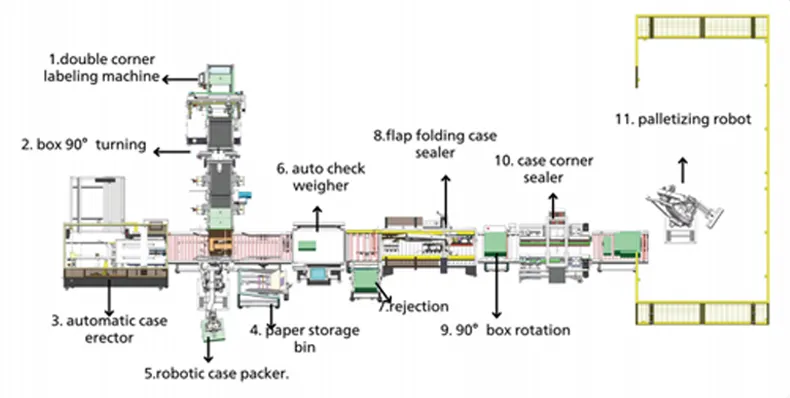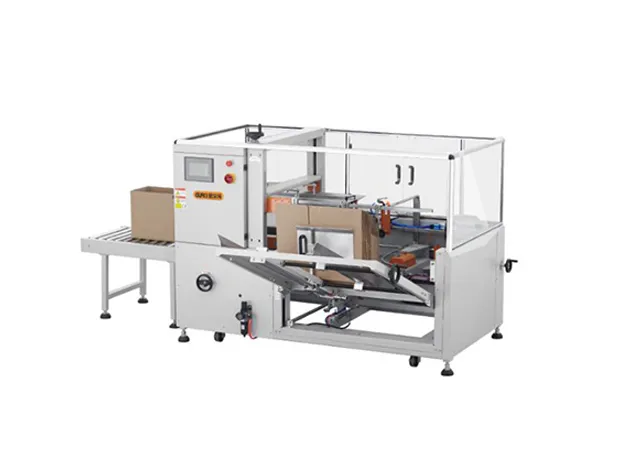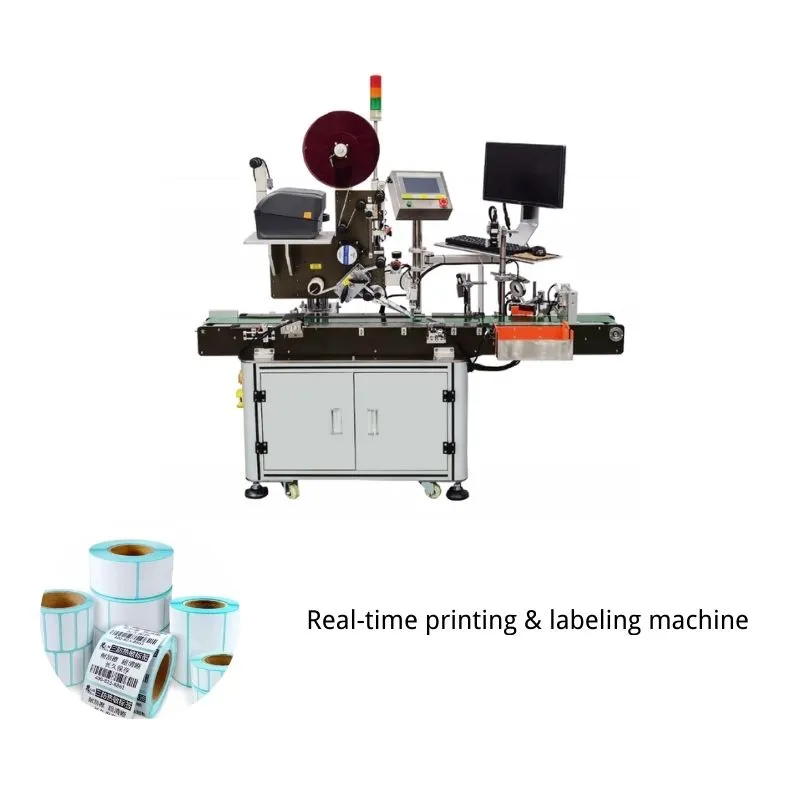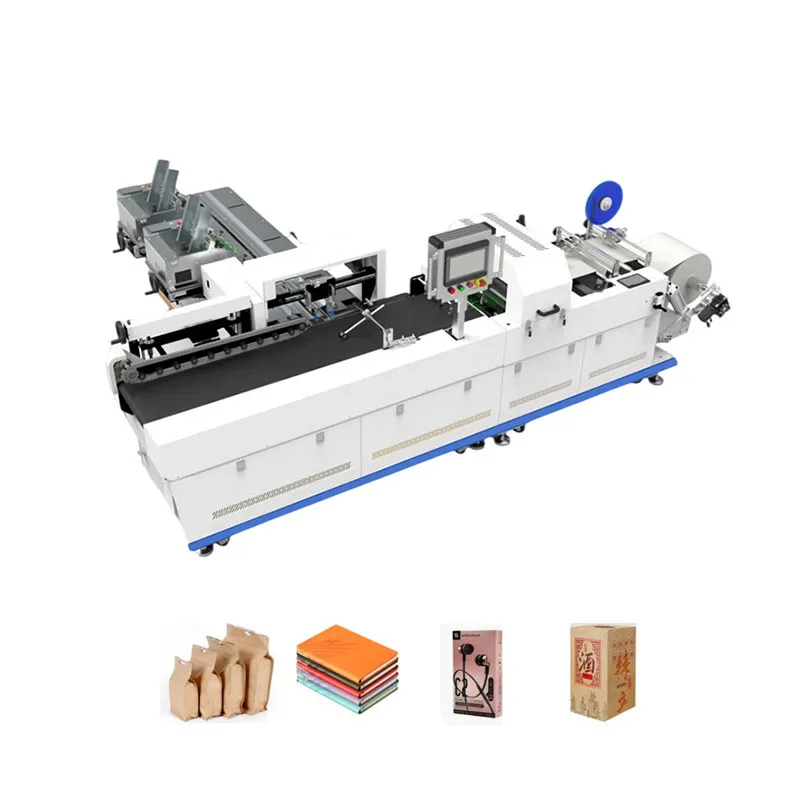
A packaging line TCO is the full cost of owning the line over its working life, not the number on the quotation. For a plastic parts packing line, the biggest surprises are rarely the machine itself: they are building work, a slow ramp-up, changeover downtime, scratched cosmetic parts, and customer returns caused by mixed parts. A plastic parts packing production line that looks cheap on day one can cost more over five years than a better-specified one. This guide gives you a formula for each hidden cost and a table to compare suppliers on the same basis.
Where this shows up in real plants. Published TCO work in packaging is anchored in damage and returns: automotive, appliance and electronics suppliers count the cost of one returned part, then the ripple effects through inspection, rework, freight and customer service. E-commerce and 3PL writers add storage cost per pallet, dimensional weight and capital tied up in stock. For molded plastic parts those ideas become concrete. Cosmetic scratches on visible parts, mixed part numbers in a sealed bag and static cling that jams a feeder are the three losses that never appear on a machine quotation, and each one is priced differently in an automotive supply chain than in a consumer-goods warehouse.
Table of Contents
- What Does Total Cost of Ownership Include?
- Separate Capital, Operating and Maintenance Costs
- Price the Building Work Before the Machine
- Price the Ramp-Up Period
- Add Consumables and Changeover Losses
- Put a Number on Scratched Parts
- Put a Number on Mix-Ups and Returns
- Put a Number on Static Cling and Jams
- Do Not Forget Software, Spares and Overseas Response
- Build a Five-Year Packaging Line TCO Table
- Request a Five-Year TCO Calculator
1. What Does Total Cost of Ownership Include?
Total cost of ownership (TCO) adds the purchase price, installation, running costs, maintenance, consumables, downtime, quality losses and support over a chosen period. A five-year window is long enough to show the difference between two lines.
A simple formula is: TCO = purchase price + installation + 5 × (labor + consumables + maintenance + downtime + quality losses) − resale value. Put every term in the same currency and the same year.
What this means for plastic parts: TCO and packing-stage ROI are two views of the same numbers. TCO counts what you spend; ROI counts what you get back. Build the TCO table first, then use it as the cost side of the payback calculation.
2. Separate Capital, Operating and Maintenance Costs
Most supplier guides split TCO into capital costs, operating costs and maintenance costs. Capital is the machine, freight, rigging and taxes. Operating is labour, power, air, film, bags and labels. Maintenance is planned service, wear parts and unplanned repairs.
Ask for a priced list in each bucket. A quote that only names the machine price hides the rest.
Add disposal and end-of-life cost as a fourth bucket alongside capital, operating and maintenance. Include the capital and opportunity cost of the money committed before the line reaches steady output, and the floor space charged per pallet of buffer stock.
What this means for plastic parts: add a fourth bucket for quality losses. Scrap, rework and returns are real cash outflows for cosmetic plastic components, and they do not appear in a generic three-bucket model.
3. Price the Building Work Before the Machine
Get a quote for power distribution, compressed air lines, network drops, floor levelling, safety fencing and any door or ceiling changes. Add the cost of moving existing equipment.

What this means for plastic parts: camera stations need stable mounting and room for lights and cleaning. That space is part of the floor plan, not an optional extra. If the building work is priced after the order, the number always goes up.
4. Price the Ramp-Up Period
New lines rarely run at full output in week one. Assume a ramp-up where the line achieves a share of target output while operators learn recipes, changeovers and cleaning.
Formula: ramp-up cost = lost output × contribution per bag × ramp-up weeks. Use your own contribution margin, not the supplier’s estimate.
What this means for plastic parts: ramp-up is longer when the line handles many similar-looking SKUs. Ask for training days and a documented first-piece check in the quote, because both shorten the learning curve.
5. Add Consumables and Changeover Losses
List the film, bags, labels, ribbon, tape and cartons. State the price per unit and the expected waste rate during start-up and changeover.
Formula: changeover cost = number of switches per week × minutes lost × contribution per minute + material scrap per switch. Do not use nameplate speed here; use accepted bags per minute.
Tooling and setup charges belong here too. Dedicated bowl tooling, recipe setup and trial material behave like MOQ and setup fees in packaging procurement: cheap per unit at high volume, expensive when forty SKUs share one line. Add freight and dimensional weight for the film, bags and cartons you will keep on site.
What this means for plastic parts: every SKU switch also needs a full line clearance, which takes longer than a recipe change alone. Use a measured changeover baseline instead of a catalogue figure.
6. Put a Number on Scratched Parts
Cosmetic plastic parts lose their value when a feeder, belt or chute marks the surface. Count the scrap rate during the trial run, not just during the demo.
Formula: scratch loss = scrapped parts per shift × part value × shifts per year.
What this means for plastic parts: the feeding method is the largest variable here. A vision-guided robot or a bowl feeder treats a soft or polished part very differently, so ask for a sample trial with your highest-finish parts and price the observed scrap rate.
7. Put a Number on Mix-Ups and Returns
One wrong part in a sealed bag can trigger a customer complaint, a sort, a return or a line stop at the customer’s plant. Count the full event, not just the value of the part.
Formula: mix-up loss = incidents per year × (sorting labour + freight + credit note + rework).
Price the full event, not the single bag. One mixed part can trigger a line stop at the customer, a sorted batch, a return freight charge and a corrective-action report. Published returns guides describe these as ripple effects; list each one as a separate line so the estimate can be audited.
What this means for plastic parts: similar parts in different colours are the highest-risk case. Require the evidence chain described in our guide to counting and mix-up errors, and ask the supplier to show how a rejected bag is confirmed before rework returns to the infeed.
8. Put a Number on Static Cling and Jams
Plastic parts can hold a static charge, cling together, or feed as a double. Each jam costs a stop and each double can become a count error.
Formula: jam loss = stops per shift × minutes per stop × contribution per minute + parts scrapped during clearing.
What this means for plastic parts: ask whether ionisers, anti-static belts or a specific belt surface are included in the quoted scope. If they are excluded, add them to the table as a separate line item.
9. Do Not Forget Software, Spares and Overseas Response
Ask for the price of software licences, recipe backups, HMI updates and remote support. Ask for a two-year spares kit and the cost of an on-site visit, including travel and waiting time.
What this means for plastic parts: camera windows, lights and suction cups wear faster when plastic dust is present. A cheap spares kit that omits the vision parts is not comparable with one that includes them. Tie the spares list and response times to the FAT/SAT handover documents so both sides work from one list.
10. Build a Five-Year Packaging Line TCO Table
Send the same table to every supplier. Ask them to fill the columns they control and leave the rest to you.
| Cost line | Year 0 | Years 1–5 per year | 5-year total | Who supplies the number |
|---|---|---|---|---|
| Machine, freight, rigging | Supplier | |||
| Building work and utilities | Buyer | |||
| Labour and power | Buyer | |||
| Film, bags, labels, tape | Buyer | |||
| Planned maintenance and spares | Supplier | |||
| Ramp-up lost output | Buyer | |||
| Changeover downtime | Both | |||
| Scratched part scrap | Both | |||
| Mix-ups and returns | Both | |||
| Software and overseas support | Supplier | |||
| TCO |
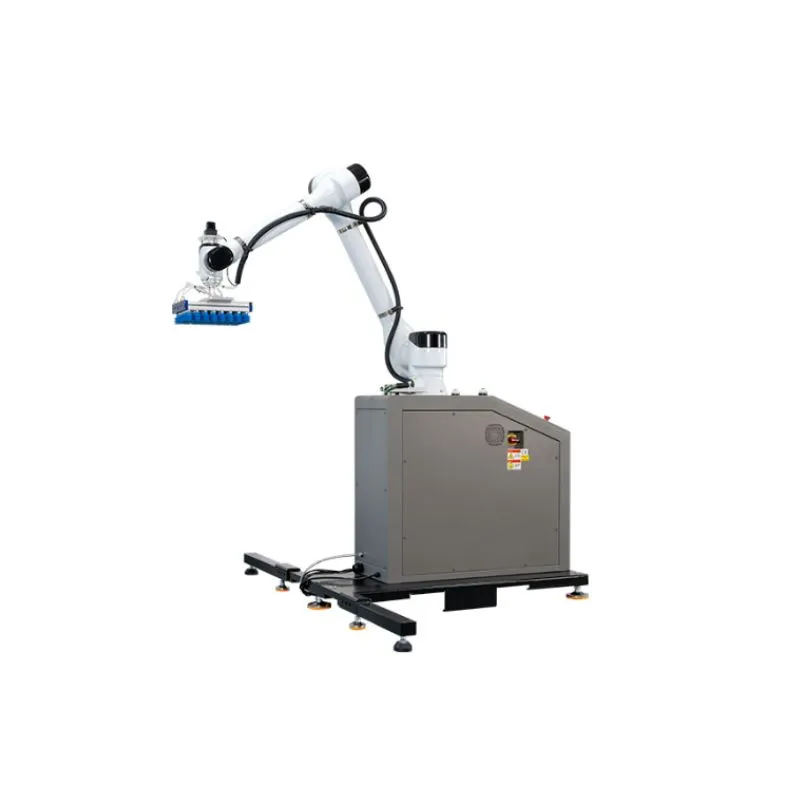
State the input variables and output calculations before the numbers: machine price, freight and rigging, wage rate, shifts, SKU count, changeovers per week, scrap rate and service response time on the input side; cost per good bag, annual operating cost and five-year total on the output side. Show the calculation for one line type step by step rather than quoting a figure nobody can reproduce.
What this means for plastic parts: normalise the scope before you compare totals. Use the same RFQ checklist and quote matrix for every supplier, or the cheapest TCO may simply be the quote with the most exclusions.
11. Request a Five-Year TCO Calculator
A packaging line TCO calculator asks for SKU count, shifts per day, wage rate, part value, scrap rate and changeover frequency, then returns a five-year total and a payback range. As a total cost calculator, it should let you change one assumption at a time.
JOYDA configures and integrates counting, bagging, labelling and palletising equipment as one packaging solution. Send your SKU count and shift pattern to sales01@joydatech.com, or message +86 137 1326 8688 on WhatsApp, and request the 5-Year TCO Calculator and a 5-year ownership cost budget proposal.
FAQ 1. What does TCO mean for a packaging line?
TCO is the full cost of buying, installing, running, maintaining and supporting the line over a set period, plus the cost of downtime and quality losses. It is usually calculated over five years.
FAQ 2. What hidden costs do buyers miss most often?
Building work, ramp-up at reduced output, changeover downtime, scratched cosmetic parts, mixed-part returns, vision wear parts and overseas service visits.
FAQ 3. How do I price a scratched plastic part?
Multiply the number of scrapped parts per shift by the part value and the number of shifts per year. Use the scrap rate observed in a trial with your real parts.
FAQ 4. Is a cheaper line always cheaper to own?
Not always. A lower purchase price can hide excluded stations, longer changeovers, higher scrap and a spares kit that omits vision parts. Compare five-year totals on the same scope.
FAQ 5. What should a TCO calculator ask for?
At minimum: SKU count, shifts, wage rate, part value, scrap rate, changeover frequency, consumable prices and the expected ramp-up period.