Operating a high-speed packaging line without real-time data integration creates severe operational blind spots, resulting in untraceable downtime and inaccurate inventory. An Industry 4.0 carton packing production line solves this by merging mechanical hardware with smart software, providing centralized control, ERP synchronization, and 100% data traceability to eliminate manual reporting errors.
When plant managers ask me how to increase their packaging throughput, they usually expect a recommendation for a faster motor or a larger robot. However, in modern manufacturing, a carton packing production line is no longer just a combination of mechanical equipment; it is a comprehensive software and data management system. True efficiency is unlocked when the machine’s brain communicates seamlessly with your factory’s IT infrastructure. Let’s examine the exact technical mechanics of this integration.
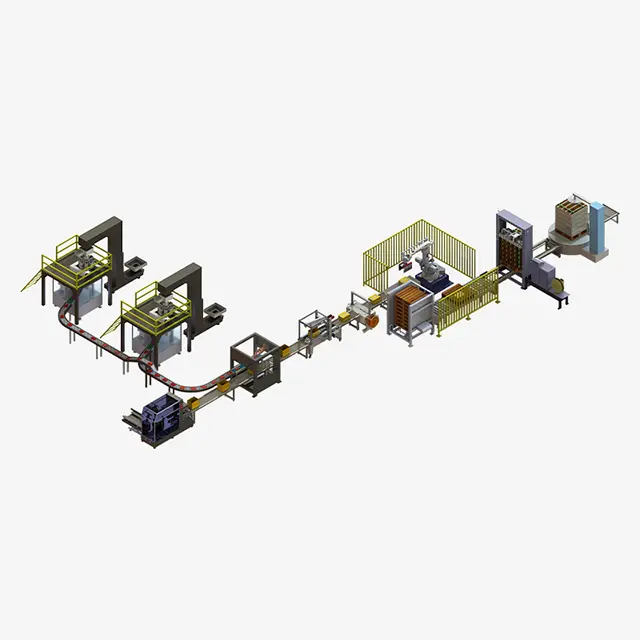
Table of Contents
- Machine Connectivity: Synchronizing the End-of-Line
- Real-Time Data Collection: Eliminating Blind Spots
- ERP and MES Integration: The Digital Handshake
- Remote Monitoring and Diagnostics: Minimizing Downtime
- The Data Benchmark: Measuring OEE and Speed Improvements
- Case Study: Digitizing a Consumer Goods Facility
- Conclusion: The Foundation for Smart Manufacturing
- Frequently Asked Questions (FAQ)
1. Machine Connectivity: Synchronizing the End-of-Line
Disconnected machines create physical bottlenecks and data silos. To achieve high efficiency, we must link the hardware through a centralized nervous system.
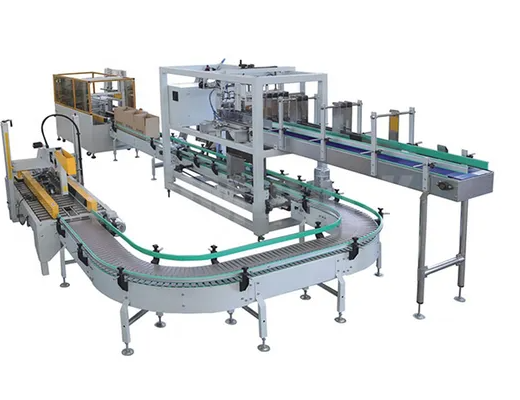
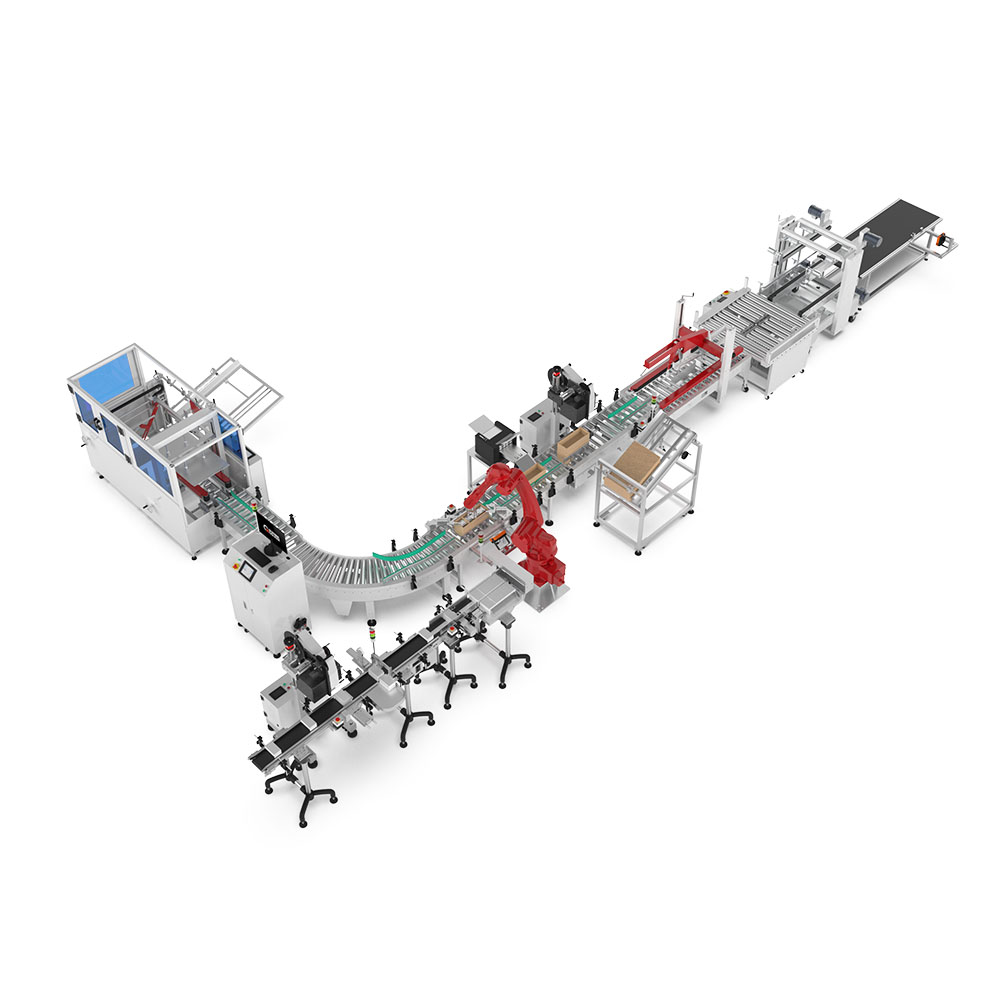
A smart carton packing system connects erectors, robotic packers, sealers, labelers, inspection units, and palletizers through a unified PLC control platform. This machine connectivity ensures synchronized data communication, allowing the entire line to automatically adjust its running speed to prevent jams and maintain a steady takt time.
Hardware Synchronization in Practice
The mechanical components of a line must operate as a single organism. We evaluate this connectivity through several operational angles, focusing on handoffs and error handling.
- Example 1: The Inspection Loop. When an inline check weigher detects an underweight carton, it doesn’t just trigger a reject arm. The unified control system instantly signals the robotic packer upstream to verify its vacuum grip pressure, while simultaneously logging the exact time and weight discrepancy into the central database.
- Example 2: End-of-Line Buffering. If the robotic palletizer needs 10 seconds to swap a full pallet for an empty one, it sends a digital handshake to the case sealer. The sealer intelligently slows down its output, utilizing a spiral accumulation conveyor to hold the sealed boxes until the palletizer is ready, ensuring the carton erector at the front of the line never has to stop.
By utilizing industrial protocols like PROFINET or EtherNet/IP, we transform isolated pieces of packaging equipment into a cohesive, intelligent production suite.
2. Real-Time Data Collection: Eliminating Blind Spots
You cannot optimize a process that you only measure once a shift. Manual clipboard tracking is highly inaccurate and entirely reactive.
Systematic data collection continuously records production takt times, total yield, specific downtime events, and individual equipment status. By capturing this data at a 100% real-time rate, factory management gains immediate visual dashboards that replace inaccurate manual logs, ensuring absolute traceability for every carton packed.
The Value of Immediate Visibility
For high-volume sectors like food, beverage, and daily chemicals, robust data management capabilities are often more critical than raw equipment speed.
- Example 1: Takt Time Analysis. The SCADA (Supervisory Control and Data Acquisition) dashboard displays a live heatmap of the line. If the carton erector is running at 25 cartons/min but the sealer is processing at 23 cartons/min, the system flags the 2-carton latency immediately, allowing engineers to investigate the sealer’s tape feed mechanism before a major backup occurs.
- Example 2: Micro-Stop Tracking. Manual operators rarely log a 15-second machine pause. However, fifty 15-second pauses cost the factory over 12 minutes of lost production per shift. The automated system logs every micro-stop, categorizing them by fault code, providing maintenance teams with actionable data to eliminate chronic, hidden inefficiencies.
3. ERP and MES Integration: The Digital Handshake
The packaging floor must communicate directly with the boardroom’s financial and planning software to ensure the factory produces exactly what the market demands.
Integrating the carton packing production line with enterprise ERP and MES systems establishes a direct digital interface. This enables order-driven production, automates yield statistics, permanently logs batch tracking data, and facilitates complete product traceability, which is highly critical for compliance.
Bridging the IT/OT Gap
Operational Technology (OT) and Information Technology (IT) must merge. When we design an Industry 4.0 architecture, we focus on bidirectional data flow.
- Example 1: Order-Driven Production. When a new work order drops into the SAP (ERP) system, the parameters are pushed directly to the packaging line’s HMI. The system automatically adjusts servo guides for the new box size and updates the inkjet coder with the correct expiration dates and lot numbers, completely bypassing manual data entry and its associated human errors.
- Example 2: Automated Inventory Relief. As each carton passes the final vision scanner and is palletized, the line sends a signal to the MES to automatically relieve the raw materials (corrugated blanks, glue) from inventory and add the finished goods to the shippable warehouse stock. This improves order fulfillment accuracy and reduces the manual accounting workload.
4. Remote Monitoring and Diagnostics: Minimizing Downtime
Waiting for a specialized technician to walk across a million-square-foot plant—or fly in from another state—destroys your OEE metrics.
Industry 4.0 architecture allows engineering teams to perform remote monitoring and diagnostics on the packaging equipment. By accessing the system’s sensor logs securely via the cloud, technicians can troubleshoot software and mechanical faults instantly, reducing on-site maintenance time and significantly improving line stability.
Proactive vs. Reactive Maintenance
The goal of smart manufacturing is to fix the machine before it actually breaks.
- Example 1: Vibration Analysis. IoT sensors on the primary drive motors continuously measure vibration frequencies. If a bearing begins to degrade, the vibration signature changes. The system alerts the maintenance manager via email days before a catastrophic failure, allowing for a planned replacement during a shift change.
- Example 2: Remote Code Updates. If a new box format requires a slight tweak to the robotic packer’s trajectory, a Joyda software engineer can securely remote into the PLC, adjust the code, and test the movement virtually, solving the issue in 20 minutes without ever stepping foot on the factory floor.
5. The Data Benchmark: Measuring OEE and Speed Improvements
Software integration ultimately drives hard mechanical performance numbers. Let us quantify the impact of these digital upgrades on the factory floor.
A fully integrated line typically sustains a running speed of 20 to 30 cartons per minute. More importantly, the Industry 4.0 software integration shortens fault response times by roughly 30%, reduces equipment downtime by 10% to 15%, and ultimately boosts Overall Equipment Effectiveness (OEE) by 10% to 20%.
Quantifying the Smart Factory Advantage
When building an ROI model for a new carton packing production line, you must factor in the compounding value of data efficiency.
| Performance Metric | Traditional Manual/Standalone Line | Industry 4.0 Carton Packing Line | Operational Impact |
| Running Speed | 10–15 cartons/min (Fluctuating) | 20–30 cartons/min (Stable) | Doubles daily output capacity. |
| Data Traceability | Paper-based, highly inaccurate | 100% real-time automated logging | Eliminates compliance risks and recalls. |
| Fault Response | 5-10 minutes (Searching for jam) | Reduced by ~30% (Pinpointed on HMI) | Recovers hundreds of hours annually. |
| Total Downtime | High (Reactive maintenance) | Reduced by 10%–15% | Protects peak-season revenue. |
| OEE Improvement | Baseline (~70%) | Increased by 10%–20% | Maximizes capital equipment ROI. |
By analyzing this production data, enterprises can optimize production scheduling, drastically reduce manual statistical workloads, and guarantee a much higher order fulfillment accuracy rate.
6. Case Study: Digitizing a Consumer Goods Facility
Theoretical frameworks must prove their value under pressure. Let’s look at a facility that successfully transformed its packaging operations.
A consumer goods manufacturer upgraded from manual record-keeping to an Industry 4.0 carton packing production line. By connecting the unified control platform to their ERP, they achieved a stable 25 cartons per minute output, eliminated manual statistics, and provided management with live, actionable production dashboards.
From Blind Spots to Total Control
Before the upgrade, this enterprise struggled severely with end-of-line data.
- The Problem: Production data relied entirely on manual clipboard records. Packaging yield statistics were chronically inaccurate, causing friction between the production and sales departments. Furthermore, when the line stopped, the root causes of the downtime were impossible to trace retrospectively.
- The Solution: We deployed a smart carton packing system encompassing an erector, robotic packer, sealer, and labeler, all wired into a centralized PLC network that interfaced directly with their corporate ERP.
- The Result: The equipment now runs at a highly stable rate of 25 cartons/min. Production data is recorded automatically and flawlessly. Factory management can now open a browser on their smartphones and view the exact live output and machine health. This digitized line not only elevated their packaging efficiency but laid the critical foundation for their broader smart manufacturing initiatives.
7. Conclusion: The Foundation for Smart Manufacturing
A true carton packing production line is no longer defined merely by its gears and pneumatics. It is a comprehensive “Mechanics + Automation + Software” solution. By demanding Industry 4.0 capabilities—such as complete machine connectivity, real-time data collection, and direct ERP/MES integration—manufacturers permanently eliminate the blind spots that drain profitability. Investing in a smart packaging system is not just about putting products into boxes faster; it is about securing the data-driven agility required to dominate the modern industrial landscape.
8. Frequently Asked Questions (FAQ)
1. What exactly is an MES, and why does my packaging line need to connect to it?
MES stands for Manufacturing Execution System. It is the software that tracks and documents the transformation of raw materials into finished goods. Connecting your packing line to the MES ensures your inventory, yield, and scrap data are updated automatically in real-time, eliminating human data entry errors.
2. Is it safe to connect packaging machinery to the internet for remote monitoring?
Yes, provided standard industrial cybersecurity protocols are followed. Remote access is typically routed through secure, encrypted VPN tunnels and edge gateways, ensuring that only authorized engineers can view diagnostics without exposing the internal factory network to external threats.
3. Does Industry 4.0 integration slow down the physical packing speed?
No. In fact, it stabilizes it. While the controllers are processing thousands of data points per second, this happens in milliseconds and does not impede the mechanical servos. The intelligent buffering actually prevents the micro-stops that degrade average speed.
4. We currently use paper logs for batch traceability. Will this system replace that?
Absolutely. The system records every single carton’s barcode, weight, timestamp, and lot number digitally. This achieves 100% traceability and allows you to pull compliance reports in seconds rather than digging through filing cabinets.
5. How difficult is it to integrate a new line with our legacy ERP system (like an older version of SAP)?
Most modern PLCs support intermediate gateway software or standard protocols like OPC UA and MQTT. These act as translators, bridging the gap between cutting-edge packaging hardware and older enterprise databases smoothly.
6. Can operators without IT backgrounds manage these smart dashboards?
Yes. The SCADA dashboards and HMIs are designed with user experience (UX) in mind. They use color-coded alerts, clear graphs, and plain-language fault descriptions so standard machine operators can easily understand line health without needing a computer science degree.
7. Does the system alert us if we are running low on raw materials?
Yes. Smart carton packing lines utilize sensors in the corrugated blank magazines and glue tanks. The dashboard will trigger a low-level warning well before the machine runs out, allowing operators to replenish consumables without halting production.