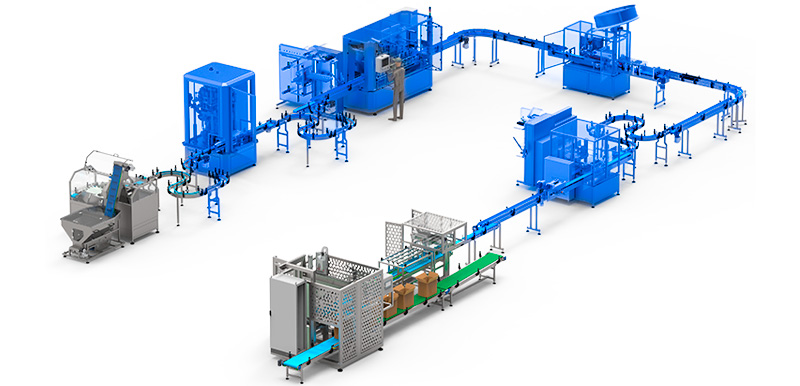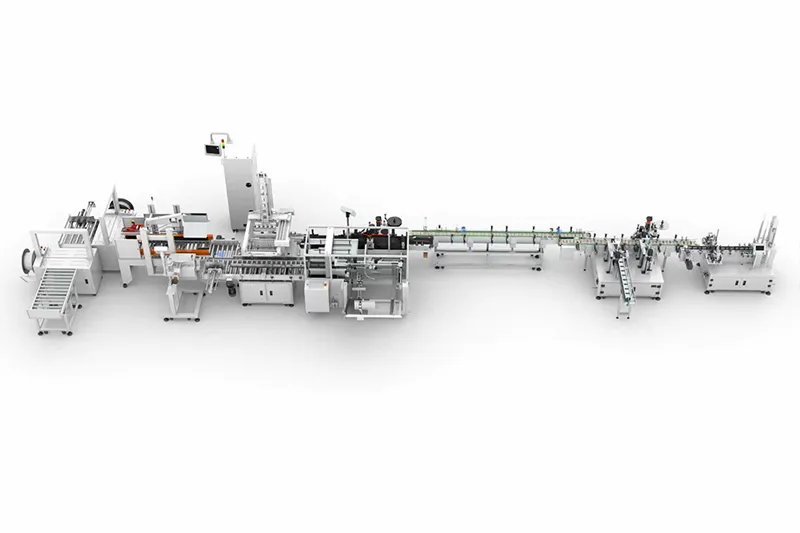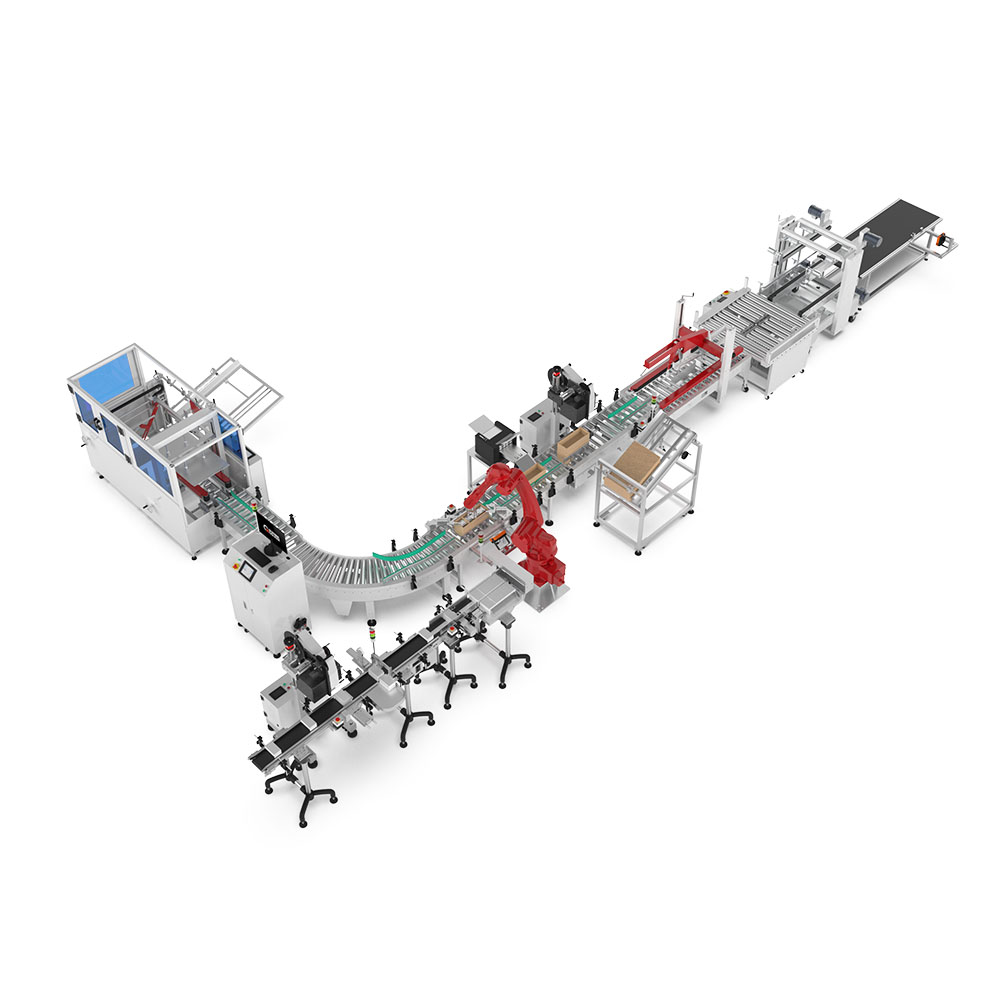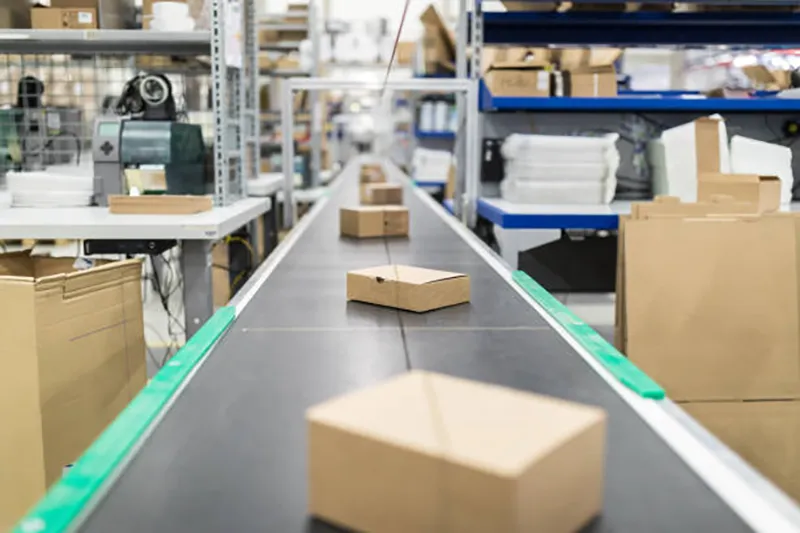
Focusing solely on the peak RPM of a single machine risks creating severe production bottlenecks and unstable yields. The true carton packing production line speed is determined by the synchronized integration of erectors, packers, and palletizers under an Industry 4.0 control architecture, ensuring stable, continuous throughput rather than erratic bursts.
At Joyda Total Pack, our engineering teams frequently see facilities purchase a “high-speed” standalone case erector, only to find their overall secondary packaging output hasn’t increased by a single box. Why? Because a turnkey automation line is a living ecosystem. If the heart beats at 40 cycles per minute but the arteries can only handle 20, you don’t get speed—you get a jam. Let’s break down the engineering realities of high-speed carton packing line efficiency and how true operational velocity is calculated.
Table of Contents
- The Myth of Peak Speed vs. Stable Output
- Component Speeds: Erectors, Packers, and Sealers
- How Packing Methods Affect Cycle Times
- The Bottleneck Effect at the Palletizer
- The Role of Industry 4.0 in Sustaining Speed
- Real-World Case Study: Tripling FMCG Throughput
- Calculating the Math of High-Speed Beverage Packing
- Conclusion
1. The Myth of Peak Speed vs. Stable Output
Many procurement teams make the mistake of reading a brochure and assuming a machine’s maximum mechanical rating equals operational reality. We need to shift the focus from instantaneous bursts to continuous reliability.
The real carton packing production line speed is not a single equipment’s limit, but the result of system coordination. An automatic carton packing production line efficiency relies on steady upstream feeding and synchronized downstream clearing, making integration capability far more critical than isolated machine RPM.
System Integration vs. Spliced Machines
When a factory attempts to splice together standalone machines from different vendors, they create inherent latency. Each machine operates on its own discrete logic, reacting to sensors only after a box has already piled up. This reactive environment causes constant micro-stops.
- Example 1: The Accumulation Problem. If a standalone sealer takes 2 seconds to tape a box, but the packer shoves a box forward every 1.5 seconds, the standalone system relies on a physical photo-eye to stop the packer. The packer halts, waits, and restarts. This stop-and-go wear and tear destroys the average cartons-per-minute (CPM) rate.
- Example 2: The Integrated Solution. In a properly integrated high-speed carton packing line, the central PLC (Programmable Logic Controller) acts as a single brain. It continuously modulates the servo speeds of the conveyors, ensuring a perfectly spaced, continuous flow. The packer gently slows down to match the sealer’s rhythm, never actually coming to a complete stop.
From an engineering perspective, modern high-speed lines win through “stable output.” Running continuously at 28 CPM yields far more product at the end of a shift than a line that sprints at 40 CPM but jams every ten minutes.
2. Component Speeds: Erectors, Packers, and Sealers
To understand the rhythm of a packaging suite, we must look at the standard operational bands of its core components. A line can only ever run as fast as its slowest module.
Typical automated configurations feature carton erectors running at 15 to 40 cartons per minute and robotic packing units operating at 10 to 35 cartons per minute. When engineered correctly, a high-speed carton packing line sustains 30 or more cartons per minute with zero accumulation issues.
Balancing the Core Modules
Each station possesses mechanical limitations dictated by physics—suction strength, material friction, and gravity. You cannot cheat these limits; you must engineer around them.
- Example 1: Carton Erecting Physics. An automatic carton erector operating at 40 CPM must pull a corrugated blank, square it, fold the minor and major flaps, and apply tape in under 1.5 seconds. If the cardboard is slightly warped, or if the vacuum cups lose suction, the machine misfires. Therefore, a highly reliable erector is usually dialed in between 25–30 CPM to ensure 100% squareness.
- Example 2: Sealing and Labeling Matching. The tape head on a case sealer can easily run at 50 CPM. However, if a print-and-apply labeler is attached immediately after, the carton packing production line speed is suddenly throttled by the printer’s cycle time.
Typical Component Velocity Bands
| Line Component | Typical Speed Range | Primary Mechanical Limiter |
| Carton Erector | 15–40 cartons/min | Vacuum suction & Corrugated quality |
| Auto Packing Unit | 10–35 cartons/min | Product weight & Tooling complexity |
| Top Sealer / Taper | 30–50 cartons/min | Tape application mechanism |
| Print & Apply Labeler | 20–40 cartons/min | Print engine cycle & Tamp duration |
| Integrated System | 30+ cartons/min stable | PLC Synchronization & Handoffs |
3. How Packing Methods Affect Cycle Times
The physical act of moving the product into the box is usually the most complex variable in the entire line. The method chosen directly dictates your maximum reliable operational velocity.
The carton packing production line speed heavily depends on whether you utilize multi-axis robotic gripping or mechanical pusher-style loading. While pushers offer rapid continuous motion for rigid items, robots provide the necessary flexibility for delicate or multi-format SKUs, ultimately dictating the sustainable rhythm.
Robotic Arms vs. Mechanical Pushers
The product dictates the packer. A highly efficient line matches the packing technology to the product’s fragility and shape.
- Example 1: Mechanical Pushers for Rigidity. For a facility packing rigid, square cereal boxes into a master carton, a side-load pusher mechanism is ideal. The cartons are accumulated, and a pneumatic arm sweeps them into the erected case in one swift motion. This method can comfortably exceed 35 CPM because the geometry is simple and predictable.
- Example 2: Delta Robots for Fragility. Conversely, if you are packing oddly shaped, soft-touch items like premium cosmetic bottles or flexible pouches, a high-speed Delta robot or a 6-axis arm is required. The robot must pick, orient, and gently place the items. Because the tooling must travel through the Z-axis (up, over, and down into the box), the cycle time is inherently longer, usually capping the unit’s throughput closer to 20–25 CPM.
4. The Bottleneck Effect at the Palletizer
You can pack 50 boxes a minute perfectly, but if they pile up at the end of the conveyor, the entire upstream system must trigger an emergency halt to prevent collisions.
The end-of-line palletizing sequence frequently forms a hidden bottleneck that artificially caps the carton packing production line speed. If the robotic palletizer cannot match the combined output of the sealing and labeling stations, the resulting backup destroys overall equipment efficiency and line synchronization.
Clearing the End of the Line
An integrated line must possess a clearing strategy. The palletizer must outpace the packer, or you must install adequate buffering.
- Example 1: The Pallet Exchange Delay. A robotic palletizer may stack boxes very quickly, but what happens when the pallet is full? The robot must pause while a conveyor moves the full pallet out and an empty pallet in. If this exchange takes 15 seconds, and your line is pushing a box every 2 seconds, you instantly have 7 boxes looking for a place to go.
- Example 2: Spiral Accumulators. To maintain high-speed carton packing line efficiency during this exchange delay, engineers utilize spiral accumulation conveyors. These vertical buffers absorb the continuous output of the sealers, holding the boxes in transit until the palletizer signals that the new empty pallet is ready, ensuring the upstream erector never has to stop.
5. The Role of Industry 4.0 in Sustaining Speed
Mechanical speed is useless without digital oversight. Modern automation utilizes data to prevent the micro-stops that secretly drain hours of productivity from an otherwise perfectly capable factory shift.
Industry 4.0 centralized control stabilizes the carton packing production line speed by utilizing smart scheduling and predictive diagnostics. This digital architecture shortens fault response times, reduces format changeovers, and ultimately boosts overall equipment effectiveness (OEE) by 10 to 20 percent compared to legacy operations.
Data-Driven Line Synchronization
We have established that integration capacity is the true metric of speed. Industry 4.0 provides the nervous system for this integration.
- Example 1: Rapid Fault Response. In a spliced line, a jammed box triggers a generic red light. The operator spends 5 minutes walking the line to find it. In an Industry 4.0 setup, the centralized SCADA screen displays exactly which photo-eye triggered the fault (e.g., “Jam at Sealer Infeed Sensor 04”). Response time drops from minutes to seconds.
- Example 2: Digital Changeovers. When switching from a small carton to a large one, manual adjustments can take an hour. With smart scheduling, the operator selects a recipe on the HMI. Servo motors automatically adjust the erector magazine, the packer guide rails, and the sealer height simultaneously. By reducing changeover times from 60 minutes to 5 minutes, you essentially “buy back” almost an hour of full-speed production time per shift.
6. Real-World Case Study: Tripling FMCG Throughput with Joyda Total Pack
Theoretical engineering principles must translate into tangible financial returns. Let us examine a facility that successfully transitioned from a highly variable manual setup to a precisely controlled automated ecosystem designed by JOYDA.
A food manufacturer approached us to upgrade their secondary packaging process. By implementing our turnkey automation solutions—including precision pick & place loading and seamless robotic palletizing—they jumped from an erratic 8 to 10 cartons per minute to a highly stable 22 to 25 cartons per minute. This automated carton packing production line efficiency allowed them to reduce staffing from 8 manual operators to just 2 system supervisors.
Eliminating the Fatigue Variable
The client was previously utilizing a manual + semi-automatic sealing model. The workflow was chaotic.
- Before Integration: The line required 6 to 8 people. Operators manually erected boxes, pushed products inside, and fed them into a standalone taper. The actual speed hovered between 8–10 cartons/min. They experienced frequent box misalignments, which jammed the taper, and the overall rhythm was highly unstable due to worker fatigue.
- After Integration: We installed a fully automated carton packing production line. The system achieved a stable, unyielding speed of 22–25 cartons/min. More importantly, the required personnel dropped to just 2 technicians who patrolled the line and replenished corrugated blanks.
Through the integrated software system, the plant manager achieved complete production data visualization. The remote monitoring capabilities allowed them to see the real-time takt time, ensuring the rhythm was completely controllable and resulting in a massive drop in annual labor costs alongside vastly improved shipment consistency.
7. Calculating the Math of High-Speed Beverage Packing
To grasp the sheer volume that a synchronized line handles, we must look at the multiplication factor of primary units inside secondary packaging over a continuous time horizon.
In a high-speed beverage application, a stable carton packing production line speed of 25 cartons per minute containing 12 bottles each yields an impressive output. This configuration comfortably processes over 18,000 bottles per hour, demonstrating the compounding power of steady, uninterrupted automation.
The Yield Multiplication Effect
The mathematics of packaging prove why consistency beats peak speed. Let’s run the numbers on a fast-moving consumer goods (FMCG) juice bottle line.
- Example 1: The Stable Line. 25 cartons/min × 60 minutes = 1,500 cartons/hour. If each carton holds a 12-pack of bottles, that is 18,000 bottles secured and palletized every single hour, guaranteed.
- Example 2: The Erratic Line. A line tuned to sprint at 40 cartons/min but lacking upstream integration might jam for 20 minutes out of every hour due to conveyor backups. (40 cartons/min × 40 minutes of actual run time) = 1,600 cartons/hour. However, the wear and tear on the servos, the stress on the operators clearing jams, and the corrugated waste generated by crushed boxes make this “faster” line drastically less profitable.
Continuous vs. Intermittent Output Comparison
| Operational Style | Rated Machine Speed | Actual Uptime | Yield per Hour (12-pack) | Result on Line Wear |
| Spliced / Erratic | 40 cartons/min | 65% | ~18,720 units | High stress, frequent jams |
| Integrated Industry 4.0 | 25 cartons/min | 98% | ~17,640 units | Smooth, predictive, low wear |
While the erratic line technically produces slightly more in a vacuum, real-world OEE dictates that the integrated line will drastically outperform the spliced line over a full 8-hour shift because it never incurs the 15-minute recovery penalties associated with catastrophic jams.
8. Conclusion
When evaluating capital equipment, you must look past the maximum RPM advertised on the spec sheet. The true carton packing production line speed is entirely dependent on your system’s integration capacity. By aligning your carton erectors, robotic packers, and sealers under a unified Industry 4.0 architecture, you eliminate the micro-stops and bottlenecks that plague standalone setups. A line that operates smoothly at a moderate speed will consistently outproduce a high-speed line crippled by poor synchronization. Focus on stable output, and your factory’s true efficiency will soar.
Stop Guessing Your Line Speed. Let Joyda Total Pack Optimize It.
Achieving maximum throughput isn’t about buying the fastest individual machine; it’s about seamless system integration. Whether you are looking for an Automatic Bottle Packing Line or a complete end-of-line robotic palletizing system, Joyda Total Pack delivers the Industry 4.0 turnkey automation you need to eliminate bottlenecks forever.
[Request a Line Audit Today] – Contact our engineering team with your product specs and target CPM, and we will design a synchronized secondary packaging solution guaranteed to hit your output goals.
Frequently Asked Questions (FAQ)
1. Is 30 cartons per minute considered fast for an automated line?
Yes. While some dedicated single-format lines (like soda can trays) run faster, 30 cartons per minute for a fully enclosed, taped, and labeled master carton containing complex payloads is an excellent and highly profitable standard in B2B manufacturing.
2. How does the quality of the corrugated cardboard affect line speed?
Significantly. If you use cheap, warped, or improperly scored cardboard, the vacuum cups on the carton erector will fail to pull the blank correctly, or the flaps will fold asymmetrically, causing jams that force the entire line to stop.
3. What does OEE mean in packaging?
OEE stands for Overall Equipment Effectiveness. It is a mathematical calculation (Availability × Performance × Quality) that tells you the percentage of manufacturing time that is truly productive. An automated line typically boosts OEE by 10-20% over manual setups.
4. Can an automated line handle different box sizes?
Yes. Modern high-speed carton packing lines feature servo-driven adjustments. Operators can switch between box formats by selecting a new recipe on the HMI touchscreen, usually completing the changeover in under 5 minutes.
5. Why are pusher-style packers faster than robots?
Pushers operate on simple, linear, continuous mechanics (pushing items directly into a box). Robots have to perform multi-axis movements (pick up, move over, lower down, release, return), which takes inherently more time. However, robots offer vastly more flexibility for fragile goods.
6. Does adding a labeler slow down the packing line?
It can if not engineered properly. If a Print-and-Apply labeler has a cycle time of 2.5 seconds, but your sealer pushes a box every 2 seconds, the labeler becomes the bottleneck. This is why integrated line design is critical to match component speeds.
7. How do I know if my palletizer is causing a bottleneck?
If your carton packer frequently pauses while there are empty spaces on the conveyor leading to the palletizer, or if boxes are stacking up against each other at the end of the line, your palletizing sequence is too slow for your packing rhythm.