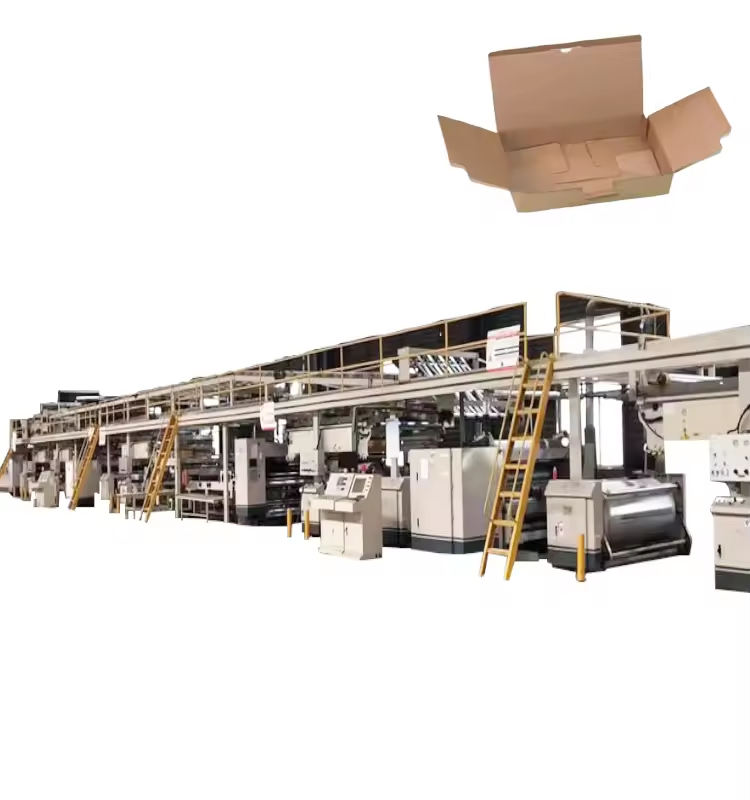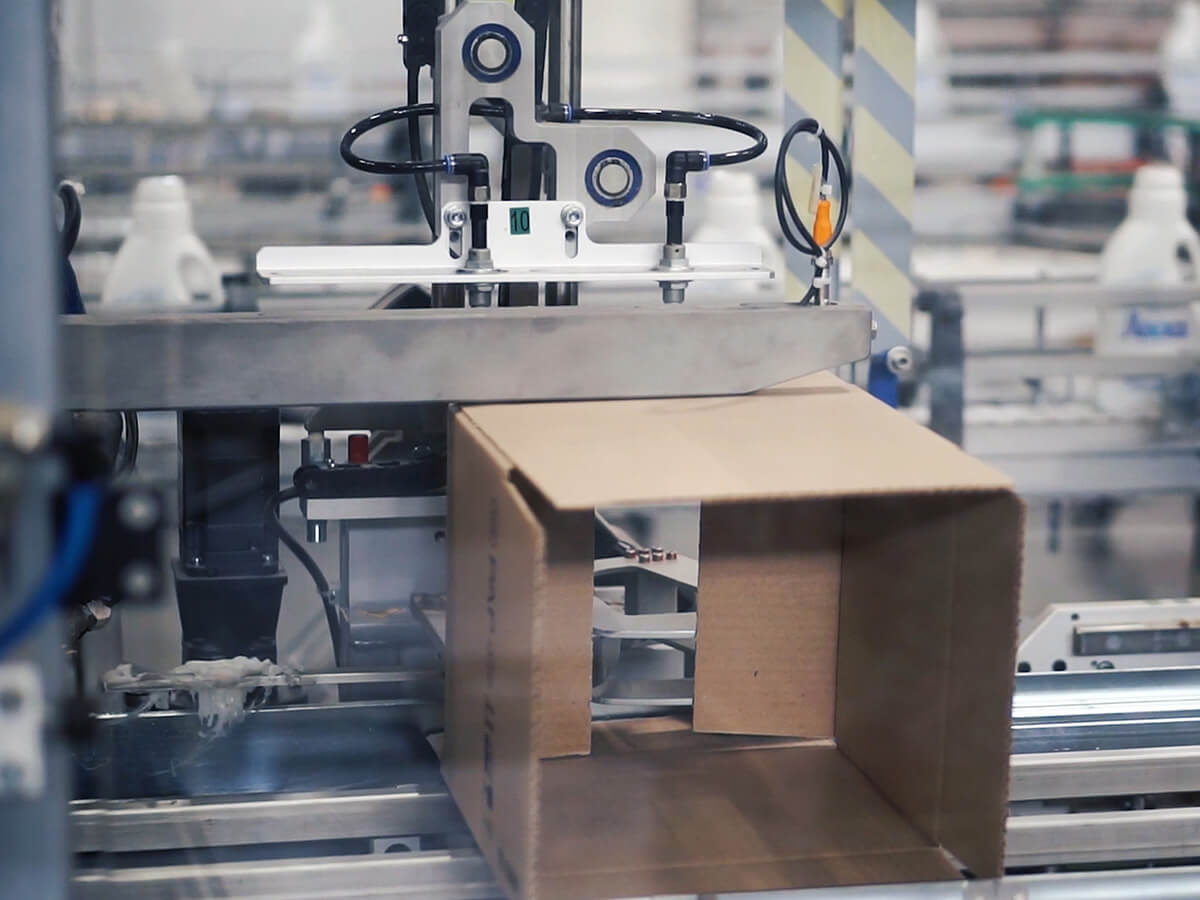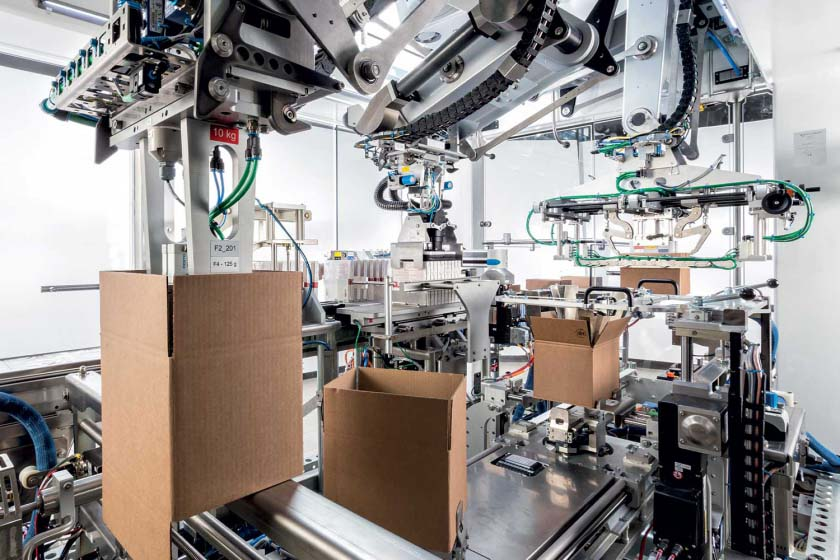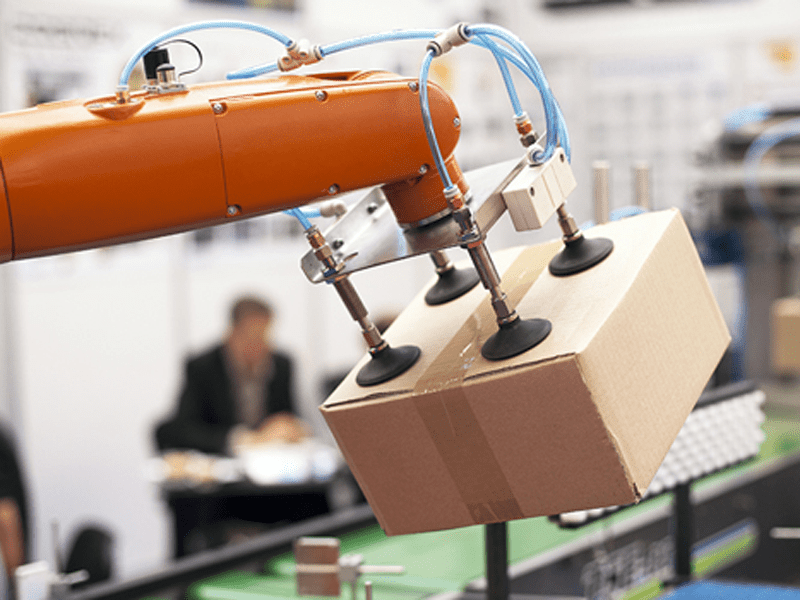
Choosing incompatible packaging equipment creates severe production bottlenecks and inflates labor costs. Ignoring integration results in isolated machines unable to scale with demand. A high-efficiency carton packing production line requires Industry 4.0 connectivity, modular flexibility for rapid SKU changeovers, and seamless integration with downstream robotic palletizers to ensure continuous, high-volume throughput.
As an engineer, I frequently see procurement teams fixate entirely on the “cartons per minute” spec sheet while ignoring how the machine actually communicates with the rest of the factory. True efficiency is not just about raw mechanical speed; it is about system harmony. When evaluating an automated solution, you must look beyond the physical hardware to assess its digital architecture, its ability to handle your specific product mix, and its long-term reliability. Let’s break down the technical criteria for making the correct investment.
Table of Contents
- Assessing Industry 4.0 Readiness and Data Connectivity
- Evaluating Modular Flexibility for High-SKU Environments
- Throughput and Continuous Run Capabilities
- Material Utilization: Reducing Waste Through Automation
- Integration Capacity: Synchronizing the End-to-End Workflow
- Labor Reduction and Safety Improvements
- Real-World Applications: Book and Beverage Packaging
- Conclusion
1. Assessing Industry 4.0 Readiness and Data Connectivity
Modern manufacturing demands absolute transparency. You cannot optimize a packaging line if you cannot see its real-time performance data and diagnose faults instantly.
An advanced automated carton packing system utilizes IoT sensors and PLC networking to provide real-time workflow monitoring. This digital connectivity enables predictive analytics and remote diagnostics, allowing engineers to identify mechanical wear before it causes unplanned downtime, thereby safeguarding your production schedule.
The Role of Predictive Analytics and SCADA
When evaluating a carton packing production line, the control architecture is just as critical as the steel frame. Industry 4.0 readiness means the system can actively predict its own maintenance needs rather than simply reacting to failures. We analyze this from three angles: IT integration, maintenance strategy, and operational uptime.
- Example 1: Pneumatic Pressure Monitoring. In the carton erecting module, IoT sensors constantly monitor the vacuum pressure of the suction cups. If the pressure drops by 10%—indicating a clogged filter or a wearing seal—the system alerts the maintenance dashboard before a box is dropped, preventing a line jam.
- Example 2: Servo Torque Analytics. In the robotic loading section, the system tracks the torque required to push the product into the carton. A gradual increase in torque suggests mechanical friction or a misalignment in the guide rails, prompting an early intervention.
By utilizing centralized SCADA (Supervisory Control and Data Acquisition) systems, plant managers gain a comprehensive view of the line’s health.
| Feature | Legacy Packaging Equipment | Industry 4.0 Ready Systems |
| Data Collection | Manual clipboards / End-of-shift reports | Automated, real-time cloud logging |
| Fault Diagnosis | Trial and error by line operators | Exact component pinpointed on HMI |
| Maintenance | Reactive (Run to failure) | Predictive (Condition-based alerts) |
| ERP Integration | Disconnected | Seamless API/OPC UA handshakes |
2. Evaluating Modular Flexibility for High-SKU Environments
Consumer demand for varied packaging sizes requires production lines that can adapt instantly without requiring hours of manual wrench-turning from your maintenance team.
When choosing a carton packing production line, prioritize modular designs that support toolless, HMI-driven changeovers. This flexibility ensures that switching from a 12-pack to a 24-pack configuration takes minutes instead of hours, maintaining high operational throughput even in facilities managing dozens of different daily SKUs.
Designing for Rapid Changeovers
The true test of automated carton packing is not how fast it runs a single product, but how fast it recovers when switching to a new one. A modular approach allows you to swap out or adjust specific end-of-arm tooling and guide rails efficiently. We look at this through mechanical design, software recipes, and overall equipment effectiveness (OEE).
- Example 1: Beverage Packaging. A facility packaging juice bottles needs to switch from a 500ml 6-pack to a 1L 12-pack. A flexible system utilizes servo-driven adjustable guide rails that automatically move to the precise width required based on the recipe selected on the touchscreen.
- Example 2: Book Publishing. Packaging books involves dealing with variable spine thicknesses and hardcover versus paperback dimensions. Modular gripper heads on the robotic loader can be quickly swapped using quick-release pneumatic couplings to handle different weights and surface textures without damaging the covers.
A high-efficiency system relies on digital “recipes” stored in the PLC. When the operator selects a new SKU, the erector, the packer, and the sealer all synchronize to the new dimensions simultaneously, eliminating the trial-and-error adjustments that plague semi-automated lines.
3. Throughput and Continuous Run Capabilities
Speed is only valuable if it is consistent. A line that constantly jams at 200 cartons per minute is far less efficient than a stable system running continuously at 100 cartons per minute.
High-efficiency automated carton packing systems process hundreds of units per minute and feature continuous run capabilities. Unlike manual processes vulnerable to worker fatigue, these automated lines run 24/7, utilizing accumulation buffers and synchronized servo drives to absorb minor upstream delays without halting the entire packaging process.
Analyzing True Machine Capacity
When assessing throughput, engineers focus on the sustained “Takt Time”—the average time between the start of production of one unit and the start of production of the next. This requires analyzing mechanical durability, buffer management, and human limitations.
- Example 1: Peak Season E-commerce. During holiday spikes, fulfillment centers must operate continuously. Manual teams experience a severe drop in packing speed after the 6th hour of a shift due to fatigue. An automated system maintains its exact cycle time across three continuous shifts, ensuring output targets are met reliably.
- Example 2: High-Speed Food Processing. In snack food packaging, primary wrappers can output hundreds of bags per minute. The secondary carton packing line must feature intelligent accumulation conveyors that can buffer these bags if the case erector momentarily pauses to load a new magazine of corrugated blanks, ensuring the primary filler never has to stop.
By removing the variability of human stamina, you transform your packaging schedule from an estimate into a mathematical certainty.
4. Material Utilization: Reducing Waste Through Automation
Raw material costs, particularly corrugated board and adhesives, often exceed the capital cost of the packaging machinery over a 5-year lifecycle. Wasting these materials destroys profit margins.
Implementing automated carton packing optimizes material utilization by enforcing exact tolerances for glue application and flap folding. This precision drastically reduces the scrap rate and enhances packaging consistency, allowing manufacturers to maximize their raw material yield and eliminate the waste typical of manual taping and gluing.
Precision Application and Scrap Reduction
Material waste in packaging usually stems from human inconsistency. By transitioning to precise electromechanical control, we address this from financial, environmental, and quality assurance angles.
- Example 1: Hot Melt Glue Control. Manual operators often over-apply tape or glue “just to be safe.” Automated sealers use pneumatic extrusion guns that apply the exact millimeter-length bead of adhesive required to secure the flap, often reducing glue consumption by 20% to 30%.
- Example 2: Carton Squaring. Manual case erecting often results in slightly skewed boxes. When these boxes are pushed through a sealer, they jam and crush, ruining both the box and potentially the product inside. Automated erectors use mandrel systems or dual-axis suction to ensure perfectly 90-degree corners every time, dropping the corrugated scrap rate to near zero.
| Metric | Manual Packing Process | Automated Carton Packing |
| Material Yield (Corrugated) | ~85% – 90% | 98% – 99.5% |
| Adhesive/Tape Usage | Highly variable / Excessive | Optimized / Precisely metered |
| Product Damage Rate | 2% – 5% (due to drops/jams) | < 0.5% |
| Aesthetic Consistency | Poor to Fair | Perfectly uniform |
5. Integration Capacity: Synchronizing the End-to-End Workflow
A carton packer provides little value if it cannot communicate effectively with the machines feeding it products or the robotic systems taking away the finished boxes.
An ideal automated carton packing solution must integrate seamlessly with upstream fillers, inline check weighers, and downstream robotic palletizers. This integration capacity creates a synchronized end-to-end workflow where machines automatically adjust their speeds to match the overall line rhythm, eliminating costly bottlenecks and work-in-progress pileups.
Creating a Closed-Loop Packaging Environment
Standalone machines create “islands of automation.” We design for continuous flow, evaluating hardware handshakes, software protocols, and physical floor layouts.
- Example 1: Check Weigher Feedback. Once the carton is packed and sealed, it passes over an inline check weigher. If the system detects a carton is underweight (missing a product), it triggers a high-speed pneumatic reject arm. Because the line is integrated, this rejection happens without stopping the main conveyor, maintaining continuous flow.
- Example 2: Robotic Palletizer Handshakes. The carton packing line must communicate with the end-of-line palletizer. If the palletizer is momentarily exchanging a full pallet for an empty one, it sends a signal upstream. The carton packing line intelligently slows down or uses a spiral accumulation conveyor to buffer the packed boxes until the palletizer is ready again.
This level of synchronization requires open communication protocols like OPC UA, ensuring that machines from different vendors can speak the same digital language.
6. Labor Reduction and Safety Improvements
Relying heavily on manual labor for repetitive, heavy-lifting tasks is no longer a sustainable business model due to rising industrial wages and stringent ergonomic safety regulations.
Transitioning to an automated carton packing production line can cut direct labor needs by 30% or more by eliminating repetitive manual operations. Furthermore, it removes operators from ergonomically hazardous tasks, shifting their roles toward system supervision and significantly reducing the frequency of workplace injuries and associated costs.
The Shift from Manual Handler to Line Supervisor
Automation is not simply about removing headcount; it is about utilizing human capital for higher-value tasks. We view this transition through the lenses of ROI, occupational safety, and workforce upskilling.
- Example 1: Eliminating Repetitive Strain. Forming hundreds of cardboard boxes an hour manually requires repetitive wrist and shoulder movements, leading to a high incidence of carpal tunnel syndrome and subsequent worker’s compensation claims. An automatic case erector eliminates this risk entirely.
- Example 2: Mitigating Lifting Hazards. Manually loading heavy products (like liquid-filled bottles or dense stacks of books) into cartons causes severe lower back strain. By employing robotic case packers, operators are removed from the physical lifting path entirely.
Instead of exhausting themselves physically, your staff transitions into technical roles—managing the HMI, replenishing corrugated blanks, and analyzing production data—which drastically improves employee retention rates.
7. Real-World Applications: Book and Beverage Packaging
Theoretical specifications must translate into functional reliability on the factory floor. We validate our engineering concepts through diverse, high-stress industry deployments.
JOYDA Totalpack’s turnkey modular design successfully supports diverse production requirements, from precise book packaging to high-speed juice bottle packaging. By combining robotics, software, and predictive analytics, these smart packaging lines reduce manual labor and execute rapid changeovers, ensuring consistent throughput across highly variable product verticals.
Industry-Specific Automation Configurations
Different products require fundamentally different handling characteristics, proving the necessity of modular flexibility and intelligent control.
- Example 1: Book Packaging Solutions. Books are dense, heavy, and have easily damaged covers. JOYDA’s system utilizes specialized soft-touch vacuum grippers to load the books into perfectly sized cartons. The system integrates with upstream binders and downstream labelers to ensure that exact ISBN matches are maintained, processing variable spine thicknesses seamlessly through dynamic servo adjustments.
- Example 2: Juice Bottle Packaging. Liquid packaging requires high-speed, continuous motion to prevent sloshing and spills. The carton packing line employs continuous-motion robotic loaders that match the velocity of the incoming bottles, smoothly grouping and lowering them into the erected cartons at hundreds of units per minute without causing impact damage to the bottle caps.
By leveraging predictive maintenance and connected control, these turnkey solutions ensure that regardless of the product type, the packaging stage never becomes the factory’s bottleneck.
8. Conclusion
Selecting a Carton Packing Production Line is a strategic infrastructural decision that dictates your facility’s long-term scalability. By prioritizing Industry 4.0 data connectivity, modular flexibility, and comprehensive end-to-end integration, manufacturers can permanently eliminate the volatility of manual packing. Investing in a high-efficiency automated system ensures that your production rhythm remains stable, your material waste drops to near zero, and your operational throughput can comfortably meet the demands of tomorrow’s market.
Frequently Asked Questions (FAQ)
1. What is the difference between semi-automated and fully automated carton packing?
Semi-automated systems require human operators for certain tasks (like erecting the box or pushing it into a sealer). A fully automated carton packing line handles the entire process—erecting, loading, sealing, and labeling—without any manual intervention, relying entirely on conveyors and robotics.
2. How long does it typically take to change over to a new carton size?
On a modern, modular system with servo-driven adjustments, a complete SKU changeover can be completed in under 10 minutes via HMI recipe selection. Older, fully mechanical systems could take 45 minutes to an hour.
3. Can an automated carton packer handle fragile items?
Yes. Modern robotic loaders can be equipped with customized end-of-arm tooling, such as soft vacuum cups or padded pneumatic grippers, allowing them to handle delicate items like glass bottles, baked goods, or sensitive electronics without causing damage.
4. What kind of air and power supply does a high-efficiency line require?
Most industrial carton packing lines require a 480V 3-phase electrical supply and a dedicated supply of clean, dry compressed air (usually operating around 6-8 bar or 90-115 PSI) to run the pneumatic cylinders and vacuum generators.
5. Will implementing this system require me to hire software engineers?
No. While the Industry 4.0 backend is complex, the user interface (HMI) is designed to be intuitive for standard operators. Maintenance and system alerts are displayed in plain language. Furthermore, remote diagnostics allow the equipment manufacturer to troubleshoot software issues off-site.
6. How much floor space is saved by upgrading to an integrated line?
Integrated lines typically save 20% to 30% of floor space compared to manual setups because they eliminate the need for large work-in-progress (WIP) staging areas, manual packing tables, and wide walkways for material handling carts.
7. How do these machines handle defective cartons or jams?
Advanced systems feature automatic reject lanes and torque-sensing servos. If a jam occurs, the machine instantly stops the specific module to prevent damage, alerts the operator via the SCADA dashboard, and often provides a step-by-step visual guide on the screen to clear the fault safely.