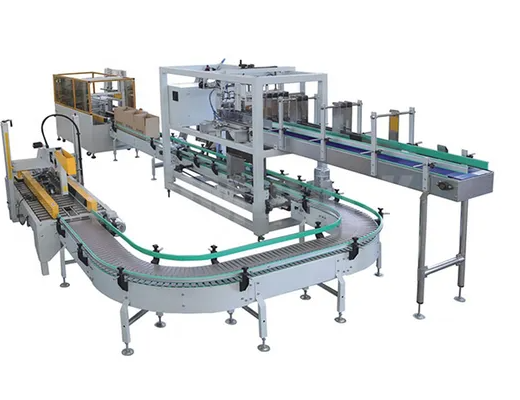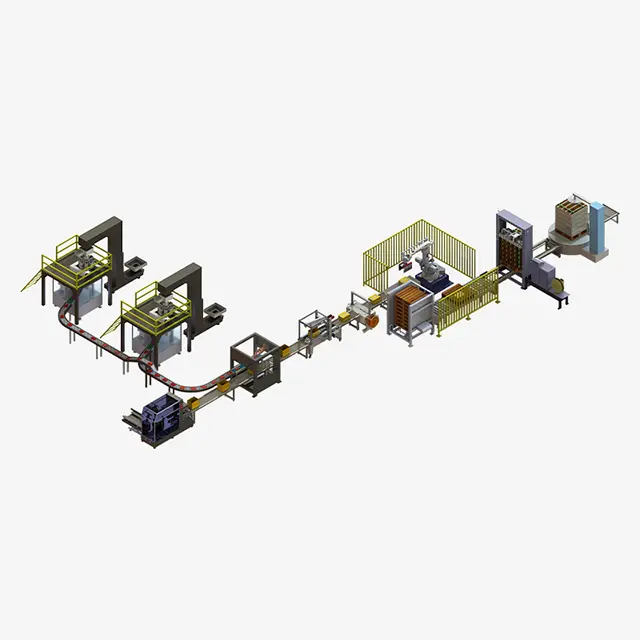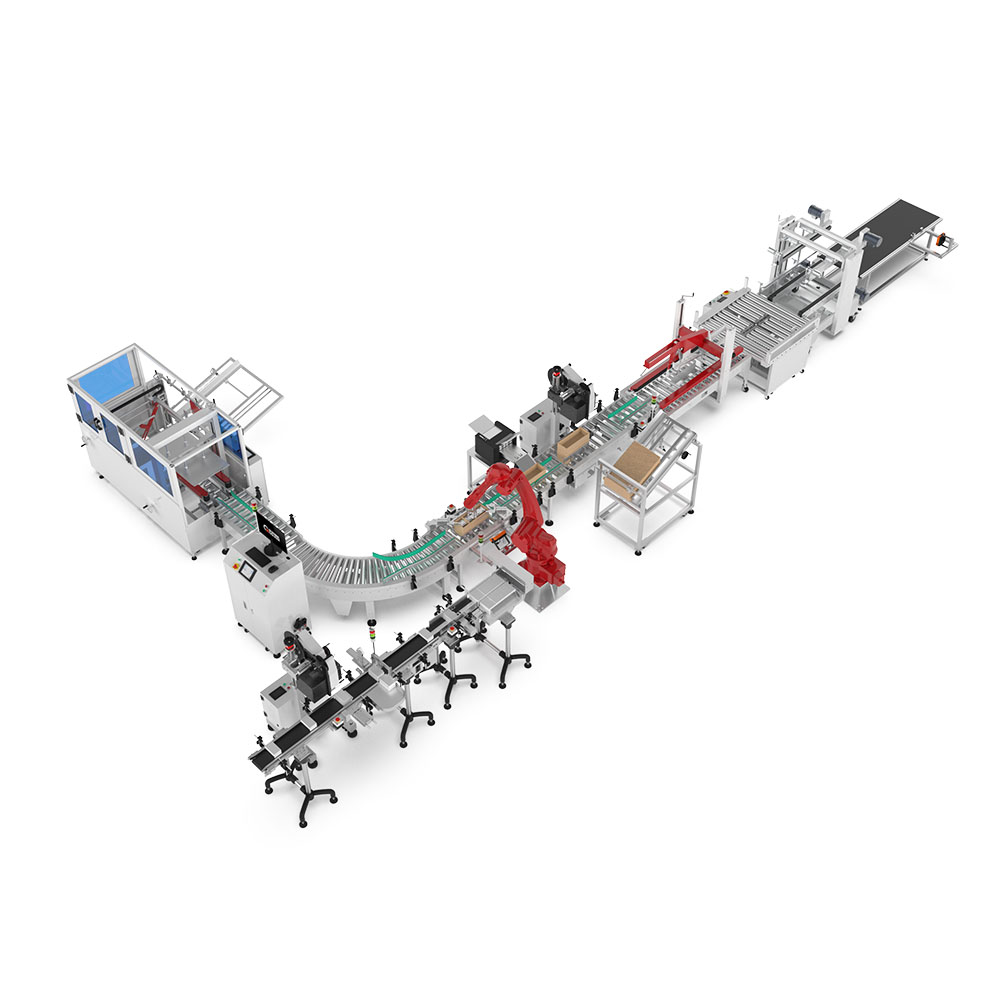
In a high-volume manufacturing environment, isolated production data is a financial liability. ERP integration for secondary packaging lines bridges the gap between the physical factory floor and your business’s digital central nervous system.
Rather than relying on manual data entry, ERP integration establishes a direct, automated communication channel between your end-of-line packaging equipment and your Enterprise Resource Planning (ERP) platform. This seamless connection allows for the real-time exchange of production data, order fulfillment statuses, inventory depletion levels, and quality metrics, transforming mechanical hardware into an intelligent, data-driven node within your supply chain.
Table of Contents
- What is ERP Integration for Packaging Machines?
- How Does JOYDA TECH Achieve Seamless ERP Integration?
- What Are the Benefits of Integrating Packaging Machines with ERP?
- How Does Integration Impact Real-time Data and Decision-Making?
- What Future Trends Await ERP-Integrated Packaging Lines?
1. What is ERP Integration for Packaging Machines?
Are you wondering how your packaging line can talk directly to your business’s central nervous system? ERP integration for packaging machines is the crucial link that transforms isolated production data into actionable business intelligence.
ERP integration for packaging machines is the process of establishing a direct, automated communication channel between packaging equipment and an Enterprise Resource Planning (ERP) system. This connection allows for the real-time exchange of production data, order information, inventory levels, and quality metrics, creating a unified operational view and streamlining workflows.
1.1 The Theoretical Basis of ERP Integration
The theoretical foundation of ERP integration for packaging machines lies in the principles of data centralization and process automation. At its core, an ERP system acts as a central repository for all business data, from sales orders and inventory to finance and human resources. When packaging machines are integrated, they become an active data source within this ecosystem. This means that a hot-melt sealing machine, for example, isn’t just sealing boxes; it’s reporting its throughput, material consumption, and operational status directly to the ERP. This multi-angle analysis reveals that the integration isn’t merely about connecting devices; it’s about creating a single source of truth for operational data, eliminating data silos, and enabling a holistic view of the entire manufacturing process. This theoretical framework underpins the ability to make informed decisions based on comprehensive, real-time information.
| Integration Principle | Description | Packaging Application Example |
| Data Centralization | Consolidating data into a single system. | All packaging line metrics flow into the ERP. |
| Process Automation | Automating data exchange and workflows. | ERP order triggers specific packaging machine settings. |
| Real-time Visibility | Instant access to current operational status. | Monitoring the progress of a specific product batch. |
| Data Consistency | Ensuring accuracy across all systems. | Inventory updates from the packaging line match ERP records. |
1.2 Design Trade-offs and Practical Impacts
Implementing ERP integration involves careful design trade-offs. While the benefits are substantial, the initial investment in software development, system configuration, and potential hardware upgrades needs consideration. JOYDA TECH’s approach, utilizing its independently developed software, minimizes reliance on third-party tools, offering a more tailored and robust solution. The practical impacts are profound: consider a packaging line for mobile phones. Without integration, a sales order in the ERP would require manual data entry into the packaging line’s control system, leading to potential errors and delays. With JOYDA TECH’s integration, the ERP order automatically configures the cartoning machine, labeling machine, and robotic palletizer for the specific product variant and quantity. Another example is the packaging of books; real-time inventory updates from the packaging line directly inform the ERP, preventing stockouts or overproduction. This level of automation significantly reduces human error, accelerates production cycles, and provides unparalleled accuracy in inventory management, ultimately leading to cost savings and improved customer satisfaction.
2. How Does JOYDA TECH Achieve Seamless ERP Integration?
Are you curious about the technical backbone that allows JOYDA TECH’s packaging machines to communicate flawlessly with complex ERP systems? The secret lies in a combination of proprietary software, robust communication protocols, and expert system architecture.
JOYDA TECH achieves seamless ERP integration through its internally developed, flexible software platform that acts as a bridge between diverse packaging machines and various ERP systems. This platform utilizes standardized communication protocols and custom APIs, ensuring secure, real-time data exchange and bi-directional control without relying on off-the-shelf solutions.
2.1 Proprietary Software as the Integration Hub
At the heart of JOYDA TECH’s seamless ERP integration strategy is its proprietary software. Unlike solutions that rely on generic, off-the-shelf integration tools, JOYDA TECH has developed its own software from the ground up. This internal development provides several key advantages. Firstly, it allows for deep customization, ensuring that the software can precisely meet the unique requirements of different packaging machines—from hot-melt sealing machines to shrink-wrapping systems—and various client ERP platforms. Secondly, it offers superior control over data security and integrity, which is paramount when sensitive production and order data are being exchanged. This software acts as an intelligent hub, translating machine-specific data into a format understandable by the ERP and vice-versa. For example, it can interpret the operational status of a robotic palletizer and relay it to the ERP’s production monitoring module, or receive a new production schedule from the ERP and configure the entire packaging line accordingly. This bespoke approach ensures maximum compatibility and reliability.
| Software Advantage | Description | Practical Application |
| Customization | Tailored to specific client needs. | Adapting to unique ERP data structures for food packaging. |
| Security | Enhanced data protection. | Secure transmission of sensitive production data for mobile phones. |
| Flexibility | Adaptable to various machine types. | Integrating cartoning, labeling, and shrink-wrapping machines. |
| Performance | Optimized for real-time data flow. | High-speed data exchange for high-volume book packaging. |
2.2 Communication Protocols and Data Mapping
JOYDA TECH’s integration prowess also stems from its mastery of various communication protocols and sophisticated data mapping techniques. The physical packaging machines, such as a hot-melt sealing machine or a cartoning machine, communicate using industrial protocols like OPC UA or Modbus TCP. JOYDA TECH’s proprietary software acts as an intermediary, translating these industrial signals into a format compatible with the ERP system, often via custom Application Programming Interfaces (APIs) or standard connectors like XML or JSON. This process involves meticulous data mapping, where specific machine parameters (e.g., units packaged, material consumed, error codes) are mapped to corresponding fields within the ERP (e.g., finished goods inventory, raw material consumption, quality control logs). For instance, when a batch of perfume bottles is completed on the packaging line, the software automatically updates the ERP’s inventory count and marks the production order as fulfilled. This precise data mapping ensures that information is accurately and consistently exchanged, providing a reliable foundation for all subsequent business processes.
3. What Are the Benefits of Integrating Packaging Machines with ERP?
Integrating your end-of-line automation with your ERP system is not just an IT upgrade; it is a strategic financial move that unlocks measurable operational agility.
By utilizing a Joyda Total Pack integrated system, facilities experience a dramatic boost in operational efficiency and a near-total elimination of manual data entry errors. When a new order is logged in your ERP, the data flows seamlessly to the factory floor, automatically configuring your case erectors, labelers, and robotic palletizers for the specific product variant. This ensures that your secondary packaging operations are always perfectly synchronized with your actual market demand, ultimately lowering carrying costs and accelerating order fulfillment.
3.1 Enhanced Operational Efficiency and Reduced Errors
The most immediate and impactful benefit of integrating packaging machines with ERP systems is a dramatic boost in operational efficiency and a significant reduction in manual errors. By automating the data flow between the packaging line and the ERP, processes that once required human intervention—such as updating production schedules, tracking material consumption, or recording finished goods—are now handled seamlessly. For example, a new order for sweeping robots entered into the ERP can automatically trigger the packaging line to prepare for production, configuring the cartoning machine, labeling machine, and palletizer with the correct settings. This eliminates the need for operators to manually input data or adjust machine parameters based on printed work orders, thereby minimizing the risk of human error. The result is faster changeovers, smoother production runs, and a more reliable packaging process, ensuring that products like mobile phones or books move through the line with optimal speed and accuracy.
3.2 Real-time Inventory Management and Production Planning
Another critical benefit is the transformation of inventory management and production planning. With JOYDA TECH’s integrated solutions, packaging machines provide real-time updates on material consumption and finished goods production directly to the ERP. This means that as a hot-melt sealing machine consumes adhesive or a shrink-wrapping machine uses film, the ERP’s raw material inventory is updated instantly. Similarly, as packages of biscuits or chocolates are completed, the finished goods inventory is automatically incremented. This real-time visibility prevents stockouts of packaging materials and avoids overproduction of finished goods, leading to optimized inventory levels and reduced carrying costs. Furthermore, production planning becomes far more accurate and responsive. The ERP can analyze real-time production data against sales forecasts and adjust schedules dynamically, ensuring that the packaging line is always producing what’s needed, when it’s needed, for products ranging from perfumes to household appliances.
| Benefit Category | Specific Advantage | Example Impact |
| Efficiency | Automated workflows. | 20% faster order fulfillment for books. |
| Error Reduction | Eliminates manual data entry. | Near-zero mislabeling for mobile phones. |
| Inventory | Real-time stock levels. | 15% reduction in packaging material waste. |
| Planning | Dynamic scheduling. | Optimized production for seasonal chocolate demands. |
4. How Does Integration Impact Real-time Data and Decision-Making?
Are you looking to leverage your packaging line data for smarter, faster business decisions? The integration of packaging machines with ERP systems provides an unprecedented level of real-time data, fundamentally transforming how businesses make strategic and operational choices.
ERP integration provides a unified, real-time data stream from packaging machines, enabling immediate insights into production performance, material consumption, and quality metrics. This empowers stakeholders with accurate, up-to-the-minute information, facilitating agile decision-making, proactive problem-solving, and strategic optimization across the entire enterprise.
4.1 Comprehensive Data for Proactive Problem-Solving
The continuous flow of data from JOYDA TECH’s integrated packaging machines to the ERP system creates a rich repository of information that is invaluable for proactive problem-solving. Every aspect of the packaging process, from the speed of a cartoning machine to the temperature of a hot-melt sealing unit, is monitored and recorded. This data allows for the identification of subtle trends or anomalies that might otherwise go unnoticed. For example, if the efficiency of a shrink-wrapping machine for sweeping robots begins to decline slightly over several shifts, the integrated system can flag this, allowing maintenance teams to investigate before a major breakdown occurs. This predictive capability, driven by real-time data analysis, moves businesses from reactive troubleshooting to proactive maintenance and optimization. The ability to correlate machine performance with specific production batches also enhances quality control, making it easier to pinpoint the root cause of any packaging defects for products like biscuits or perfumes.
4.2 Strategic Decision-Making and Business Intelligence
Beyond day-to-day operations, the real-time data provided by ERP-integrated packaging lines significantly enhances strategic decision-making and business intelligence. With a holistic view of production costs, material usage, and throughput, management can make more informed decisions regarding capacity planning, new product introductions, and supply chain optimization. For instance, by analyzing the performance data of a packaging line for mobile phones, a company can accurately assess its ability to meet increased demand or identify areas for investment in new machinery. The data can also be used to evaluate the profitability of different product lines, considering actual packaging costs rather than estimates. JOYDA TECH’s integration ensures that this critical data is not confined to the factory floor but is accessible to all relevant stakeholders through the ERP, empowering them with the insights needed to drive long-term growth and competitive advantage. This includes leveraging the expertise of technical consultants like Chandra Gour, who specialize in complex system integration and data utilization.
5. What Future Trends Await ERP-Integrated Packaging Lines?
Are you curious about the next evolution of packaging machine and ERP integration? The future promises even deeper levels of intelligence, autonomy, and interconnectedness, driven by emerging technologies and evolving business demands.
The future of ERP-integrated packaging lines will feature advanced AI for predictive analytics and self-optimization, enhanced cybersecurity, greater interoperability with external supply chain partners, and the development of fully autonomous, self-healing packaging factories that seamlessly adapt to dynamic market conditions.
5.1 AI-Driven Self-Optimization and Predictive Analytics
The next frontier for ERP-integrated packaging lines lies in advanced AI-driven self-optimization and predictive analytics. While current systems provide real-time data, future iterations will leverage AI and machine learning to not only analyze this data but also to autonomously adjust machine parameters for optimal performance. Imagine a hot-melt sealing machine that, based on real-time sensor data and historical patterns, can predict adhesive curing issues and automatically fine-tune its temperature and pressure settings to prevent defects before they occur. JOYDA TECH’s commitment to internal software development positions it perfectly to integrate these sophisticated AI algorithms. This means the packaging line for products like books or chocolates will not just report data; it will learn, adapt, and continuously improve its own efficiency and quality without constant human oversight. This level of intelligence will lead to unprecedented levels of throughput, minimal waste, and near-perfect quality control.
5.2 Enhanced Cybersecurity and Supply Chain Interoperability
As packaging lines become more interconnected with ERP systems and the broader digital ecosystem, enhanced cybersecurity will become an even more critical trend. Protecting sensitive production data, intellectual property, and operational integrity from cyber threats will be paramount. JOYDA TECH’s focus on robust, internally developed software provides a strong foundation for building secure integration solutions. Simultaneously, the trend towards greater supply chain interoperability will see ERP-integrated packaging lines communicating not just with internal systems but also with external partners—suppliers, logistics providers, and even customers. For example, real-time production data from a packaging line for mobile phones could automatically update a logistics partner’s shipping schedule, optimizing the entire delivery process. This extended integration will create a truly transparent and responsive supply chain, allowing businesses to react with unprecedented agility to market changes and customer demands, further solidifying the value of a “one-stop solution” approach.
Conclusion
The smart integration of packaging machines with ERP systems is a cornerstone of modern manufacturing efficiency, and JOYDA TECH stands at the forefront of this revolution. By leveraging its proprietary software and deep expertise, JOYDA TECH enables seamless data exchange, automated workflows, and real-time insights across the entire production process. This integration delivers tangible benefits, from enhanced operational efficiency and reduced errors to precise inventory management and proactive decision-making. As we look to the future, AI-driven self-optimization, robust cybersecurity, and extended supply chain interoperability will further elevate the capabilities of these integrated systems. For businesses aiming to achieve unparalleled agility, cost savings, and a competitive edge, embracing JOYDA TECH’s smart integration solutions is not just an upgrade—it’s a strategic imperative for navigating the complexities of Industry 4.0.
Connect Your Factory Floor to Your Top Floor with Joyda Total Pack
Achieving true Industry 4.0 efficiency requires more than just buying fast machines; it demands seamless digital integration. Because Joyda Total Pack develops its proprietary control software in-house, we eliminate the headaches of third-party API mismatches, delivering a turnkey packaging solution that communicates flawlessly with your existing ERP system.
[Request a Software Integration Consultation] – Contact our automation and software engineering team today. Tell us which ERP platform you use, and we will design a customized, fully integrated secondary packaging line that brings total transparency to your production data.