
Your packaging factory may already have automated equipment, but hidden production problems can still severely limit your overall efficiency. Modern packaging manufacturers face increasing operational challenges, including higher production volumes, shorter delivery cycles, and severe labor shortages. When output drops, factories often struggle to identify whether the root cause is unexpected machine downtime, inefficient workflow coordination, or inconsistent manual operations. Industry 4.0 packaging solutions solve these manufacturing problems by creating a connected, transparent production environment where real-time data identifies bottlenecks instantly, allowing managers to optimize performance and maintain stable, high-volume output. This guide explores the critical production problems solved by smart manufacturing and how turnkey automation can transform your packaging line.
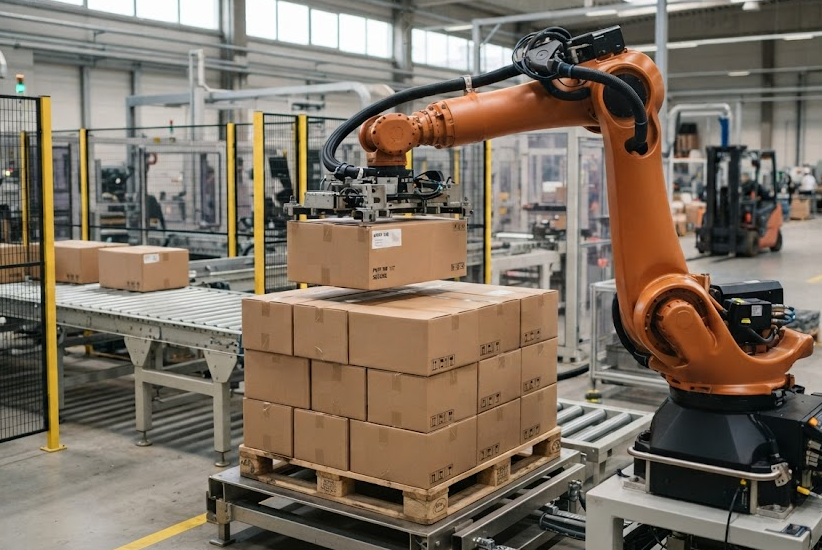
Table of Contents
- Overcoming the Lack of Real-Time Production Visibility
- Preventing Frequent Equipment Downtime and Maintenance Delays
- Identifying Hidden Production Bottlenecks Through Data Analysis
- Reducing High Labor Dependency with Smart Automation
- Solving Poor Coordination Between Isolated Packaging Machines
- Managing Increasing Production Demand Without Adding Labor
- Providing Accurate Production Data for Executive Decision-Making
- Industry Application Scenarios: Solving Sector-Specific Packaging Problems
- Evaluating the Right Partner: Turnkey Solutions vs. Standalone Machines
- Conclusion
1. Overcoming the Lack of Real-Time Production Visibility
Industry 4.0 packaging solutions solve the lack of real-time visibility by automatically collecting production data and displaying live equipment status, eliminating the delays caused by manual reporting.
A major traditional challenge for plant managers is relying on manual production reports or delayed operator feedback to understand what is happening on the factory floor. By the time a paper report highlights a drop in output or a process inefficiency, the shift is often over, and the production loss is permanent.
Smart factory systems address this by bridging the gap between the physical machines and digital management. They continuously collect production information automatically, providing real-time visibility into critical metrics:
- Equipment operating status: Knowing instantly if a machine is running, starved, or faulted.
- Production output: Tracking real-time throughput against daily targets.
- Running efficiency: Calculating dynamic OEE (Overall Equipment Effectiveness).
- Downtime records: Logging exact fault codes and stoppage durations automatically.
This immediate visibility allows managers to address production abnormalities the second they occur, rather than reacting to them hours later.
2. Preventing Frequent Equipment Downtime and Maintenance Delays
Smart factory solutions prevent frequent equipment downtime by utilizing predictive maintenance sensors that detect abnormal machine conditions before catastrophic mechanical failures occur.
Unexpected equipment failures interrupt the entire packaging process, leading to severe production delays, missed delivery schedules, and massively increased emergency maintenance costs. In a traditional setting, maintenance teams are reactive—they only fix the case packer or palletizer after it has broken down.
Industry 4.0 introduces connected equipment monitoring. By tracking physical parameters such as vibration, temperature, and servo motor torque, the system can identify wear and tear on components early. The benefits of this proactive approach include:
- Reduced unplanned downtime: Repairs are scheduled during planned changeovers.
- Improved equipment availability: Machines run consistently without micro-stops.
- Longer machine service life: Operating equipment within optimal parameters prevents cascading mechanical damage.
For manufacturers, reducing downtime is not just about having “advanced tech”—it is about directly protecting enterprise profit margins.
3. Identifying Hidden Production Bottlenecks Through Data Analysis
Industry 4.0 eliminates hidden production bottlenecks by continuously analyzing workflow data to pinpoint exactly which machine, process, or operational setting is limiting overall line output.
Many factories face a highly frustrating problem: they know production efficiency is low, but they cannot easily determine why. Is the carton erector too slow? Is the labeling machine causing workflow interruptions? Why does production speed fluctuate from shift to shift?
When a factory cannot identify the exact cause of a problem, optimization is impossible. Production data analysis provided by Industry 4.0 smart manufacturing systems precisely maps out capacity limitations. By evaluating the time intervals between different packaging stages, the system highlights slow-performing equipment and inefficient production sequences. This allows manufacturing engineers to optimize processes based on hard operational data rather than operator assumptions.
4. Reducing High Labor Dependency with Smart Automation
Connected packaging systems reduce high labor dependency by integrating robotics and automated equipment to handle repetitive, physically demanding tasks like material handling, case packing, and palletizing.
Packaging operations traditionally require significant manual involvement. However, rising labor costs, severe labor shortages, and inconsistent operation quality have made high manual dependency a major manufacturing risk.
Industry 4.0 solves this by combining robotics, automated mechanical equipment, and intelligent control systems into a seamless workflow. Applications include:
- Automated case packing: Replacing manual loading with high-speed, precision robotic arms.
- Automatic material handling: Using conveyors and automated guided vehicles (AGVs) to eliminate manual product transfer.
- Robotic palletizing: Ensuring perfectly stacked pallets ready for logistics without ergonomic risks to workers.
By shifting away from repetitive manual work, factories stabilize their daily output and insulate themselves from unpredictable labor market fluctuations.
5. Solving Poor Coordination Between Isolated Packaging Machines
Industry 4.0 solves poor machine coordination by connecting isolated case formers, packers, and palletizers into an integrated, synchronized production system that regulates material flow.
Many factories operate individual packaging machines separately. A standalone case former might overproduce cartons while an isolated robotic palletizer sits idle waiting for sealed boxes. This lack of communication results in excessive production waiting time, inefficient material flow, and difficult system management.
Industry 4.0 connects these different packaging equipment units into one unified ecosystem. Connected solutions improve machine communication by matching the operational speed of downstream equipment to the exact output of upstream feeders. This production synchronization ensures that products move continuously, eliminating bottlenecks and drastically improving overall line performance.
6. Managing Increasing Production Demand Without Adding Labor
Intelligent packaging automation systems manage increasing production demand by maximizing the capacity and utilization of existing equipment rather than relying on expensive physical expansion or additional manual labor.
When orders increase, traditional manufacturers often default to hiring more workers, adding additional shifts, or purchasing separate, disjointed machines. These approaches linearly increase operating costs and create complex management challenges.
Industry 4.0 offers a smarter solution for scaling. Smart packaging systems help manufacturers improve their existing production capacity through higher equipment utilization and automated workflow optimization. By reducing downtime and enabling better production planning via rapid, automated recipe changeovers, factories can absorb higher order volumes using their current footprint and workforce.
7. Providing Accurate Production Data for Executive Decision-Making
Smart manufacturing platforms solve the lack of production data by integrating MES systems that provide actionable performance analysis, enabling faster, accurate executive decision-making.
Without accurate production data, factory managers struggle to answer fundamental operational questions: Why did output decrease yesterday? Where exactly are the material losses occurring? Which specific process needs capital improvement?
Industry 4.0 bridges the gap between the factory floor and the executive suite. Through the integration of Manufacturing Execution Systems (MES), smart platforms provide deep production insights. Data collection, digital monitoring, and manufacturing system integration mean that managers no longer guess the causes of their manufacturing problems. They possess the analytical tools required to make proactive, cost-saving decisions.
8. Industry Application Scenarios: Solving Sector-Specific Packaging Problems
Industry 4.0 packaging solutions are engineered to solve sector-specific manufacturing problems, providing customized data visibility and automation to meet the exact production demands of various industries.
Different industries experience unique manufacturing problems. Below is an analysis of how smart factory solutions address these specific challenges.
| Manufacturing Industry | Common Manufacturing Problems | Industry 4.0 Application & Solution | Selection Recommendation |
| Food & Beverage | High production speed requirements; frequent line interruptions; seasonal demand fluctuations; strict traceability. | Smart packaging monitors performance in real-time, reducing downtime and maintaining stable output during peak seasons. | Essential for facilities requiring high-volume throughput and continuous product traceability. |
| FMCG / Consumer Goods | Multiple product formats; frequent packaging changes; short delivery cycles. | Flexible automation systems manage rapid recipe changes, minimizing changeover times while maintaining efficiency. | Highly recommended for operations with high SKU counts and diverse packaging formats. |
| Pharmaceuticals | Strict quality requirements; mandatory production tracking; critical packaging accuracy. | Connected systems improve production transparency and automated vision inspection ensures consistent quality control. | Strictly required to meet regulatory compliance and eliminate the high cost of packaging errors. |
| Electronics | Complex production scheduling; need for flexible production; difficulty monitoring multiple processes. | Smart manufacturing provides workflow visibility, helping factories optimize intricate, small-batch packaging lines. | Ideal for agile manufacturing environments prioritizing precision and rapid scheduling adjustments. |
| Large Manufacturing Plants | Managing multiple packaging lines; difficult equipment management; lack of centralized data. | Turnkey smart factory solutions integrate all equipment and data into one coordinated platform. | Recommended for plant managers requiring unified, top-down visibility across the entire factory floor. |
9. Evaluating the Right Partner: Turnkey Solutions vs. Standalone Machines
Purchasing a turnkey Industry 4.0 packaging solution is strongly recommended over buying standalone machines because a single integration partner ensures complete system connectivity, automated workflow design, and comprehensive data management.
When large manufacturing enterprises decide to upgrade, they do not just want to buy a single machine. Purchasing isolated equipment from multiple independent suppliers inevitably leads to software communication failures, fragmented production data, and complex integration projects that strain internal engineering resources.
To truly solve manufacturing problems, buyers must seek complete end-of-line automation. A turnkey partner provides:
- Complete Line Design: Ensuring the case erector, packer, labeler, and palletizer are mechanically synchronized.
- Automation Integration: Writing unified PLC programs so the entire line operates as a single entity.
- System Connectivity: Seamlessly linking the packaging line to the factory’s MES/ERP systems.
- Ongoing Support: Providing centralized, long-term technical support for both hardware and software.
10. Conclusion
Your packaging factory may already utilize automated equipment, but if that equipment is disconnected, hidden production problems will continue to limit your efficiency. Industry 4.0 packaging solutions transform operations by overcoming the lack of real-time visibility, preventing frequent downtime, and pinpointing exact bottlenecks through data analysis. By integrating robotics and smart control systems, manufacturers can reduce their reliance on manual labor, coordinate isolated machines, and manage increasing production demands profitably. To fully realize these benefits, factories must shift away from purchasing standalone machines and invest in comprehensive, integrated smart manufacturing ecosystems.
Are hidden production problems limiting your packaging efficiency?
As a professional manufacturer and turnkey automation expert, JOYDA TECH specializes in designing customized Industry 4.0 packaging solutions. We help factories transition from isolated machines to fully connected, intelligent end-of-line packaging systems. Contact our engineering team today to discuss your specific manufacturing challenges and discover how our smart factory integration can optimize your production line.
Frequently Asked Questions (FAQs)
1. What manufacturing problems does Industry 4.0 solve in a packaging line?
Industry 4.0 solves critical issues such as unexpected machine downtime, lack of real-time production visibility, high labor dependency, poor coordination between isolated machines, and the inability to identify the root cause of production bottlenecks.
2. How does an intelligent packaging automation system reduce equipment downtime?
It utilizes predictive maintenance and real-time monitoring. By continuously collecting data from machine sensors (like vibration and temperature), the system alerts operators to abnormal conditions, allowing maintenance to be performed before a catastrophic failure occurs.
3. We have automated machines, but efficiency is still low. Why?
Having automated machines does not guarantee efficiency if they do not communicate. If your case erector and palletizer operate independently, you will suffer from material flow imbalances, micro-stops, and waiting times. Industry 4.0 synchronizes these machines into a cohesive workflow.
4. Can Industry 4.0 help us manage higher production demands without hiring more staff?
Yes. By maximizing equipment utilization, reducing changeover times, and eliminating unplanned downtime, smart packaging systems allow you to extract significantly more capacity from your existing production lines without expanding your workforce.
5. Why is MES integration important in packaging production?
Manufacturing Execution System (MES) integration bridges the gap between top-level business planning and shop-floor execution. It automates production scheduling, tracks orders in real-time, and ensures accurate data collection for executive decision-making.
6. Why should we choose a turnkey packaging automation solution instead of buying individual machines?
A turnkey solution provides a fully integrated system where all mechanical components, software interfaces, and data networks are designed to work together by a single supplier. This eliminates integration risks, reduces installation time, and ensures unified technical support.