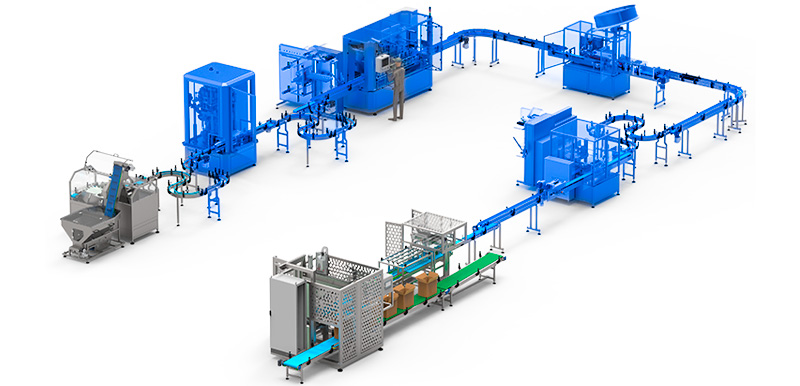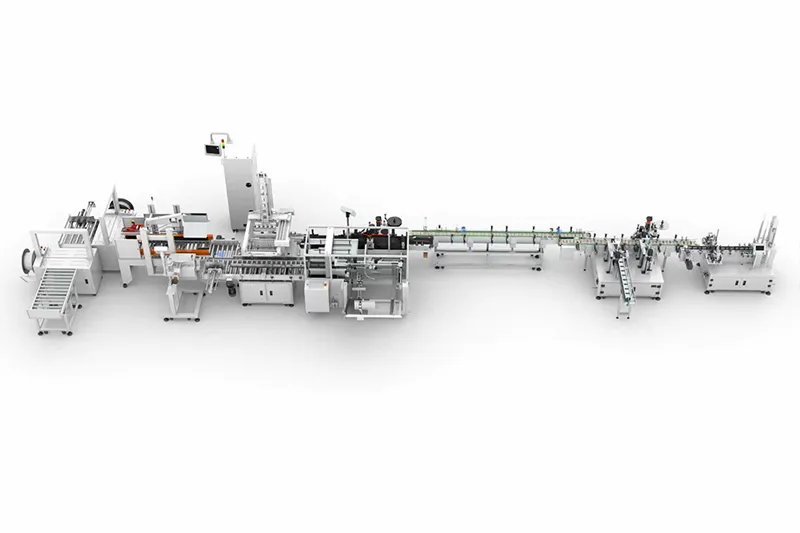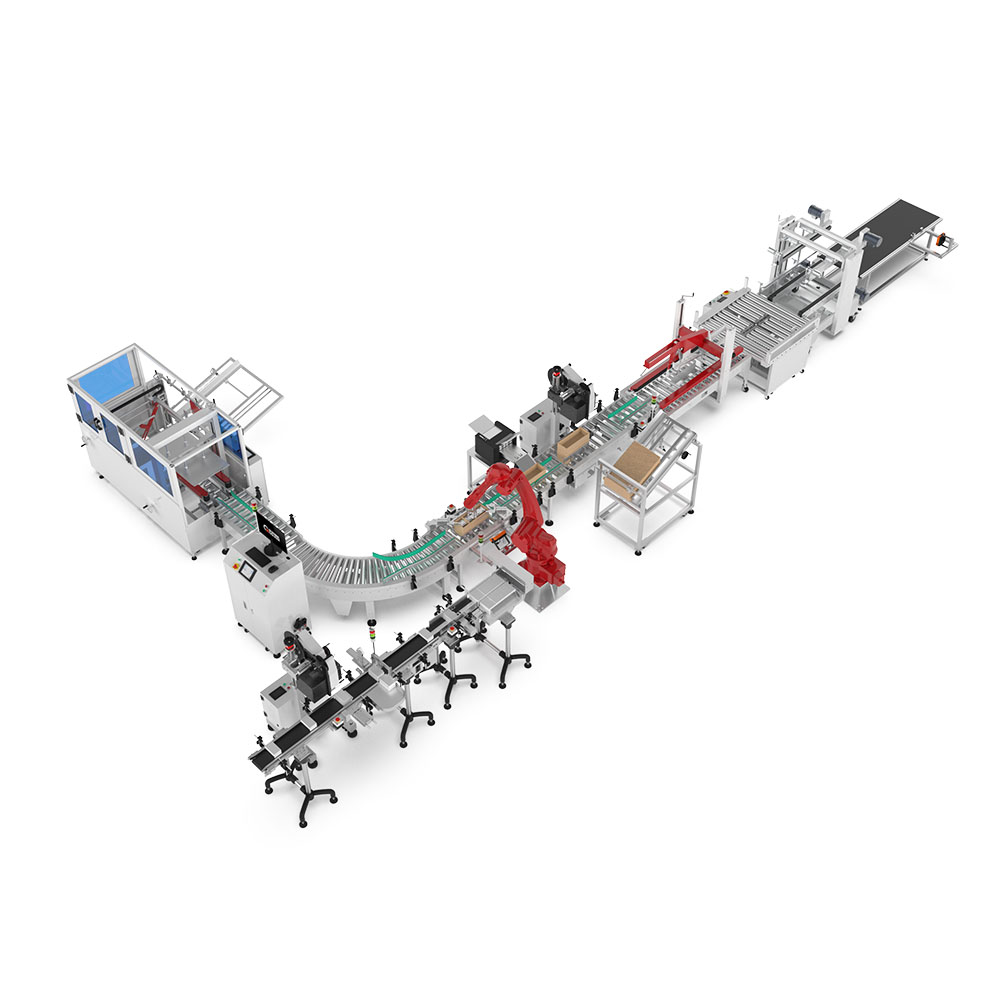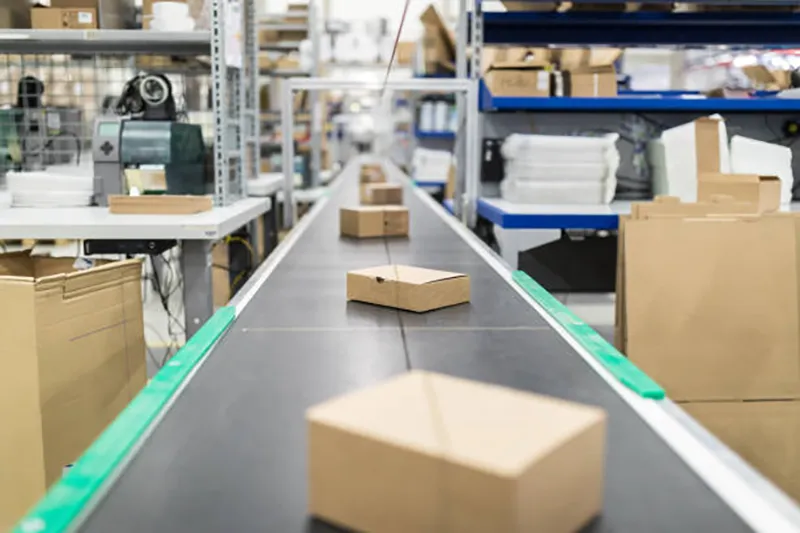
Many manufacturers fall into the trap of equating “machine speed” with “production output,” only to find their overall throughput limited by frequent stops and disconnected processes. The real secret to maximizing output isn’t running a conveyor faster; it is system coordination. An Industry 4.0 Carton Packaging System maximizes output by integrating forming, loading, weighing, sealing, and palletizing into one unified digital platform. This connectivity allows for real-time fault tracing, synchronized cycle times, and predictive maintenance, ensuring that the entire line operates as a single, continuous organism rather than a series of disjointed machines.
At Joyda, we often see lines capable of 200 cartons per minute running at an effective rate of only 80 because of bottlenecks and micro-stops. This article outlines the top technical strategies to close that gap and achieve true operational efficiency.
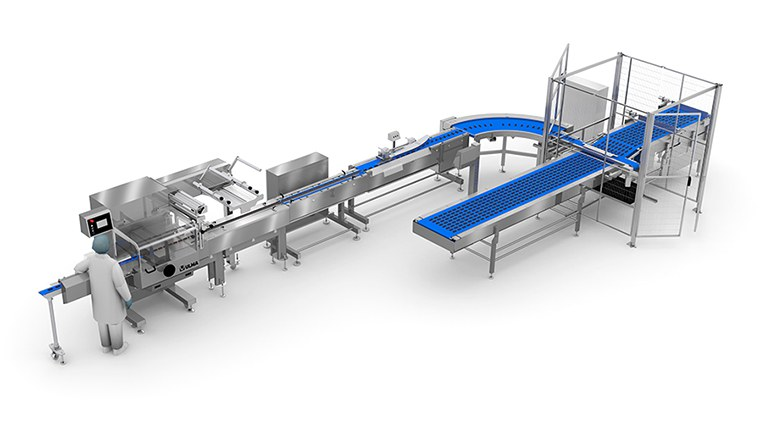
Table of Contents
- Eliminate “Islands of Automation” through Full Integration
- Synchronize Cycle Times to Reduce Idle States
- Leverage Real-Time Data for Immediate Fault Tracing
- Automate Quality Control to Protect Yield
- Optimize Changeover Procedures via HMI Recipes
- Implement Predictive Maintenance to Kill Downtime
- Shift Operator Roles from Manual Handling to Line Supervision
- Standardize Consumables to Prevent Mechanical Jams
- Real-World Case Study: From Disconnected to Digital
- Future-Proofing Your Line for Scalability
1. Eliminate “Islands of Automation” through Full Integration
The biggest killer of output is the hand-off between machines. If your case erector stops but the sealer keeps running, you create a gap. If the sealer stops but the erector keeps running, you create a jam.
To maximize output, you must integrate every station—from the case erector and robotic packer to the palletizer and wrapper—under a unified control platform. A modern Industry 4.0 carton packing production line ensures a continuous hand-off from one station to the next, replacing stop-and-go manual handling with a seamless flow that eliminates hidden bottlenecks at the end of the line.
The Cost of Disconnection
In legacy setups, machines often have their own separate controllers.
- Problem: The case packer doesn’t “know” the palletizer is full until boxes start piling up on the floor.
- Solution: Centralized logic (PLC networking) allows the upstream machine to slow down or pause intelligently based on downstream status, maintaining a smooth flow pressure.
2. Synchronize Cycle Times to Reduce Idle States
Speed is irrelevant without synchronization. If your robot packs 20 boxes a minute but the sealer only processes 15, your output is 15. If the sealer does 25, it spends 30% of its time idling, wasting energy and wear.
Centralized control synchronizes the operational rhythm of erectors, packers, sealers, weighers, and palletizers, ensuring that the “takt time” remains consistent across the entire line. By dynamically adjusting conveyor speeds and robot movements, the system eliminates the “starve and block” scenarios that cause unnecessary idle time and erratic production rates.
Balancing the Line
We use buffering conveyors to absorb small fluctuations.
- Scenario: The robotic packer needs 30 seconds to reload a tray.
- System Action: The accumulation conveyor releases buffered cartons to the sealer during this 30-second window so the downstream palletizer never sees a gap in product flow.
3. Leverage Real-Time Data for Immediate Fault Tracing
In a manual line, if a machine stops, the operator has to walk over, open the door, and look for a jam. This takes minutes. In an Industry 4.0 system, the diagnosis is instant.
Industry 4.0 monitoring improves line stability by providing real-time status updates, alarm history, and specific maintenance reminders directly on the centralized dashboard. This allows operators to instantly pinpoint the root cause of a stoppage—whether it is a sensor fault or a jammed flap—helping to reduce unexpected downtime and protect overall throughput.
Data Visualization Table
| Feature | Old Way (Manual/Legacy) | Industry 4.0 Way | Impact on Output |
| Fault Detection | “Why did it stop?” (Trial & error) | “Servo 3 Overload” (Pinpointed on screen) | 90% Faster Recovery |
| Performance Tracking | End-of-shift paper report | Real-time OEE Dashboard | Immediate Correction |
| Bottle Neck ID | Guesswork based on observation | Heatmap of station latency | Data-Driven Optimization |
4. Automate Quality Control to Protect Yield
Rework is the silent enemy of speed. If you pack 100 boxes but 5 are missing an item, your effective output drops, and your downstream logistics suffer.
Integrating automated weighing and inspection modules directly into the line keeps packing accuracy stable by rejecting non-conforming cartons without stopping the flow. This ensures that only perfect products reach the palletizer, significantly lowering rework and scrap rates while improving the net yield of the production run.
The Role of Check Weighers
A high-precision check weigher detects if a carton is light (missing instruction manual) or heavy (double pack).
- The Benefit: The system uses a pneumatic pusher to divert the bad box to a reject lane. The main line never slows down, ensuring 100% of the pallets shipped are accurate.
5. Optimize Changeover Procedures via HMI Recipes
In today’s market, “High Mix, Low Volume” is the norm. If it takes you 2 hours to switch from Packing Format A to Packing Format B, you lose 25% of your shift.
With Industry 4.0 functions like servo-driven adjustments and digital HMI recipes, operators can optimize changeovers and reduce human mistakes when switching SKUs. Instead of manually adjusting guide rails with wrenches, the operator selects a pre-set formula on the screen, and the system automatically adjusts widths and heights, maintaining stable takt time even with frequent changes.
The “One-Touch” Changeover
- Manual Setup: Loosening bolts, sliding rails, guessing the width, tightening bolts, testing, readjusting. (Time: 45+ mins).
- Digital Setup: Select “SKU-102” on the touchscreen. Servos move guides to the exact position stored in memory. (Time: < 15 mins).
6. Implement Predictive Maintenance to Kill Downtime
Reactive maintenance (fixing it when it breaks) is too costly for high-throughput lines. You need to fix it before it breaks.
Predictive maintenance, supported by IoT sensors and vibration analysis, can prevent catastrophic failures by alerting maintenance teams to wearing components before they fail. This proactive approach helps reduce unexpected stoppages by 30–50%, ensuring that the line remains available for production during critical delivery windows.
Example: The Motor Bearing
- Standard: Run until the bearing seizes and the belt snaps. Line down for 4 hours.
- Industry 4.0: Sensor detects a 10% increase in vibration and temperature. The system sends an alert: “Schedule Maintenance for Palletizer Axis Z.” Maintenance replaces it during a scheduled lunch break. Zero lost production time.
7. Shift Operator Roles from Manual Handling to Line Supervision
The most efficient lines are those where humans do the least amount of physical work and the most amount of intellectual work.
By automating the heavy lifting and repetitive tasks, the carton packing system allows operators to shift from manual handling to high-level supervision. They manage the entire line from one central control interface, using real-time data to identify bottlenecks and adjust production rhythms without physically stopping the system to intervene.
The Safety & Efficiency Correlation
Reducing labor intensity isn’t just about comfort; it’s about consistency. A robot palletizer doesn’t get tired at 4:00 PM. It doesn’t drop boxes because of back pain. This reliability allows for a predictable hourly output that manual labor simply cannot match.
8. Standardize Consumables to Prevent Mechanical Jams
A surprisingly common cause of downtime is inconsistent packaging materials. A machine calibrated for high-speed operation requires materials within tolerance.
To maximize the uptime of your automated equipment, ensure that your corrugated cartons, shrink film, and hot melt glue meet strict quality standards. Variations in cardboard thickness or box scoring can cause jams in the case erector, nullifying the speed advantages of the automation.
- Tip: Work with your machine supplier to validate your box supplier. A 1mm variance in a box flap can cause a vacuum cup to miss, stopping a machine running at 30 cycles per minute.
9. Real-World Case Study: From Disconnected to Digital
Let’s look at a recent transformation Joyda facilitated for a consumer goods manufacturer.
In one typical configuration, the client upgraded from separate manual packing points to a fully connected Industry 4.0 carton packing system. Previously, they had operators manually forming boxes, hand-packing products, and manually stacking pallets. This resulted in frequent bottlenecks where one slow operator delayed the whole line.
After integrating Joyda’s automatic case erecting, robotic packing, sealing, inline weighing, and palletizing modules—all seamlessly connected by our proprietary in-house software—the workflow changed dramatically. Operators no longer managed each station independently. Instead, they transitioned from manual laborers to high-level supervisors monitoring the entire line from a single control interface. The result? The client increased their Overall Equipment Effectiveness (OEE) by 18%, reduced manual labor reliance by 60%, and achieved a full Return on Investment (ROI) in just 1.8 years. Packaging consistency is now 100% uniform across multiple product formats, regardless of the shift.
10. Future-Proofing Your Line for Scalability
Finally, maximizing output today means ensuring you can maximize it tomorrow.
When selecting an Industry 4.0 Carton Packaging System, prioritize modularity. A well-designed system allows you to drop in additional modules—such as a second robotic packer or a high-speed wrapper—without rewriting the entire software code. This scalability ensures that as your business grows, your packaging line can grow with it, protecting your initial ROI.
Ready to Maximize Your Packaging Output? Stop letting disconnected machines and micro-stops dictate your production ceiling. Because Joyda owns both our manufacturing facilities and our software development teams, we provide true, seamless Industry 4.0 turnkey solutions—without the integration headaches of third-party vendors.
[Contact Joyda Today] – Share your current packaging bottlenecks with our experts, and we will provide a customized, data-driven system integration proposal within 48 hours.