A packing line RFQ for plastic parts is a short document that tells suppliers how injection-molded parts must be counted, bagged, labelled and boxed. If the RFQ only says “one automatic packing line”, three suppliers will quote three different lines, and the prices will not be comparable. Discrete small-part counting is a different job from handling a continuous product, so the plastic parts packing production line you ask for must be defined part by part. This guide lists the 12 items buyers most often leave out and gives you a quote matrix you can copy.
Where this shows up in real plants. Published RFQ guides in this space are written for consumer-goods packaging: they ask for carton dimensions, board structure, print finishes, branding details, MOQ flexibility and a delivery destination. Equipment guides add a second requirement, which is to bring the right details for the equipment family you are buying. A plastic parts packing line serves a different buyer. Injection-molded clips, connectors, caps and small housings are supplied into automotive, appliance and electronics assembly, where the quote has to start from part geometry, surface grade and the count rule for each bag, not from a printed box spec. Group your part families before you write the brief, because a line configured for one family will not quote cleanly against another.
Table of Contents
- What Should a Plastic Parts Packing Line RFQ Define?
- Send Real Part Samples and Drawings
- State the Count Rule for Every Bag and Carton
- Define Counting Accuracy So You Can Test It
- Write Down the Rejection Logic
- Make Line Clearance a Written Requirement
- List Every SKU and the Changeover You Expect
- Specify PLC, HMI and Data Handshake Points
- Fix Label and QR Code Data Fields Before Asking for a Price
- Put FAT and SAT in the RFQ
- Ask for Spare Parts, Wear Parts and Response Times
- Define Installation, Training and Delivery Documents
- Use a Quote Matrix to Make the Prices Comparable
- Request a Quote With a Complete RFQ Pack
1. What Should a Plastic Parts Packing Line RFQ Define?
A packing line RFQ should define four things before any price is discussed: the part population, the count rule, the accuracy test, and the scope boundary. Everything else is detail that hangs from those four.
Most supplier guides tell you to write a project brief, list the product and package dimensions, state the quantity and MOQ, name the destination and delivery date, and keep the scope and assumptions the same across all quotes. That advice is sound, but it was written for continuous-product lines. A discrete-part line also has to prove that every bag holds the right number of the right part.
Use this table as the minimum checklist. It is also the structure of the downloadable RFQ checklist at the end of this guide.
| RFQ item | What the buyer must supply | Why it changes the quote |
|---|---|---|
| 1. Part samples and drawings | Real parts, 2D drawing, surface finish grade | Sets feeder, vision and handling design |
| 2. Count rule | Pieces per bag, bags per carton, mixed sets | Sets counting method and buffer size |
| 3. Accuracy definition | Test method, sample size, pass or fail rule | Sets vision hardware and checkweigher |
| 4. Rejection logic | What gets rejected, where rejects go | Sets reject station and rework flow |
| 5. Line clearance | Written clean-out and sign-off rule | Sets changeover hardware and sensors |
| 6. SKU and changeover list | Every SKU, batch size, change frequency | Sets recipe capacity and tooling |
| 7. PLC, HMI and handshake | Protocol, signals, data owner | Sets controls and integration scope |
| 8. Label and QR fields | Field list, barcode type, print method | Sets printer and scanner scope |
| 9. FAT and SAT | Test plan, challenge samples, sign-off | Sets commissioning time and cost |
| 10. Spares and service | Wear parts list, response time | Sets long-term support cost |
| 11. Installation and training | Site readiness, language, training days | Sets travel, rigging and handover |
| 12. Quote boundary | One matrix, same assumptions, same exclusions | Makes the numbers comparable |
For a discrete-part line, the equivalents of structure, material and print specification are part geometry and tolerance, resin and surface grade, bag film and label stock, and the data fields printed on each bag. State them as separate line items so a supplier cannot quietly substitute a different film or label format.
What this means for plastic parts: the first four rows decide whether the quote covers a counting line or a generic packing line. Ask each supplier to write a one-line answer to every row. A blank cell is a missing cost that will appear after the order is placed. The same checklist is also the fastest way to see the hidden costs behind a packing line quote.
2. Send Real Part Samples and Drawings
Start the RFQ with a project brief: industry, site, timeline, power and air supply, and target output. Then send the parts themselves, not just a part number.
Include a 2D drawing with the length, width, height and weight of each part. Include the bag size, carton size, and the material of each. State the surface finish grade, because a cosmetic part needs different handling from a hidden structural part. State the MOQ and the expected annual volume so the supplier can size the line.
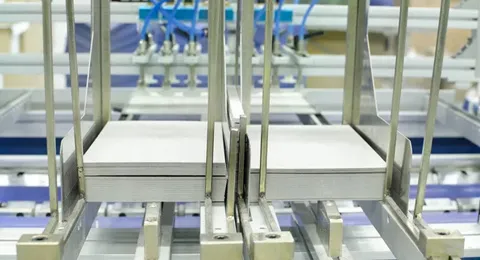
A drawing with dimensions tells the supplier where the line starts and stops. Without it, one quote may include the infeed conveyor and another may not.
Group samples by equipment family: rigid symmetrical parts, soft or flexible parts, transparent or reflective parts, and look-alike parts that share a silhouette. One sample per family is enough to expose feeding and counting risk; a single best-case sample hides it.
What this means for plastic parts: send at least 200–300 real parts per SKU, including the awkward ones. Transparent parts, shiny parts, soft parts that bend, and two similar parts in different colours all behave differently in a feeder and under a camera. Ask the supplier to run a sample feedability test and report which parts jam, overlap or reflect light. A part that cannot be fed reliably is a scope change, not a small detail.
3. State the Count Rule for Every Bag and Carton
Write the count rule as a plain sentence: “50 pieces per bag, 20 bags per carton, one SKU per carton.” If you pack mixed sets, list the exact contents of one set and the order of the parts inside the bag.
State what happens to the last incomplete batch at the end of a run. State whether the bag count or the carton count is the legal quantity that the customer will check. State the tolerance, if any, and who approves it.
What this means for plastic parts: a count rule for discrete parts needs a rule for remainder parts and a rule for rework. If a bag is rejected, does the whole bag go to scrap, or are the parts counted again? Write it down. Loose parts left on a belt at shift change are the most common source of the counting and mix-up errors that buyers discover only after a customer complaint.
4. Define Counting Accuracy So You Can Test It
Do not write “99.9% accuracy” on its own. Write the test that proves it.
Define the counting point first. Is accuracy measured at the bag, at the carton, or at the pallet? Then define good output versus nameplate speed: a line rated at a certain cycle rate may still reject some bags, so the accepted output is what matters. Put the sample size, the run length and the pass rule in the RFQ.
A simple way to set the pass rule is the rule of three. If a test runs 3,000 bags with zero count errors, the upper 95% bound on the true error rate is about 3 divided by 3,000, or 0.1%. Fewer test bags give a weaker bound. This is a statistical bound, not a promise, and it is why the sample size belongs in the RFQ.
What this means for plastic parts: ask for challenge samples in the accuracy test. A good test includes one short bag, one overfilled bag, one bag with a similar-looking wrong part, and one bag with two parts stuck together. The supplier should state both the false reject rate and the miss rate. Then carry the exact same wording into the FAT and SAT acceptance criteria so the quote and the test measure the same thing.
5. Write Down the Rejection Logic
List every reason a bag can be rejected: wrong count, wrong part, damaged part, unreadable label, failed seal, failed weight check. For each reason, say what the line does with the bag.
Say where rejected bags go, who empties them, and whether the parts can be returned to the infeed. Say whether the line stops or keeps running after a reject. Say how many consecutive rejects trigger an alarm.
What this means for plastic parts: rework is where mixed parts enter a clean batch. Require a physical reject bin that is separate from the good-bag path, and require a logged confirmation before any rejected part is fed again. If the quote does not name a reject station, the line will handle rejects by hand.
6. Make Line Clearance a Written Requirement
Line clearance is the documented check that the previous SKU is gone before the next SKU starts. Ask the supplier to describe the check, the person who signs it, and the record that is kept.
Put this in the RFQ rather than in a later procedure. It affects sensors, belt design, recipe control, and the time allowed for a changeover.
What this means for plastic parts: two similar parts in different colours can look identical to a camera that was trained on only one of them. Require a first-piece check after every changeover and a visual check of the whole belt, not just the counting head. Clearance is the first constraint in any multi-SKU changeover, not an afterthought.
7. List Every SKU and the Changeover You Expect
Give the full SKU list, the batch size for each, and how often the line switches. State the target changeover time and how it is measured, from the last good bag of the old SKU to the first good bag of the new one.
Ask how many recipes the HMI can store, how a vision model is switched, which mechanical parts must be swapped, and how long the first-piece check takes.
What this means for plastic parts: a line with a dedicated bowl tool per SKU and a line with a vision-guided robot have very different changeover costs. Put both options in the RFQ as separate line items so you can compare them. The number of SKUs is usually the single biggest driver of the feeder choice.
8. Specify PLC, HMI and Data Handshake Points
Name the PLC and HMI brand preference, the language of the screens, and the communication protocol your factory uses. List every signal the line must exchange with upstream machines and with your ERP or WMS.
State who owns each data point: the line, the plant system, or the customer’s label database. Say what happens when the network is down.
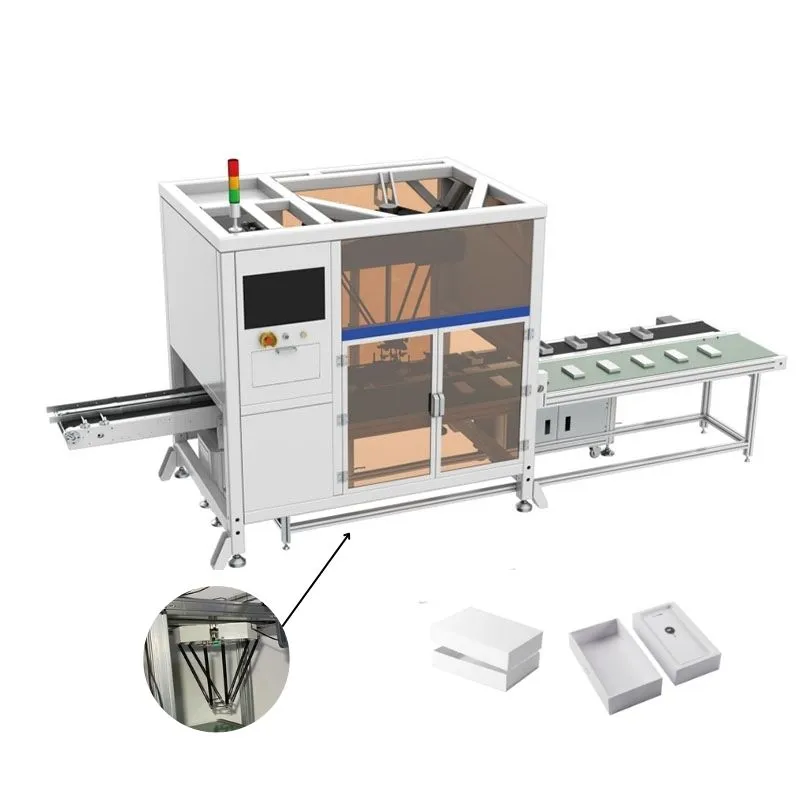
What this means for plastic parts: a counting line needs a batch timestamp at the moment the bag is made, not only at the end of the shift. Ask for the count result, the vision result, the reject reason and the operator ID to be logged against that timestamp. Without this link, a customer audit cannot trace one bag back to one batch.
9. Fix Label and QR Code Data Fields Before Asking for a Price
List every field on the label and in the QR code: part number, batch, quantity, date, operator, customer code, and any serial rule. State the barcode type, the print method, and whether the code is scanned after printing.
Say who supplies the label data and in what format. Say what the line does when a scan fails.
What this means for plastic parts: the quantity printed on the label must come from the same count result that closed the bag. If the printer uses a fixed template instead of the live count, a rejected bag can still produce a valid-looking label. Ask for a closed loop: count, verify, then print.
10. Put FAT and SAT in the RFQ
Ask for a Factory Acceptance Test before shipment and a Site Acceptance Test after installation. Both should use the same challenge samples, the same run length and the same pass rule as the accuracy definition in item 3.
Ask for the test plan, the deviation log, the retest rule, and the list of documents left on site. Ask who signs the acceptance sheet and what happens if a test fails twice.
What this means for plastic parts: include a sustained run, not just a short demo. A short run can hide a feeder that slowly drifts out of alignment. Ask for the downtime log and the reject log from that run, not only the final pass figure.
11. Ask for Spare Parts, Wear Parts and Response Times
Ask for a priced list of wear parts: belts, suction cups, sealing wires, blades, filters and camera lights. Ask for the recommended spares kit for one year and for two years.
State the response time you expect for a remote fault and for an on-site visit. State the warranty period, the exclusions, and the language of the service engineer.
What this means for plastic parts: static and dust from plastic parts shorten the life of camera windows and sensor lenses. Ask whether cleaning is part of the daily checklist and how many cleaning cycles the supplier expects. A cheap spares kit that omits the vision parts is not comparable with one that includes them.
12. Define Installation, Training and Delivery Documents
State the destination, the delivery date, the Incoterm, and who arranges rigging. State what the site must provide: power, air, network, floor space, and clear access doors.
List the training you need: operator, maintenance, and changeover. List the documents you expect in return: drawings, electrical schema, parts list, recipes, and the test records from FAT and SAT.
What this means for plastic parts: ask for the layout drawing early, because the counting head needs maintenance space for lights and cameras that a plain conveyor does not. The floor space and layout review should happen before the order, not during installation.
13. Use a Quote Matrix to Make the Prices Comparable
Send every supplier the same RFQ pack and the same matrix. Ask them to fill in one row per item, with a price and a short note for what is included and what is excluded.
| Quote matrix row | Supplier A | Supplier B | What to check |
|---|---|---|---|
| Infeed and feeding | Tooling per SKU included? | ||
| Counting and vision | Accuracy test defined? | ||
| Bagging and sealing | Film and consumables included? | ||
| Cartoning and labelling | Printer and scanner included? | ||
| Reject and rework | Reject bin and logging included? | ||
| Controls and data | Protocol and ERP link included? | ||
| FAT, SAT and documents | Challenge samples included? | ||
| Spares and training | Vision wear parts included? | ||
| Freight, rigging, taxes | Same Incoterm as others? | ||
| Total and lead time | Same scope boundary? |
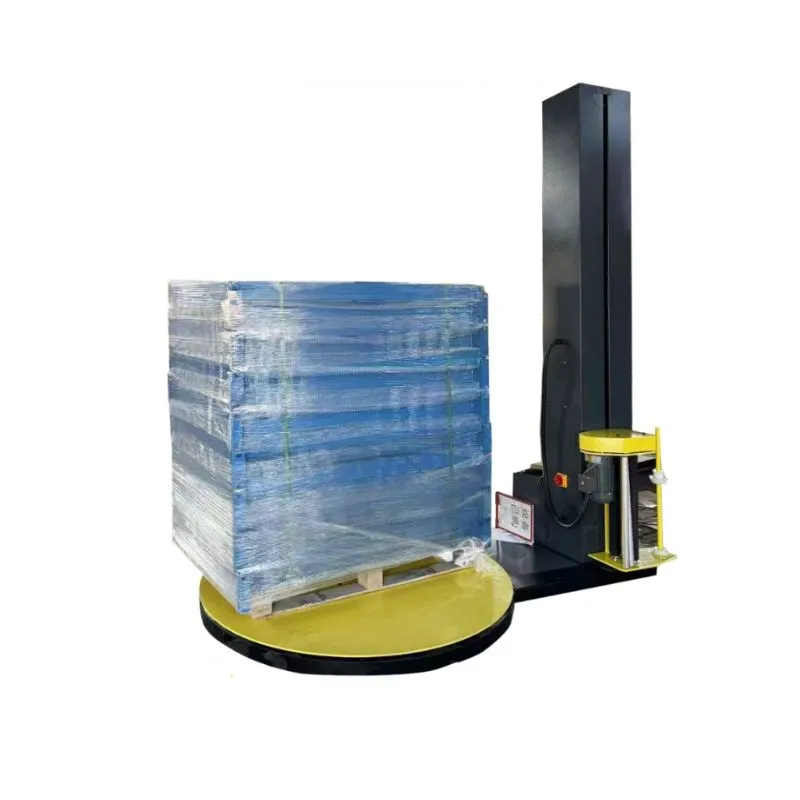
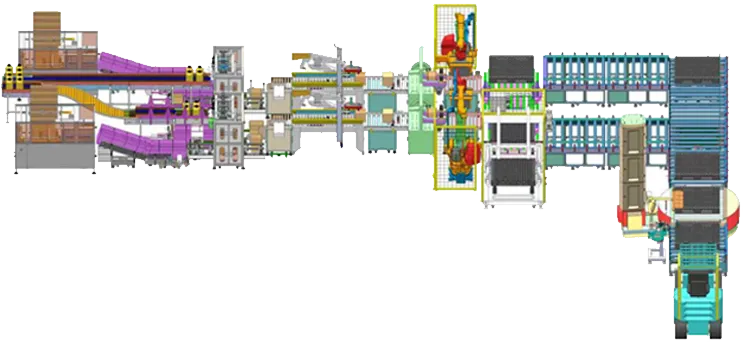
The line layout above shows three configurations built from the same station list. Ask each supplier to mark which configuration the quoted price covers. A price for a single-feeder line and a price for a three-feeder line are not two prices for the same product.
Add a line-type row to the matrix. The line can be configured as A, B or C, and the feeding hardware, vision stations and downstream footprint differ. Ask each supplier to name the line type they are pricing and list what is excluded if you later change it, otherwise two quotes describe two different machines.
What this means for plastic parts: normalise the scope before you compare totals. Add one column for the cost of a second SKU and one for the cost of an extra vision head. Those two numbers often change the payback calculation more than the headline machine price. Download the RFQ checklist and the blank quote matrix, fill in part samples and drawings, and send the same pack to every supplier.
14. Request a Quote With a Complete RFQ Pack
A complete RFQ pack is a part sample, a drawing, a count rule, a counting accuracy acceptance test, a SKU list, and the filled comparable quote matrix. Send the same pack to every supplier and ask for one line item per row.
JOYDA configures and integrates counting, bagging, cartoning, labelling and palletising equipment as one packaging solution, so a defined RFQ lets us return a configuration and a layout instead of a guess. Send your part samples and drawings to sales01@joydatech.com, or message +86 137 1326 8688 on WhatsApp, and request the packaging line RFQ checklist and a comparable quote.
FAQ 1. What is a packing line RFQ?
A packing line RFQ is a request for quotation that tells suppliers exactly what the line must pack, how fast, how accurately, and which stations are included. For plastic parts, it must also define the count rule and the test that proves the count.
FAQ 2. How many part samples should I send with an RFQ?
Send enough real parts for a feeding and counting trial, typically 200–300 pieces per SKU. Include the difficult parts: transparent, shiny, soft, and two similar shapes in different colours.
FAQ 3. What counting accuracy should I ask for?
Ask for a test, not only a percentage. Define the counting point, the sample size, the challenge samples, and the pass rule. The rule of three gives an upper bound on the true error rate when a test finds zero errors.
FAQ 4. Can one RFQ cover several SKUs?
Yes, but list every SKU, the batch size, and how often the line changes over. Ask suppliers to price the tooling and recipes for each SKU separately.
FAQ 5. What documents should a supplier return with the quote?
Ask for a completed quote matrix, a layout drawing, the station list, the accuracy test plan, the FAT and SAT plan, a priced spares list, and a clear list of exclusions.