A FAT SAT packaging line test is only useful when both sides agree on what “accurate” means before the machine is built. For plastic parts, that means defining the counting point, the challenge samples, the run length and the evidence pack. A supplier can claim a high accuracy figure, but the plastic parts packing production line you buy has to prove that figure on your parts, in your bags, at your speed. This guide turns that claim into clauses you can put in a purchase order.
Where this shows up in real plants. The FAT/SAT guides that rank for this topic come from liquid bottles, powder vials, pharmaceutical container lines and labeling machines. Their checklists measure fill volume, cap torque, label placement and container integrity, and the published worked examples are food, beverage, cosmetic and pharmaceutical lines. A plastic parts counting line is validated differently: the output is a counted quantity of discrete parts, so the acceptance question is whether every bag holds the right number of the right part, across every SKU and after every changeover. Use the published structure, but replace the container checks with count, identity and clearance checks.
Table of Contents
- What Should a FAT SAT Packaging Line Test Prove?
- Agree the Test Scope Before the Trial
- Define the Counting Point and Good Output
- Build a Measurable Acceptance Matrix
- Use Challenge Samples Made From Real Plastic Parts
- Measure False Rejects and Missed Errors Separately
- Run a Sustained Test, Not a Short Demo
- Time a Full Changeover During SAT
- Check Batch Timestamps and Label Data
- Set the Sampling Plan and Retest Rules
- Assemble the Handover Evidence Pack
- Request a FAT/SAT Test Protocol
1. What Should a FAT SAT Packaging Line Test Prove?
A Factory Acceptance Test (FAT) happens at the supplier’s site before shipment. A Site Acceptance Test (SAT) happens at your factory after installation. FAT proves the line can do the job in controlled conditions; SAT proves it can do the job in your real conditions, with your air supply, your operators and your parts.
Both tests should use the same challenge samples, the same run length and the same pass rule. If FAT and SAT measure different things, a pass at the factory tells you nothing about the site.
What this means for plastic parts: write the acceptance wording into the packing line RFQ first, then copy it unchanged into the test protocol and the purchase order. Three documents with one definition cannot drift apart.
2. Agree the Test Scope Before the Trial
List every station in the test: feeding, counting, bagging, sealing, checkweighing, labelling, case packing and palletising. State which stations are included and which are excluded.
State the installed conditions: power, air pressure, network, ambient light near the camera, and the film or bag material to be used. State who supplies the test parts and how many.
Treat commissioning as its own stage between FAT and SAT, not as a short handover. Published project guides call it the most underestimated phase, because interface faults appear only when machines are connected on site. Ask whether part of FAT can be witnessed remotely, and record which tests still require physical samples at the site.
What this means for plastic parts: the test parts must be the real production parts, including cosmetic parts with a surface finish grade. A test run with clean, rigid sample parts will not show how shiny or soft parts behave. Agreeing the scope early also stops a hidden cost from appearing as an extra test day later.
3. Define the Counting Point and Good Output
Name the exact point where a count becomes final. Is it at the bag outlet, after the checkweigher, or after the carton is closed? Write it down.
Separate nameplate speed from good output. A line may run at a rated cycle rate, but the number that matters is the number of accepted bags per hour after rejects. Put both figures in the test record.
What this means for plastic parts: a bag that contains 50 parts but has a wrong part inside is not a good bag. Define good output as the right count and the right part. This is where most counting and mix-up errors slip through a test that only checks quantity.
4. Build a Measurable Acceptance Matrix
Write one row per test item. Each row needs a method, a pass line and a record. Do not accept “pass” without a number.
| Test item | Method | Pass line (example) | Record to keep |
|---|---|---|---|
| Count accuracy | N bags, verified by hand | Zero wrong counts in N bags | Count log |
| Wrong-part detection | Challenge bags with a similar part | 100% rejected | Reject log |
| False reject rate | Good bags through the line | Agreed upper limit | Reject reason log |
| Seal and label check | Visual plus scan | 100% readable | Scan log |
| Sustained run | Continuous production | Agreed hours, logged stops | Downtime log |
| Changeover | Full SKU switch, timed | Agreed minutes | Changeover sheet |
| Traceability | Trace one bag back to batch | Complete data chain | Batch report |
The numbers in the pass line are yours to set. What matters is that every row has a number and a record before the test starts.
Write down the difference between FAT and SAT in the matrix: FAT proves the machine is ready to ship, SAT proves the line is ready to produce in your plant. Keep a three-record acceptance chain for each requirement, the observed result and the signed disposition, so an observation cannot be mistaken for a pass.
What this means for plastic parts: include a row for overlapping parts and a row for transparent or reflective parts. Generic checklists rarely have them, and they are the two cases that separate a counting line from a simple bagging machine.
5. Use Challenge Samples Made From Real Plastic Parts
Prepare bags that are deliberately wrong: one short bag, one bag with an extra part, one bag with a similar-looking wrong part, one bag with two parts stuck together, and one bag with a damaged part.
Also run the awkward good parts: transparent, shiny, soft and easily bent parts. Record how each behaves.
What this means for plastic parts: a feeder that handles one rigid part perfectly may jam on a soft part. Send the same samples for a feedability test before FAT, so the test does not fail for a reason you could have found earlier.
6. Measure False Rejects and Missed Errors Separately
A line can look accurate by rejecting every doubtful bag. That is expensive, not accurate. Record two numbers: the false reject rate (good bags thrown away) and the miss rate (bad bags accepted).
State the upper limit for each in the acceptance matrix. If the supplier only reports one number, ask for the other.
What this means for plastic parts: shiny parts often trigger false rejects because the camera sees a reflection as a second part. Ask for the reject reason log, not just the final percentage.
7. Run a Sustained Test, Not a Short Demo
A short demo hides drift. Require a continuous run long enough to cover a normal shift, with the downtime log and the reject log kept for the whole period.
Record every stop, the fault that caused it, the restart steps and who restarted the line. Record the time from the first good bag to the last good bag.
What this means for plastic parts: static build-up and dust on camera windows appear after hours, not minutes. A stable long run is also the number you need for a realistic payback calculation, because accepted output per shift is what pays for the line.
8. Time a Full Changeover During SAT
SAT is the right time to switch SKUs. Time it from the last good bag of the old SKU to the first good bag of the new one.
Include the clean-out, the recipe change, the vision model change, any tooling swap, and the first-piece check. State who signs the line clearance.
Ask for an interface control document for every handover between feeding, counting, bagging, labeling and palletizing, and define the SKU operating envelope: the lightest and heaviest part, the smallest and largest count per bag, and the fastest changeover the line must sustain.
What this means for plastic parts: two similar parts in different colours are the hardest case. Require a first-piece check after every multi-SKU changeover, and keep the signed sheet with the SAT record.
9. Check Batch Timestamps and Label Data
Trace one bag from the SAT run back to its batch. The record should show the count result, the vision result, the reject reason and the operator ID against one timestamp.
Verify that the quantity printed on the label comes from the live count result, not from a fixed template. Scan the QR code and confirm the data matches.
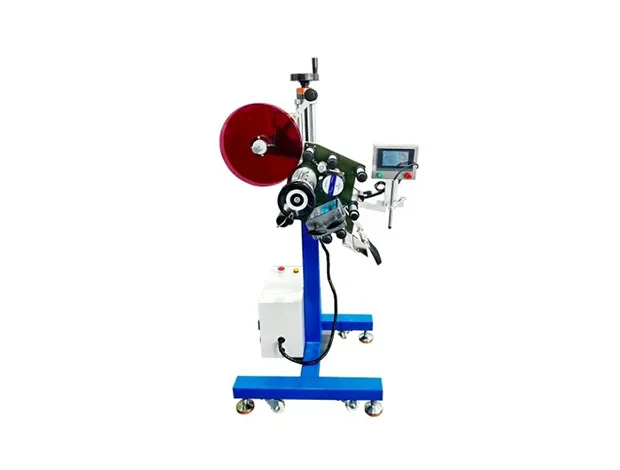
What this means for plastic parts: if the printer uses a fixed template, a rejected bag can still leave with a valid-looking label. Ask for a closed loop: count, verify, then print. Keep the sample bag and the scan log in the evidence pack.
10. Set the Sampling Plan and Retest Rules
State how many bags are inspected and how they are chosen. An AQL-style sampling plan can be used for visual checks, but count accuracy needs a defined number of consecutive bags, not a random handful.
State the deviation rule: what is logged, who approves a retest, how many retests are allowed, and what happens after a second failure. If the sample size is small, use the rule of three to state the upper bound on the true error rate when zero errors are found.
What this means for plastic parts: a zero-error result from 300 bags is weaker than one from 3,000 bags. Put the sample size in the contract so the statistic cannot be changed after the test.
11. Assemble the Handover Evidence Pack
List the documents you expect before signing: the signed acceptance matrix, the count and reject logs, the downtime log, the changeover sheet, the batch trace report, the deviation and retest record, sample bags, the recipe backup, and the layout drawing.
State the format, the language and who keeps the master copy.
Decide early whether you are buying best-of-breed machines from several suppliers or one integrated line from a single partner, because that decides who owns an interface failure. Include training and skill retention in the handover pack: a test protocol is only useful if the shift team can repeat it.
What this means for plastic parts: include the layout drawing and the service-clearance dimensions in the handover pack. Maintenance teams need the camera and light positions, not only the machine footprint.
12. Request a FAT/SAT Test Protocol
A FAT SAT packaging line protocol has one definition of counting accuracy acceptance, one acceptance matrix, one set of challenge samples and one evidence pack. Ask for it before you place the order, not after the machine is built.
JOYDA configures and integrates counting, bagging, labelling and palletising equipment as one packaging solution. Send your part samples and count rule to sales01@joydatech.com, or message +86 137 1326 8688 on WhatsApp, and request the FAT/SAT test protocol template for your counting packaging line and a sample trial run.
FAQ 1. What is the difference between FAT and SAT?
FAT is the acceptance test at the supplier’s site before shipment. SAT is the acceptance test at your factory after installation. FAT checks the machine in controlled conditions; SAT checks it with your utilities, operators and parts.
FAQ 2. What should a counting accuracy test include?
It should include the counting point, the number of bags tested, deliberately wrong challenge bags, the false reject rate, the miss rate and a sustained run with a downtime log.
FAQ 3. How many bags should be tested?
Set a number that gives you the confidence you need. If zero errors are found, the rule of three puts the upper 95% bound on the true error rate at about 3 divided by the number of bags tested.
FAQ 4. Why do transparent or shiny plastic parts need special tests?
Reflections and light passing through a part can look like a second part to a camera. Test them explicitly so the acceptance criteria cover real production parts.
FAQ 5. What documents should I receive after SAT?
Ask for the signed acceptance matrix, count and reject logs, downtime log, changeover sheet, batch trace report, deviation record, sample bags, recipe backup and layout drawing.