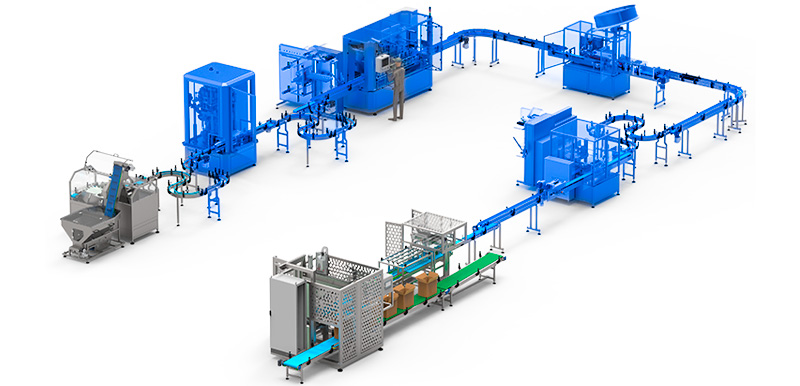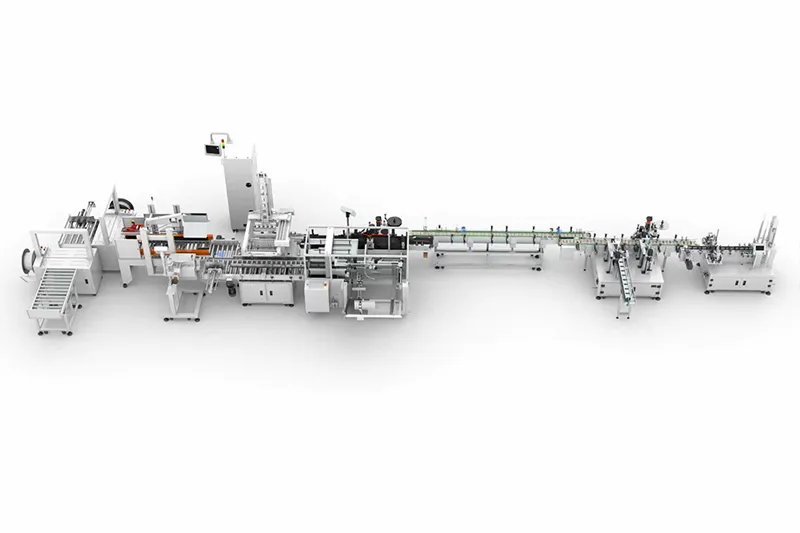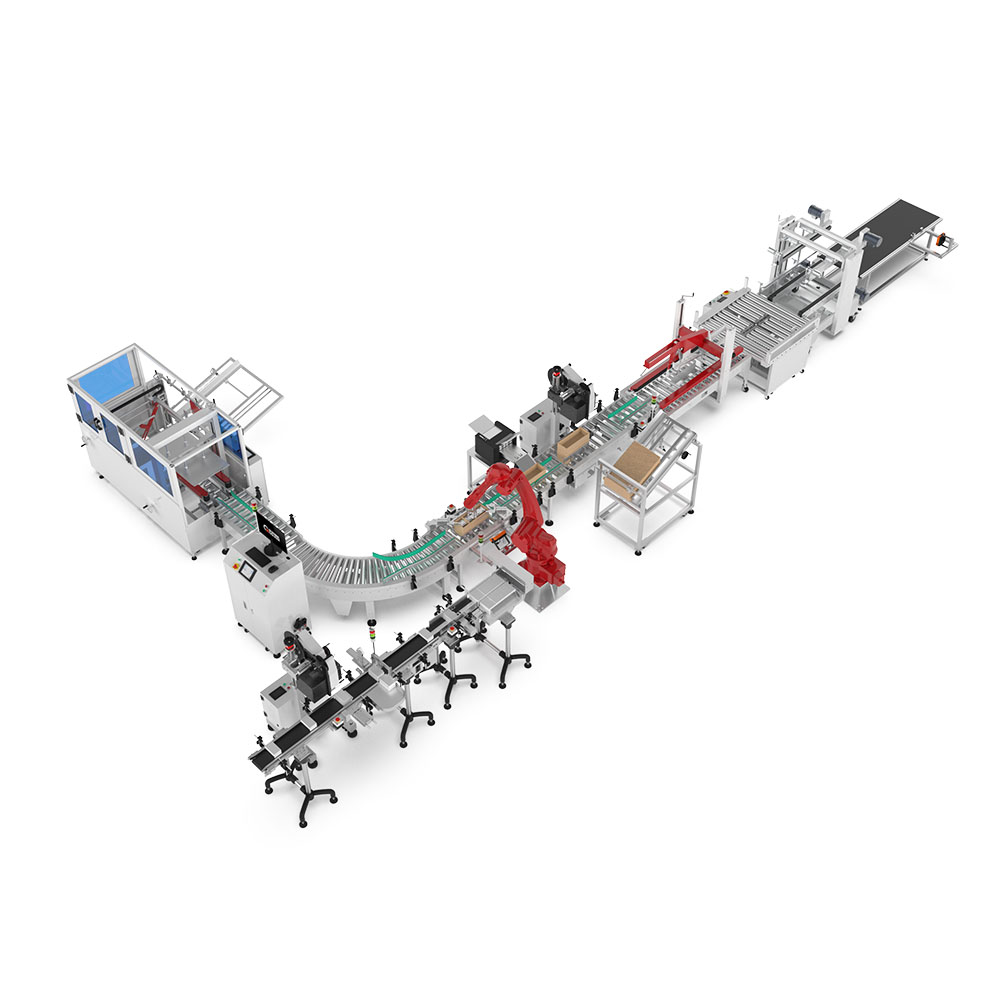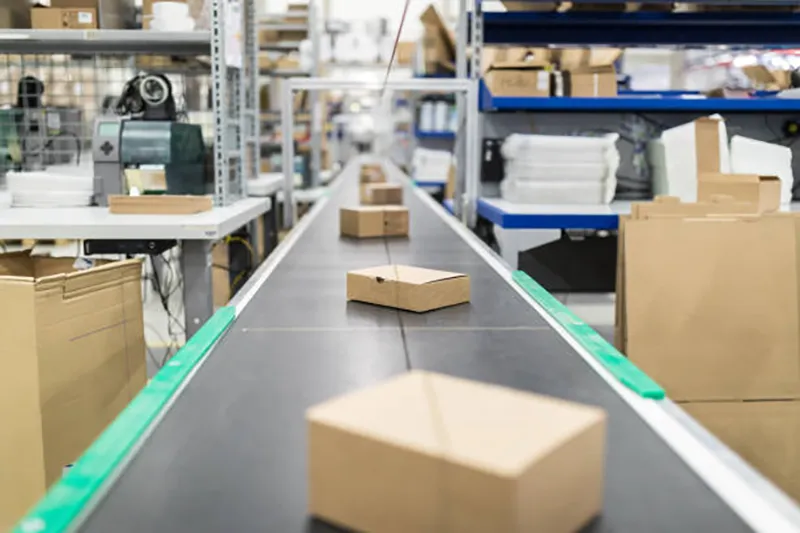
A carton packing line that keeps jamming is one of the most expensive problems in a packaging plant, because it hides its real cost. A jam looks like a two-minute stop: someone walks over, clears the carton, re-homes the product, resets the fault, and the line moves again. But the cases you did not pack in that window are gone for good, and so are the ones that would have shipped while the operator was busy with the reset. In this guide we walk through the 10 jam causes we see most often on real end-of-line carton lines, what each one looks like on the floor, and the fix that actually holds — not just a quick clear that buys you another hour. Many of these jams get worse during peak season, when the line runs flat out and small setup gaps turn into full stoppages.
What you will find in this guide
- 1. Why a jamming line costs more than downtime
- 2. The top 10 jam causes (and the fix for each)
- 3. How to diagnose which jam is yours
- 4. Quick reference: cause → first check → fix
- 5. How JOYDA lines cut jam rates
- 6. A 15-minute daily prevention checklist
- 7. Frequently asked questions
- 8. Request a line audit
1. Why a jamming line costs more than downtime
A jam looks like a two-minute pause. It rarely is. Someone walks over, clears the carton, re-homes the product, and resets the fault. By the time the line is back at speed, you have lost the cases from that window plus the ones that would have shipped while the operator was distracted. Do that ten times a shift and you have given away a real slice of daily output before anyone counts rework. The lines that “always jam a little” are usually the ones quietly missing their ship dates.
The cost shows up in three places at once. First, the lost cases in the stop window. Second, the rework — a carton cleared by hand is often sealed wrong and ships as a returns risk. Third, the trust cost: customers remember the late order more than the nine that were on time. On a 10 to 15 cases per minute line, a few jams an hour can take 2 to 3 percent of daily output before you add rework, and that number climbs on the busy days when you can least afford it.
2. The top 10 jam causes (and the fix for each)
Each cause below follows the same shape: what it is, how to spot it on the floor, the fix that holds, and the habit that stops it coming back. Read the “how to spot it” lines first — they are the fastest way to tell which jam is yours.
- 2.1 Carton blanks feed in crooked
- 2.2 Worn timing belts and flight lugs
- 2.3 Tape tails and label backing jam the sealer
- 2.4 Air pressure drops mid-cycle
- 2.5 Products arrive at the wrong spot
- 2.6 Photoeyes get blinded by dust
- 2.7 Backpressure crushes cartons at merges
- 2.8 Changeover leaves guides mis-set
- 2.9 Inconsistent board quality
- 2.10 Parameters drift after a shift change
2.1 Carton blanks feed in crooked
What it is: The carton magazine holds flat blanks. If a blank is warped, wrong-size, or just tilted in the stack, the erector misses the fold and pushes a half-open carton into the packer. That carton blocks every carton behind it.
How to spot it: Jams cluster right after a new bundle of board is loaded, or right after a size change. You see half-open cartons at the erector exit.
The fix: Store board flat and within spec. A vacuum-assisted feeder that squares each blank before it erects removes most of these jams, and it also helps when board quality varies batch to batch, because the feeder corrects small differences instead of passing them downstream.
Prevention: Reject out-of-spec board at goods-in, and never stack blanks on a leaning shelf where they bend.
2.2 Worn timing belts and flight lugs
What it is: Belts stretch and lugs wear down with run hours. Once timing slips a few millimeters, the case and the product no longer meet at the same point, and you get a nudge that turns into a jam at the next station.
How to spot it: The jam rate climbs steadily over weeks rather than in spikes, and you may hear a change in the line’s rhythm.
The fix: Replace belts on a schedule based on run hours, not when they break. Most lines show a clear jam spike right after a belt passes its service life — that pattern is your proof the belt was the cause.
Prevention: Log run hours per belt and set a replace-by threshold, not a fix-when-broken habit.
2.3 Tape tails and label backing jam the sealer
What it is: Loose tape ends and label liner scraps collect at the sealing station and catch the next carton. Over a shift this builds into a stop.
How to spot it: Jams at the sealer, often with tape or liner visible in the mechanism.
The fix: A trim collector and a clean-air blow-off at the sealer keep the path clear. This also cuts tape waste, which adds up faster than most plants expect once they measure it.
Prevention: A five-minute blow-down of the sealer at the end of each shift.
2.4 Air pressure drops mid-cycle
What it is: Pneumatic erectors and clamps need steady pressure. A drop of even 0.2 bar slows the plunger and the carton arrives late to the next station.
How to spot it: Jams appear when another air tool starts, or late in a busy run when the compressor lags.
The fix: Size the compressor for peak draw and watch the regulator. A surprising number of “mystery” jams trace back to a shared air line that also feeds a wrapper on the same circuit.
Prevention: Give the packing line its own air supply, or add a buffer tank so one tool cannot starve the others.
2.5 Products arrive at the wrong spot
What it is: If the infeed timer drifts, the product lands off-center in the carton and the flap will not close, so the carton jams at the sealer.
How to spot it: Jams right after a carton size change, or when line speed is raised.
The fix: Sync the infeed to the case with a servo instead of a guess. After a change, re-check this timing first, because the old setting almost never fits the new box.
Prevention: Save the infeed timing inside the carton recipe so it loads automatically on changeover.
2.6 Photoeyes get blinded by dust
What it is: Carton dust builds on sensors and they start missing cartons or reading ghosts. The line then stops on a carton that is not there, or misses one that is.
How to spot it: “Random” jams that nobody can reproduce, often on busy afternoons when dust is highest.
The fix: Use sealed sensors and a short daily wipe. A blinded photoeye is the classic cause of a jam that vanishes when maintenance stands there watching.
Prevention: Sealed sensors plus a one-minute wipe at the start of each shift.
2.7 Backpressure crushes cartons at merges
What it is: When downstream slows, cartons pile up at a merge and the pressure crushes the lead box. A crushed carton jams the next station and, worse, becomes a returns problem.
How to spot it: Jams at a merge, with flattened cartons.
The fix: Add an accumulation zone with controlled backpressure. Crushed cartons are not just a jam cause, they are a returns cause, so this fix pays back twice.
Prevention: Set the merge to release one carton at a time, never to push a queue.
2.8 Changeover leaves guides mis-set
What it is: Every size change is a chance to leave a guide a few millimeters off. The line runs, then jams on the third carton of the new size.
How to spot it: Jams within the first minutes of a new size run.
The fix: Tool-free changeover and a saved recipe per carton remove most of these errors, because slow changeovers are exactly where they sneak in.
Prevention: Lock guides to indexed positions and store the full setup as a named recipe.
2.9 Inconsistent board quality
What it is: Board from a weak batch is softer, and the erector folds it unevenly. The carton then jams or seals badly downstream.
How to spot it: Jams rise after a new board lot, independent of any machine change.
The fix: Set a board spec with your supplier and check burst strength on incoming lots. Variable board is the quiet driver behind a lot of “our line is unreliable” complaints that are really a purchasing problem.
Prevention: A burst-strength check on the first carton of each incoming lot.
2.10 Parameters drift after a shift change
What it is: A new operator tweaks a speed and does not write it down. Next shift inherits a line that jams.
How to spot it: Jams appear at the start of a shift, not mid-run.
The fix: Store recipes on the HMI and lock changes behind a code. What looks like a machine fault is often a settings gap between shifts.
Prevention: Operator logins with role-based limits, so speed changes need a supervisor code.
3. How to diagnose which jam is yours
Before you throw parts at the problem, find out which jam is actually yours. A week of logging beats a year of guessing, and it points your money at the station that jams most.
- Log every jam for one week — one line each: time, station, and a one-word cause if you know it.
- Map jams to a station. Group them as erector, packer, sealer, merge, or palletizer. Most lines jam at one station far more than the others.
- Check the triggers. Do jams track a board lot, a size change, or a shift change? That tells you whether the fix is purchasing, setup, or training.
- Fix in order of frequency. The station with the most jams is where your first dollar should go.
A line audit does this mapping for you if you would rather have JOYDA read the data, but the one-week log works with a clipboard and a sharpie and costs nothing but attention.
4. Quick reference: cause → first check → fix
| Cause | First check | Fix that holds |
|---|---|---|
| Crooked blanks | Jams after new board bundle or size change | Vacuum feeder that squares each blank; store board flat |
| Worn belts / lugs | Jam rate climbs over weeks | Replace belts by run-hour schedule |
| Tape / liner at sealer | Jams at sealer with scrap visible | Trim collector + air blow-off |
| Air pressure drop | Jams when another air tool starts | Size compressor; separate air line |
| Product off-center | Jams after size change or speed raise | Servo infeed sync; save in recipe |
| Blinded photoeyes | “Random” jams, busy afternoons | Sealed sensors + daily wipe |
| Backpressure at merge | Crushed cartons at merge | Accumulation zone, controlled release |
| Mis-set guides | Jams first minutes of new size | Tool-free changeover + saved recipe |
| Weak board lot | Jams after new lot, no machine change | Board spec + incoming burst test |
| Shift drift | Jams at shift start | Recipes on HMI, locked changes |
5. How JOYDA lines cut jam rates
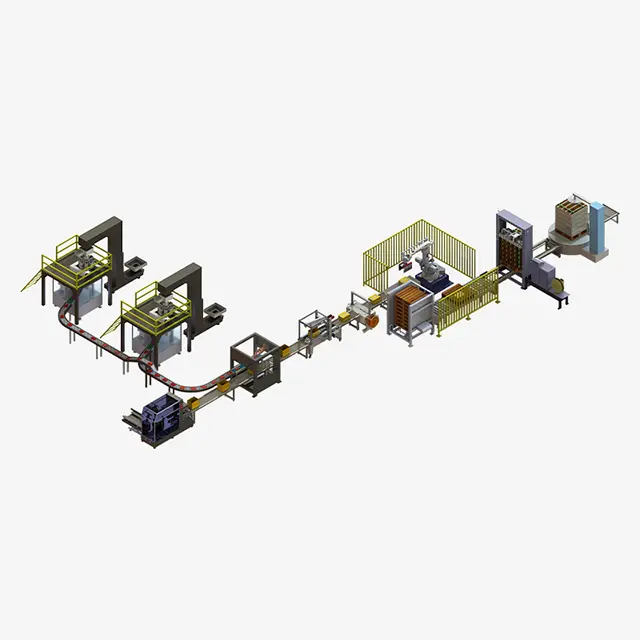
JOYDA’s automatic carton packing production line is built around synchronized servo control, so the case, the product, and the sealer move as one timed sequence instead of three machines guessing at each other. That single change removes most of the timing drift that causes jams in the first place.
Sealing is handled by a calibrated flap folder with steady pressure, so you do not get the weak or doubled seals that later cause misfeeds at the next station. The fold is the same on carton one and carton ten thousand.
An inline checkweigher catches a mis-fed or short carton and rejects it before it reaches the palletizer, so one bad carton does not stall the whole downstream cell while someone clears it by hand.
Because the line runs with fewer hands on it, operator-driven jams from shift changes drop. That matters most when the same few people cover every line, because tired operators are the ones who skip the reset step.
Integration is designed as one line, not three machines bolted together, so the gaps where jams live simply are not there to begin with. The result is fewer stops and a steadier case count per shift, not just a higher headline speed.
6. A 15-minute daily prevention checklist
Most jams are cheap to prevent and expensive to ignore. A short routine at the start and end of each shift removes the causes before they reach the line.
- Start of shift: wipe the photoeyes, check air pressure at the regulator, confirm the correct recipe is loaded for today’s carton.
- During the run: keep the board magazine square, watch the sealer for tape buildup, and never let a merge queue push.
- End of shift: blow down the sealer, log the day’s jams with their station, and flag any belt that sounded different.
None of this needs a mechanic. It needs a checklist on the line and someone owned to run it. Plants that do this see jam rates fall within the first week, because the three biggest causes — dust, board, and mis-set guides — are exactly the ones a checklist catches.
7. Frequently asked questions
7.1 How many cases per minute can a line lose to jamming?
Even a few jams an hour add up. On a 10 to 15 cases per minute line, ten minutes of stoppage per shift is roughly 2 to 3 percent of daily output gone, before you count rework and late shipments.
7.2 Is jamming mostly the machine or the board?
Both, but board is the underrated half. Spec the carton and you remove a large share of feed jams without touching the machine. The board spec is cheap insurance against a line that will not run.
7.3 Can an old line be fixed or should I replace it?
Often a feeder, sensor, and control upgrade solves most jams for far less than a new line. A line audit shows which parts are actually failing, so you do not replace a machine that only needed its eyes cleaned.
7.4 Do servo lines jam less than pneumatic ones?
Generally yes, because timing stays tight without air fluctuations. They also use less air, which helps the rest of the plant when every machine is fighting for the same compressor.
7.5 How long does a retrofit take?
A focused upgrade is usually days to a couple of weeks, not a full shutdown quarter. The biggest variable is how much of your line is custom, not how bad the jams are.
7.6 What is the single most overlooked jam cause?
Dust on photoeyes. It is cheap to fix and explains a large share of “random” jams that nobody can reproduce. A sealed sensor and a daily wipe removes most of them before they ever stop the line.
7.7 How do I know if my board is the problem?
Run one lot from a supplier you trust next to your usual lot on the same line. If jams drop on the trusted lot, board is your issue, not the machine. Our sealing guide also covers how board and tape work together at the sealer, which is where weak board shows up first.
8. Request a line audit
If your line keeps stopping, send JOYDA your carton sizes, current speed, and where it jams most. We will map a fix or a line audit and quote it, with no pressure to buy a full line if a targeted upgrade will do. Before you talk to any supplier, our carton line buying checklist covers the points most quotes leave out, so you know what you are actually getting. Email sales01@joydatech.com or message us on WhatsApp at +86 137 1326 8688.