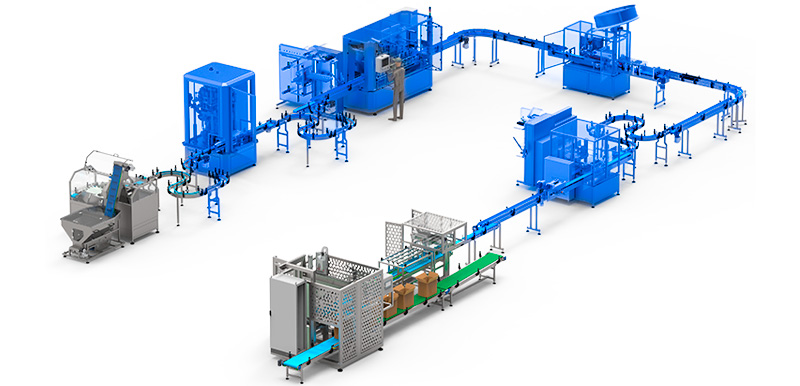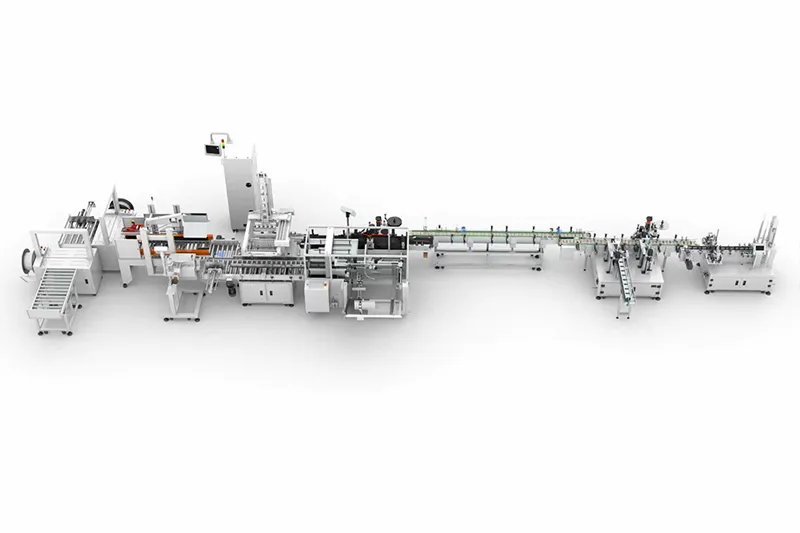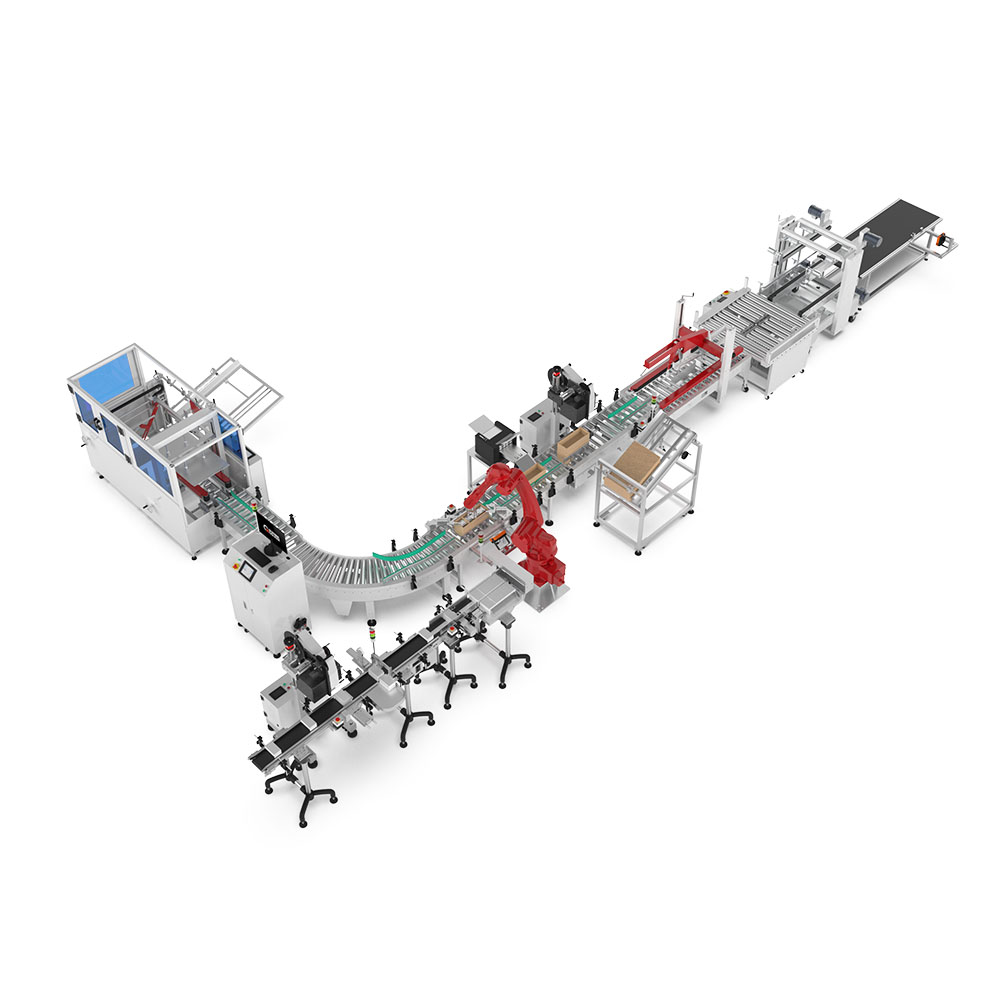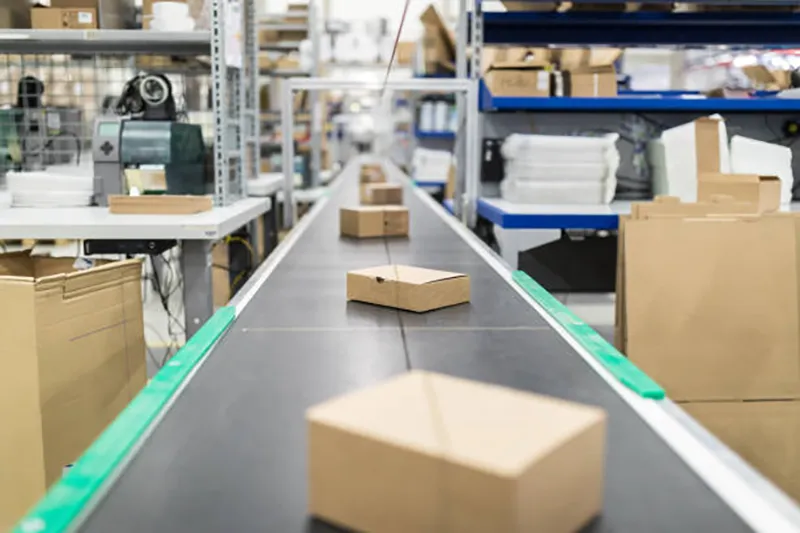
Piecemeal equipment integration for large-scale book fulfillment leads to software incompatibilities, undefined vendor liabilities, and severe operational bottlenecks. To eliminate these critical risks, procurement teams must abandon traditional machine buying. The most effective strategy is partnering with an Industry 4.0 turnkey packaging system integrator capable of delivering full-line automation, centralized software control, and single-point responsibility.
Table of Contents
- The Paradigm Shift: From Machine Suppliers to System Integrators
- Single Vendor Responsibility: Mitigating Integration Risks
- Evaluating Industry 4.0 and WMS Integration Capabilities
- Core Architecture of a Turnkey Book Packaging Solution
- Application-Specific Engineering Customization
- ROI, Labor Reduction, and Performance Benchmarks
1. The Paradigm Shift: From Machine Suppliers to System Integrators
For decades, the standard procurement logic in the book packaging industry was centered around “machine buying.” A facility needed to wrap books, so they purchased a bagging or shrink-wrapping machine. They needed labels, so they bought a standalone labeler. Today, this fragmented approach is fundamentally obsolete.
Modern procurement has shifted from buying individual machines to selecting a comprehensive automation partner, as large fulfillment centers require fully integrated packaging lines with centralized software control rather than isolated mechanical equipment.
The core trend driving this structural change is the disappearance of the boundary between a traditional supplier and a system integrator. Large publishing distribution centers and e-commerce fulfillment hubs are facing unprecedented SKU fragmentation and a normalization of small-batch, highly variable orders. When using single-machine suppliers for bagging, labeling, and sealing, facilities create “automation islands.” Between these islands, human operators must manually transfer, buffer, and sort products, destroying overall line efficiency.
Therefore, the core procurement question is no longer “How fast is your machine?” but rather, “Who can deliver a fully integrated packaging system, not just machines?” Modern buyers are looking for a data-driven fulfillment automation partner who understands end-to-end workflow design, mechanical line integration, software control, and real-time data systems.
2. Single Vendor Responsibility: Mitigating Integration Risks
When capital expenditures reach into the hundreds of thousands or millions of dollars, risk control becomes the primary driver of procurement decisions. The industry consensus is rapidly moving away from multi-vendor patchwork lines.
Choosing a single-point responsibility turnkey supplier eliminates the integration risks, undefined liabilities, and prolonged commissioning cycles associated with combining equipment from multiple different manufacturers.
From the perspective of an engineering director, the highest risk in deploying a new automation line is the interface between different machines. If you source an automatic book feeder from Company A, a cartoner from Company B, and a labeling system from Company C, you are inherently taking on the role of the system integrator.
When a multi-vendor line fails during the Factory Acceptance Test (FAT) or onsite commissioning—for example, if the check weigher’s PLC fails to trigger the labeling machine downstream—suppliers will inevitably blame each other’s protocols. This leads to integration disputes, non-guaranteed overall performance, and uncontrollable debugging cycles.
Large clients now overwhelmingly prefer a single vendor who assumes full turnkey system ownership. The critical conversion trigger is asking the supplier: “Do you take full responsibility for the entire packaging line performance?” A true automation partner will handle the mechanical layout, electrical synchronization, line-level programming, and final throughput guarantees, ensuring a seamless, risk-free deployment.
3. Evaluating Industry 4.0 and WMS Integration Capabilities
Hardware capabilities are only the baseline. In the modern era of logistics, the true differentiating factor among book packaging system suppliers is their software architecture and data handling capabilities.
A qualified Industry 4.0 packaging automation system must feature real-time ERP/WMS synchronization, digital visibility dashboards, and remote diagnostics to enable data-driven production rather than relying on manual operator inputs.
Based on advanced frameworks like the Joyda Totalpack system, the industry is transitioning from standard machine automation to complex cyber-physical production systems. Ordinary manufacturers build machines; advanced partners build intelligent data nodes.
Real-Time WMS/ERP Synchronization
High-end clients use WMS integration as a strict screening threshold. As multi-SKU book orders travel down the line, the system must not require an operator to manually select the packaging format. Instead, the packaging line’s central control system must communicate directly with the facility’s Warehouse Management System (WMS) or Enterprise Resource Planning (ERP) software via API. By scanning a barcode upstream, the line instantly retrieves the necessary data—book dimensions, required packaging material, weight tolerances, and shipping label data—executing the packaging dynamically.
Production Visualization and Predictive Maintenance
An end-of-line packaging integration partner must provide a digital dashboard displaying real-time OEE (Overall Equipment Effectiveness), uptime, output rates, and localized downtime analysis. Furthermore, incorporating IoT sensors allows for predictive maintenance. Instead of waiting for a servo motor to fail during peak season, the system analyzes torque data and vibration anomalies, alerting maintenance teams before a breakdown occurs.
4. Core Architecture of a Turnkey Book Packaging Solution
To accurately assess a supplier’s integration scope, you must evaluate the completeness of their closed-loop system architecture. An incomplete line still leaves manual bottlenecks that drain profitability.
A complete turnkey book packaging solution encompasses automatic conveying, intelligent batching, multi-format packaging, inline weighing, tracking, and robotic palletizing operating as a unified, data-driven closed-loop system.
When reviewing a supplier’s proposal, the key judgment point is not the sheer number of machines, but whether the system forms a fully closed loop from product entry to final palletizing. A typical industrial-grade configuration includes:
- Automatic Book Feeding & Conveying System: Smooth, non-damaging material transfer.
- Intelligent Stacking & Batching Module: Collating mixed book orders seamlessly.
- Packaging System: Capable of bagging, shrink wrapping, or carton forming based on WMS commands.
- Inline Weighing & Rejection System: Automated quality control to instantly kick out mispacked orders without stopping the line.
- High-Speed Labeling & Tracking System: Precision print-and-apply mechanisms with barcode verification.
- Robotic Palletizing System: End-of-line robotic arms preparing the output for warehouse dispatch.
- ERP/WMS Integration Layer: The software bridge governing the entire operation.
Supplier Evaluation Matrix
Use the following table to benchmark potential suppliers based on modern fulfillment requirements:
| Evaluation Metric | Traditional Machine Supplier | Industry 4.0 Turnkey Integrator |
| System Scope | Isolated modules (e.g., just bagging) | Full end-to-end line integration |
| Responsibility | Limited to individual machine warranty | Single-point full line performance guarantee |
| Data Architecture | Standalone PLCs, manual data entry | Line-level PLC, WMS/ERP real-time API sync |
| Changeover Method | Manual mechanical adjustments | HMI recipe-driven automated changeovers |
| Quality Control | End-of-line manual spot checks | Inline check weighing with automated rejection |
| Maintenance | Reactive, break-fix support | IoT predictive maintenance & remote diagnostics |
5. Application-Specific Engineering Customization
The book industry is highly non-standard. A system that works for uniform textbook distribution will fail catastrophically in a dynamic e-commerce environment. Therefore, rigid, off-the-shelf machines are inadequate.
Because book logistics are highly non-standard, the right supplier must possess robust engineering customization capabilities to adapt line layouts, handling mechanisms, and packaging formats for specific operational requirements.
A B2B buyer must ask: “Can you design a customized system for our specific workflow, SKU structure, and layout?” A reliable automated packaging line manufacturer proves their value by adapting their technology to diverse application cases:
Large Publishing Distribution Centers
These facilities deal with high-volume runs of mixed-size books, from heavy textbooks to delicate novels. The core requirement is zero damage combined with stable throughput. The integrator must engineer specialized servo-driven pushers and cushioned conveyors to ensure the physical integrity of the books while maintaining robust system stability and automated error-proofing (anti-mix-up mechanisms).
E-Commerce Book Fulfillment Platforms
E-commerce is defined by severe order fluctuations, especially during promotional events and peak holiday seasons. The core requirements here are flexibility and scalability. The system must handle rapid SKU switching and possess the continuous load capacity to surge production without jamming or overheating.
3PL Logistics Operators
Third-Party Logistics (3PL) providers handle fulfillment for multiple distinct clients on the same day. Their core requirements are unified packaging standards and profound software compatibility. The integrator must deliver exceptional ERP/WMS integration capabilities, allowing the line to instantly switch between Client A’s branded cartoning and Client B’s poly-bagging without manual intervention.
Export-Oriented Warehousing Hubs
Books destined for international transport face long-distance logistical abuse. The core requirement is highly protective packaging and standardized output. The integrator must focus on the end-of-line quality control system, ensuring tight shrink wrapping or reinforced carton sealing to prevent moisture damage and edge crushing during transoceanic shipping.
6. ROI, Labor Reduction, and Performance Benchmarks
Ultimately, every engineering upgrade must be justified by its financial return. Procurement teams need hard data to prove that an automated book fulfillment system is a sound investment, particularly regarding operational cost reduction.
An optimized turnkey book packaging solution delivers continuous line flow, reduces manual labor by 30% to 60%, and achieves automated SKU changeovers in under 20 minutes, yielding a rapid and measurable return on investment.
When evaluating proposals, demand that the book packaging system supplier commits to specific performance benchmarks based on industry typical expectations:
- Automation Coverage: A true turnkey system should automate 80% to 95% of the end-of-line packaging process.
- Line Continuity: The system must feature continuous end-of-line flow without the need for manual buffering zones. If operators have to manually move half-finished goods from the wrapper to the labeler, the integration has failed.
- SKU Changeover Time: High-mix environments require recipe-based SKU switching. Through motorized, programmable adjustments, line changeovers should take approximately 10 to 20 minutes.
- Labor Reduction: Depending on the baseline manual setup, the integration should reduce labor requirements by 30% to 60%. This is the core driver of the ROI.
When a B2B buyer asks, “What is the ROI and labor reduction we can expect?”, the integrator should be able to map out a clear payback period. By drastically reducing headcount, virtually eliminating mispack errors via automated inspection, and easily absorbing peak-season order spikes without hiring temporary labor, a well-engineered system typically achieves ROI within 18 to 24 months.
Conclusion
Evaluating and selecting the right book packaging system supplier requires a fundamental shift in perspective. You are no longer purchasing a piece of mechanical equipment; you are investing in a data-driven fulfillment automation partner. To ensure operational success and minimize risk, focus your evaluation on a supplier’s ability to provide single-vendor responsibility, comprehensive Industry 4.0 WMS integration, and proven custom engineering for high-mix SKU environments.
By demanding fully closed-loop architecture and strict performance benchmarks, large-scale fulfillment centers can achieve transformative labor reductions and rapid ROI, future-proofing their operations against rising labor costs and market volatility.
Looking for a proven system integration partner?
As a leading Industry 4.0 turnkey packaging system integrator, Joyda Totalpack specializes in end-to-end automation tailored for the global book publishing and e-commerce fulfillment sectors. We take full responsibility for your entire line—from WMS integration to robotic palletizing. Contact our engineering consultants today for a comprehensive technical evaluation, custom layout design, and a detailed ROI quotation for your facility.
FAQ
What is the difference between a packaging machine supplier and a system integrator?
A machine supplier provides standalone equipment (like a sealer or labeler) leaving the buyer responsible for connecting them. A system integrator designs, builds, and programs the entire line as a unified, closed-loop system with centralized software control, ensuring seamless material flow from start to finish.
Why is single vendor responsibility critical for book packaging lines?
It eliminates integration risks and vendor finger-pointing. If a multi-vendor line fails, it is difficult to determine which machine or software protocol is at fault. A single turnkey supplier assumes total liability for the mechanical layout, software integration, and overall throughput guarantees.
How does an Industry 4.0 packaging system connect to our WMS?
The packaging line utilizes a centralized, line-level PLC combined with a software layer that communicates with your facility’s WMS or ERP via APIs. This allows the line to automatically retrieve packaging instructions, shipping data, and weight tolerances in real-time by simply scanning a product barcode.
What is the typical ROI timeline for an automated book packaging line?
While it varies based on current manual labor costs and daily throughput, most high-volume distribution centers and e-commerce fulfillment hubs recover their investment within 18 to 24 months through a 30% to 60% reduction in labor and an elimination of packaging errors.
How fast can a turnkey system handle SKU changeovers for mixed book sizes?
Advanced systems utilize motorized, recipe-based changeovers controlled via an HMI. When switching between different book dimensions or packaging formats, the mechanical adjustments (such as guide rail width or film tension) are performed automatically in approximately 10 to 20 minutes.
Can the system handle both domestic e-commerce and export packaging standards?
Yes. A capable automation partner can engineer custom routing within the line. Based on WMS data, the system can automatically direct a book to a lightweight bagging module for domestic shipping, or to a robust cartoning module designed to withstand long-distance export logistics.