As manufacturers face increasing pressure from labor shortages, SKU (Stock Keeping Unit) diversification, and faster delivery expectations, selecting the right automated packaging equipment has become a strategic operational decision. Modern factories no longer evaluate packaging systems based simply on mechanical speed. Buyers now focus on production flexibility, digital integration, downtime reduction, and total operating cost.
To transition successfully to a smart factory environment, upgrading to an Industry 4.0 box folding packing line is essential. But what exactly makes a line “smart” or “Industry 4.0 ready”? Whether you are in e-commerce, FMCG, electronics, or medical products, here are the top 10 critical features you must look for when investing in an automated packaging system.
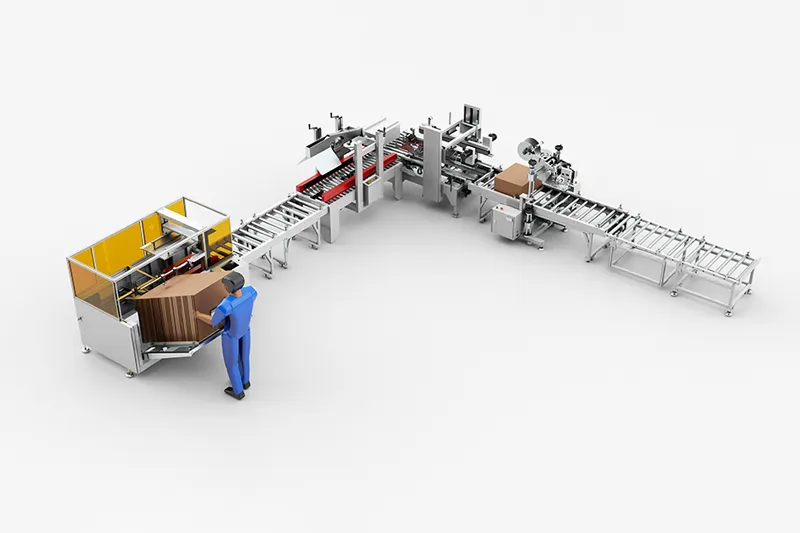
Table of Contents
- Feature 1: How Does Servo-Driven Carton Forming Ensure Speed and Precision?
- Feature 2: Why Is Digital HMI Recipe Management Critical for 15-Minute Changeovers?
- Feature 3: How Does Advanced Robotic Handling Protect Fragile Products?
- Feature 4: How Does Inline Check Weighing Prevent Missing Items?
- Feature 5: Why Is Barcode and Vision Verification Vital for Shipment Accuracy?
- Feature 6: How Do Automated Sealing and Labeling Boost Overall Efficiency?
- Feature 7: Why Is Modular System Architecture Important for Future Scalability?
- Feature 8: How Does IoT Condition Monitoring Reduce Downtime by 75%?
- Feature 9: Why Is ERP and MES Integration the Core of a Smart Factory?
- Feature 10: How Does Synchronized Robotic Palletizing Complete the Workflow?
- The Measurable ROI of an Intelligent Packaging Production Line
- Frequently Asked Questions (FAQ)
1. Feature 1: How Does Servo-Driven Carton Forming Ensure Speed and Precision?
The foundation of any automated box folding system is how it erects the carton. Traditional machines rely on pneumatic cylinders, which can be inconsistent as air pressure fluctuates, leading to skewed or jammed boxes.
A modern Industry 4.0 system utilizes precision servo motors. Servo-driven carton forming guarantees that every box is erected and squared perfectly, maintaining structural integrity for palletizing. Depending on the carton size and product configuration, standard servo-driven lines achieve a highly stable 10 to 30 cartons per minute, with advanced configurations reaching up to 60 cartons per minute. This stable speed allows high-volume operations to absorb seasonal order spikes without hiring additional operators.
2. Feature 2: Why Is Digital HMI Recipe Management Critical for 15-Minute Changeovers?
One of the most important considerations for high-SKU manufacturers is changeover efficiency. Traditional lines require technicians to use wrenches to physically adjust guide rails when carton specifications change.
The best automatic carton folding machines feature digital HMI (Human-Machine Interface) recipe management. Operators simply select a saved “recipe” for a specific carton size on the touchscreen, and the machine automatically recalibrates its dimensions using servo adjustments.
Case Study: FMCG Factory
A fast-moving consumer goods (FMCG) manufacturer struggled with frequent production interruptions caused by manual carton adjustments. By adopting an intelligent carton folding system with digital recipes, they reduced their carton specification switching time to approximately 15 minutes. This helped them handle fluctuating packaging demands more efficiently and drastically reduced setup-related downtime.
3. Feature 3: How Does Advanced Robotic Handling Protect Fragile Products?
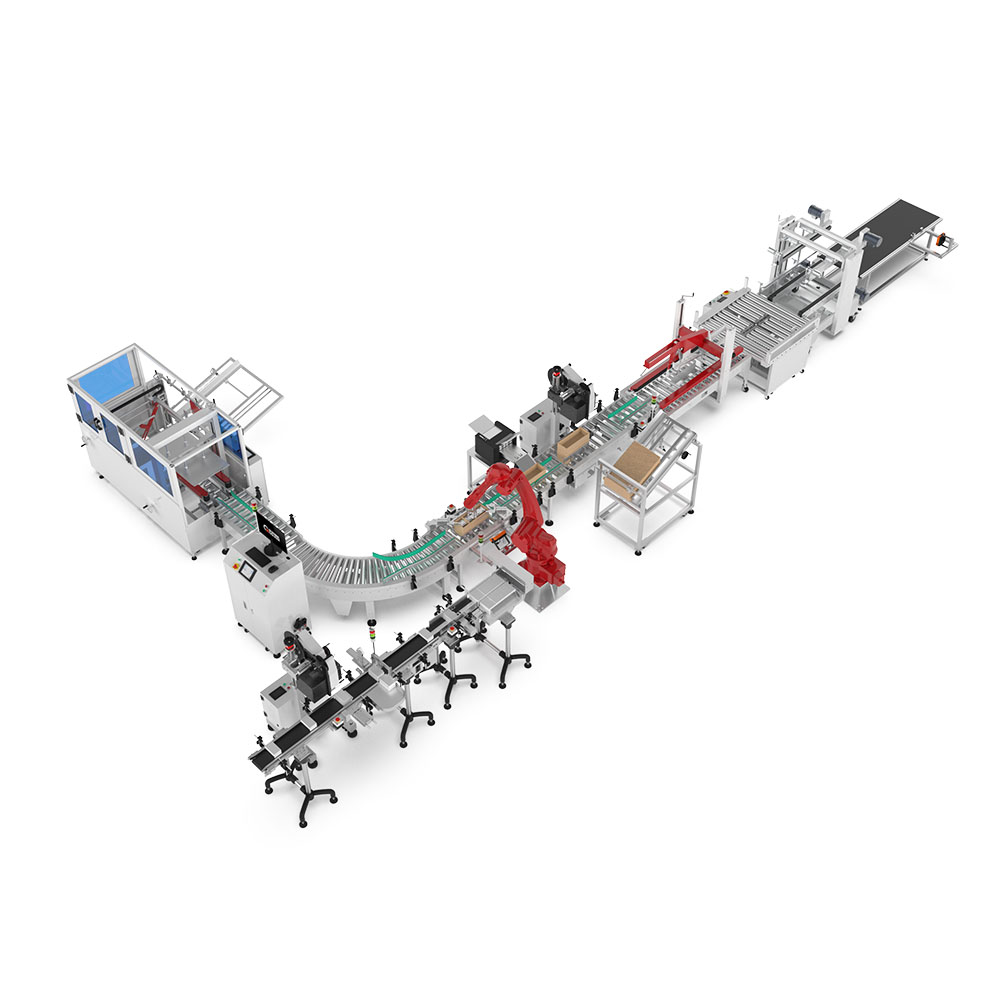
Dropping products into boxes using gravity or crude mechanical pushers often results in damaged goods. Modern smart packaging automation systems integrate advanced robotic handling, utilizing Delta or 6-axis robotic arms.
These robots provide gentle, precise product loading. They can be equipped with customized end-of-arm tooling (such as soft vacuum suction or padded grippers) to handle delicate items like consumer electronics, glass bottles, or household goods. This precision significantly lowers long-term operating costs by minimizing product waste on the factory floor.
4. Feature 4: How Does Inline Check Weighing Prevent Missing Items?
Shipment accuracy is a critical metric, especially for e-commerce and high-value manufacturing. An intelligent packaging production line features an integrated inline check weigher.
As the loaded carton moves down the conveyor, the scale dynamically weighs it in milliseconds. If the box is lighter or heavier than the exact target weight stored in the system’s recipe (indicating a missing component or an extra manual), the system automatically diverts the box to a reject lane. This feature catches errors before the box is sealed, drastically reducing customer complaints and reverse logistics costs.
5. Feature 5: Why Is Barcode and Vision Verification Vital for Shipment Accuracy?
In conjunction with weight checks, visual verification is mandatory for high-SKU operations. Advanced lines are equipped with high-speed vision inspection cameras and barcode scanners.
Before sealing, the cameras scan both the product inside the box and the shipping label to ensure a 100% match.
Case Study: E-commerce Fulfillment Center
An e-commerce warehouse handling thousands of daily SKU variations needed a system to stop packing errors during peak shopping festivals. After implementing a high-SKU packaging automation line with barcode verification and inline weighing, their shipment accuracy soared. Combined with precision robotic handling, these automated inspection systems successfully reduced their product damage and error rates from 3% down to just 0.2%.
6. Feature 6: How Do Automated Sealing and Labeling Boost Overall Efficiency?
Manual taping and labeling are incredibly labor-intensive and prone to error. An automated line seamlessly folds the top flaps, applies consistent hot-melt glue or tamper-evident tape, and uses a print-and-apply labeler to affix the correct logistics label in the exact same spot every time.
By eliminating the manual steps of folding, sealing, and labeling, facilities can reduce direct packaging labor costs by up to 30%. Furthermore, this integrated automation coordination improves overall operational efficiency by over 40%, as the workflow is completely synchronized without manual bottlenecks.
7. Feature 7: Why Is Modular System Architecture Important for Future Scalability?
Manufacturers should not be forced to replace their entire packaging line just because their business grows. The best automated carton packing lines are designed with a modular architecture.
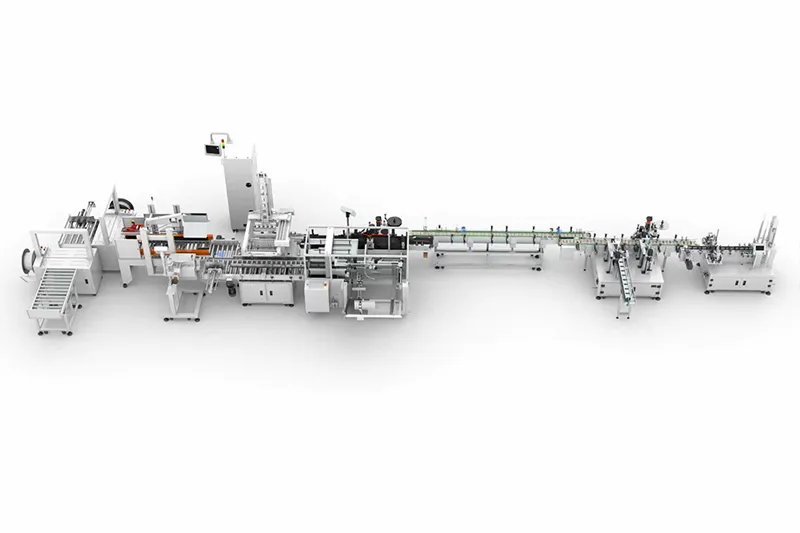
This means the system is built in interchangeable blocks. A facility can purchase the automatic carton forming and sealing modules today to solve immediate labor shortages. Next year, they can bolt on robotic loading and inline weighing modules without discarding the original equipment. This modularity enables gradual automation expansion, minimizing initial capital expenditure while supporting long-term scalability.
8. Feature 8: How Does IoT Condition Monitoring Reduce Downtime by 75%?
Traditional maintenance is reactive: you fix the machine after it breaks, resulting in hours of costly downtime. An Industry 4.0 packaging line utilizes IoT (Internet of Things) sensors to continuously monitor the health of the equipment, tracking motor vibrations, temperatures, and cycle delays.
If a bearing starts to degrade, the intelligent monitoring system detects the anomaly and alerts the maintenance team days in advance. This predictive maintenance model allows repairs to be scheduled during planned shifts, effectively reducing unexpected production downtime by up to 75%—a critical feature for continuous production environments.
9. Feature 9: Why Is ERP and MES Integration the Core of a Smart Factory?
Hardware alone does not make a factory “smart.” The equipment must communicate with enterprise software to achieve true end-of-line packaging automation.
An ERP integrated packaging line connects directly with your Enterprise Resource Planning (ERP) and Manufacturing Execution Systems (MES). Production orders flow directly from the software to the machinery without human data entry.
Case Study: Smart Factory Upgrade
An electronics manufacturer transitioning toward Industry 4.0 required equipment that could connect to their MES. By deploying a digitally integrated packaging line, they enabled complete production traceability and centralized packaging data management. The packaging floor transformed from an isolated manual zone into a highly visible, data-rich segment of the factory’s digital infrastructure.
10. Feature 10: How Does Synchronized Robotic Palletizing Complete the Workflow?
The final feature of a complete automated system is getting the finished boxes off the line and ready for transport. A comprehensive system includes synchronized robotic palletizing, where heavy-duty robotic arms stack the sealed cartons into optimized pallet patterns based on data received from the WMS (Warehouse Management System).
Once the pallet is wrapped, the system communicates with Automated Guided Vehicles (AGVs) or forklifts to remove the pallet, creating a completely touchless, highly efficient end-of-line workflow.
11. The Measurable ROI of an Intelligent Packaging Production Line
When you combine all 10 of these features, the resulting system is far more than a packaging tool—it is an operational optimization platform. Below is a breakdown of the measurable data and ROI you can expect when upgrading from a traditional manual setup to an integrated Industry 4.0 architecture.
| Key Performance Metric | Traditional/Manual Packaging Line | Automated Industry 4.0 Packaging Line | Strategic Business Impact |
| Direct Labor Dependency | High (Requires large teams) | Reduced by up to 30% | Minimizes reliance on temporary labor during peaks. |
| Overall Efficiency | Baseline (Prone to fatigue) | Over 40% Improvement | Synchronized workflow eliminates human bottlenecks. |
| Unplanned Downtime | High (Run-to-failure model) | Reduced by up to 75% | IoT predictive maintenance ensures production continuity. |
| SKU Changeover Time | 2 – 4 Hours (Manual tuning) | ~15 Minutes (HMI) | Maximizes uptime for high-mix, high-SKU operations. |
| Product Error/Damage Rate | ~3% (Human error) | Reduced to 0.2% | Verification systems eliminate costly shipping errors. |
| Throughput Speed | 3 – 8 cartons/minute | 10 – 60 cartons/minute | High-volume scaling without expanding the workforce. |
Build Your Smart Factory with JOYDA Totalpack
Selecting the right packaging system requires a partner who understands both advanced mechanical engineering and digital software integration. At JOYDA Totalpack, we design and deploy centralized Industry 4.0 box folding packing lines tailored to your specific manufacturing challenges.
By integrating all 10 of these critical features—from rapid HMI changeovers and robotic handling to deep ERP/MES connectivity—our modular systems ensure you achieve a rapid ROI, reduce your labor dependency, and transition smoothly into the era of smart manufacturing.
Ready to modernize your packaging floor? Contact the automation experts at JOYDA Totalpack today to discuss a customized solution for your facility.
12. Frequently Asked Questions (FAQ)
1. Can we upgrade to an Industry 4.0 packaging line if we don’t have an ERP system yet?
Yes. Thanks to modular system architecture, you can install the physical automated line and operate it via its localized touchscreen HMI. When your factory eventually implements an ERP or MES system, the packaging line is already equipped with the necessary communication protocols to integrate seamlessly.
2. How does the machine handle different thicknesses of cardboard?
Servo-driven automatic carton forming machines are highly precise. The suction cups and folding arms can be calibrated via the digital recipes to apply the exact amount of pressure needed, whether handling thin e-commerce boxes or thick, double-wall industrial corrugated board.
3. What happens if a box fails the barcode or inline weighing inspection?
The system is designed for continuous operation. If a carton fails an inspection, an automated pneumatic pusher diverts that specific box onto a separate reject conveyor line. The main production line continues running without stopping, allowing operators to inspect the rejected box manually.
4. How difficult is it for our existing maintenance team to use IoT monitoring?
The IoT monitoring system is designed to be highly user-friendly. Instead of requiring complex coding knowledge, the system displays machine health visually on a dashboard (e.g., green, yellow, red status lights). It sends plain-text alerts outlining exactly which part is degrading and needs attention.
5. How much floor space does a fully integrated line require?
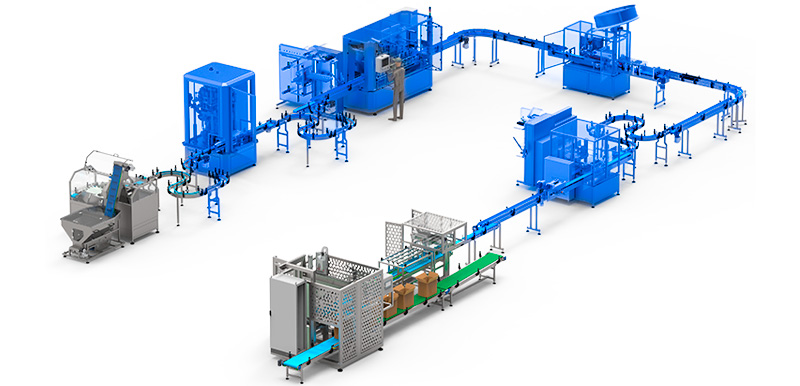
Because automated lines are highly synchronized and connected, they are often more compact than traditional setups that require large staging areas for manual packers. The exact footprint depends on the modules you select, and our engineers can customize the layout (such as U-shapes or L-shapes) to fit your specific facility.