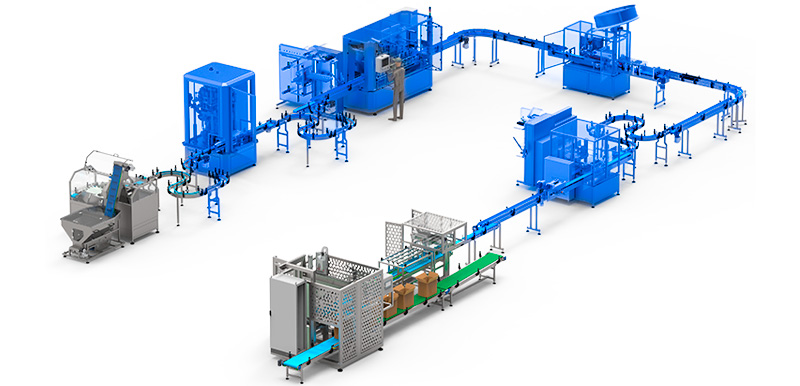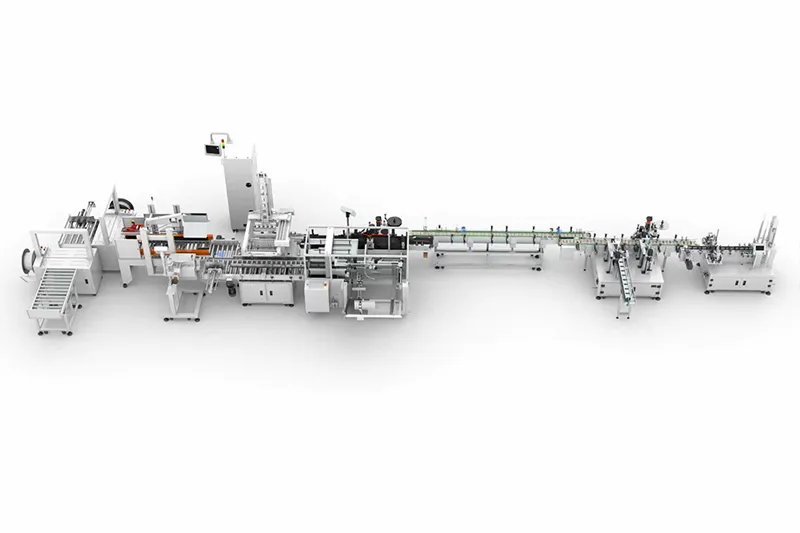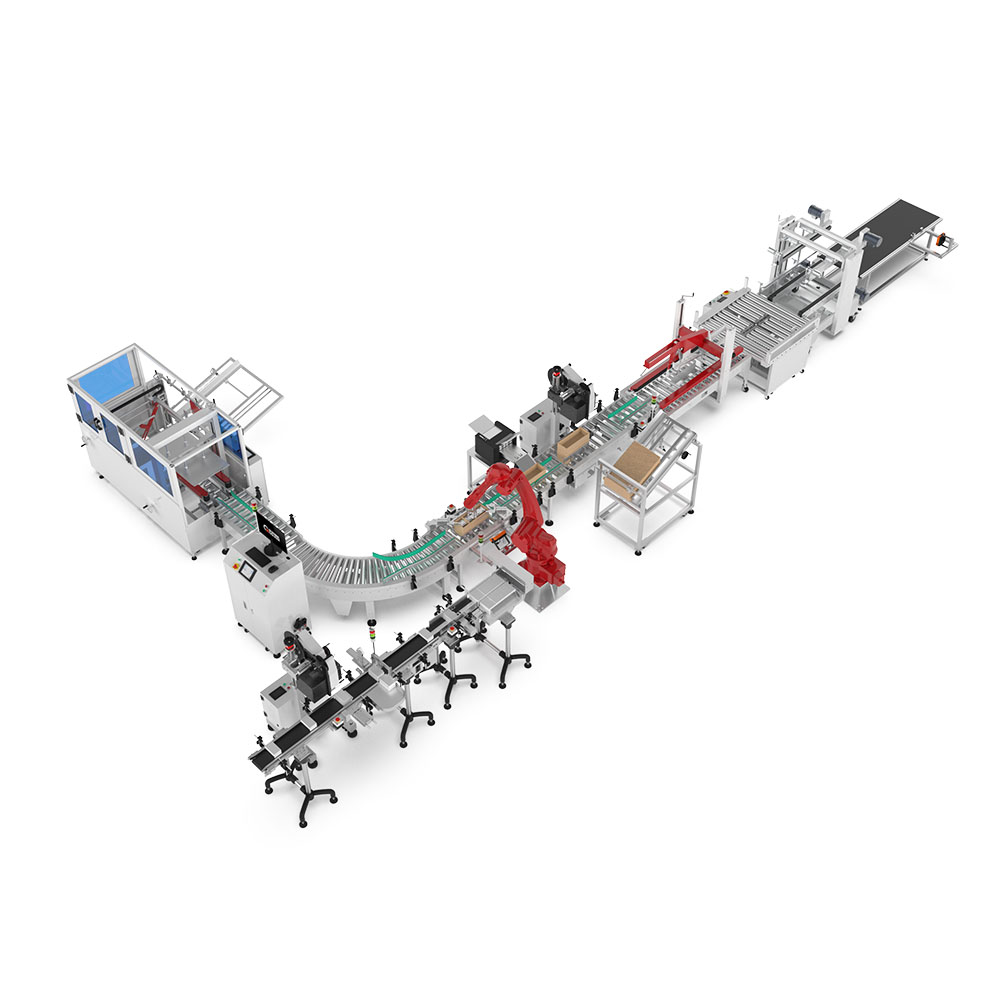
Procuring fragmented packaging equipment creates severe data silos, catastrophic integration failures, and operational bottlenecks that cripple smart factory transitions. To guarantee a successful upgrade, buyers must evaluate a box folding packing line supplier based strictly on their turnkey system integration capabilities, Industry 4.0 software connectivity, and proven custom engineering strength, moving entirely beyond isolated machine speed and initial price.
Table of Contents
- The Shift from Equipment Vendors to Turnkey System Integrators
- Evaluating Industry 4.0 Capabilities and Software Control
- Assessing System Flexibility and High-Mix Production Readiness
- Deep Dive: Technical Architecture of a Complete Packaging Line
- Calculating Total Cost of Ownership (TCO) Over Machine Price
- Verifying Custom Engineering and Manufacturing Strength
1. The Shift from Equipment Vendors to Turnkey System Integrators
For years, procurement teams focused on buying standalone machines. They evaluated a supplier based on isolated metrics: the cycle speed of a box erector, the upfront machine price, or the individual equipment function. In the modern manufacturing landscape, this fragmented approach is a recipe for operational failure.
Buyers must evaluate whether a supplier acts as a true system integrator capable of designing and delivering a complete end-to-end packaging workflow—from box forming to robotic palletizing—rather than simply selling isolated mechanical equipment.
As a technical director with decades of experience in end-of-line automation, I routinely advise large manufacturing enterprises to avoid the multi-vendor trap. Modern packaging is not a single action; it is a continuous, highly synchronized workflow encompassing box forming, product loading, sealing, labeling, inspection, and palletizing.
When a factory pieces together a line using a custom box folding machine supplier for the front end and a different vendor for the sealer, they inadvertently take on the complex role of system integrator. This leads to integration disputes, mismatched production beats, and a lack of overall accountability. A truly mature end-of-line packaging automation provider must offer “one partner for the complete packaging workflow.” Buyers must verify that the supplier possesses comprehensive mechanical engineering, automation integration, software control, and long-term service capabilities to ensure the line operates continuously without manual buffering zones.
2. Evaluating Industry 4.0 Capabilities and Software Control
The hardware of a packaging line is only as effective as the software architecture controlling it. As manufacturing pivots toward the Smart Factory model, mechanical reliability is no longer the sole differentiator; digital connectivity is the new baseline.
A qualified box folding packing line supplier must provide an Industry 4.0 control architecture featuring centralized PLC control and seamless ERP, MES, and WMS integration to enable real-time production monitoring and intelligent fault diagnosis.
The gap between a standard machine manufacturer and a high-end automation partner is fundamentally defined by software capability. An ordinary factory delivers “machine automation”—equipment that folds boxes efficiently but operates in a digital vacuum. Conversely, an advanced supplier delivers a “smart manufacturing system.”
Enterprise Integration Layer
When evaluating a supplier, you must assess their software engineering depth. Can the packaging line connect directly to your facility’s Enterprise Resource Planning (ERP), Manufacturing Execution System (MES), or Warehouse Management System (WMS)? In a proper setup, as a product approaches the line, the centralized PLC queries the enterprise system to retrieve the specific order data, automatically adjusting the downstream labeling and routing protocols without human intervention.
Digital Dashboards and Fault Diagnosis
Advanced systems provide a digital monitoring dashboard that allows plant managers to view real-time data tracking, analyze exact production capacities, and monitor OEE (Overall Equipment Effectiveness). Furthermore, intelligent fault diagnosis minimizes downtime. Instead of a generic “machine fault” light, the system provides precise diagnostics (e.g., “Pneumatic cylinder 4 pressure drop”), allowing maintenance teams to instantly resolve issues and optimize overall production efficiency.
3. Assessing System Flexibility and High-Mix Production Readiness
Consumer demands have fragmented, leading to a massive proliferation of SKUs. Factories are no longer running the same product size for weeks at a time; they are dealing with different box types, varying product specifications, and a normalization of small-batch orders.
To prevent excessive downtime in high-mix environments, buyers must evaluate the system’s flexibility, ensuring the supplier incorporates modular design, quick changeover mechanisms, and recipe-based production adjustments.
Traditional fixed production lines are highly rigid. When an order changes from a standard carton to a custom folding box, traditional equipment requires hours of manual mechanical adjustments, wrenching, and test runs. This extended downtime annihilates daily throughput and requires highly skilled technicians on the floor at all times.
When auditing an automated box forming and packing line, focus heavily on the changeover protocol. A premium supplier will engineer modular designs utilizing motorized guide rails and servo-driven actuators. Through recipe-based production adjustment, an operator simply selects the new SKU profile on the HMI. The system then automatically adjusts its parameters—from the magazine width on the box former to the stroke length on the robotic loader—drastically reducing changeover times and minimizing the need for manual intervention.
4. Deep Dive: Technical Architecture of a Complete Packaging Line
A supplier’s proposal must be scrutinized to ensure it covers the entire automation loop. Leaving gaps in the technical architecture forces reliance on manual labor, defeating the purpose of the automation investment.
A comprehensive evaluation must verify that the supplier’s architecture includes automatic box forming, precision robotic product loading, robust quality inspection, and versatile sealing modules, operating uniformly to eliminate manual bottlenecks.
Based on the proven system architecture of a JOYDA box folding packing production line, a complete turnkey solution must encompass the following fully integrated modules:
Automatic Box Forming and Product Loading
The line must begin with an Automatic Box Forming System capable of automatically grabbing flat paperboards, folding them into shape, and guaranteeing the structural stability of the carton. The supplier must prove the system can handle standard cartons, customized folding boxes, and irregular-shaped packaging.
Following forming, the Automatic Product Loading System is critical. Relying on manual labor for placement introduces errors and slows the entire line. The supplier should offer robotic loading, automatic insertion mechanisms, and precise product positioning. This eliminates the manual labor required for placing boxes, aligning products, and checking orientations, resulting in unmatched packaging consistency.
Quality Inspection and Final Sealing
An automated line moving at high speeds will inevitably encounter physical anomalies. The supplier must integrate a comprehensive Quality Inspection & Traceability module. This includes vision inspection cameras, barcode verification scanners, check weighing systems, and an automated reject system. The engineering goal is to systematically reduce empty boxes, incorrect loading, and abnormal weights before they reach the shipping pallet.
Finally, the Sealing & Final Packaging Modules must secure the product for transport. Depending on your logistics requirements, the supplier must be capable of integrating flap folding, tape sealing, hot melt glue sealing, and protective strapping systems seamlessly.
Supplier Evaluation Matrix
| Evaluation Metric | Traditional Machine Supplier | Industry 4.0 Turnkey Provider (e.g., JOYDA) |
| System Scope | Isolated box forming or sealing units | Complete end-to-end closed-loop workflow |
| Control Architecture | Independent, localized machine PLCs | Centralized PLC with ERP/MES/WMS integration |
| Changeover Method | Manual mechanical tool adjustments | Recipe-based motorized SKU switching |
| Quality Assurance | Manual end-of-line spot checks | Inline vision, check weighing & auto-rejection |
| Production Data | No digital tracking or logging capabilities | Real-time digital monitoring dashboard |
| Liability & Support | Limited strictly to individual equipment | Full-line performance and lifecycle integration support |
5. Calculating Total Cost of Ownership (TCO) Over Machine Price
One of the most common procurement mistakes is filtering suppliers based solely on the lowest initial capital expenditure. Cheap machinery often masks exorbitant long-term operational costs.
Procurement teams must evaluate suppliers based on Total Cost of Ownership (TCO), focusing on long-term labor savings, energy efficiency, reduced maintenance costs, and the mitigation of downtime losses, rather than just the upfront equipment price.
Automation investment value is derived entirely from long-term operational cost reduction. When evaluating an automatic box folding packing system manufacturer, the B2B purchasing trigger should shift from “How much does this machine cost?” to calculating the comprehensive ROI over a 5-to-10-year lifespan.
A well-engineered system drastically reduces direct labor headcount, eliminating the human cost of manual folding, loading, and inspection. Furthermore, advanced servo-driven systems consume less energy than outdated pneumatic setups. A premium supplier will also integrate robust mechanical components that reduce frequent maintenance costs and utilize predictive diagnostics to prevent catastrophic downtime losses. The TCO of a fully integrated, highly stable turnkey system will always outperform a disjointed line built from the cheapest available machines.
6. Verifying Custom Engineering and Manufacturing Strength
Real-world factory environments are highly unique. A “one-size-fits-all” machine will fail when introduced to non-standard products, specific box geometries, or confined floor space layouts.
Buyers must verify a supplier’s manufacturing strength, custom engineering capability, and proven automation experience to ensure the line can be physically and digitally customized to fit specific factory constraints and diverse product workflows.
Major procurement projects hinge on risk mitigation. You must ask: Does the supplier possess autonomous in-house production capabilities? Do they employ a dedicated mechanical and software engineering team? Can they guarantee rapid after-sales response?
A supplier’s proven automation experience is far more critical than an equipment specification sheet. You must evaluate if they truly understand your specific factory workflow through established application cases:
- Consumer Goods Manufacturing: Facilities handling household products and daily necessities require high-speed packaging, stable output, and massive labor reduction.
- E-commerce Fulfillment Centers: Dealing with extreme SKU fragmentation and peak season pressure, these buyers must demand fast changeovers, flexible packaging handling, and flawless data tracking.
- Electronics & Small Components: Packaging fragile, high-value electronics requires precision robotic loading, strict error prevention, and rigorous barcode tracking via integrated vision systems.
- Industrial Manufacturing Plants: Heavy industries upgrading from manual to automated packaging require robust custom mechanical design to connect the new box folding packing line directly to their existing heavy production lines, ultimately achieving completely unmanned end-of-line packaging.
Conclusion
Choosing the right automation partner is a high-stakes decision that dictates the operational efficiency of your factory for years to come. By moving beyond simple equipment pricing and evaluating suppliers based on their turnkey delivery capabilities, Industry 4.0 software integration, TCO impact, and custom engineering strength, manufacturing enterprises can successfully secure a robust, intelligent packaging line.
Looking for a proven Industry 4.0 turnkey packaging automation partner?
As a premier engineering manufacturer, Joyda Totalpack transcends standard machinery supply by delivering comprehensive, customized box folding packing solutions. From initial workflow design and in-house equipment manufacturing to software integration and continuous after-sales support, our engineering team ensures absolute production reliability. Contact us today for a technical consultation, full-line layout proposal, and custom ROI evaluation.
FAQ
Why should we choose a turnkey system integrator instead of buying individual packaging machines?
Buying individual machines forces your internal team to act as the integrator, risking software incompatibilities and poorly synchronized line speeds. A turnkey supplier assumes single-point responsibility for designing, building, and programming the entire closed-loop system, guaranteeing overall line performance and eliminating multi-vendor disputes.
What Industry 4.0 capabilities should a modern box folding packing line have?
A modern line must feature centralized PLC control with the ability to integrate seamlessly into your factory’s ERP, MES, or WMS. This allows for real-time production data tracking, digital monitoring dashboards, and intelligent fault diagnosis to optimize overall efficiency.
How does an automated line handle frequent SKU changes and different box sizes?
Advanced automated box forming and packing lines utilize modular designs and recipe-based production adjustments. Operators select a pre-programmed SKU profile on the HMI, and the system uses servo-driven actuators to automatically adjust guide rails, forming magazines, and robotic strokes, reducing changeover downtime to minutes.
What modules are included in a complete box folding packing solution?
A comprehensive system typically includes an automatic box forming machine, a robotic or mechanical product loading system, inline quality inspection (vision, weighing, barcode verification), and final sealing modules (tape, hot melt glue, or strapping), culminating in robotic palletizing.
How does automated quality inspection work on the packaging line?
The line integrates high-speed vision cameras to verify product placement, inline check weighers to detect missing components, and barcode scanners to ensure correct labeling. If an anomaly is detected, an automated rejection system pneumatically kicks the faulty box off the line without stopping continuous production.
How quickly can an automated box folding line generate a return on investment (ROI)?
While dependent on your current labor costs and production volume, a fully integrated line significantly lowers the Total Cost of Ownership (TCO). By eliminating manual forming, loading, and inspection labor, while drastically reducing material waste and downtime losses, most high-volume facilities achieve complete ROI within 18 to 24 months.