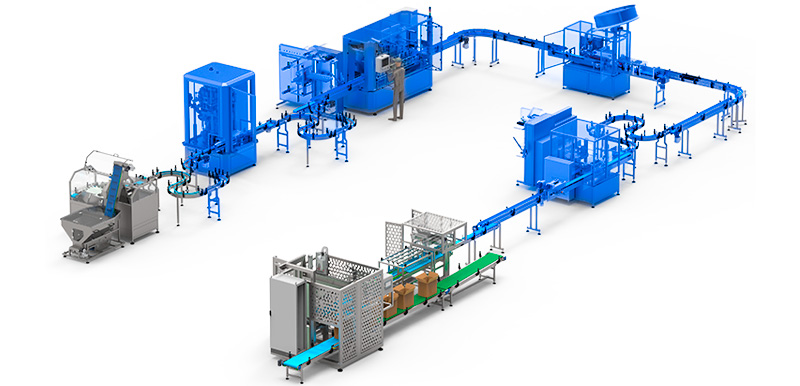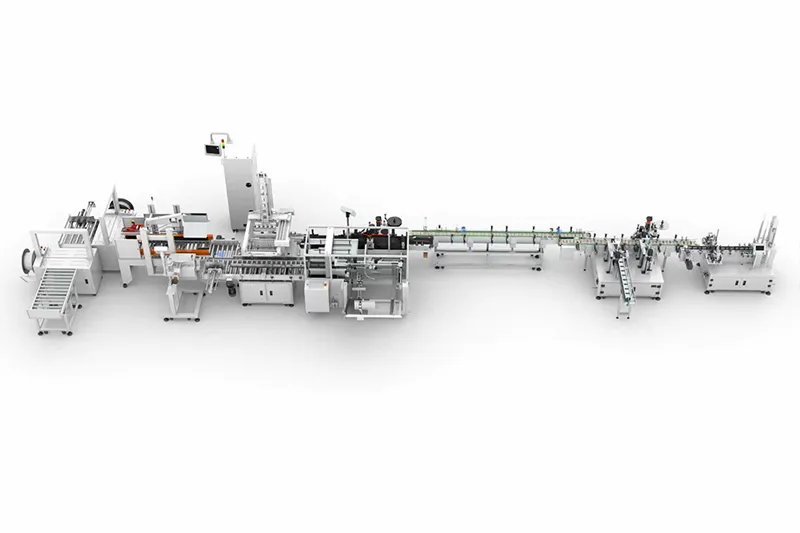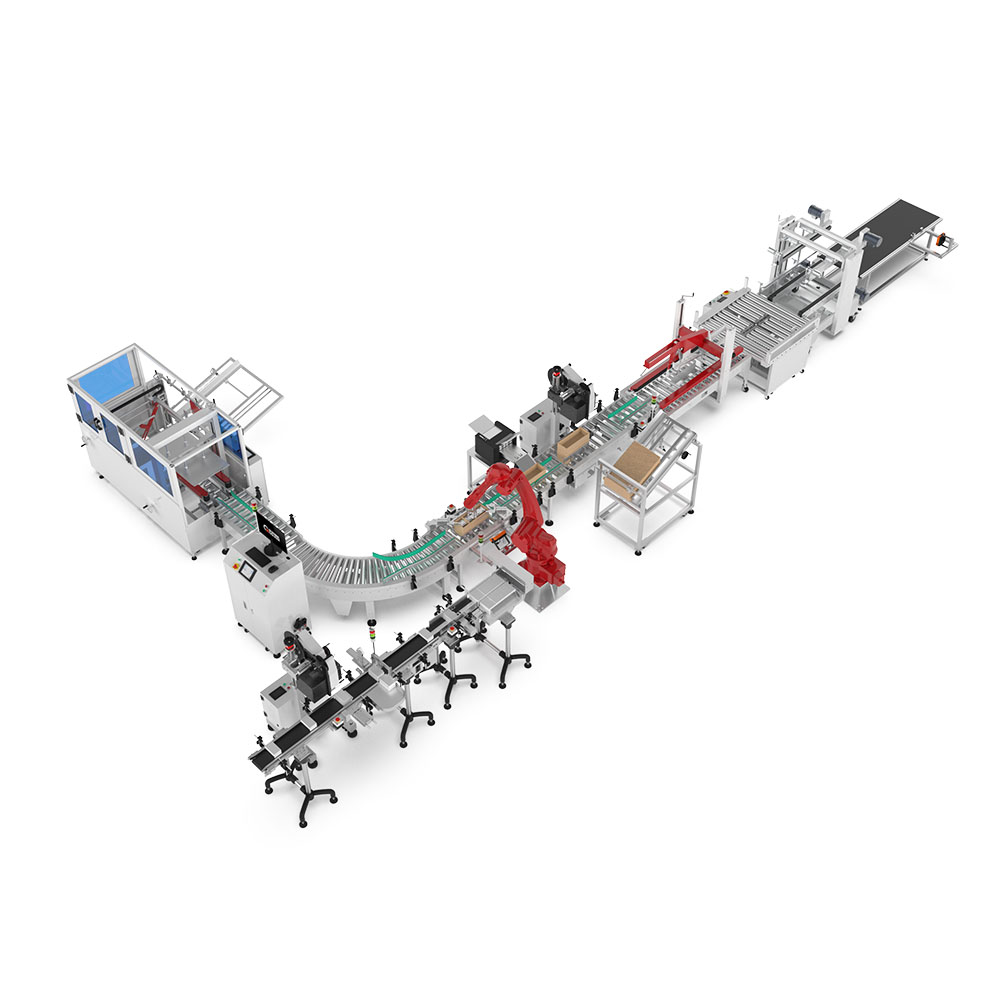
An under-filled carton is not a small slip. If a buyer opens a box and finds one item missing, that is a short shipment—and for contract or regulated orders, it is a breach. The cost is a replacement, a complaint, and often a lost account. The real question is whether your line can stop it before the box is sealed and shipped. This guide compares hand counting with in-line checkweighing, shows how to choose and set up a checkweigher, and what accuracy and compliance really require.
Two ways exist to catch a wrong count: a person counting by hand, or an in-line checkweigher weighing each carton. On a modern automatic carton packing production line, the choice between them decides how many short cartons ever leave the building.
What you will read
- An under-filled carton is a contract breach
- Manual count vs checkweigher: the side-by-side
- Why carton counts go wrong
- How in-line checkweighing catches short shipments
- How to choose a checkweigher
- What throws off the weight reading
- How to set the tolerance
- Compliance and traceability
- A before-and-after example
- Frequently asked questions
1. An under-filled carton is a contract breach
When the carton count is wrong, the buyer pays for what is not there. That breaks trust fast. Some industries treat a short shipment as a quality failure that triggers audits or penalties, so one missing unit can cost far more than the unit itself.
Counting errors share a root with other line faults: a carton line that keeps jamming often also mis-feeds items, so jamming and short counts travel together. Fix the feed and the count at the same time.
2. Manual count vs checkweigher: the side-by-side
The table below compares hand counting with an in-line checkweigher on the things that decide whether short cartons get caught.
| Factor | Manual count | In-line checkweigher |
|---|---|---|
| Accuracy | Drops with speed and fatigue | Consistent, set by tolerance |
| Line speed | Slows the line | Keeps pace, no stop |
| Cost over time | Recurring labor | One install, low run cost |
| Miss rate | Real on long runs | Near zero within tolerance |
| Traceability | Hard to prove | Logged per carton |
| Best use | Low volume, one-offs | Repeat, contract, mixed-SKU |
3. Why carton counts go wrong
Manual counting fails for predictable reasons, not random ones:
- Operator fatigue on long runs. The same motion hundreds of times breeds missed items.
- Mis-count under pressure. Rush orders push speed over care, and errors climb.
- Batch mix-up. Two similar SKUs on one line confuse the count.
- Changeover slips. A slow carton changeover is when mixed items most often enter the wrong carton.
- Vibration or jam feeding. A misfeed drops an item without anyone noticing.
4. How in-line checkweighing catches short shipments

A checkweigher weighs every carton against a target. If a carton is light—meaning an item is missing—it is rejected before sealing or at the line exit. The result is a count you can prove, not one you hope for.
- Set a weight tolerance per carton; anything outside is flagged.
- Auto-reject short cartons so they never reach the buyer.
- Log each weigh for traceability and audit defense.
- Feed the reject back for re-work instead of scrap where possible.
Checkweighing sits at the end of the line, after gentle handling and sealing. It pairs with a tape vs glue sealing choice so the box is closed and correct, and it assumes cartons arrived intact—which is why why cartons get crushed matters: a damaged carton weighs wrong and triggers a false reject. Handle gently, then weigh.
5. How to choose a checkweigher
Four numbers decide the right machine:
- Capacity (max weight). Must clear your heaviest filled carton with margin; over-spec’ing hurts readability.
- Readability (resolution). The smallest weight it can tell apart—should be well below one item’s weight so a missing unit is always caught.
- Throughput (speed). Cartons per minute at your line rate; it must keep pace without a backup.
- Reject method. Push-arm, air-blast, or diverter—match to carton size and line layout.
6. What throws off the weight reading
A checkweigher is only as good as its environment. Watch for:
- Line vibration. A shaky belt adds noise; isolate the scale from drives.
- Temperature and humidity. Both shift readings; use a temperature-compensated load cell.
- Uneven carton weight. If your fill varies, set tolerance to the real variation, not the label weight.
- Debris on the belt. Dust or product buildup changes the tare; clean the section.
- Off-center cartons. A carton not centered on the plate reads low; use a centering infeed.
7. How to set the tolerance
The tolerance is the band around the target weight. Set it right and you catch every short carton without rejecting good ones:
- Start from one item’s weight. The tolerance must be smaller than a single missing unit, or that unit will not show.
- Add your real fill variation. If filled weight swings ±20 g, the band must cover that or you reject good cartons.
- Example: Target 5,000 g, item weight 200 g, fill variation ±30 g → set tolerance around ±50 g so a 200 g miss is always outside the band.
- Tune from data. Run a few hundred good cartons, see the spread, then tighten the band to just outside it.
8. Compliance and traceability
For traded goods, a checkweigher is often a legal weighing device. In many markets it must meet a measuring-instrument standard (such as MID in the EU or NTEP in the US) when used for quantity control. Beyond law, the log is the point:
- Per-carton record. Weight, time, and pass/reject status stored for each box.
- Audit defense. If a buyer disputes a count, you show the verified log, not a handshake.
- Batch traceability. Link weights to batch or shift to spot a feed problem early.
9. A before-and-after example
A parts supplier shipping contract orders by count was hit with a short-shipment penalty twice in a quarter from hand-count misses on long runs. After adding an in-line checkweigher set to flag any carton more than one item light, short shipments dropped to zero in the first month. The logged weights also let them prove correct counts in a later dispute, protecting the account. The install paid back in one avoided penalty.
10. Frequently asked questions
Is a checkweigher accurate enough for counting?
For cartons where one missing item changes the weight by more than the tolerance, yes. Set the tolerance to the lightest single item and a short carton is caught every time.
Does it slow the line?
No. In-line checkweighers run at line speed and reject without stopping flow. They are faster than a person counting and never tire.
Is manual counting ever fine?
For very low volumes or one-off cartons, a careful hand count can work. For repeat runs, contract orders, or mixed SKUs, automation removes the risk a person cannot.
Can I prove the count to a buyer?
Yes. A checkweigher logs each carton’s weight, so you can show the shipment was verified, not just hoped. That log is strong defense in a dispute.
When should I add one?
Add checkweighing as soon as short shipments carry a real cost—contract penalties, audits, or lost accounts. The install pays for itself in avoided claims.
How tight should the tolerance be?
Tight enough to catch one missing item, wide enough to pass normal fill variation. Run good cartons first to see the real spread, then set the band just outside it—not at the label weight alone.
Why do I get false rejects?
Usually vibration, debris on the belt, or off-center cartons. Isolate the scale, clean the section, and center the infeed; most false rejects disappear without touching the tolerance.
Worried about shipping under-filled cartons? Talk to the JOYDA team about an in-line checkweigher sized to your carton weight, item weight, and line speed—we will also send a tolerance-setting worksheet you can use to tune it yourself. You can review our automatic carton packing production line to see where checkweighing fits at the end of the line.