For growing manufacturers, the debate between manual vs. automated carton packing is often reduced to a simple comparison of “machine price” versus “operator hourly wage.” This is a calculation error. The true cost difference lies in system coordination and stability. While manual packing offers low upfront costs, it creates unpredictable bottlenecks and quality variances. In contrast, a fully automated Industry 4.0 line connects forming, loading, weighing, and palletizing into one continuous flow, delivering superior long-term cost performance through stable cycle times, reduced rework, and predictive maintenance.
As an engineer who has designed lines for both small workshops and massive logistics hubs, I have seen the numbers. A manual team might have a “good day” where they pack 5,000 units, and a “bad day” where they pack 3,500. An automated line does not have bad days. This article breaks down the financial and operational reality of making the switch.
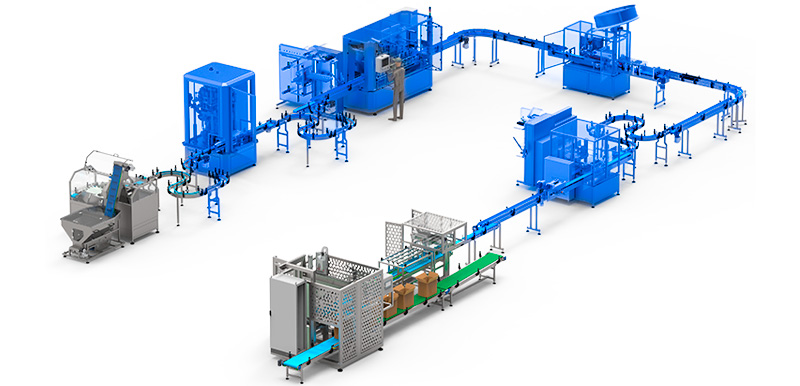
Table of Contents
- The Hidden Costs of the “Human Factor” in Packaging
- Defining the Automated Ecosystem: It Is Not Just a Robot
- The Efficiency Gap: Synchronized Takt Time vs. Variable Output
- Quality Assurance: How Automation Eliminates the “Rework Tax”
- The Role of Industry 4.0 in Reducing Unplanned Downtime
- Real-World Case Study: From Manual Labor to System Supervision
- Cost-Benefit Comparison Matrix: Making the Financial Case
- Final Verdict: When is the Right Time to Automate?
1. The Hidden Costs of the “Human Factor” in Packaging
When you audit a manual packaging line, the direct labor cost (wages) is just the tip of the iceberg. The real drain on ROI comes from what we call “The Hidden Factory”—the inefficiencies that don’t show up on a payroll spreadsheet but bleed profit margins every day.
Manual packing depends entirely on operators. This means production output varies by shift, by day of the week, and even by the hour (pre-lunch vs. post-lunch). Furthermore, manual processes create bottlenecks at the end of production. If the packer is slower than the filler, the entire upstream line has to slow down or stop. You are paying for 100% capacity on your filling machines but utilizing only 70% because the manual packing team cannot keep up. Add to this the costs of repetitive strain injuries (RSI) and high turnover training, and the “low cost” of manual labor becomes expensive.
2. Defining the Automated Ecosystem: It Is Not Just a Robot
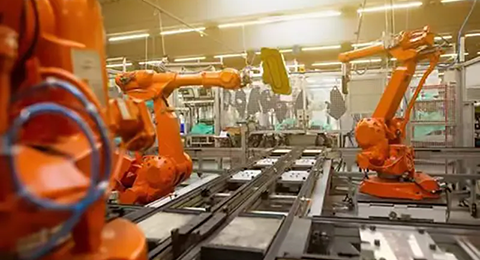
To make a fair comparison of Manual vs. Automated Carton Packing, we must define what modern automation entails. It is not just replacing a person with a robot arm; it is about creating a closed loop.
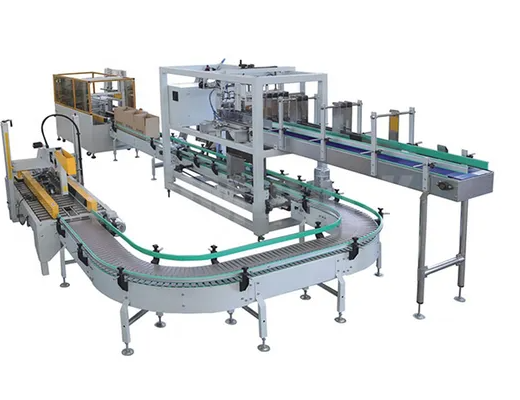
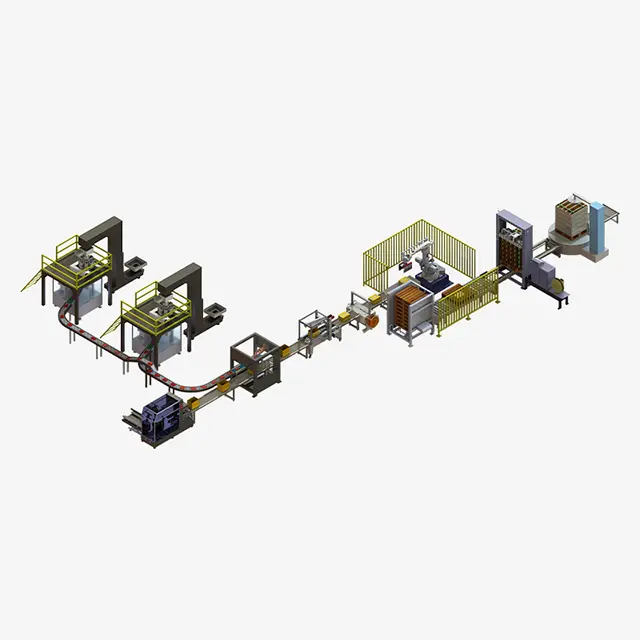
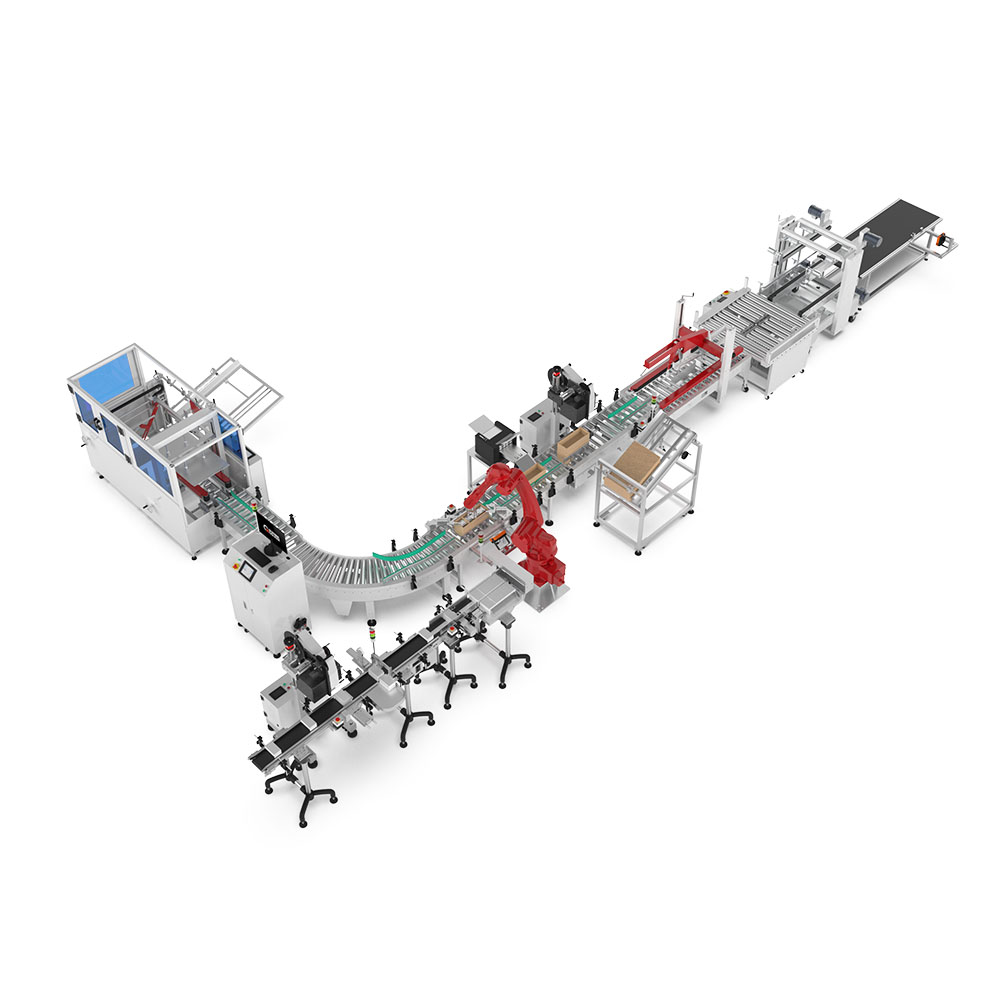
A fully automated carton packing production line connects every stage of the process: carton forming, robotic loading, weighing, sealing, labeling, palletizing, and wrapping. Under an Industry 4.0 control framework, these are not independent islands.
- The Workflow: The system starts with an automatic case erector squaring the box.
- The Link: Conveyors feed the box to a robotic packer that loads products with precise geometry.
- The Verification: The box passes over an inline check weigher and vision system before being sealed, labeled, and palletized.
Automation transforms multiple independent stations into one continuous flow, reducing idle time and unnecessary handling that plagues manual setups.
3. The Efficiency Gap: Synchronized Takt Time vs. Variable Output
In engineering terms, the Holy Grail of manufacturing is a consistent “Takt Time”—the heartbeat of the line.
Centralized PLC and sensor control synchronize each module so the entire line runs at a coordinated takt time. In a manual setup, if the person forming boxes is faster than the person taping them, inventory piles up (WIP), consuming floor space and risking damage. In an automated line, the case erector “talks” to the robotic packer. If the packer slows down for a complex loading pattern, the erector automatically adjusts its speed to match. This synchronization improves throughput and productivity by eliminating the “stop-and-go” effect that destroys efficiency.
4. Quality Assurance: How Automation Eliminates the “Rework Tax”
One of the most significant long-term savings in automation comes from error reduction. In a manual vs. automated carton packing analysis, manual lines historically have a 2-5% error rate (wrong count, missing insert, bad seal).
Inline weighing and inspection modules stabilize accuracy, lowering rework and product damage compared with manually handled packing.
- Manual Scenario: A customer receives a case with 11 units instead of 12. You pay for the refund, the shipping, and the reputational damage.
- Automated Scenario: The check weigher detects the 100g weight variance instantly. A pneumatic pusher rejects the case before it is sealed. The problem is solved inside the factory, not at the customer’s warehouse.
5. The Role of Industry 4.0 in Reducing Unplanned Downtime
Critics of automation often argue, “If the machine breaks, the whole line stops.” This was true 10 years ago. Today, Industry 4.0 changes the equation.
Industry 4.0 monitoring enables real-time status tracking, failure diagnostics, and maintenance planning. Modern systems use smart sensors to monitor motor temperature, vibration, and vacuum pressure.
- Predictive Maintenance: Instead of running until a bearing fails (causing 4 hours of downtime), the dashboard alerts the maintenance manager: “Servo B Maintenance Required in 48 Hours.”
- Result: You schedule maintenance during a shift change, protecting uptime and significantly reducing the cost of unplanned stops compared to the reactive nature of manual equipment failure.
6. Real-World Case Study: From Manual Labor to System Supervision
Let’s look at a concrete example from a facility that recently made this transition.
A mid-sized food manufacturer upgraded from a largely manual end-of-line process to a fully automated Industry 4.0 carton packing line.
- Before: 8 operators manually formed boxes, hand-loaded bags of product, taped them, and stacked them on pallets. The line speed was inconsistent, limited by the slowest worker.
- The Solution: They installed an automatic case erector, a delta robot for case packing, a top sealer, a print-and-apply labeler, and a robotic palletizer.
- The Result: After integration, the 8 operators were reduced to 2 technicians whose role shifted from physical packing to monitoring and supervision via the HMI. Production became predictable, labor demand decreased by 75%, and consistent packaging quality was achieved—even when the line switched between three different box sizes in a single shift.
7. Cost-Benefit Comparison Matrix: Making the Financial Case
To help you visualize the ROI, here is a breakdown of how the costs shift over a 5-year period.
| Cost Factor | Manual Packing | Automated Carton Packing | Long-Term Winner |
| Upfront Investment | Low (Tables, simple tape machines) | High (Robotics, Conveyors, Integration) | Manual |
| Labor Cost | High (Wages + Overtime + Benefits) | Low (Supervision only) | Automated |
| Recruitment/Training | Constant (High turnover) | Minimal (Specialized staff) | Automated |
| Material Waste | High (Overuse of tape/film) | Low (Precision cutting/taping) | Automated |
| Quality/Rework | High (Human error) | Near Zero (Sensor verified) | Automated |
| Scalability | Difficult (Must hire more people) | Easy (Increase speed/Add shift) | Automated |
Conclusion: Manual packing is cheaper for the first 6–12 months. Automated packing typically achieves ROI (Return on Investment) between months 18 and 24, after which it is significantly more profitable.
8. Final Verdict: When is the Right Time to Automate?
So, is automation always the answer? Not always.
Stick with Manual Packing if:
- Your production volume is low or highly sporadic.
- Your product shape changes every week, requiring constant extreme flexibility.
- You lack the capital for upfront investment.
Switch to Automated Packing if:
- You are running continuous shifts (2 or 3 shifts/day).
- Your “Manual vs. Automated Carton Packing” calculation shows labor costs exceeding the monthly lease/finance cost of machinery.
- You require traceability (Industry 4.0 data) for compliance.
- You are struggling to hire reliability staff for repetitive tasks.
With Industry 4.0 connectivity, the automated line delivers traceability and easier planning, making the long-term cost performance significantly higher than manual operations for any manufacturer looking to scale.