Manual packing is a major bottleneck that drains your profit. A professional carton packing production line integrates an auto case erector and high-speed sealing to eliminate repetitive manual labor. Whether you need a semi-auto setup or a fully automatic carton packing machine, our solutions help you reallocate workers to higher-value tasks while ensuring 24/7 consistency. Stop overpaying for inefficiency—read on to see the savings, or contact us for a custom configuration today.
When evaluating the transition from manual processes to an automated carton packing line, procurement teams often ask for the exact headcount reduction. The math is highly compelling. However, the true value lies not just in eliminating wages, but in transforming the nature of the work. By shifting human operators from exhausting, repetitive tasks to high-value supervisory roles, factories stabilize their daily output and protect their long-term profitability.
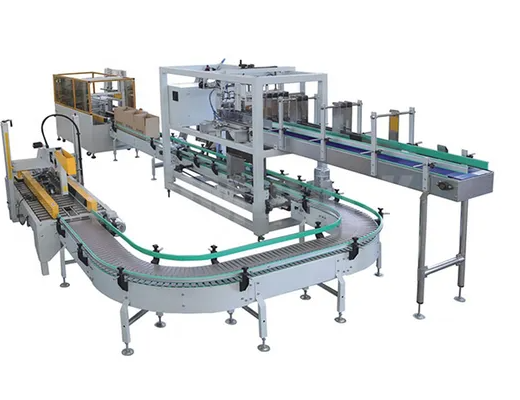
Table of Contents
- The Anatomy of Manual Labor in Traditional Packaging
- The Shift to an Automated Carton Packing Line
- The Transformation of the Operator’s Role
- Hard Data: Quantifying Labor and Efficiency Gains
- Comparative Analysis: Manual vs. Automated Packing
- Real-World Case Study: A Food Manufacturing Facility
- The Long-Term ROI of Labor Reduction
1. The Anatomy of Manual Labor in Traditional Packaging
In a traditional packaging workshop, cartoning is a highly physical, multi-step process. To maintain a steady flow, a factory must staff multiple workers at discrete stations.
The manual workflow typically requires human hands to execute several highly repetitive tasks. Operators must manually pull flat corrugated blanks, square them, and tape the bottoms. From there, another team handles product grouping and loading, carefully counting and orienting the primary products into the box. The box is then passed down the line for manual sealing, where an operator pushes it through a tape dispenser. Finally, shipping labels are affixed, and the heavy, sealed boxes are manually stacked onto a pallet for warehouse transfer. Because these tasks are physically demanding, they require a high headcount—often 6 to 10 operators per line—just to maintain a baseline speed.
2. The Shift to an Automated Carton Packing Line
A modern carton packing production line replaces this fragmented, labor-heavy process with a continuous, synchronized mechanical flow.
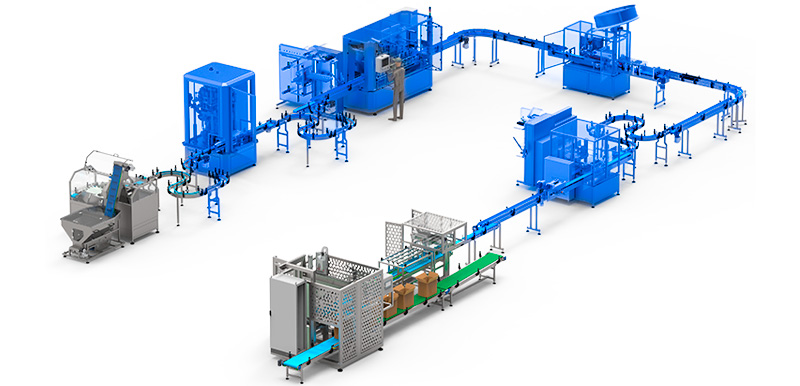
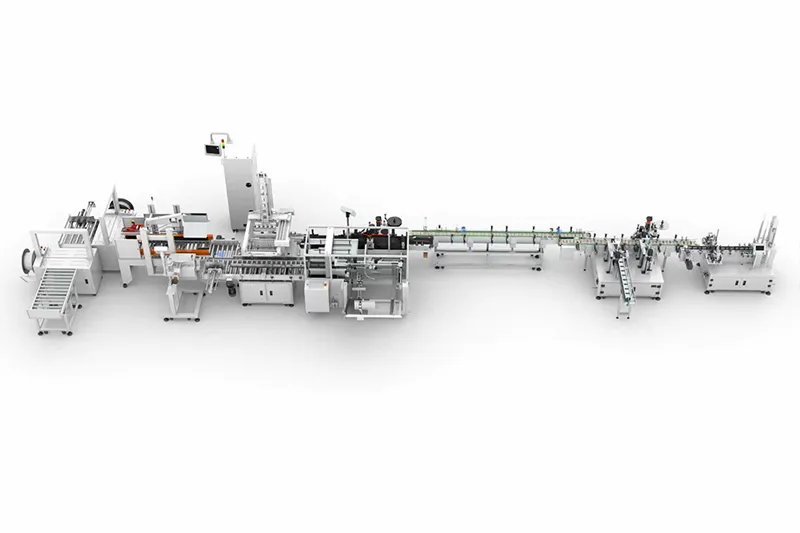
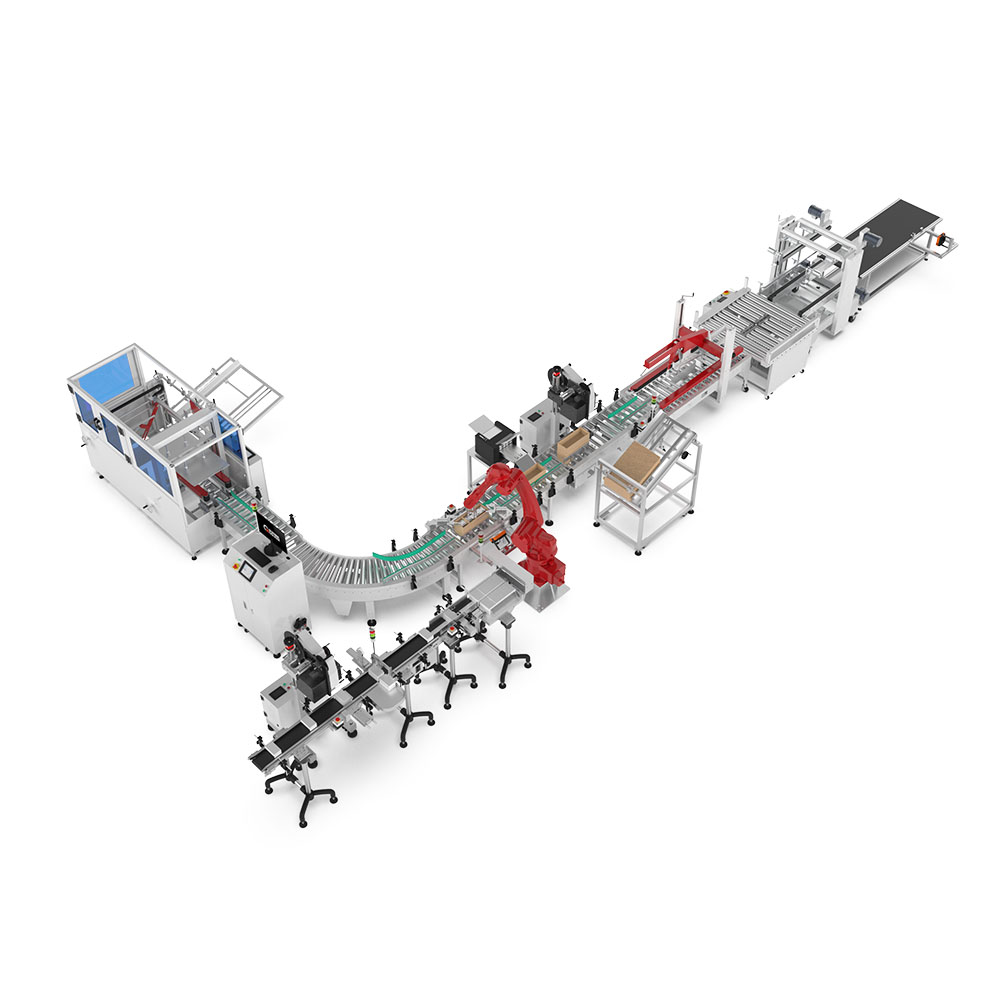
By integrating the entire end-of-line packaging process through a centralized control system, the equipment executes the sequence flawlessly. The auto case erector forms and seals the bottom of the box. Next, a high-precision robotic case packer groups and inserts products perfectly every time. The automatic carton packing line then automatically folds and tapes the top flaps precisely without jamming. Finally, automatic inspection and labeling units verify the contents before the automatic palletizer stacks the finished goods.
3. The Transformation of the Operator’s Role
When a facility installs an automatic carton packing production line, the human requirement does not disappear; it evolves. The labor model shifts fundamentally from an “operational” role to a “supervisory” one.
Instead of performing high-intensity repetitive lifting and packing, the remaining operators step into technical management. In most upgraded factories, personnel are primarily responsible for equipment patrol (monitoring the system for health and efficiency), replenishing raw materials (loading magazines with flat cardboard blanks, tape rolls, and glue), and handling exceptions (clearing occasional jams or responding to automated reject alarms). This removes staff from ergonomically hazardous tasks and significantly reduces physical fatigue.
4. Hard Data: Quantifying Labor and Efficiency Gains
The financial justification for end-of-line automation is built on concrete metrics. Based on our Industry 4.0 applications, a high-speed automatic carton packing machine running at 4,000 units/hour delivers massive operational changes.
A standard line eliminates the wages of 19 to 21 manual workers, reducing the required personnel down to just 2 to 3 supervisors—a direct labor reduction of up to 70%. In a traditional environment, manual packing speed typically hovers around 8 to 12 cartons per minute and drops as operators get tired. In contrast, our automatic carton packing line maintains a stable speed of 20 to 30 cartons per minute (or higher depending on configuration). This fixed mechanical rhythm ensures your efficiency never fluctuates.
5. Comparative Analysis: Manual vs. Automated Packing
To clearly visualize the operational shift, we can compare the core metrics of a manual setup against an integrated automated system.
| Metric | Traditional Manual Packing | Carton Packing Production Line | Operational Impact |
| Headcount per Line | 6 to 10 Operators | 2 to 3 Supervisors | 50% to 70% reduction in direct wage costs. |
| Sustained Speed | 8 to 12 cartons/min | 20 to 30 cartons/min | Throughput increases by 2x to 3x. |
| Fatigue Factor | High (Output drops late in shift) | Zero (Runs 24/7 constantly) | Predictable, stable daily yield without fluctuations. |
| Error and Rework Rate | Moderate (Miscounts, poor seals) | Near Zero (Sensor verified) | Eliminates costly shipping mistakes and customer complaints. |
| Primary Human Role | Heavy lifting and repetitive motion | System monitoring and material refill | Improved workplace safety and lower staff turnover. |
6. Real-World Case Study: A Food Manufacturing Facility
To illustrate these numbers in a practical setting, consider the recent upgrade of a regional food production enterprise.
The Baseline (Manual Setup):
The facility relied entirely on a manual cartoning process. It required 8 workers strictly dedicated to erecting, loading, and sealing boxes. Their maximum sustainable production speed was approximately 10 cartons per minute. During peak seasonal demand, the factory was forced to hire additional temporary workers, which introduced high error rates, packing inconsistencies, and severe training bottlenecks.
The Upgrade (Automated Setup):
The facility deployed a fully integrated carton packing production line. The new system automatically handled the erecting, loading, sealing, and conveying of the products.
The Results:
The line now requires only 2 to 3 technicians to patrol the equipment and replenish corrugated blanks. The system achieves a highly stable running speed of 24 cartons per minute. Ultimately, packing efficiency increased by over two times, while direct labor dependency was reduced by approximately 65%. Additionally, packaging consistency improved significantly, entirely eliminating the issues caused by the previous manual workforce.
7. The Long-Term ROI of Labor Reduction
For manufacturing enterprises, this type of automation does more than slash payroll. The savings generated from eliminating 20 roles is the primary driver of our 1-year ROI guarantee. By transforming unpredictable labor costs into a fixed mechanical asset, a case packing line transforms your variable expenses into predictable profit. This stability, backed by our Harvard-educated consultant’s strategic integration, ensures your factory can scale aggressively without labor market risks.
Ready to Stop Overpaying for Manual Labor?
Don’t let high headcount drain your profits. At JOYDA, we specialize in high-speed automatic carton packing lines that deliver 24/7 consistency and immediate financial returns. Contact us now to get your Free Labor Savings Assessment and custom configuration within 48 hours.
Frequently Asked Questions (FAQ)
1. Does reducing the headcount by 70% mean we have to lay off staff?
Not necessarily. Most growing manufacturers reallocate these workers to other, higher-value areas of the facility where labor is still needed, effectively increasing total factory output without increasing the overall payroll.
2. Will the remaining 2 to 3 operators need advanced engineering degrees?
No. Modern automatic carton packing production lines utilize user-friendly touchscreens. The remaining staff requires only basic vendor-provided training to learn how to operate the interface, clear minor faults, and safely reload materials.
3. If the machine breaks down, does that waste more time than human fatigue?
While a breakdown halts production, modern systems use predictive maintenance sensors to alert you to wear and tear before a breakdown occurs. The continuous speed of 20 to 30 cartons per minute easily compensates for short, scheduled maintenance pauses.
4. How quickly does the labor savings pay for the machine?
Depending on your local labor rates and whether you run single or multiple shifts, the ROI generated strictly from labor reduction and increased throughput typically pays for the equipment within 1.5 to 2.5 years.
5. Can an automated line handle our peak season volume?
Yes. Because automated lines do not suffer from fatigue, you can run them continuously during peak seasons without the need to hire, train, and manage temporary seasonal workers.
6. Do we still need manual quality control inspectors at the end of the line?
Usually, no. Automated lines can be integrated with inline check weighers and vision inspection systems that automatically reject underweight or improperly sealed boxes with far greater accuracy than human inspectors.
7. Is an automated line too rigid if we change carton sizes?
Modern systems feature modular designs and servo-driven adjustments. Changing from one box size to another can often be done by selecting a new parameter recipe on the touchscreen, allowing the machine to adjust itself in 10 to 15 minutes.