As the manufacturing landscape rapidly shifts toward smart factory operations, plant managers are discovering a critical bottleneck: the end of their production line. While upstream manufacturing processes have become highly automated and data-driven, traditional manual packaging processes remain sluggish, error-prone, and increasingly difficult to scale. Dealing with large SKU volumes, rapid order turnover, and skyrocketing labor costs requires more than just adding more hands to the warehouse floor.
To solve this, forward-thinking facilities are adopting the Industry 4.0 box folding packing line. This is not merely a mechanical upgrade; it is a complete digital transformation of the packaging floor. By combining advanced robotics, precise carton handling, and real-time data connectivity, these systems turn a traditional cost center into a transparent, high-efficiency production asset.
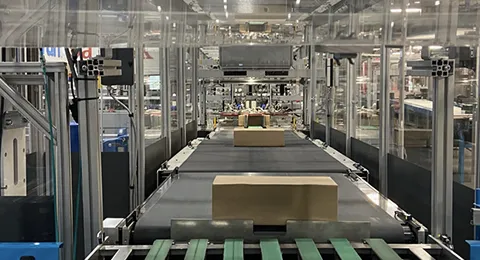
This comprehensive guide explores the core functionalities of this technology, examines the measurable data behind its return on investment, and details exactly which industries stand to benefit the most from integrating smart packaging automation.
Table of Contents
- Why Are Traditional Packaging Methods Failing Modern Supply Chains?
- What Is an Industry 4.0 Box Folding Packing Line?
- Which Specific Industries Benefit Most from Smart Packaging Automation?
- How Does an Automated Box Folding System Improve Operational Data?
- Can an Intelligent Packaging Production Line Handle High-SKU Environments?
- Why Is ERP, MES, and IoT Integration Crucial for End-of-Line Packaging?
- How Can You Scale Your Packaging Automation Gradually?
- Frequently Asked Questions (FAQ)
1. Why Are Traditional Packaging Methods Failing Modern Supply Chains?
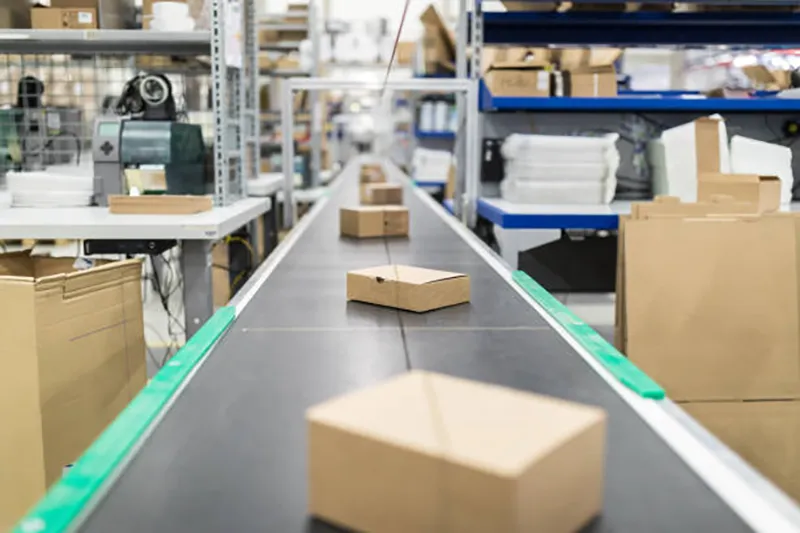
In today’s fast-paced manufacturing environment, relying on manual labor for end-of-line packaging creates several unsustainable friction points. The most pressing issue is the escalating cost and decreasing availability of manual labor. Finding reliable workers for repetitive tasks like folding cardboard and applying tape is a continuous struggle for warehouse managers, particularly during seasonal peaks.
Furthermore, human operators introduce a high degree of variability. A worker’s packing speed and accuracy at the start of a shift differ drastically from their performance at the end of the day. This inconsistency leads to un-squared boxes, poor seals, and incorrect labeling. In a traditional setup, the product damage rate can hover around 3%, leading to costly returns, wasted materials, and dissatisfied customers. When upstream machines run at high speeds but the downstream packaging relies on human hands, the entire factory’s throughput is artificially capped by human fatigue.
2. What Is an Industry 4.0 Box Folding Packing Line?
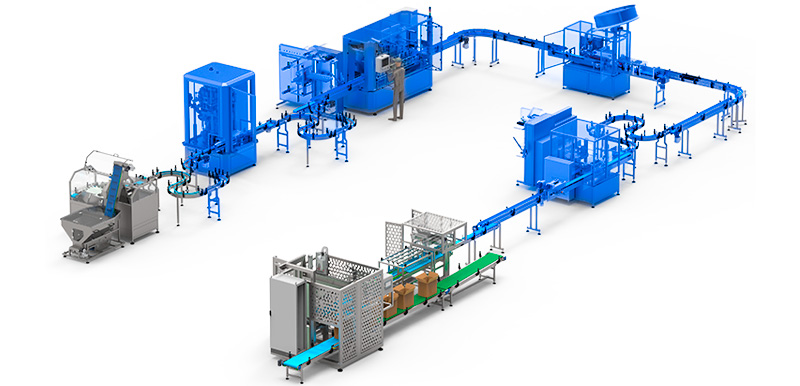
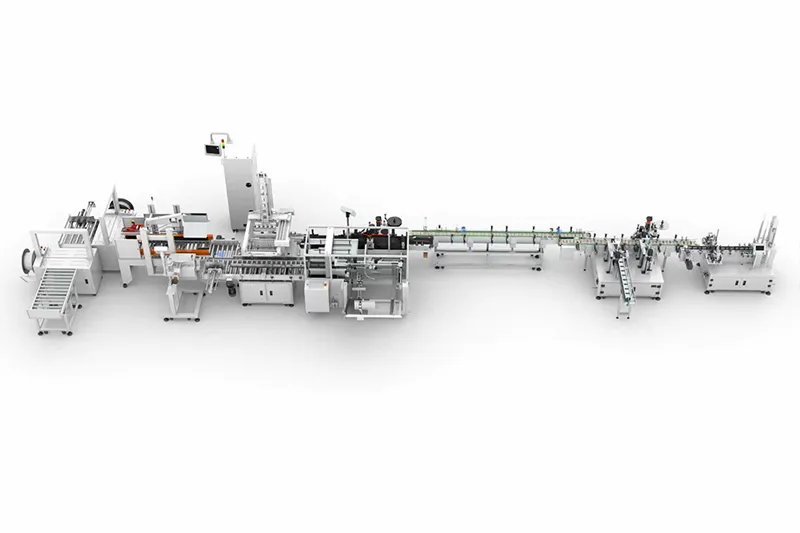
To overcome the limitations of manual packing, facilities must deploy an architecture that integrates mechanical precision with digital intelligence. An Industry 4.0 box folding packing line is a centralized, automated workflow that handles a product from the moment it leaves the assembly line until it is securely palletized and ready for shipping.
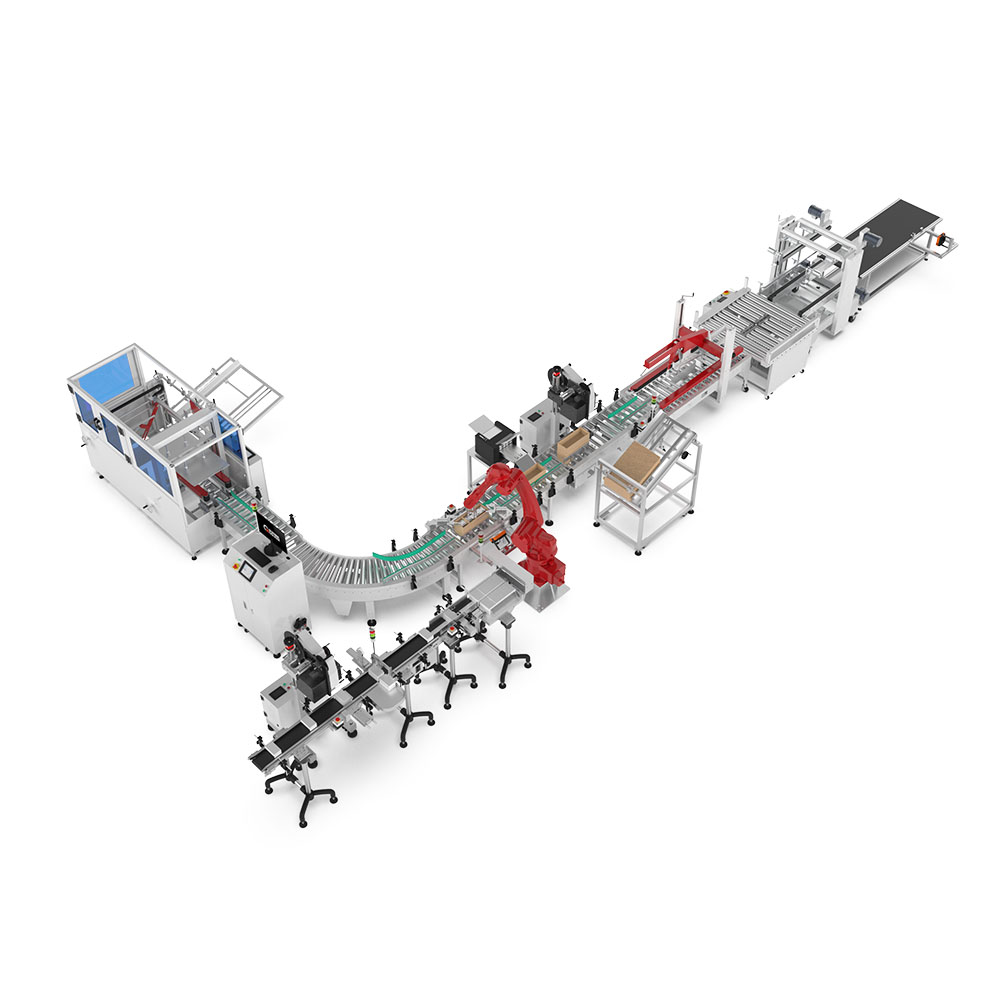
Advanced solutions, such as those engineered by JOYDA Totalpack, move beyond the capabilities of a standalone automatic carton folding machine. Instead, they create a synchronized ecosystem integrating the following components:
- Automatic Carton Forming & Intelligent Box Folding: Erecting perfectly squared boxes at high speeds.
- Robotic Handling: Using delta or 6-axis robots to gently and precisely load products into the cartons.
- Quality Assurance: Utilizing inline weighing and barcode verification to ensure 100% shipment accuracy.
- Labeling and Sealing: Applying secure tape or glue and printing accurate logistics labels.
- Palletizing: Automatically stacking finished goods for warehouse handoff.
- Digital Connectivity: Tying the entire physical process together with ERP/MES connectivity and IoT monitoring.
This end-of-line packaging automation is designed specifically for digital manufacturing environments where production data, complete traceability, and intelligent diagnostics are absolute operational requirements.
3. Which Specific Industries Benefit Most from Smart Packaging Automation?
While almost any manufacturing facility can benefit from automation, certain industries experience a vastly accelerated Return on Investment (ROI) due to their unique operational pressures. The environments that benefit most are those with high packaging labor demand, frequent SKU switching, strict shipment accuracy requirements, and fast production cycles.
The E-commerce Fulfillment Industry
An e-commerce fulfillment center processing thousands of mixed SKU orders daily faces a chaotic environment. During shopping festivals and seasonal peaks, these facilities often struggle with severe labor shortages, packaging bottlenecks, and an unacceptable rate of shipment errors.
The Solution: By implementing an Industry 4.0 packing line integrated with barcode verification and automated labeling, e-commerce operations can vastly improve their packaging speed and shipment accuracy. Fast carton size switching allows the system to handle wildly fluctuating product dimensions efficiently, completely decoupling their peak-season success from the need to hire temporary labor.
The Fast-Moving Consumer Goods (FMCG) Industry
FMCG manufacturers produce multiple packaging formats and require an incredibly flexible end-of-line system to keep up with rapid turnover. A major pain point is the downtime caused by manually adjusting machines for different box sizes.
The Solution: Deploying a servo-driven intelligent packaging production line with digital recipe management changes the game. Operators can change packaging specifications instantly through an HMI (Human-Machine Interface) touchscreen rather than performing lengthy mechanical adjustments with wrenches. This reduces changeover downtime, stabilizes output, and provides the scheduling flexibility needed to support high production turnover.
The Electronics Manufacturing Industry
Electronics manufacturers operate under strict quality control standards and are often at the forefront of the smart factory transition. Their packaging equipment must offer complete traceability and integrate seamlessly with enterprise systems.
The Solution: For these environments, the automated packaging line acts as a data node. It enables real-time production traceability, centralized packaging monitoring, and synchronized robotic palletizing. The packaging area becomes a fully connected part of the factory’s Industry 4.0 infrastructure, ensuring that high-value electronics are packed flawlessly and logged digitally into the warehouse system.
4. How Does an Automated Box Folding System Improve Operational Data?
The transition to a smart packaging automation system provides measurable, undeniable operational improvements. Transitioning away from manual dependency yields hard data that easily justifies the capital investment.
Below is a detailed comparison of operational metrics between a traditional manual packaging setup and a fully integrated Industry 4.0 line.
| Key Performance Indicator | Traditional Manual Packaging | Industry 4.0 Packaging Line | Operational Impact |
| Direct Labor Costs | High (Requires large teams) | Up to 30% Reduction | Frees capital and solves labor shortage bottlenecks. |
| Operational Efficiency | Baseline (Prone to fatigue) | >40% Improvement | Achieved through synchronized machine communication. |
| Unplanned Downtime | High (Reactive maintenance) | Up to 75% Reduction | Driven by IoT monitoring and predictive maintenance. |
| SKU Changeover Time | 2 – 4 hours | ~15 Minutes | Maximizes uptime for high-mix manufacturing. |
| Product Damage Rate | ~3% (Handling inconsistencies) | Reduced to 0.2% | Automated inspection ensures perfect carton forming. |
| Packaging Throughput | 3 – 8 cartons/minute | 10 – 60 cartons/minute | Easily absorbs high-volume seasonal production spikes. |
5. Can an Intelligent Packaging Production Line Handle High-SKU Environments?
A common myth is that automation is only suitable for factories making the exact same product 24/7. In reality, modern Industry 4.0 packaging lines are built for high-mix, high-SKU environments.
The secret lies in servo-driven mechanical adjustments and software-based recipe management. When a production run changes, the operator does not need to manually recalibrate the machine. They simply select the new product profile on the digital dashboard. The system automatically adjusts its guide rails, folding arms, and sealing mechanisms to the new dimensions in approximately 15 minutes. This incredible flexibility allows factories to maintain fast production cycles without sacrificing the precision of automated handling.
6. Why Is ERP, MES, and IoT Integration Crucial for End-of-Line Packaging?
An automated box folding system is powerful on its own, but its true potential is unlocked when it talks to the rest of the factory. Standalone machines operate in the dark; Industry 4.0 machines operate in a connected ecosystem.
- ERP and MES Connectivity: Integrating the packaging line with Enterprise Resource Planning (ERP) and Manufacturing Execution Systems (MES) allows for automated order fulfillment. The system knows exactly what needs to be packed, prints the correct labels automatically, and updates the inventory database the moment a pallet is finished.
- IoT Monitoring: Internet of Things (IoT) sensors continuously monitor the health of the packaging machinery. By tracking motor vibration, temperature, and cycle delays, the system can predict a mechanical failure before it happens. This predictive maintenance is directly responsible for reducing unplanned downtime by up to 75%, ensuring continuous production for critical industries.
- Warehouse Automation Upgrades: A connected line easily hands off finished goods to Automated Guided Vehicles (AGVs) and warehouse management software, creating a seamless, touchless logistics chain.
7. How Can You Scale Your Packaging Automation Gradually?
Upgrading to a smart factory does not require tearing down your entire facility overnight. The best smart packaging automation systems feature a modular architecture. This allows manufacturers to scale their automation capacity gradually.
A facility might start by automating the most labor-intensive steps—such as installing an automatic carton former and sealer—while keeping manual product loading. In the next fiscal year, as volume grows, the factory can seamlessly integrate robotic loading arms, inline weighing, and robotic palletizing into the existing line. This phased approach reduces upfront capital pressure while ensuring that the packaging line can adapt and grow alongside the business.
Conclusion
For industries facing rising operational costs, severe labor shortages, and complex SKU demands, traditional manual packing is no longer a viable option. By deploying an Industry 4.0 box folding packing line, manufacturers can achieve a massive reduction in direct labor, virtually eliminate shipment errors, and transform their end-of-line process into a predictable, data-driven asset.
Are you ready to modernize your packaging floor and achieve a measurable ROI? Discover how the integration specialists at JOYDA Totalpack can design a customized, modular smart packaging system tailored to your unique production environment.
8. Frequently Asked Questions (FAQ)
1. What is the difference between a standard carton folder and an Industry 4.0 packing line?
A standard carton folder is a standalone machine that simply erects boxes. An Industry 4.0 packing line is a fully connected system that integrates carton forming, robotic loading, sealing, and labeling, all while sharing real-time production data with your factory’s ERP and MES software.
2. Will integrating this system require us to completely rebuild our factory floor?
No. Advanced automated packaging lines utilize a modular architecture. They are designed to fit into existing facility footprints and can be installed in phases. You can start with basic carton forming and sealing, and add robotic palletizing or AGV handoffs later.
3. How does the system handle quality control and missing products?
The line utilizes inline weighing scales and barcode vision scanners. If a box is lighter than the target weight (indicating a missing item) or the barcode does not match the production order, the system automatically diverts the defective carton to a reject lane without stopping the rest of the line.
4. How difficult is it for operators to learn the new system?
Despite the complex technology running in the background, the user interface is designed for simplicity. Operators interact with an intuitive, touch-screen HMI (Human-Machine Interface). Selecting new box sizes, monitoring machine health, and clearing errors are straightforward processes that require minimal training.
5. Can this system really reduce our labor costs by 30%?
Yes. By automating the highly repetitive tasks of erecting, folding, taping, and moving boxes, the need for large manual packing teams is eliminated. Instead of 6-10 manual packers, the line typically requires only 1-2 operators to load raw materials (flat cardboard and tape) and monitor the digital dashboard.