In traditional manufacturing, plant managers often operate in the dark, discovering a machine failure only after the shipping dock is already backed up. Operating high-volume end-of-line systems without data connectivity creates severe operational blind spots that drain profitability. In modern smart factories, IoT packaging line real-time visibility is no longer an optional add-on—it is the foundational core layer that transforms disconnected equipment into a synchronized, self-reporting network.
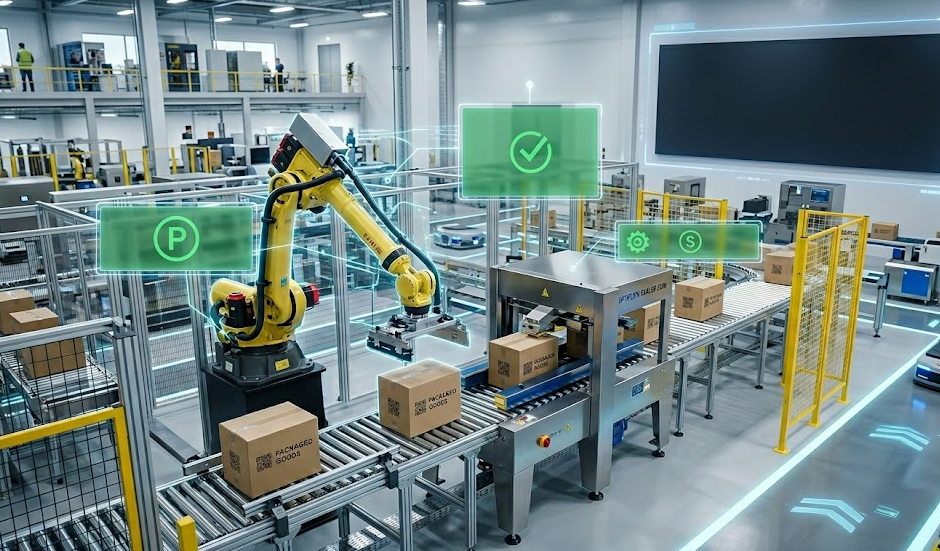
If your facility struggles with delayed fault reporting, inaccurate production statistics, and reactive maintenance, this guide explains how deploying an industrial IoT network fundamentally solves these critical pain points and turns packaging into a measurable, controllable asset.
1. The High Cost of Packaging Blind Spots
In real applications, manufacturers typically face three severe visibility gaps before IoT integration. These gaps prevent production managers from making agile, data-driven decisions:
- Reactive Status Awareness: Machine status is only known after downtime has occurred and production has halted.
- Delayed Performance Tracking: Production performance, throughput, and scrap rates are manually recorded on clipboards, meaning data is obsolete by the time it reaches management.
- Late Quality Detection: Quality issues—such as underweight boxes or misapplied labels—are detected too late in the process, often after the pallet is already wrapped, necessitating expensive rework.
Operating under these conditions means the facility is constantly firefighting rather than optimizing.
2. Building a Connected Production Network
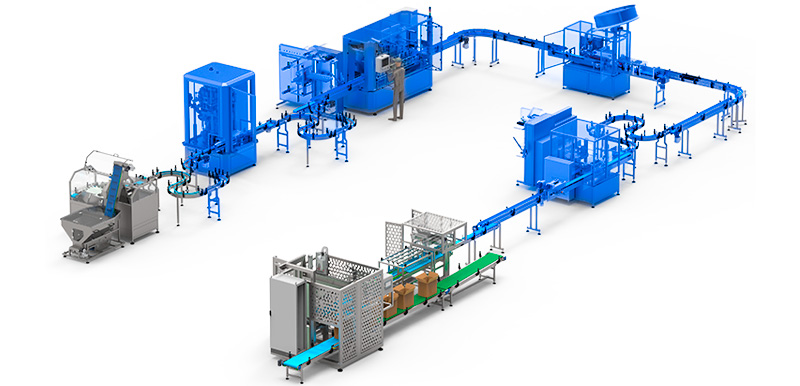
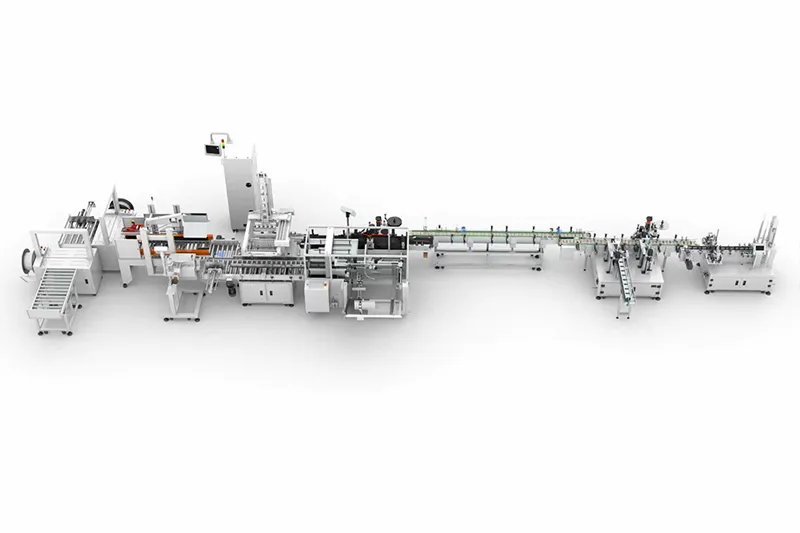
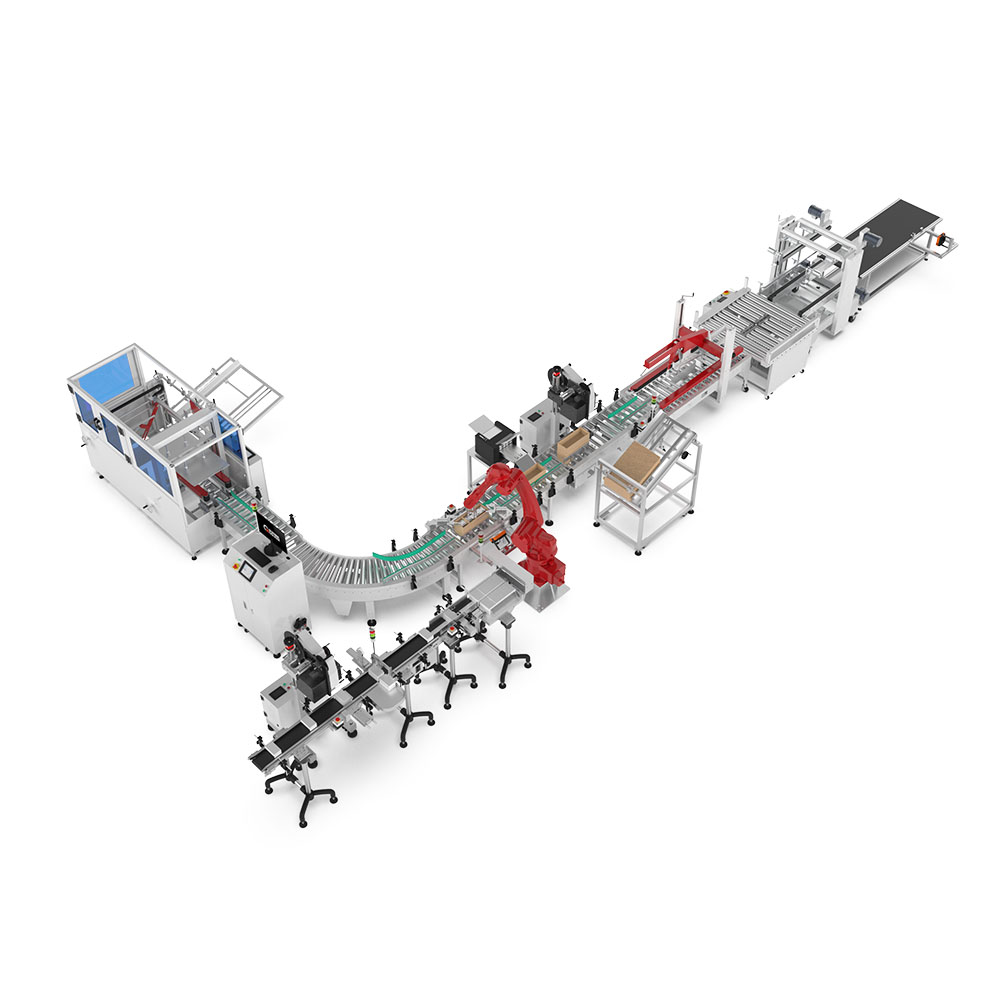
The key transformation in modern automated environments is the shift from isolated machine operation to a fully connected production network. Each equipment node—such as case erectors, packing stations, labeling units, inspection systems, and palletizers—becomes an active, data-generating endpoint. By deploying IoT sensors and industrial gateways, machines continuously transmit operational signals including cycle time, fault status, throughput, and alarms.
To better understand where this constant stream of data is actually processed, we must look at the underlying network strategy. The balance of edge vs cloud computing in Industry 4.0 packaging determines whether a machine reacts to an anomaly in milliseconds locally or analyzes long-term efficiency trends remotely. Edge computing allows industrial gateways to handle immediate, localized decisions—like triggering a high-speed reject arm—while cloud processing aggregates shift-wide data for deeper, predictive analysis.
3. Translating Raw Signals into Business Strategy
Generating raw data is only the first step; the true value lies in how that data is processed and utilized. Within a fully integrated architecture, IoT acts as the data backbone that connects mechanical automation, control systems, and upper-level software platforms (ERP/MES).
To better understand how raw electrical signals become business intelligence, we need to trace the journey from sensors to insights: building a data pipeline in packaging systems ensures that a simple vibration alert from a robotic packer is automatically cross-referenced with production schedules. This pipeline translates basic sensor data into specific, actionable maintenance work orders, effectively transforming packaging lines from “post-event reporting systems” into continuous streaming data environments.
4. Hard Data: Measuring the Impact of Smart Monitoring
Industry research and real-world implementations consistently show measurable improvements when IoT is applied to packaging lines. When every production second is measurable and actionable, the financial returns compound quickly.
Operational Impact of IoT Integration
| Performance Metric | Legacy Packaging Line | IoT-Enabled Packaging Line | Strategic Benefit |
| Fault Response Delay | 10–15 mins (Manual search) | Up to 90% Reduction | Interventions happen in minutes, saving hours of weekly uptime. |
| Unplanned Downtime | High (Reactive fixes) | Reduced by 30%–50% | Sensor-driven predictive maintenance prevents catastrophic failures. |
| Energy Consumption | Constant, unmonitored draw | Dropped by 10%–20% | Optimized machine utilization and intelligent load balancing. |
| OEE Tracking Accuracy | Estimated / End-of-shift | 100% Live Accuracy | Combines availability, performance, and quality into one live metric. |
| Supply Chain Traceability | Batch-level (Paper-based) | Real-Time Continuous | IoT enables precise tracking across all packaging and logistics flows. |
5. Case Study: Evolving into a Self-Reporting System
To see these metrics in action, consider a typical Industry 4.0 upgrade for a mid-to-large consumer goods manufacturer.
Before IoT Integration:
Operators relied heavily on manual observation and periodic reporting. Machine alarms were only noticed after they impacted the rest of the line, and downtime root cause analysis happened hours after the shift ended. Crucially, production data was fragmented across different machines, making it impossible to calculate true efficiency.
After IoT-Enabled Transformation:
The facility upgraded its end-of-line system, ensuring every machine node streamed real-time status data into a central dashboard.
- Live Visualization: Line performance (speed, efficiency, stoppages, and quality loss) is now visualized live on large overhead monitors.
- Proactive Alerts: Automatic alerts trigger when abnormal patterns appear, such as a conveyor slowdown, excessive motor vibration, or an inline blockage.
- Predictive Notifications: Maintenance teams receive alerts to replace wearable parts before failure occurs.
As a result, the packaging line evolved into a transparent, self-reporting production system. Managers can now instantly identify bottlenecks, compare station efficiency, and optimize throughput without waiting for manual reports.
6. Unifying the Factory Ecosystem
This sensor-driven approach is just one component of a much larger paradigm shift. To better understand the macro impact of this connectivity, it helps to observe how Industry 4.0 transforms end-of-line packaging architecture. It completely shifts the manufacturing paradigm from isolated mechanical islands to a highly synchronized, closed-loop system.
IoT enables the packaging system to become a seamless part of a broader digital factory ecosystem. When production machinery, control software, and logistics are fully synchronized under an Industry 4.0 architecture, the system can enable unified decision-making. The line can automatically order raw corrugated materials when supplies run low and instantly update warehouse inventory the moment a pallet is wrapped, enabling true order-driven manufacturing.
7. Securing Your Digital Packaging Future
Transitioning from blind, reactive machine operation to a fully transparent, data-driven environment is the most effective way to protect your production margins. A smart packaging monitoring system eliminates the guesswork, allowing you to maximize throughput, guarantee traceability, and drastically reduce unplanned downtime.
At Joyda Totalpack, we build intelligent, IoT-enabled packaging architectures designed to give you absolute control over your end-of-line operations. By integrating cutting-edge mechanical design with robust data pipelines, our solutions ensure your factory operates at peak efficiency.
Are you ready to eliminate production blind spots? Reach out to our engineering integration team today to discuss how a customized, IoT-connected packaging line can provide the real-time visibility your facility needs to scale profitably into the future.
Frequently Asked Questions (FAQ)
1. What exactly is an industrial IoT gateway in a packaging line?
An industrial IoT gateway is a hardware device that acts as a translator. It collects raw electrical signals and data from various machine sensors and PLCs (Programmable Logic Controllers) on the packaging line, encrypts the data, and transmits it to a centralized SCADA dashboard or cloud system for analysis.
2. Will integrating IoT sensors slow down our existing packaging machinery?
No. IoT sensors operate entirely in parallel with your machine’s mechanical drive systems. They passively monitor variables like vibration, temperature, and cycle counts in milliseconds without interfering with the physical servos or pneumatic cylinders, meaning your line speed remains completely unaffected.
3. How does IoT directly improve Overall Equipment Effectiveness (OEE)?
OEE is calculated using Availability, Performance, and Quality. IoT improves this metric by providing 100% accurate, live data rather than estimated manual logs. It highlights exactly when a machine stops (Availability), if it is running slower than the baseline (Performance), and exactly how many cartons are rejected (Quality), allowing engineers to fix the true root cause of inefficiencies.
4. Can we retrofit IoT technology onto our older, legacy packaging machines?
Yes. While native Industry 4.0 machines have this built-in, legacy equipment can be retrofitted. Engineers can install external sensors—such as photoelectric counters, temperature probes, and vibration monitors—onto older erectors or sealers and wire them into a modern edge gateway to bring them into your digital network.
5. Is our production data secure when using a connected packaging line?
Yes, provided that standard industrial cybersecurity protocols are followed. Modern smart packaging architectures utilize encrypted data transmission, secure VPN tunnels, and strict edge computing firewalls to ensure that production data flows safely to your ERP/MES without exposing the factory floor to external network threats.
6. Do our floor operators need advanced IT training to use a smart monitoring system?
No. The value of a well-designed IoT system is that it does the complex data processing in the background. The operator interfaces (HMIs and SCADA screens) translate this data into highly visual, intuitive formats—such as green/red status indicators, plain-language fault codes, and simple trend graphs—making it easily usable for standard factory personnel.
7. What is the realistic ROI timeline for implementing IoT visibility on a packaging line?
For facilities running two or three continuous shifts, the ROI is typically realized within 12 to 24 months. This rapid payback is primarily driven by the 30% to 50% reduction in unplanned downtime, the elimination of manual data-entry labor, and the drastic reduction in the time it takes to locate and resolve mechanical faults.