In the rush to achieve smart manufacturing, many plant managers fall into a costly trap: assuming that implementing a Manufacturing Execution System (MES) is a simple “plug-and-play” software installation. In reality, packaging lines are among the most complex production segments in any factory due to their high speeds, multi-machine coordination, and frequent format changes. A successful MES integration in packaging systems is a rigorous system engineering task that bridges the gap between mechanical hardware, operational data, and organizational workflows. If executed poorly, an MES simply becomes a highly expensive reporting tool. If executed correctly, it transforms your end-of-line operations into a dynamic, order-driven powerhouse.
This guide breaks down the core challenges of deploying a smart packaging execution system and provides actionable insights on how to synchronize machines, data, and decision-making for a seamless Industry 4.0 transition.
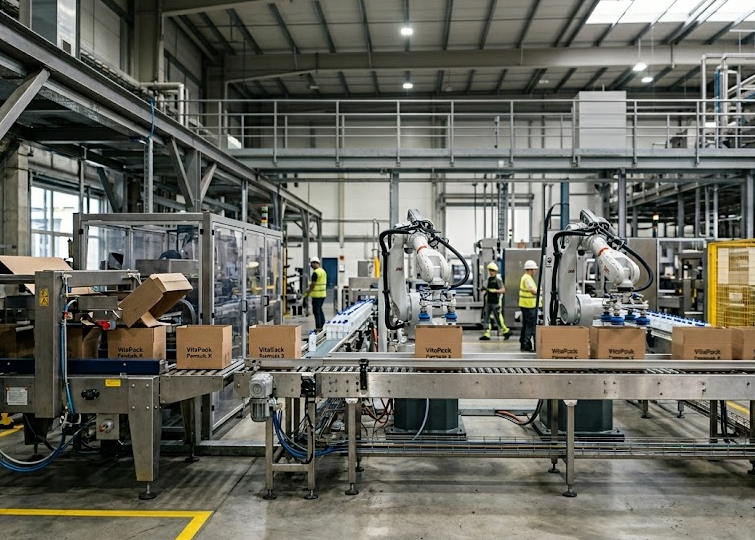
Table of Contents
- The “Plug-and-Play” Myth of MES Deployment
- Challenge 1: Heterogeneous Equipment Integration
- Challenge 2: Data Alignment and Overcoming Silos
- Challenge 3: Real-Time Execution vs. Planning Conflicts
- Hard Data: Measuring the Impact of MES Integration
- Case Study: Navigating the Integration Minefield
- Unlocking Smart Manufacturing with Joyda Totalpack
1. The “Plug-and-Play” Myth of MES Deployment
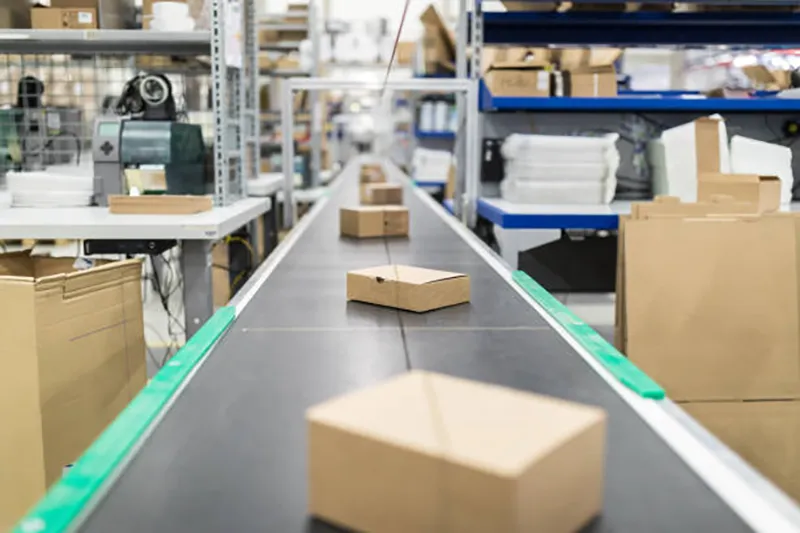
When upgrading an end-of-line packaging facility, the biggest misconception is that connecting an MES is like installing a new app on a smartphone. Packaging lines operate at blistering speeds. A minor delay in data transfer can result in mislabeled boxes, incorrect palletizing, and severe throughput drops.
An MES serves as the central bridge between top-floor ERP systems and shop-floor machines, enabling vertical integration. However, achieving this requires overcoming deep-rooted legacy incompatibilities. Without proper integration, the MES risks becoming a mere post-event reporting tool rather than a real-time execution system. Success is defined not by the software installation itself, but by how effectively it synchronizes timing, logic, and control responsibilities.
2. Challenge 1: Heterogeneous Equipment Integration
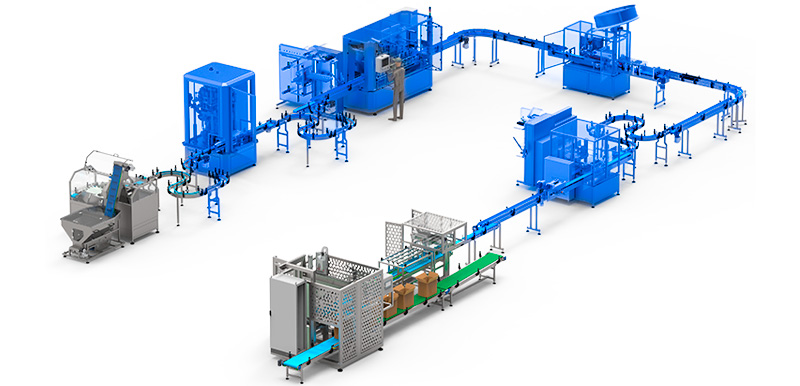
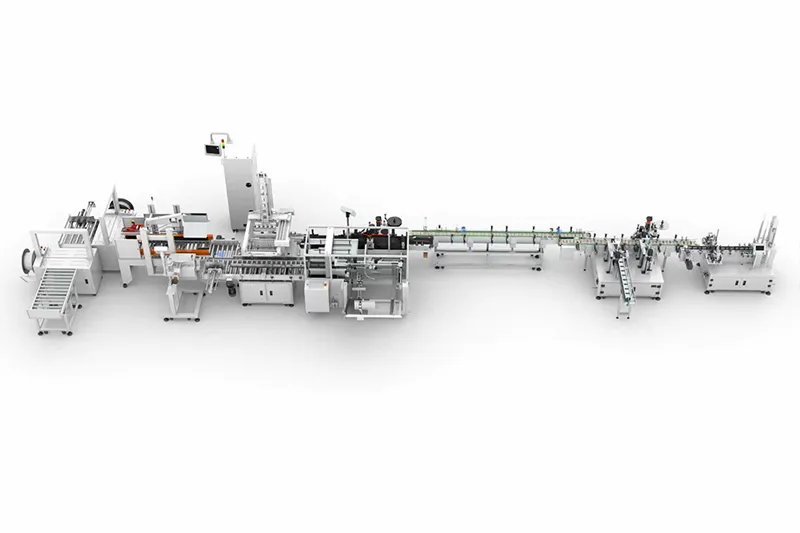
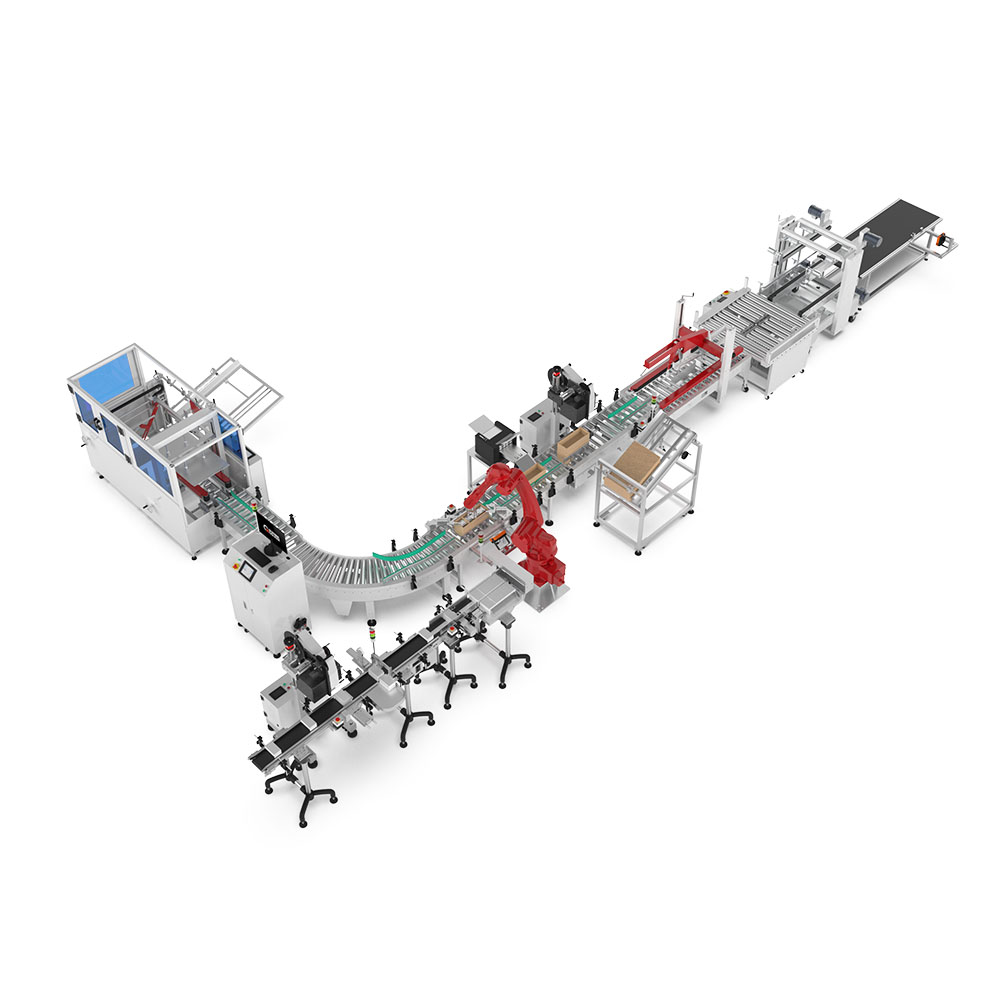
End-of-line packaging is rarely supplied by a single vendor. A typical line includes case erectors, packers, labeling systems, vision inspection cameras, and palletizing robots—often procured from entirely different manufacturers over a span of several years.
This creates a massive communication barrier. Each machine may use different PLC logic and communication protocols (such as PROFINET, EtherNet/IP, or Modbus), making standardized data exchange extremely difficult. An MES cannot orchestrate a line if it cannot speak the language of every machine on it.
To better understand how these disparate machines can merge into a cohesive unit, it is essential to look at how Industry 4.0 transforms end-of-line packaging architecture. This architectural shift fundamentally redesigns the packaging floor—from isolated hardware islands into a synchronized, closed-loop network where every machine is a unified data node, paving the physical way for MES control.
3. Challenge 2: Data Alignment and Overcoming Silos
Even if the machines are physically connected, the data they produce must be harmonized. The MES must act as the ultimate translator between the high-speed shop floor and the slower, planning-oriented enterprise systems.
However, data structures often do not match:
- ERP Systems focus on customer orders, financial planning, and inventory levels.
- MES Platforms focus on execution, real-time status, and work-in-progress (WIP) tracking.
- Shop-Floor Machines generate raw, high-frequency operational signals (motor speeds, temperature, fault codes).
Without a unified data model, integration leads to data inconsistency. If a vision scanner rejects a carton but the MES doesn’t accurately map that signal to the ERP’s inventory deduction, the factory’s stock levels will instantly fall out of sync with reality.
4. Challenge 3: Real-Time Execution vs. Planning Conflicts
Timing is the third critical hurdle. Packaging lines operate in real-time—making mechanical decisions in milliseconds. Conversely, ERP systems operate in broader cycles, updating in minutes or hours.
This discrepancy creates immediate conflicts on the floor. For instance, what happens if production orders change mid-shift? Or if the packaging machines are running 10% ahead or behind the ERP schedule? If the MES cannot buffer and translate these timing differences, the lack of synchronization will cause machines to idle while waiting for the next order command.
When this timing gap is successfully closed, the operational results are profound. Exploring how ERP connectivity transforms packaging line decision-making reveals that translating top-level planning schedules directly into dynamic shop-floor execution commands allows managers to adjust production on the fly, eliminating downtime and aligning execution perfectly with customer demand.
5. Hard Data: Measuring the Impact of MES Integration
Industry data highlights both the complexity and the absolute necessity of MES packaging line integration. Because MES implementation often requires deep customization for each specific production process, deployment times can be lengthy, but the operational payoff justifies the engineering effort.
MES Integration Challenges and Operational Impact
| Integration Challenge | Typical Root Cause | Impact on Un-Integrated Line | Result of Successful MES Integration |
| Data Silos & Latency | Legacy machine incompatibility | Delayed quality tracking; post-shift reporting | Real-time data capture; instant fault alerts |
| Order Synchronization | ERP and PLC timing conflicts | Machines idle during format or order changes | Dynamic, order-driven production execution |
| Quality Traceability | Fragmented inspection data | High cost of mass product recalls | 100% batch and unit-level traceability |
| OEE Visibility | Manual clipboard statistics | Hidden bottlenecks and unrecorded micro-stops | Centralized visibility into performance metrics |
From a system perspective, an effective MES ERP integration manufacturing strategy transforms the packaging line from a blind executioner of tasks into an intelligent, responsive node within the supply chain.
6. Case Study: Navigating the Integration Minefield
To illustrate the reality of these challenges, consider a typical packaging manufacturer upgrading to an Industry 4.0 standard.
Before MES Integration:
The facility’s packaging machines operated as completely isolated units. Production yield and downtime data were manually recorded on paper. The corporate ERP system lacked real-time execution feedback, meaning sales teams never knew exactly when an order was finished packing. Consequently, quality and batch traceability were nearly impossible to track across the line.
During Integration:
The engineering phase was intense. Integration teams had to connect multiple machines featuring different communication standards using edge gateways. Data mapping between raw machine signals and the structured MES databases required extensive customization. Furthermore, the ERP-MES synchronization logic had to be carefully designed to prevent mid-shift scheduling conflicts.
After Successful Integration:
Today, the MES collects real-time data from all packaging stations (forming, filling, labeling, palletizing) seamlessly. Production orders from the ERP are executed dynamically at the shop-floor level without manual intervention. The plant achieves full traceability across products, batches, and packaging processes. In this advanced implementation, the MES successfully became the core control layer of the packaging system, forming a complete Industry 4.0 architecture.
7. Unlocking Smart Manufacturing with Joyda Totalpack
Successfully executing an Industry 4.0 MES challenges roadmap requires more than just buying software; it demands deep engineering expertise to align mechanical actions with digital workflows. Without this alignment, you risk creating a highly expensive data silo.
At Joyda Totalpack, we understand the intricate realities of the packaging floor. We specialize in designing and deploying intelligent, integration-ready packaging systems that communicate flawlessly with your chosen MES and ERP platforms. We bridge the gap between high-speed mechanics and enterprise data.
Are you struggling to connect your packaging line to your enterprise software? Contact our system integration engineers today to discuss how we can help you build a unified, data-driven packaging architecture that executes flawlessly in real-time.
Frequently Asked Questions (FAQ)
1. What is the exact difference between an ERP and an MES in packaging?
An ERP (Enterprise Resource Planning) system manages business functions—like finance, customer orders, and raw material purchasing. An MES (Manufacturing Execution System) manages the actual factory floor—tracking how those orders are executed by the machines, monitoring WIP (Work In Progress), and recording exact machine performance in real-time.
2. Why can’t we just connect our packaging machines directly to the ERP?
ERPs are not designed to handle the high-frequency, millisecond-level data generated by PLCs and machine sensors. Connecting them directly would overwhelm the ERP with raw data. The MES acts as the necessary intermediary, filtering raw machine signals into structured production events before sending them to the ERP.
3. Our packaging line has machines from four different brands. Can they still be integrated into an MES?
Yes. This is the challenge of “Heterogeneous Equipment Integration.” Integration engineers use edge gateways and industrial communication protocols (like OPC UA) to translate the different PLC languages from various brands into a single, standardized format that the MES can understand.
4. How does an MES improve packaging quality control?
An MES integrates directly with inline vision systems and check weighers. If a box is rejected, the MES instantly records the exact time, batch number, and reason for rejection, tying it to the specific production order. This provides 100% traceability and prevents defective batches from reaching the warehouse.
5. Does implementing an MES require stopping production for a long time?
A well-planned integration minimizes downtime. The software mapping and gateway programming are usually done offline. The physical connection and system switchover are typically scheduled during planned maintenance windows or over a weekend.
6. Will an MES replace our machine operators?
No. An MES empowers operators. Instead of spending time manually filling out production logs or searching for work orders, operators use the MES interface (HMI) to see exactly what needs to be run, allowing them to focus on machine supervision and efficiency.
7. What is the first step we should take before buying an MES for our packaging line?
Before purchasing software, conduct a thorough hardware audit. Ensure your existing packaging machines have modern PLCs capable of data export. Upgrading legacy hardware to be “integration-ready” is the mandatory first step to a successful MES deployment.