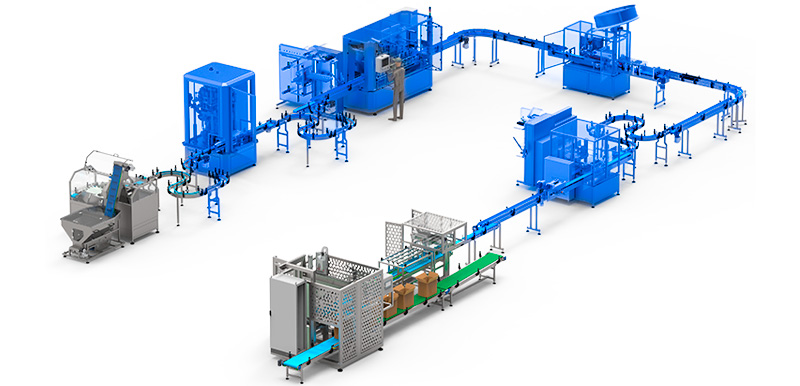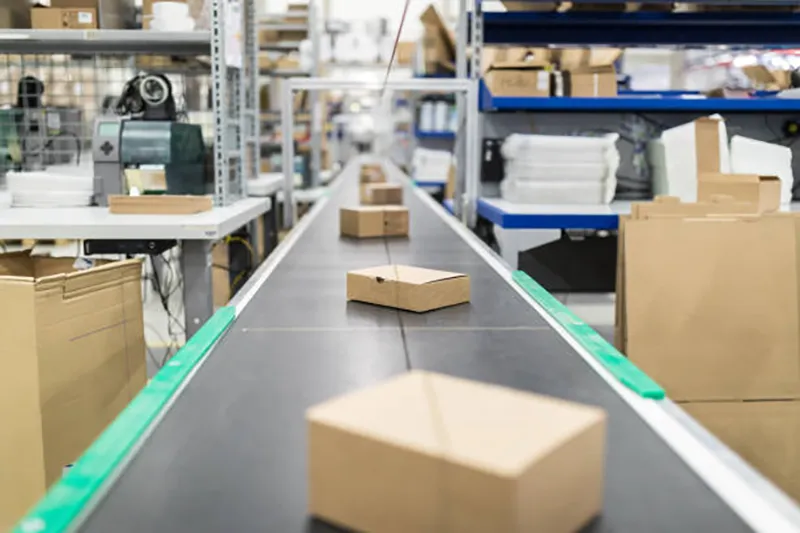
Modern manufacturers are under immense pressure. As production volumes increase and stock-keeping unit (SKU) complexity grows, the end-of-the-line packaging process often turns into a severe operational bottleneck. Relying on traditional manual carton folding and packing means dealing with slow speeds, high labor dependency, and fluctuating output quality. Whether you are operating in e-commerce, fast-moving consumer goods (FMCG), food processing, or consumer electronics, manual packaging processes simply cannot keep pace with modern supply chain demands.
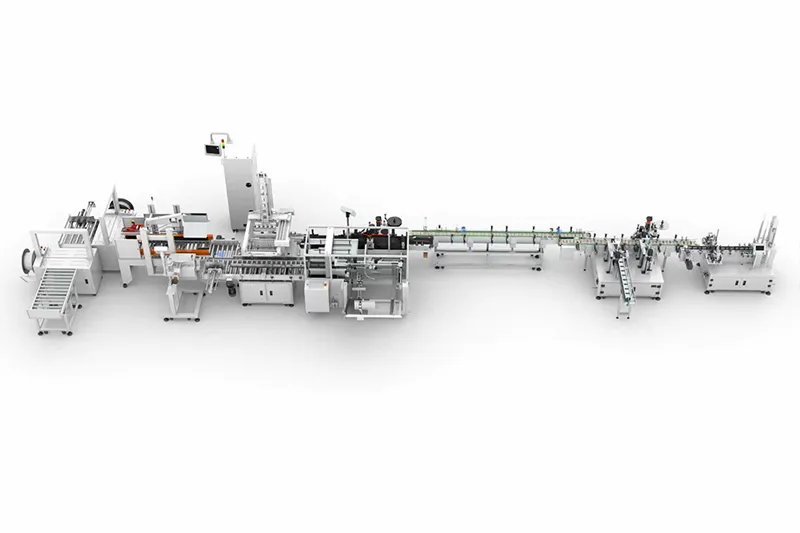
To overcome these hurdles, forward-thinking manufacturers are transitioning to an automated box folding system. By integrating carton forming, robotic loading, inspection, sealing, and palletizing into one continuous workflow, these systems solve the most persistent packaging floor headaches. This guide breaks down the top seven packaging problems plaguing today’s factories and explores how intelligent automation resolves them, turning your packaging line from a liability into a data-driven asset.
Table of Contents
- How Can You Solve the Rising Pressure of Packaging Labor Costs?
- What Is the Best Way to Overcome Low Throughput and Inefficiency?
- How Can You Eliminate Long Downtime During High-SKU Changeovers?
- How Do You Stop Manual Inconsistencies from Causing Product Damage?
- Why Are Equipment Failure Response Delays Crippling Your Output?
- How Can You Prevent Unplanned Production Downtime?
- How Do You Overcome the Challenge of Integrating Smart Factory Systems?
- Measuring the Real-World ROI (Data Comparison)
- Frequently Asked Questions (FAQ)
1. How Can You Solve the Rising Pressure of Packaging Labor Costs?
One of the heaviest burdens on any manufacturing facility is the rising cost and decreasing availability of manual labor. In traditional setups, tasks such as erecting a carton, folding the bottom flaps, placing the product inside, and sealing the top are heavily reliant on human hands. During peak seasons or shopping festivals, finding, training, and retaining temporary labor is both expensive and highly stressful.
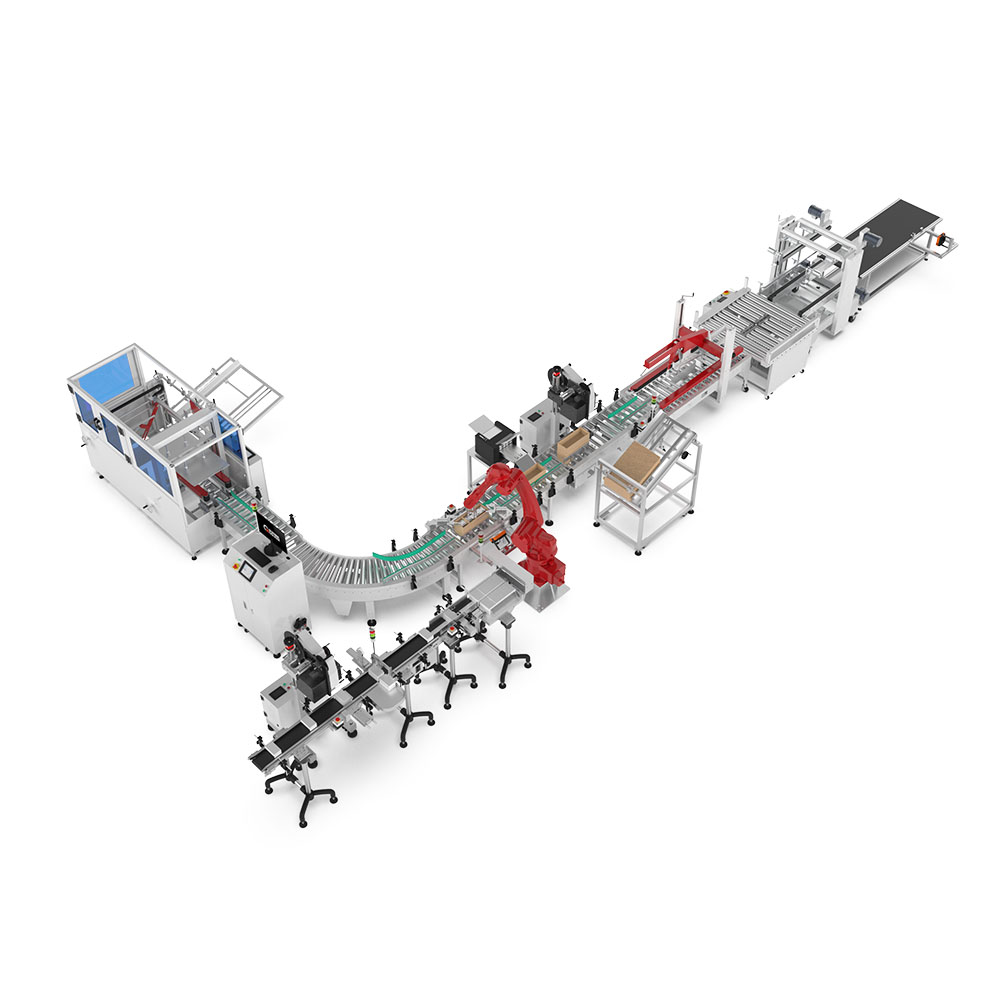
An automated box folding system completely transforms this dynamic. By automating the most labor-intensive steps—carton erection, folding, sealing, and handling—facilities can drastically reduce their headcount requirements on the floor. Operational data shows that deploying a comprehensive box folding packing production line can reduce direct labor costs by up to 30%.
Real-World Application:
Consider a large e-commerce fulfillment center processing mixed SKU orders. During peak shopping festivals, manual carton folding led to severe shipment delays and a massive reliance on temporary workers. By introducing an automated box folding line equipped with automatic labeling, the warehouse not only stabilized their shipment accuracy during rush periods but also permanently decoupled their packing capacity from human labor availability.
2. What Is the Best Way to Overcome Low Throughput and Inefficiency?
Human workers, no matter how skilled, are subject to fatigue. A worker’s packing speed at the beginning of a shift is vastly different from their speed at the end of the day. This inconsistency leads to unpredictable daily throughput, causing upstream manufacturing processes to pause and wait for the packaging team to catch up.
An automated packaging line operates at a continuous, synchronized rhythm. Depending on the carton size and product configuration, standard automated lines achieve a highly stable 10 to 30 cartons per minute. Advanced configurations can push this throughput up to 60 cartons per minute. Because the machines coordinate seamlessly without manual intervention, overall operational efficiency is typically improved by over 40%. The system never gets tired, ensuring that your packaging output matches your manufacturing output perfectly.
3. How Can You Eliminate Long Downtime During High-SKU Changeovers?
For high-mix manufacturing environments dealing with multiple product formats, SKU changeovers are a nightmare. On traditional semi-automated or manual lines, switching from a small electronics box to a large shipping carton requires technicians to use wrenches to physically adjust guide rails, tape heads, and conveyor widths. This mechanical adjustment can halt production for several hours.
Carton folding automation eliminates this costly downtime. Modern servo-controlled systems feature digital recipe management.
Real-World Application:
An FMCG manufacturer managing dozens of product formats struggled with frequent downtime due to box size adjustments. By implementing an automatic box folding machine with digital controls, operators were able to select the new carton specification directly through the HMI (Human-Machine Interface) touchscreen. Servo motors instantly adjusted the machine to the new dimensions, reducing the packaging specification switching time to approximately 15 minutes. This fast changeover capability is critical for preserving production continuity in high-SKU environments.
4. How Do You Stop Manual Inconsistencies from Causing Product Damage?
When human operators are rushed to meet high packing quotas, quality inevitably suffers. Cartons may not be squared properly, resulting in deformed boxes that collapse when palletized. Tape may be applied unevenly, or worse, the wrong product might be placed into the box. These inconsistencies lead to transit damage, costly returns, and damaged brand reputation.
An intelligent packaging line enforces strict, repeatable quality control. Precision mechanical handling ensures every box is perfectly squared and securely sealed, preventing structural failure during transport. Furthermore, by integrating barcode verification and inline weighing inspections, the system instantly identifies missing components or incorrect items, automatically rejecting defective boxes before they reach the shipping dock. Through these combined technologies, facilities frequently see their product damage rates plummet from 3% down to an impressive 0.2%.
5. Why Are Equipment Failure Response Delays Crippling Your Output?
In older, disconnected packaging facilities, when a machine jams or a motor stops, the operator must physically search the machine to find the source of the problem. This troubleshooting process can easily take 10 to 15 minutes—time during which the entire line is completely paralyzed.
A smart packaging system features an intelligent monitoring architecture designed to eliminate this diagnostic delay. If a carton jams or a sensor detects an anomaly, the system stops instantly to prevent mechanical damage and flashes the exact location and cause of the fault on the central digital dashboard. This precise, real-time alerting reduces fault response time to under 30 seconds. Operators can immediately walk to the exact site of the issue, clear it, and restart production, saving hours of accumulated micro-stoppages each week.
6. How Can You Prevent Unplanned Production Downtime?
While fast fault response is excellent, preventing the fault from happening in the first place is the ultimate goal. Traditional lines rely on “run-to-failure” maintenance, meaning parts are only replaced after they break and stop production unexpectedly.
Industry 4.0 packaging automation introduces predictive maintenance. By utilizing IoT (Internet of Things) sensors, the automated box folding system continuously monitors the health of critical components—such as motor vibration, pneumatic pressure, and temperature. If a component begins to degrade, the system alerts the maintenance team days or weeks in advance. Repairs can then be scheduled during planned downtime windows, effectively reducing unexpected equipment downtime by up to 75% and securing long-term operational stability.
7. How Do You Overcome the Challenge of Integrating Smart Factory Systems?
Many factories invest heavily in upper-level management software, only to realize their packaging floor consists of isolated manual workstations that cannot share data. This creates a digital blind spot at the most crucial stage of the supply chain.
Real-World Application:
A manufacturer upgrading toward a smart factory standard needed their packaging line to communicate with enterprise systems. By deploying an integrated, smart automated line from JOYDA Totalpack, they successfully connected their packaging hardware with their ERP (Enterprise Resource Planning) and MES (Manufacturing Execution Systems) platforms, as well as WMS and AGV logistics systems.
This integration enabled centralized digital management. Customer orders flowed directly from the ERP to the packaging machines without manual data entry. Production progress was monitored in real-time, and finished pallets were seamlessly handed off to automated guided vehicles. The packaging area transformed from an isolated bottleneck into a fully connected, highly responsive smart manufacturing node.
8. Measuring the Real-World ROI (Data Comparison)
To clearly illustrate how an automated box folding system resolves these seven critical problems, the following table compares a traditional manual packaging line against a fully integrated smart packaging architecture.
| Operational Challenge | Traditional Manual Packaging | Automated Box Folding System | Direct Business Impact |
| 1. Labor Dependency | 6 to 10 operators per line | 1 to 2 machine supervisors | Up to 30% reduction in direct labor costs. |
| 2. Throughput Speed | 5-10 cartons/min (fluctuates) | 10-60 cartons/min (stable) | Over 40% improvement in operational efficiency. |
| 3. SKU Changeovers | 2 to 4 hours (wrench adjustments) | ~15 minutes (HMI recipes) | Massive recovery of production uptime. |
| 4. Product Damage | 3% (inconsistent manual seals) | Reduced to 0.2% | Eliminates costly returns and transport damage. |
| 5. Fault Response | 10+ minutes (manual searching) | Under 30 seconds | Instant issue identification via digital dashboards. |
| 6. Unplanned Downtime | High (run-to-failure model) | Reduced by up to 75% | IoT predictive maintenance prevents breakdowns. |
| 7. System Integration | Isolated, paper-based tracking | Full ERP/MES/AGV connectivity | Creates a unified, data-driven smart factory. |
Build Your Smart Packaging Future with JOYDA Totalpack
Solving modern packaging problems requires more than just replacing human hands with steel machinery; it requires intelligent, integrated architecture. JOYDA Totalpack’s automated box folding packing production lines are designed with modularity in mind. This allows manufacturers to gradually expand their automation, reducing the financial pressure of a full factory reconstruction while achieving a rapid ROI through combined labor savings, higher throughput, and minimized downtime.
Are you ready to eliminate your packaging bottlenecks and transition to a true Industry 4.0 workflow? Contact our engineering team today to discuss how a customized automated box folding system can optimize your high-mix production environment.
9. Frequently Asked Questions (FAQ)
1. Can an automated box folding system handle corrugated board of varying thicknesses?
Yes. Modern automatic carton forming modules are highly adaptable. The vacuum suction mechanisms and folding arms can be calibrated to handle a wide range of corrugated board types, from thin single-wall e-commerce boxes to heavy-duty double-wall industrial cartons.
2. What happens if a defective product enters the packaging line?
The line is equipped with inline check weighers and barcode vision scanners. If the system detects an incorrect weight (indicating a missing or extra item) or a mismatched barcode, it automatically diverts that specific carton to a reject lane without halting the rest of the production flow.
3. Do we need to stop the machine to reload flat cartons or tape?
Most advanced systems feature continuous-feed magazines. Operators can safely load new stacks of flat carton blanks and splice in new rolls of sealing tape while the machine is actively running, ensuring zero interruption to your throughput.
4. Is it difficult to train existing warehouse staff to operate this system?
No. While the technology behind the machine is complex, the user interface is not. The system is operated via an intuitive, touchscreen HMI. Most operators can learn to select product recipes, clear minor jams, and reload materials after just a few days of vendor-provided training.
5. We don’t have the budget to automate the entire line right now. Can we do it in stages?
Absolutely. JOYDA Totalpack systems utilize a modular automation architecture. You can start by installing an automatic carton erector and sealer to handle the most labor-intensive tasks, and easily integrate robotic product loaders, labelers, and palletizers at a later date as your budget allows.
6. Will this system integrate with our existing WMS (Warehouse Management System)?
Yes. The PLCs (Programmable Logic Controllers) driving the automated packaging line support open industrial communication protocols. Our integration engineers can map the data so that your WMS knows exactly when a carton is sealed, labeled, and ready for dispatch in real-time.