The rapid rise in multi-SKU book orders causes manual packaging lines to suffer severe bottlenecks, leading to fulfillment delays and soaring labor costs. To resolve this, large-scale facilities must choose a reliable book packaging system manufacturer capable of delivering WMS-synchronized, turnkey automation to eliminate manual intervention.
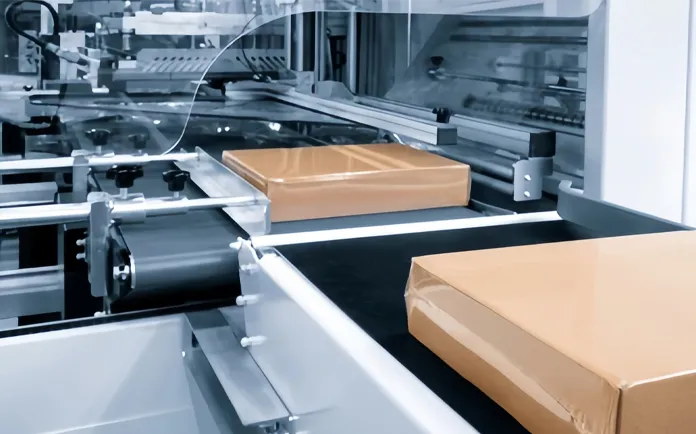
Table of Contents
- Why the Shift from Standalone Machines to Turnkey Integrated Systems?
- Evaluating System Architecture and Continuous Workflow Capabilities
- The Role of Industry 4.0: ERP/WMS Integration and Data Visibility
- Assessing Labor Reduction and ROI Justification in Fulfillment
- Custom Engineering and Flexibility for High-Mix SKU Fulfillment
- Evaluating High-Speed Stability Under Peak Load Conditions
1. Why the Shift from Standalone Machines to Turnkey Integrated Systems?
For decades, book publishing distribution centers relied heavily on a combination of manual labor and isolated, standalone packaging machines. Today, the operational landscape of e-commerce and 3PL warehousing has fundamentally changed.
Large-scale book fulfillment requires turnkey integrated systems rather than standalone machines because multi-SKU fragmentation and small-batch orders cause traditional fixed-line efficiency to plummet, demanding automated end-to-end sorting, feeding, and packaging capabilities.
As an engineering consultant with over 20 years in end-of-line packaging integration, I have witnessed the transition firsthand. The industry is facing extreme SKU fragmentation. A single fulfillment run might include paperbacks, heavy hardcover encyclopedias, and mixed orders of varying dimensions. When operators use standalone equipment, they must manually transfer stacks, adjust machine settings for different batches, and manually sort the output. This breaks the continuous flow of production.
Modern procurement teams realize that buying individual machines creates automation islands. The core objective is no longer just purchasing a fast machine; it is investing in an integrated smart packaging system. An automated book packaging line supplier must act as a system integrator, delivering a cohesive line where the product flows seamlessly from upstream picking to downstream palletizing without human interference.
2. Evaluating System Architecture and Continuous Workflow Capabilities
The foundation of any high-volume book fulfillment operation lies in the mechanical and electrical architecture of the packaging line. A poorly architected system will suffer from micro-stops, which drastically reduce overall equipment effectiveness (OEE).
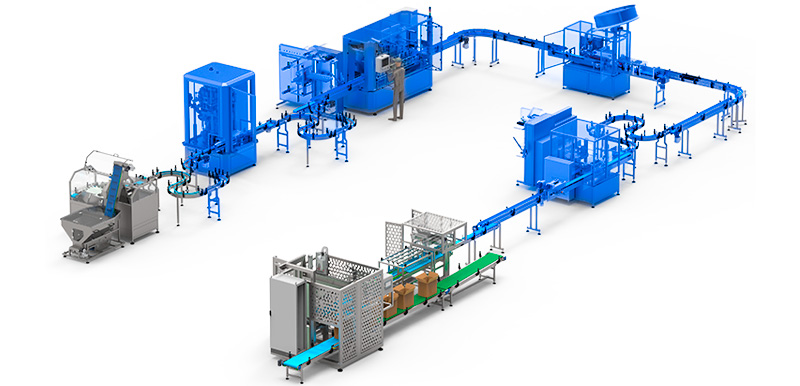
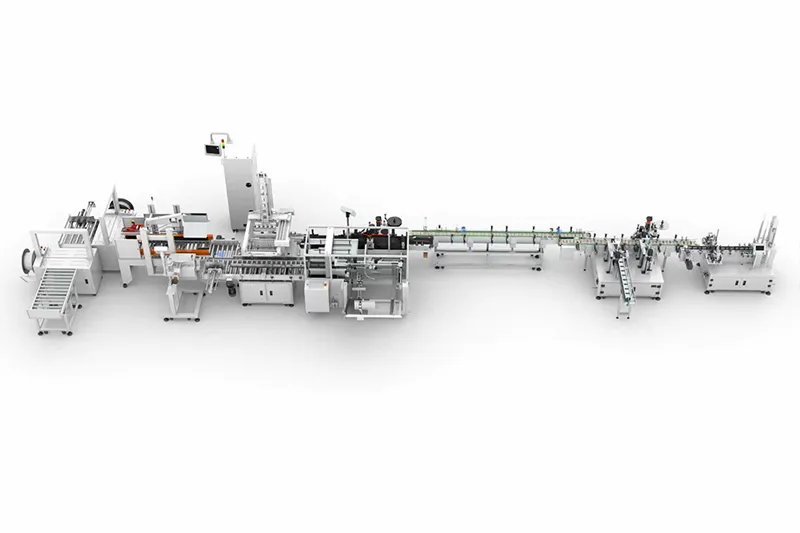
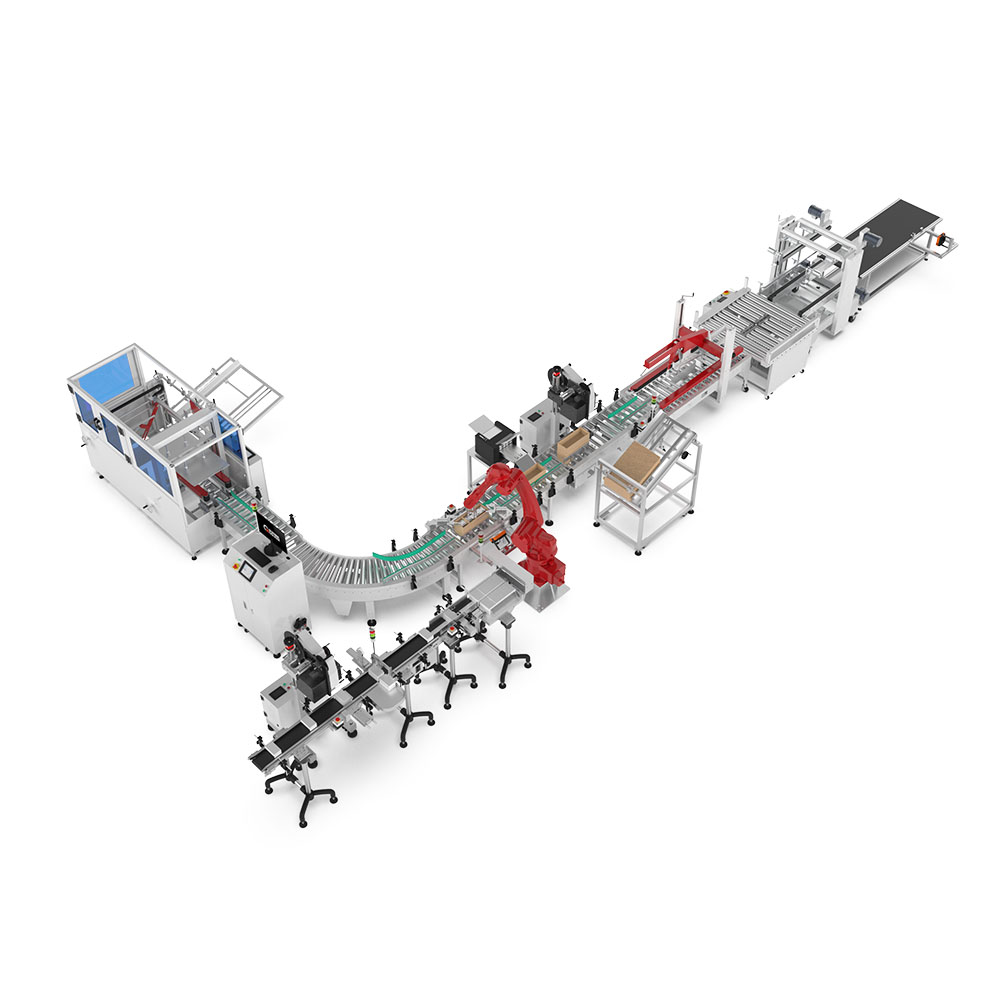
A robust book packaging system architecture must feature automatic conveying, robotic stacking, inline check weighing, dynamic labeling, and robotic palletizing to ensure a fully automated, continuous workflow without manual bottlenecks.
To evaluate a manufacturer’s technical capability, you must inspect the critical modules that make up their turnkey packaging system for fulfillment centers.
Automated Feeding and Batching Modules
Books are dense and prone to surface scuffing if handled improperly. The initial feeding module must utilize precision automatic conveying and batching systems. Advanced lines feature book stacking and feeding modules that gently collate mixed orders. The kinematics of these modules must be servo-driven to ensure smooth acceleration and deceleration, preventing books from sliding out of alignment before they enter the packaging phase.
Packaging, Inspection, and Tracking Integration
The core packaging module—whether it handles bagging, shrink wrapping, or cartoning—must form tightly around the product. However, packaging is only half the equation. Quality control must be automated. Integrating an inline check weigher coupled with an automatic rejection system ensures that mispacks (e.g., a missing book in a multi-item order) are kicked off the line without stopping production. Furthermore, labeling and tracking systems must apply shipping labels dynamically, verifying barcodes inline to guarantee the right package goes to the right customer.
Architecture Comparison Table
To clearly illustrate the engineering shift, here is how traditional setups compare with integrated fulfillment automation:
| Feature/Metric | Traditional Standalone Equipment | Turnkey Book Packaging System |
| Workflow Format | Disconnected batch processing | Fully automated continuous workflow |
| Material Transfer | Manual cart/conveyor transfer | Automated routing & robotic handling |
| Error Detection | Manual inspection (high error rate) | Inline check weigher + rejection system |
| Labeling Process | Manual print-and-apply stations | Dynamic high-speed automated labeling |
| Palletizing | Manual stacking | Robotic palletizing integration |
| Overall Efficiency | Prone to human-induced bottlenecks | High-speed fulfillment integration |
3. The Role of Industry 4.0: ERP/WMS Integration and Data Visibility
Hardware alone cannot solve the complexities of modern book logistics. The brain of the packaging line is its software infrastructure, which bridges the gap between physical machinery and warehouse data.
Industry 4.0 book packaging systems integrate directly with ERP and WMS platforms to enable real-time order synchronization, data-driven throughput balancing, and predictive maintenance, eliminating manual scheduling errors.
When evaluating an Industry 4.0 packaging automation solution, the decision-making threshold for high-end clients always centers on software connectivity.
Real-Time Order Synchronization
In high-volume e-commerce book fulfillment platforms, order profiles change by the second. A top-tier system receives data packets directly from the client’s Warehouse Management System (WMS) or Enterprise Resource Planning (ERP) software. As a book travels down the conveyor, a barcode scanner reads its ID. The system instantly queries the WMS, retrieves the correct packaging format, dimension, weight tolerance, and shipping label data, and adjusts the downstream machinery automatically. This eliminates the need for an operator to input data manually.
Predictive Maintenance and Digital Dashboards
Industrial environments demand high uptime. Advanced systems utilize smart sensors for production monitoring, feeding data into a digital production visibility dashboard. Instead of reacting to a broken belt or an overheated motor during peak season, plant managers receive predictive maintenance alerts. The system analyzes torque loads and sensor latency to warn maintenance teams of impending failures, ensuring system-level optimization and continuous throughput balancing across all modules.
4. Assessing Labor Reduction and ROI Justification in Fulfillment
The most pressing pain point for packaging facility managers is the rising cost and unpredictable availability of manual labor, especially during peak seasons like back-to-school or Q4 holidays.
A highly optimized automated book packaging line can reduce labor dependence by 30% to 60%, providing a rapid ROI through minimized manual intervention, fewer packaging errors, and continuous high-volume output.
From a technical director’s perspective, ROI is a mathematical certainty when replacing manual packing stations with an integrated line. In typical deployment scenarios within large publishing distribution centers, manual packaging stations require workers to erect cartons, insert books, add void fill, seal, weigh, and label. Under high volume, human fatigue leads to a drop in throughput and a spike in packaging errors.
By implementing book fulfillment automation equipment, labor is reallocated from repetitive, strenuous tasks to supervisory and maintenance roles. When a B2B buyer asks, “How fast can we recover the investment through labor savings?”, the answer lies in evaluating the facility’s current throughput vs. headcount. With automated stacking, inline weighing, and robotic palletizing, shifts can run with skeleton crews. The elimination of manual labor bottlenecks during seasonal spikes often justifies the capital expenditure within 18 to 24 months.
5. Custom Engineering and Flexibility for High-Mix SKU Fulfillment
Books are not uniform commodities. A 3PL warehousing operator dealing with multiple clients must process a vast array of physical dimensions and packaging standards on the same day.
Manufacturers must possess custom engineering capabilities to design modular packaging lines that handle diverse book dimensions, support rapid 15-minute changeovers, and adapt to multiple packaging formats like bagging, cartoning, or shrink wrapping.
A rigid machine that only runs standard paperback sizes is useless to a modern e-commerce platform. High SKU variation is the norm. The engineering challenge is maintaining high throughput while seamlessly handling the physical transition from a 10-inch hardcover textbook to a 6-inch paperback novel.
Rapid Changeover Mechanisms
To achieve profitability, line downtime must be minimized. When switching from a batch of thin catalogs to thick novels, the changeover time should be approximately 15 minutes or less. This is achieved through motorized, recipe-driven adjustments where the operator selects an SKU profile on the HMI (Human-Machine Interface), and the machine automatically adjusts guide rails, film tension, and sealing jaw heights.
Multi-Format Packaging Capability
Different logistical routes require different packaging. Domestic e-commerce might require lightweight polybags or shrink wrapping, while export-oriented book logistics hubs demand rigid corrugated cartoning to survive long-distance shipping. A capable system integrator will engineer the line to dynamically route books to the appropriate packaging module based on WMS instructions, ensuring strict adherence to multi-client packaging standards.
6. Evaluating High-Speed Stability Under Peak Load Conditions
It is easy for a machine to perform well during a low-volume factory acceptance test. The true measure of engineering quality is how the equipment behaves during a sustained, high-load production run when millions of books must be shipped.
To ensure high-speed stability under peak loads, evaluate the system’s ability to maintain continuous throughput and consistent packaging quality without jamming or corner damage during maximum capacity runs.
When assessing a potential system integrator, you must look closely at their mechanical tolerances and damage-prevention mechanisms.
Preventing Product Damage at High Speeds
Books are particularly vulnerable to corner dents and cover scuffing. When systems run at high speeds, the kinetic energy transferred during stopping, sorting, and pushing can easily damage the product. Quality manufacturers engineer automated inspection and handling modules with precise deceleration curves. Conveyors use specialized friction belts, and pushers utilize pneumatic cushioning or servo-profiling to gently yet swiftly move the books into the packaging film or carton. This ensures zero damage and a consistent packaging output, which is absolutely critical for export logistics where aesthetics and condition upon arrival dictate customer satisfaction.
Sustained Throughput Architecture
Stability means the machine does not require constant micro-adjustments by an operator. Reliable systems utilize heavy-duty frames to absorb vibration, high-quality PLCs to handle rapid logic execution, and robust sealing mechanisms that maintain perfect temperature control even when operating 24/7. When evaluating suppliers, the critical question is: “Can the system maintain stable throughput during peak season without degradation in seal integrity or tracking accuracy?” Only manufacturers with deep integration experience can guarantee this level of industrial endurance.
Conclusion
The transition from manual packing to fully automated, integrated systems is no longer optional for large-scale book fulfillment centers; it is a critical survival strategy. To handle SKU fragmentation, rising labor costs, and the demand for rapid shipping, decision-makers must move beyond purchasing standalone machines.
Success requires partnering with a system integrator capable of delivering an Industry 4.0 turnkey book fulfillment automation solution. By prioritizing robust system architecture, seamless ERP/WMS integration, custom engineering flexibility, and high-speed stability, operations can reduce labor dependencies by up to 60% while eliminating product damage and order inaccuracies.
Ready to modernize your book fulfillment operations?
As a specialized end-of-line packaging automation manufacturer, Joyda Totalpack delivers data-driven, turnkey integrated smart packaging systems tailored to your exact SKU mix and warehouse layout. Contact our engineering team today for a comprehensive technical consultation, custom solution design, or to request an ROI evaluation and quotation for your facility.
FAQ
What is a turnkey book packaging system?
A turnkey book packaging system is a fully integrated, end-to-end automation line that handles the entire process—from automatic feeding and stacking to bagging/cartoning, inline weighing, labeling, and robotic palletizing—without requiring manual intervention between steps.
How does an Industry 4.0 packaging line integrate with WMS/ERP?
The packaging line’s PLC communicates directly with your WMS/ERP via APIs or industrial network protocols. As products are scanned on the line, the system queries the WMS in real-time to retrieve order details, dynamically adjusting the packaging format, verifying weight, and printing the correct shipping label.
How much labor can an automated book packaging line save?
Based on typical fulfillment center deployments, a fully automated continuous workflow system can reduce manual packaging labor dependency by 30% to 60%, reallocating workers from repetitive tasks to higher-value operational roles.
Can the system handle mixed orders of hardcovers and paperbacks?
Yes. Advanced systems utilize smart sensors and servo-driven adjustments to accommodate high SKU variations. They can dynamically read product dimensions inline or via WMS data to adjust guide rails, film lengths, and bag sizes on the fly.
What is the changeover time for different book dimensions?
A well-engineered book packaging system features recipe-driven automated adjustments via the HMI, allowing operators to complete SKU switching and physical line changeovers in approximately 15 minutes.
How does the equipment prevent corner dents and book damage at high speeds?
The equipment uses precision servo-motor controls, cushioned pushers, and specialized conveying belts to manage kinetic energy. This ensures smooth acceleration and deceleration, preventing books from slamming into guides and protecting fragile corners from denting during high-speed fulfillment.