Material waste on a carton line is the quietest cost on the floor. Nobody notices an extra 40 mm of tape per box, or a carton 20% larger than it needs to be. Multiply either one by a million boxes a year and it becomes a six-figure line item in tape, board, and the freight to ship air you paid to package. If your packing margin feels thinner than it should, look at what leaves the line as waste. This guide shows where carton packing material disappears, how to measure it, and how to cut it without slowing the line or weakening the pack.
Waste has a second cost your CSR team feels: every gram of board and meter of tape is carbon and landfill. The fixes below help both the P&L and the sustainability report, which is why modern carton lines treat material efficiency as a design goal rather than an afterthought.
What You’ll Learn
- Where tape and board waste comes from
- How to measure your real waste
- Cut tape with precision sealing
- Spec the board right, not just less of it
- Right-size cartons to the product
- Kill rework and returns waste
- A worked savings example
- How JOYDA cuts material use
- Frequently asked questions
- Get a material-savings assessment
1. Where Tape and Board Waste Comes From
Most waste is structural, not accidental. It is built into how the line is set up. The four biggest sources:
1.1 Over-long seals
Manual and fixed-head tapers apply a standard 70-100 mm seal “to be safe.” On most cartons 50-60 mm holds fine, so 30-40% of tape is pure over-application. The tape-vs-glue choice matters less than applying the right amount of either.
1.2 Over-specced board
Many factories buy one heavy-duty board grade for everything because a heavy carton “never complains.” But board is priced by grade and weight, and using a high-ECT double-wall box for a 3 kg product is money spent on strength the product doesn’t need. Match the board grade to the stack height, transit mode, and product weight of each SKU family, and the board bill drops without a single box failing.
1.3 Rework and rejects
Poorly sealed or crushed cartons get opened and repacked. That is double the tape, double the board, plus labor. Rework is the most expensive waste because you pay for the material twice.
1.4 Over-packaging
Extra void fill, double boxing, and “just in case” protective layers stack cost and carbon. Good line design often removes the need for them.
| Waste source | Typical loss | Fix |
| Over-long seals | 30-40% of tape | Metered, right-sized sealing |
| Over-specced board | 10-20% of board cost | Grade matched per SKU family |
| Oversized cartons | 15-25% board plus freight | SKU-matched box sizes |
| Rework / rejects | Material paid twice | Consistent automated sealing |
| Over-packaging | Void fill plus double box | Right handling, less padding |
2. How to Measure Your Real Waste
You can’t cut what you don’t count. Three numbers tell the story:
2.1 Tape per box
Weigh a fresh roll, run a known carton count, weigh again. Divide the used grams by the boxes to get grams per box, then multiply by your annual volume. A 2 g/box reduction at 1 million boxes is 2 tonnes of tape a year.
2.2 Board utilization
Compare the carton’s flat area to the product’s footprint plus the clearance it actually needs. If clearance averages more than about 15 mm, the box is oversized and every unit wastes board.
2.3 Rework rate
Track opened-and-repacked cartons per shift. Each one is 2x material plus labor, often the largest single waste line once you see it. This is the same metric behind inconsistent packing quality.
3. Cut Tape with Precision Sealing
Automated sealers meter tape to the carton, applying the minimum that holds. Set the seal length per carton recipe so a small box gets a small seal. Servo-controlled applicators also place the seal consistently, which removes the “add extra to be safe” habit that manual taping builds in. The result is typically 25-35% less tape at equal or better hold.
Tape grade matters too. Premium tape at a shorter seal length often beats economy tape at a long one, because adhesion, not length, is what keeps a box shut. Test before you switch, and you may find the cheaper roll was costing you more.
4. Spec the Board Right, Not Just Less of It
Right-specing board is a conversation with your carton supplier, and it goes in this order. First, group SKUs by weight and stacking requirement. Second, for each group, ask the supplier to recommend the lowest board grade (ECT or bursting strength) that survives your real transit profile, not a worst-case fantasy one. Third, trial the lighter grade on one lane for a month and check damage data before rolling it out. Most factories that do this properly drop at least one board grade across a quarter of their SKUs.
5. Right-Size Cartons to the Product
Match carton dimensions to each SKU, and use quick-changeover so switching sizes doesn’t punish you with downtime. Where products vary, consider a case former that erects to the size the recipe calls for. Smaller, tighter cartons also ship denser, cutting both board and freight. That is a double win, and it compounds across the year.
6. Kill Rework and Returns Waste
Consistent, machine-applied seals and gentle handling remove most rework. A checkweigher at the end catches under-filled or wrong cartons before they ship, so you don’t pay to pack, ship, return, and repack. Fewer returns means less material, less freight, and happier customers.
7. A Worked Savings Example
Here is what the numbers look like for a mid-size operation running 800,000 cartons a year:
| Change | Saving per box | Annual saving |
| Seal length 80 to 55 mm | About 2.5 g tape | 2 tonnes of tape |
| Carton downsized one size step | About 40 g board | 32 tonnes of board |
| Rework rate 3% to 0.5% | Material paid once, not twice | Roughly 20,000 boxes of material |
| Tighter cartons, denser freight | More boxes per pallet | Often 5-10% freight saving |
None of these changes slows the line. Most are settings and specifications, not capital projects, and the ones that do need hardware (a metered sealer, a checkweigher) usually pay for themselves inside the first year at this volume.
8. How JOYDA Cuts Material Use
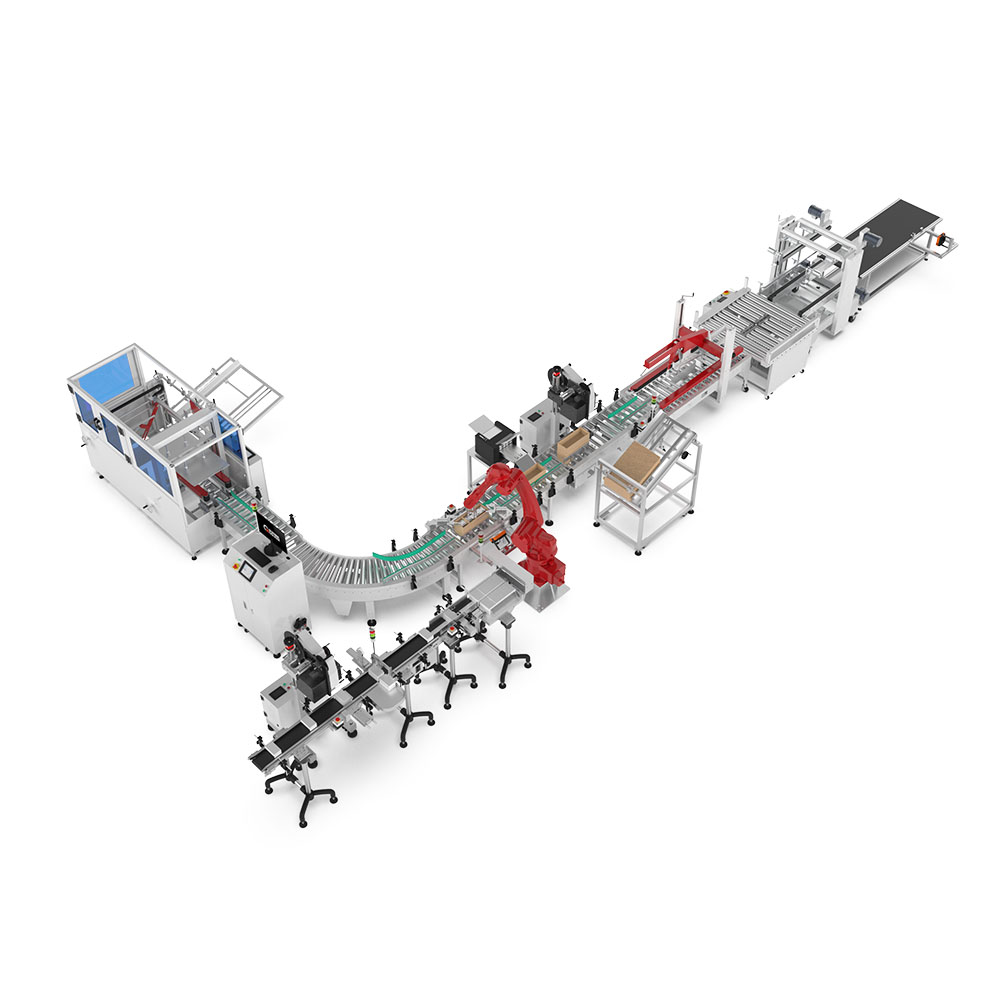
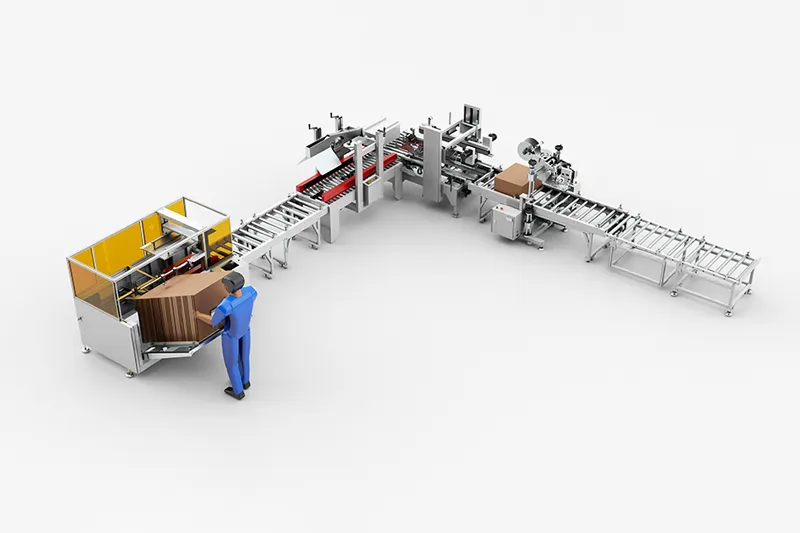
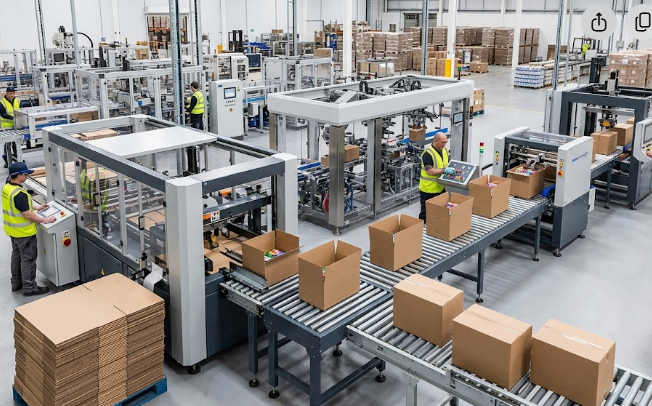
A JOYDA automatic carton packing line is built around material efficiency: metered sealing, recipe-driven right-sizing, and consistent handling that slashes rework. Across a typical installation the combined tape-and-board saving runs above 20%, with freight and carbon savings on top. Send us a week of your packing data and we’ll show the saving as a number, not a promise.
9. Frequently Asked Questions
9.1 Will shorter seals risk boxes opening in transit?
No, as long as the seal length is set for the carton. A correctly metered shorter seal holds as well as or better than a hand-applied “safe” one, because the placement is consistent every time. The real risk is inconsistent hand taping, not a shorter machine seal.
9.2 How fast do material savings pay back automation?
At volume, tape and board savings alone often recover a sealer or right-sizing upgrade inside a year. The freight saving accelerates it further.
9.3 Does smaller packaging hurt protection?
Only if it’s too small. Right-sized means snug with the correct clearance, not crushed. See our guidance on avoiding crushed cartons.
9.4 What’s the easiest first cut?
Meter the seal length per carton. It needs no new line, just a setting change, and removes 30% or more of tape almost overnight.
9.5 Should I downgrade board across the whole range at once?
No. Trial the lighter grade on one product family or one shipping lane, watch the damage data for a month, then extend. Wholesale downgrades are how companies end up with crushed cartons and a bigger problem than the one they fixed.
9.6 Can I report this as sustainability progress?
Yes. Reduced board, tape, and freight are measurable Scope 3 packaging reductions, exactly the data ESG reports ask for.
9.7 Does JOYDA size this for my products?
Yes. Share your carton sizes and volumes and we return a right-sizing and sealing plan with the expected saving.
10. Get a Material-Savings Assessment
If tape and board feel like a line item you can’t explain, send JOYDA a sample of your cartons and a week of packing volume. We’ll measure the waste, size a material-efficient carton line, and show the annual tape, board, and freight saving in hard numbers. Contact our engineers here for a no-obligation assessment.