Peak season should be your best quarter. Instead, for a lot of packing operations, it turns into late shipments, retailer chargebacks, and a sales team apologizing on the phone. If you know the feeling of “we have the orders but we can’t get boxes out the door,” this article is for you. Before you throw temp staff or overtime at the problem, learn to read the eight early warning signs that your carton packing line can’t handle a surge, and what a surge-ready line looks like instead.
These signs rarely show up alone. Most lines have two or three by Q3, then all eight during the November rush. Catch them early and you can fix capacity in weeks. Catch them late and you spend the peak improvising.
What You’ll Learn
- The 8 signs your line can’t keep up with peak
- A quick self-check: are you surge-ready?
- What one bad peak week actually costs
- How to size a carton line for seasonal surges
- Your pre-peak preparation timeline
- How JOYDA builds peak-ready lines
- Frequently asked questions
- Talk to JOYDA about your peak plan
1. The 8 Signs Your Carton Line Can’t Handle Peak Season
Run this list against your last busy month. The more boxes you tick, the bigger the gap.
1.1 One station sets the pace for everything
You bought a fast case erector and a fast sealer, but the line still moves at the speed of the slowest hand-pack station. Work piles up beside every other machine while that one bench struggles. Capacity is dictated by the weakest link, not the newest machine. Mapping the true cycle time of each station is step one, and the top jamming causes are usually hiding in that same data.
1.2 Packers can’t keep pace with the infeed
When order volume doubles, the manual packing bench falls behind first. Supervisors pull people from other areas, quality slips, and overtime costs climb. If your peak plan depends on “we’ll just add bodies,” the line was never engineered for surge. Labor is the least scalable part of packing, which is exactly why hiring carton packers gets hardest when everyone else is hiring too.
1.3 No buffer between stations
Without accumulation between erecting, packing, sealing, and weighing, a 30-second stop at one station stalls the whole line. During peak, micro-stops multiply, and a line with zero buffer loses more hours to these cascading stops than to real breakdowns. Buffers are cheap insurance against surge volatility.
1.4 Sealing can’t keep up with filling
Filled cartons stack up waiting for the taper or glue head. If sealing is manual or a single-head machine, it caps your real throughput no matter how fast everything upstream runs. This connects to the tape vs glue decision: either method works, but neither survives peak without enough sealing capacity.
1.5 Checkweighing slows the line to a crawl
Manual counting or a slow checkweigher at the end forces everything to wait. Under-filled cartons breach contracts, so teams over-check, and the last station becomes the bottleneck. Inline checkweighers that run at line speed remove the cap while protecting accuracy.
1.6 Changeovers eat your peak windows
Peak usually means more SKUs, not just more volume. If every size switch costs an hour, your effective capacity collapses exactly when the mix is widest. The biggest changeover time-wasters matter most during a surge, because quick changeovers are what keep a wide peak mix profitable.
1.7 Breakdowns land in the worst week
Worn bearings, drifting air pressure, and tired operators produce failures precisely in November. A line running near its limit has no margin for a jammed feeder or a failed sealer. This is when predictive maintenance and a critical-spares plan stop being nice-to-haves.
1.8 Temp staff raise your reject rate
New seasonal hires miss seals, miscount, and mishandle cartons, so crushed boxes and inconsistent packs spike exactly when returns hurt most. If quality depends on who is standing at the bench that day, the line is fragile.
2. Quick Self-Check: Are You Surge-Ready?
Score your line against the table below. Count how many of the eight signs showed up in your last peak. The fix column points to where to act first.
| Sign | What it looks like in peak | First fix |
| 1. One slow station | Work stacks at the bench | Balance cycle time; automate the slow step |
| 2. Packers behind | Overtime and pulled staff | Automate case packing |
| 3. No buffer | Cascading stops | Add accumulation conveyors |
| 4. Sealing slow | Filled boxes waiting | Dual-head or faster sealer |
| 5. Weighing slow | Line waits at the end | Inline checkweigher at line speed |
| 6. Changeovers | Hours lost per SKU | Quick-changeover tooling |
| 7. Breakdowns | Failures in rush week | Predictive maintenance plus spares |
| 8. Temp quality | Reject rate rises | Automated, repeatable packing |
Ticked three or more? You are losing peak revenue to line design, not to demand. Most of these are fixable with targeted automation rather than a full rip-and-replace.
3. What One Bad Peak Week Actually Costs
Managers often treat packing bottlenecks as a nuisance rather than a number. So put a number on it. Take a mid-size operation shipping 40,000 cartons a week at peak, with a line that caps out at 30,000. That 10,000-box gap has to go somewhere, and it rarely goes quietly.
| Loss type | How it shows up | Typical cost of one bad week |
| Overtime and temp premiums | Weekend shifts to close the gap | 25-40% premium on affected hours |
| Expedited freight | Air-freighting late orders | 3-10x normal shipping cost |
| Retail chargebacks | Missed OTIF or delivery windows | Fixed penalties per late PO, sometimes 5 figures |
| Lost reorders | Buyer switches to a reliable rival | The whole annual value of that account |
The last row is the one that stings. A retailer who experiences a late peak shipment remembers it at next year’s vendor review. Compare that against the cost of adding buffer, a line-speed checkweigher, or a second sealing head, and the upgrade usually pays back within a season or two.
4. How to Size a Carton Line for Seasonal Surges
Most lines are sized for average volume. Peak-ready lines are sized for the surge, with headroom and flexibility. Four rules:
4.1 Design to peak, not to average
Take your highest four-week volume of the year and add 15-20% headroom. If you size to the average, every good year becomes a fire drill. The buying checklist should ask suppliers for peak-rate specs, not nameplate rates.
4.2 Build in buffer and accumulation
Even modest buffers between stations absorb micro-stops so one hiccup doesn’t stall the line. This is the cheapest surge insurance available.
4.3 Make changeovers minutes, not hours
Tool-free, recipe-driven changeover lets one line absorb a wide peak mix. The same design that cuts changeover time also lifts effective peak capacity.
4.4 Automate the people-dependent steps
Case packing, sealing, and weighing are the steps that break under temp labor. Automating them removes the staffing cliff and the quality cliff at once.
| Sizing factor | Average-designed line | Surge-ready line |
| Rate basis | Annual average | Peak plus 15-20% headroom |
| Between-station buffer | None | Accumulation conveyors |
| Changeover | Manual, 30-60 min | Tool-free, under 10 min |
| Pack/seal/weigh | Manual or single-head | Automated, line-speed |
| Quality dependence | On operator skill | Built into the machine |
5. Your Pre-Peak Preparation Timeline
Peak readiness is a calendar problem as much as an equipment one. Work backwards from your first rush week:
5.1 Q2: measure and decide
Log true cycle time per station for two normal weeks, tally micro-stop minutes, and score the eight signs. This gives you the business case while there is still time to act on it.
5.2 Q3: install and commission
Order long-lead items (sealing heads, checkweighers, conveyor modules) and install in the quiet weeks. Ask suppliers for a fixed commissioning window so the install doesn’t drift into peak. The hidden costs list covers what to pin down in the contract.
5.3 Early Q4: validate and train
Run the line at simulated peak rate with your real cartons and SKU mix. Train core staff on changeover recipes and daily checks. Pre-stage critical spares. When November arrives, you want proven numbers, not hopes.
6. How JOYDA Builds Peak-Ready Carton Lines
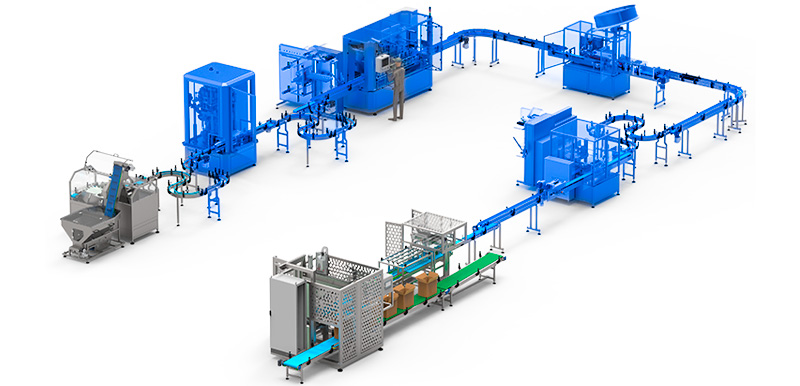
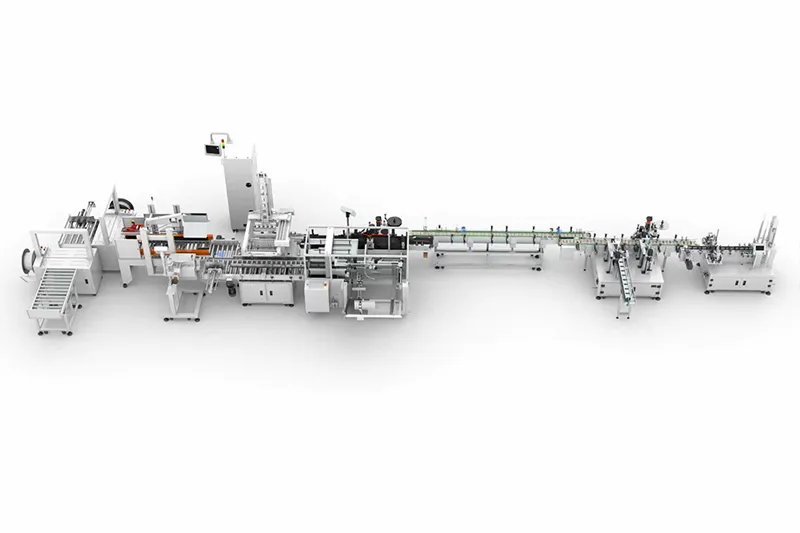
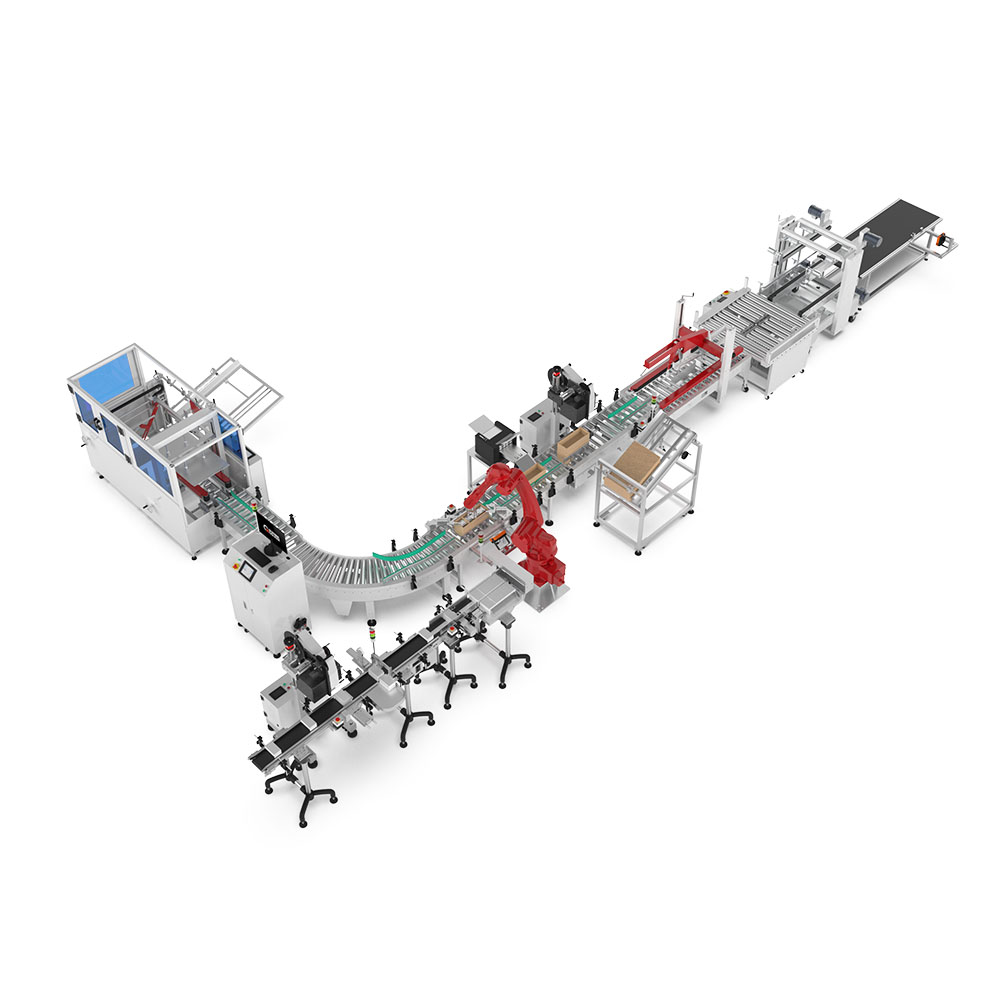
A JOYDA automatic carton packing production line is engineered around these rules: balanced station cycle times, accumulation between modules, recipe-driven quick changeover, and automated packing, sealing, and weighing so throughput no longer depends on who is on shift. Integrated checkweighers and rejection keep accuracy at line speed, and the control system logs micro-stops so you can see where margin is leaking before next peak. Tell us your peak four-week volume and SKU mix and we will size the line to your surge, not your average.
7. Frequently Asked Questions
7.1 Do I need a whole new line to handle peak?
Not always. Many operations fix 60-70% of peak loss by automating the slowest station, adding buffer, and installing a line-speed checkweigher. A full line makes sense when three or more of the eight signs are chronic.
7.2 How much headroom should I plan for?
15-20% above your highest four-week volume is a sensible starting point. Tight-margin peaks with promo spikes may need more; stable seasonal curves need less.
7.3 Will automation make peak worse during install?
Installed in the off-season and validated before the rush, automation removes peak risk. Installed during peak, it competes with your busiest weeks. That is the whole argument for reading the signs early.
7.4 Can one line really handle a wide SKU mix?
Yes, with recipe-driven changeover. The line stores per-SKU settings; an operator selects the recipe and tool-free adjustments bring it to spec in minutes, not the hour-long manual swaps that kill peak mix.
7.5 What’s the fastest win if peak is next month?
Add buffer between stations, install a line-speed checkweigher if you can get one delivered, and pre-stage critical spares. Those three moves recover more lost peak hours than almost anything else short of full automation.
7.6 How do I prove the capacity gap to management?
Log true cycle time per station for two peak weeks and tally micro-stop minutes. The self-check table in section 2 plus the cost table in section 3 turn that log into a business case in an afternoon.
7.7 Does JOYDA help size for my specific products?
Yes. Send your carton dimensions, peak volume, and SKU mix and we return a sized line concept with rate, changeover, and buffer recommendations.
8. Talk to JOYDA About Your Peak Plan
If two or more of these eight signs showed up in your last rush, your line is leaving peak revenue on the table. Send JOYDA your peak four-week volume, carton sizes, and SKU mix. We will size a surge-ready carton packing line and flag the three fixes that recover the most lost hours. Contact our packing engineers here and we will reply with a no-obligation capacity assessment.