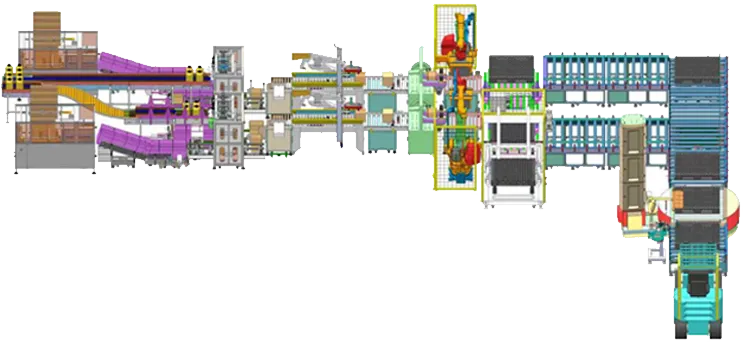
Manual flat washer packing looks cheap on a static accounting spreadsheet because it requires zero upfront capital equipment, yet once a plant exceeds roughly 15,000 bags per shift, hand packing costs significantly more per finished bag than an automated system.Evaluating manual vs automatic small parts packaging cost ROI specifically for thin flat washers reveals that capillary oil adhesion, manual over-counting giveaway, operator turnover, and customer short-count claims bleed $80,000 to $250,000+ annually from mid-sized hardware operations. Below is the complete engineering cost comparison, a copy-ready 5-input spreadsheet model, and three worked payback scenarios built around the 10-station architecture in our complete flat washer packing production line guide.
Table of Contents
- The Hidden Cost of Manual Flat Washer Packing
- Manual vs Automatic: The Full Cost Comparison
- The Flat Washer ROI Model: Your Five Inputs
- Worked Payback Examples
- Sensitivity: When Does the Answer Change?
- Five Steps Before You Commit Capital
- Conclusion
1. The Hidden Cost of Manual Flat Washer Packing
Generic packaging ROI calculators model easy-to-handle dry screws or plastic plugs, completely missing the physical reality of stamped metal washers. Thin flat washers (0.5 mm to 3 mm thick) coated in rust-preventative stamping oil behave differently than any other fastener in your warehouse: they stick flat to stainless worktables, shingle together like wet coins between gloved fingers, and mask their piece weight when scooped onto bench scales.
Because of those thin-part physics, manual flat washer packing drains cash across four hidden operational buckets:
- Chronic Over-Count Giveaway on Oily Shingled Washers (1% to 2% Manual vs. <0.1% Automated): When human packers count thin M6 or M8 washers by hand—or scoop oily washers onto a static check scale—two stuck washers look and feel like one piece. To avoid customer short-count complaints, manual operators routinely toss an extra “insurance washer” into every pouch, driving actual material giveaway to 1% to 2% of total metal volume. On a $0.008 stainless or zinc-plated washer packed in 50-piece kits ($0.40 metal value per bag) or $1.60 multi-size washer assortments across 12.5 million bags per year, a 1.5% giveaway wastes $75,000 to $300,000 per year in unbilled steel. An automated vision-verified counter holds giveaway strictly below 0.1%.
- Severe Unit-Time Labor Disparity: Separating thin, flat rings with oil-resistant nitrile gloves is slow, tedious micro-manipulation. On complex multi-size retail blister bags or precision hand-counted and heat-sealed kits, a manual operator produces just 8 to 15 bags per hour per SKU station—and even on simple scoop-and-weigh bulk polybags, manual benches require 2 to 3 dedicated operators per line to feed, seal, label, and box. By contrast, an automated flat washer counting and bagging machine runs continuously at 40 to 80 bags per minute with only 0.5 to 1 operator tending film and hopper refills. At a fully burdened wage of $18 to $28 per hour ($37,000 to $58,000 per year per operator), manual labor is your single largest recurring leak.
- Rework, Scrap Film, and Customer Defect Escapes: Human visual fatigue sets in after 20 minutes of staring at reflective zinc-plated rings. Manual packing suffers a 0.5% to 1.2% defect escape rate to the customer—shipping bags with unpunched center slugs, cupped washers that deform during rough bulk scooping, or missing pieces—compared to <0.05% on an automated vision-and-checkweigher line. Every rejected pallet triggers $8 to $20 per carton in return freight and restocking fees, plus $2,000 to $10,000 if a blind unpunched washer stalls an OEM customer’s automated assembly gun.
- Ergonomic Turnover and Recruitment Costs: Manual end-of-line washer packing requires operators to spend 8 hours pinching oily metal disks while repeatedly lifting 20 kg to 25 kg corrugated master cartons onto wooden pallets. Annual operator turnover on manual fastener benches routinely exceeds 60%, costing $2,500 to $4,000 in recruiting, onboarding, and slow-ramp productivity losses every time a packer quits.
2. Manual vs Automatic: The Full Cost Comparison
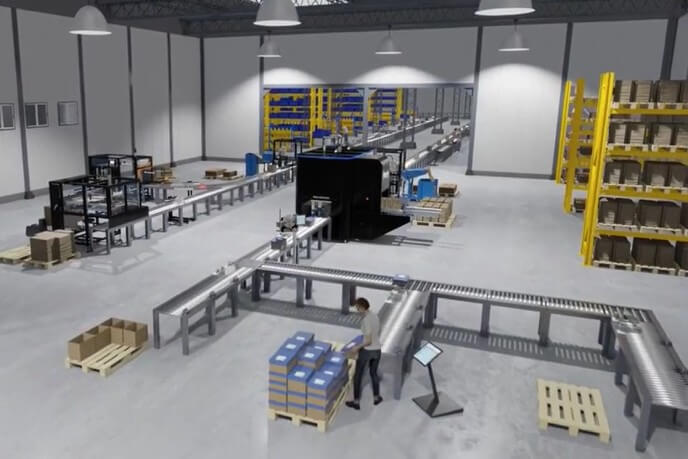
Use the side-by-side operational benchmark table below to compare a manual flat washer packing bench against a dedicated automated counting/bagging cell (Stations 1 to 7) and a full 10-station turnkey line:
| Operational & Financial Metric | Manual Packing Bench (Hand Count / Bench Scale) | Dedicated Automated Cell (Stations 1 to 7) | Full 10-Station Turnkey Line (Stations 1 to 10) |
|---|---|---|---|
| Net Throughput Speed | 8 to 15 bags/hr per operator on complex kits (up to 400-600 bags/hr on 3-person bulk bench) | 40 to 60 bags/min (16,000 to 24,000 bags per 8-hr shift at 85% OEE) | 50 to 80 bags/min (20,000 to 32,000+ bags per 8-hr shift at 85% OEE) |
| Direct Operators Required | 2 to 3 operators per shift per bench | 0.5 to 1 operator per shift (loads hopper and boxes) | 0.5 to 1 operator per shift (monitors entire line) |
| Annual Labor Cost per Shift (at $22/hr / $45,760/yr FTE) | $91,520 to $137,280 per shift (2 to 3 FTEs) | $22,880 to $45,760 per shift (0.5 to 1 FTE) | $22,880 to $45,760 per shift (0.5 to 1 FTE) |
| Fastener Material Giveaway | 1.0% to 2.0% (oil shingling + manual “safety” extras) | <0.1% (dimpled PU bowl + air-knife + vision gate) | <0.1% (closed-loop vision + dynamic checkweigher) |
| Energy & Air Cost per 1,000 Bags | $0.08 to $0.15 (bench impulse sealer and lighting only) | $0.45 to $0.75 (15 kW 3-phase draw; 600 NL/min air) | $0.85 to $1.30 (25-35 kW 3-phase draw; 1,200 NL/min air) |
| Film Scrap & Deformation Rate | 1.8% to 3.0% (wrinkled hand seals, crooked labels) | <0.3% (servo VFFS film pull and auto-registration) | <0.2% (synchronized VFFS, case erector, and strapper) |
| SKU Changeover Time | 25 to 40 minutes (clearing benches, swapping label rolls, scale tare) | 5 to 10 minutes (quick-release collar and HMI recipe) | 10 to 15 minutes (servo rails + case erector recipe) |
| Floor Space Footprint | 6.0 m x 4.0 m (multiple worktables and staging pallets) | 3.5 m x 2.5 m (compact L-shape or linear cell) | 12.0 m x 4.5 m (complete bag-to-pallet workflow) |
| Lot & Heat Traceability | Paper travel cards (1.5% to 3.0% human transcription error) | Automated TTO/Laser QR tied to hopper barcode | Full ERP/MES work-order binding and 10-year audit log |
| Defect Escape Rate to Customer | 0.5% to 1.2% of shipped bags contain count or part defects | <0.05% (dual-stage optical vision + inline checkweigher) | <0.05% (vision + bag checkweigher + master case weigher) |
Notice the energy versus labor trade-off: while an automated line draws 15 to 35 kW of 3-phase power (380 to 480 V) and 600 to 1,200 NL/min of compressed air at 0.6 MPa—adding roughly $0.40 to $1.15 per 1,000 bags in utility cost—it simultaneously strips out $15.00 to $45.00 per 1,000 bags in direct manual wages and metal giveaway.
3. The Flat Washer ROI Model: Your Five Inputs
You can calculate your exact washer packing automation payback in five minutes by copying these five input variables into a spreadsheet. Below are the named inputs alongside realistic default baseline values for a mid-size fastener distributor running 250 working days per year:
- Input A — Daily Volume per Shift ($V_{shift}$): Number of finished bags packed per 8-hour shift. (Default mid-size value: 25,000 bags/shift).
- Input B — Active Shifts per Day ($S_{day}$): Number of 8-hour packing shifts operated daily across 250 annual production days. (Default mid-size value: 2 shifts/day = 12,500,000 bags/year).
- Input C — Current Manual Giveaway Rate ($G_{man}$): Percentage of excess washers given away per bag due to oil shingling, scale rounding, and manual safety extras. (Default mid-size value: 1.5% manual vs. 0.08% automated = 1.42% net giveaway saved).
- Input D — Fully Burdened Operator Cost ($L_{cost}$): Annual wage plus payroll taxes, insurance, and benefits per packing operator, multiplied by the net operators displaced. (Default mid-size value: $22.00/hour = $45,760/year per FTE; displacing 2.0 FTEs per shift across 2 shifts = 4.0 FTEs saved).
- Input E — Average Bagged Metal Value ($B_{val}$): Manufacturing or procurement cost of the washers inside one bag. At $0.004 to $0.01 per individual washer, a standard 50-piece single-size washer bag holds $0.35 to $0.50 in metal, while heavy structural washer packs or multi-compartment kits range from $1.50 to $6.00 per bag. (Default mid-size value: $0.45 average metal cost per bag).
To compute your Net Annual Automation Benefit, apply this three-part formula in your spreadsheet:
- Annual Labor Savings = (Manual FTEs per Shift – Automated FTEs per Shift) x $S_{day}$ x $L_{cost}$
- Annual Giveaway Savings = ($V_{shift}$ x $S_{day}$ x 250 days) x $B_{val}$ x ($G_{man}$ – 0.0008)
- Annual Quality & Rework Savings = (Annual Claim/Sorting Penalties Avoided + Scrap Film Saved) minus (Added Annual Power, Air, and Wear-Parts Cost of $4,500 to $9,500)
- Payback Period (Months) = (Total Turnkey Equipment Capital Investment / Net Annual Automation Benefit) x 12
Running the default mid-size distributor values above: displacing 4.0 FTEs across two shifts saves $183,040/year in direct labor; cutting giveaway by 1.42% across 12.5 million bags ($0.45 metal value/bag) saves $79,875/year in raw washers; and avoiding $12,000 in rework/claims while deducting $7,915 in added power and wear parts yields a net quality/utility gain of $4,085/year. Total Net Annual Automation Benefit equals $267,000/year.
4. Worked Payback Examples
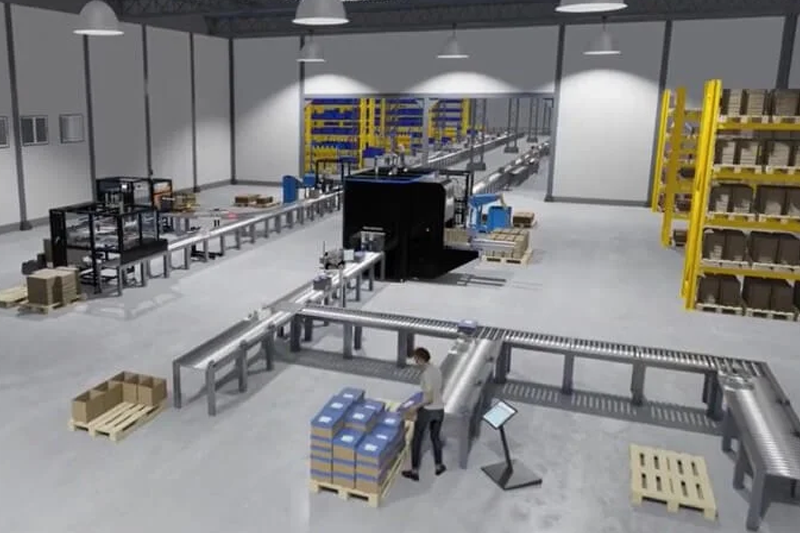
Because capital equipment scales from a $40,000–$90,000 dedicated counting/bagging cell (Stations 1 to 7) up to a $160,000–$220,000 full 10-station turnkey line, payback timelines depend on matching the machine tier to your volume. Below are three arithmetically verified plant scenarios over a 36-month (3-year) horizon:
| Financial & Operational Metric | Scenario A: Small Contract Packager (8,000 bags/shift, 1 shift) | Scenario B: Mid-Size Fastener Distributor (25,000 bags/shift, 2 shifts) | Scenario C: Large OEM Hardware Supplier (60,000 bags/shift, 2 shifts) |
|---|---|---|---|
| Annual Production Volume (250 days) | 2,000,000 bags/year | 12,500,000 bags/year | 30,000,000 bags/year |
| Recommended Automation Configuration | 1x Dedicated Counter + VFFS Cell (Stations 1 to 7) | 1x Full 10-Station Turnkey Line (or 2x Dedicated Cells) | 2x High-Speed Full 10-Station Turnkey Lines |
| Average Bag Value ($B_{val}$) & Giveaway Cut | $0.60/bag; giveaway cut from 1.6% to 0.08% (1.52% saved) | $0.45/bag; giveaway cut from 1.5% to 0.08% (1.42% saved) | $0.40/bag; giveaway cut from 1.4% to 0.08% (1.32% saved) |
| Operators Reduced (at $45,760/yr per FTE) | From 2.5 FTEs down to 0.5 FTE (Saves 2.0 FTEs) | From 6.0 FTEs (across 2 shifts) down to 2.0 FTEs (Saves 4.0 FTEs) | From 12.0 FTEs (across 2 shifts) down to 2.0 FTEs (Saves 10.0 FTEs) |
| Current Manual Annual Operating Cost | $136,640/yr ($114,400 labor + $19,200 giveaway + $3,040 rework) | $365,915/yr ($274,560 labor + $84,375 giveaway + $6,980 claims) | $737,120/yr ($549,120 labor + $168,000 giveaway + $20,000 claims) |
| Post-Automation Annual Operating Cost | $27,340/yr ($22,880 labor + $960 giveaway + $3,500 power/wear) | $103,915/yr ($91,520 labor + $4,500 giveaway + $7,895 power/wear) | $117,120/yr ($91,520 labor + $9,600 giveaway + $16,000 power/wear) |
| Net Annual Cash Savings | $109,300 / year | $262,000 / year | $620,000 / year |
| Capital Investment Used in Model | $65,000 (Dedicated Cell: $40k-$90k range) | $185,000 (Full Turnkey Line: $160k-$220k range) | $380,000 (Dual Turnkey Lines: $190k each) |
| Simple Payback Period | 7.1 Months (within 4 to 9 mo cell benchmark) | 8.5 Months (or 14.1 mo on single-shift volume) | 7.4 Months (or 14.7 mo on single-shift volume) |
| 3-Year Net Cash Position (3x Savings – Capex) | +$262,900 net positive | +$601,000 net positive | +$1,480,000 net positive |
Look closely at the crossover threshold between Scenario A and Scenario B. Even at 8,000 bags per shift on a single shift, a $65,000 dedicated counting and bagging cell pays back in 7.1 months and generates +$262,900 in net 3-year cash flow. When a plant steps up to a full $185,000 10-station turnkey line (adding case erecting, bag-in-box loading, strapping, and palletizing), running a single shift of 15,000 to 20,000 bags yields a 13- to 17-month payback, while running two shifts compresses payback to 8.5 months. If your operation also packages bolts and nuts alongside washers in multi-part kits, review how multi-lane synchronization amplifies labor savings on a fastener and hardware packaging line.
5. Sensitivity: When Does the Answer Change?
To stress-test your capital request before presenting it to your CFO, examine how the four core sensitivity levers shift the payback window between best-case and worst-case plant conditions:
- Regional Operator Wage Rates ($18/hr vs. $28/hr+): In North American, Western European, and Australian plants where fully burdened packing labor hits $26 to $28/hour ($54,000 to $58,000/year per FTE), displacing just 2 operators pays back a $65,000 dedicated cell in 4.2 to 5.5 months. In lower-wage manufacturing hubs where burdened labor is $10 to $14/hour, labor savings cut in half, extending dedicated cell payback to 9 to 13 months and shifting the primary ROI driver onto metal giveaway reduction and OEM quality compliance.
- Baseline Giveaway Already Achieved (0.5% vs. 2.0%): If your current workers pack dry, thick M16 washers using high-precision counting scales and your actual audited giveaway is already down at 0.5%, giveaway savings drop by 65%. Conversely, if you pack thin, heavily oiled M4 to M10 stainless washers or high-value $1.50 to $6.00 hardware kits where shingled double-drops push giveaway to 2.0%, material savings alone can pay for the entire counting station in under 6 months.
- Part Value and Alloy Grade ($0.004 Carbon Steel vs. $0.01+ Stainless/Brass): Low-cost plain carbon steel washers ($0.004/piece) generate modest giveaway savings per bag, meaning your ROI washer bagging machine case relies 75% on labor reduction and throughput speed. High-value 316 stainless steel, copper, or aerospace alloy washers ($0.01 to $0.05/piece) flip the equation—making optical vision counting (+/- 0 pieces) mandatory to stop inventory bleed.
- Volume Stability and OEE Execution (55% Multi-Vendor vs. 85% Turnkey): A machine only generates ROI while it is sealing good bags. Buyers who cobble together a self-built line from three separate vendors suffer PLC handshaking stops and 35-minute manual changeovers, stalling at 55% to 65% OEE and stretching a projected 13-month payback out to 22+ months. Commissioning an integrated turnkey system running at 80% to 88% OEE with 5- to 10-minute quick-release changeovers protects your payback even when daily SKU mixes fluctuate.
Across all four variables, the realistic risk envelope is clear: for a dedicated counting and bagging cell ($40,000 to $90,000), payback spans 4 months (best case: 2 shifts, oily stainless washers, $28/hr labor) to 9 months (conservative single-shift carbon steel run). For a full 10-station turnkey line ($160,000 to $220,000), single-shift operations above 15,000 bags pay back in 13 to 17 months, while high-volume two-shift plants pay back in 7.5 to 11 months.
6. Five Steps Before You Commit Capital
Do not guess your input numbers or over-buy secondary automation before verifying your baseline. Follow this five-step engineering and financial sequence before signing an equipment purchase order:
- Audit 200 Random Manual Bags on a Laboratory Gram Scale Today: Pull 200 sealed bags from your shipping dock across your top 5 flat washer SKUs and weigh each bag to 0.1-gram precision. You will almost certainly discover that actual over-count giveaway is 1.2% to 2.1% higher than the theoretical standard printed on your ERP routing sheet—giving you hard internal data for Input C.
- Calculate True Labor Hours per 1,000 Bags (Including Rework and Cartoning): Track not just the operators sitting at the counting bench, but the warehouse staff folding corrugated boxes, taping master cartons, printing labels, and re-sorting rejected batches.
- Mandate a Pre-Shipment FAT With Your Oiliest, Thinnest Washers: Never accept an ROI projection based on dry test speeds. Ship 50 kg of your oiliest production washers to the supplier to verify that dimpled PU bowls and optical vision gates sustain 40 to 80 bags per minute without shingling micro-stops. Use the supplier scorecard in our flat washer packing machine buyer’s guide to enforce contractual accuracy guarantees.
- Run Your Own Numbers Through the 5-Input Spreadsheet Model: Plug your audited labor cost, actual shift volume, and real bag metal value into the Section 3 equations, testing both single-shift and two-shift sensitivity cases.
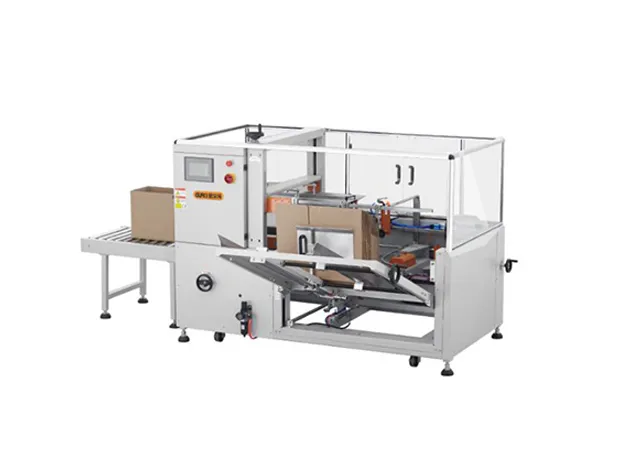
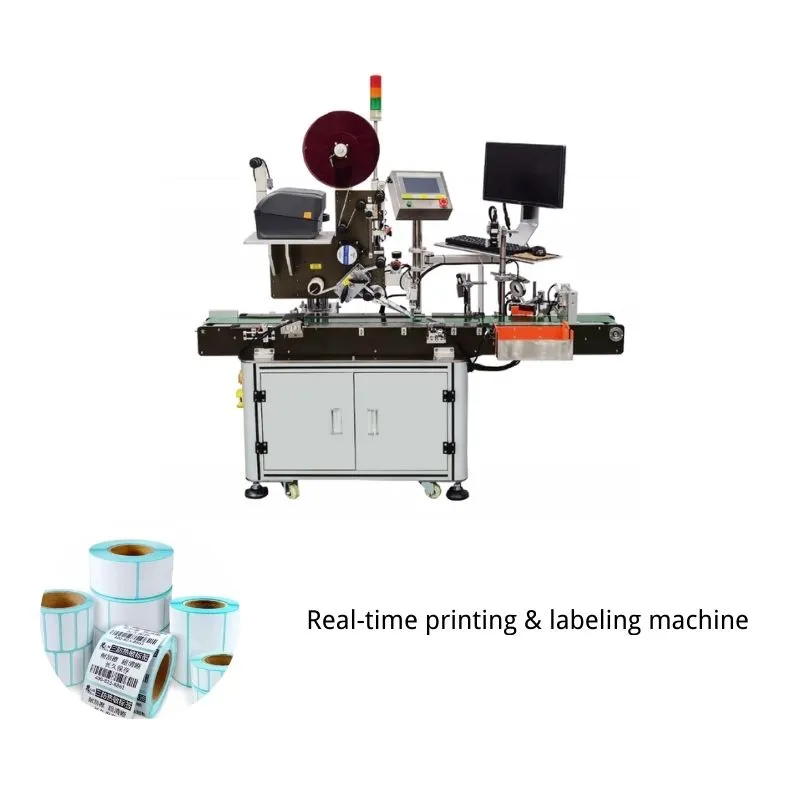
- Phase Your Capital Investment (Start With Stations 1 to 7 First if Budget Is Tight): If your current shift volume sits between 8,000 and 15,000 bags—or if capital budget approval is capped below $90,000 this quarter—invest in a modular flat washer packing production line configured with Stations 1 to 7 first (Bulk Elevator, PU Vibratory Feeder, Vision Counter, Inclined VFFS Bagger, Coder, Discharge Conveyor, and Dynamic Checkweigher). Stations 1 to 7 capture 80% of the total labor and giveaway savings for a 4- to 9-month payback, and because JOYDA pre-wires the master PLC for modular expansion, you can bolt on Stations 8 to 10 (Automatic Case Erector, Strapper, and Palletizer) 12 months later using the cash flow generated by Phase 1.
7. Conclusion
When you evaluate manual vs automatic small parts packaging cost ROI around the real physics of thin, oil-coated flat washers, manual packing is only “cheaper” at micro-volumes under 5,000 bags per shift. Above 15,000 bags per shift, the combination of $37,000 to $58,000 annual operator wages, 1% to 2% oil-shingling giveaway, and 0.5% to 1.2% customer defect escapes makes manual packing far more expensive per bag than an automated line—allowing a dedicated counting and bagging cell to pay back in 4 to 9 months and a full 10-station turnkey line to pay back in 13 to 17 months (or under 9 months across two shifts).
As your dedicated one packaging partner and end-of-line solutions integrator, JOYDA configures, integrates, commissions, and supports modular counting cells and complete 10-station turnkey lines engineered specifically for oily hardware washers. Send us your five production inputs today (bags per shift, active shifts, washer dimensions/oil condition, current operator count, and target bag formats), and our engineering team will deliver a customized, CFO-ready Excel ROI Payback Report, floor layout, and itemized quotation within 24 hours.
FAQ
At what daily volume does automatic flat washer packing become cheaper per bag than manual packing?
The financial crossover point typically occurs between 8,000 and 15,000 bags per 8-hour shift. At 8,000 bags per shift, a dedicated counting and VFFS bagging cell ($40,000 to $90,000) achieves payback in 4 to 9 months by replacing 2 manual operators and eliminating 1.5% in metal giveaway. Above 15,000 bags per shift, manual labor and giveaway costs exceed the amortized monthly cost of a full 10-station turnkey line.
Why is automation ROI higher for thin flat washers than for standard screws or bolts?
Thin flat washers (0.5 mm to 3 mm thick) coated in stamping oil stick flat to benchtops and shingle together between gloved fingers, making them significantly slower to separate by hand (only 8 to 15 complex kit bags per hour per worker) and causing 1% to 2% over-count giveaway on manual scales. Automated lines equipped with dimpled polyurethane bowls, dual air-knives, and line-scan vision counters run 40 to 80 bags per minute at <0.1% giveaway, creating a much larger labor and material savings delta.
How much operator labor does an automatic flat washer packing line actually save?
A manual packing bench producing 15,000 to 25,000 bags per shift requires 2 to 3 full-time operators per shift to count, bag, checkweigh, and load boxes ($37,000 to $58,000 per year per operator at $18 to $28/hour fully burdened). An automated counting and bagging cell or turnkey line requires only 0.5 to 1 operator per shift to replenish bulk floor hoppers and film rolls, saving $74,000 to $116,000 per shift annually.
What is the typical capital cost and payback period for a dedicated cell versus a full turnkey line?
A dedicated flat washer counting, bagging, and checkweighing cell (Stations 1 to 7) requires a capital investment of $40,000 to $90,000 and pays back in 4 to 9 months. A complete 10-station turnkey line adding automatic case erecting, bag-in-box loading, carton strapping, and robotic palletizing requires $160,000 to $220,000 and achieves full payback in 13 to 17 months on a single-shift schedule—or 7.5 to 11 months across a two-shift operation.
Does the ROI model account for the added electricity, compressed air, and wear parts of an automated line?
Yes. Our net payback calculations deduct all recurring machine operating costs—including 15 to 35 kW of 3-phase electrical draw, 600 to 1,200 NL/min of compressed air at 0.6 MPa, and annual consumables such as cutoff knives, PTFE jaw tape, and PU bowl linings. Those combined utilities and wear parts typically total just $3,500 to $9,500 per year ($0.45 to $1.30 per 1,000 bags), which is less than 4% of the gross labor and metal giveaway savings.
How does buying from one packaging partner improve ROI compared to assembling a line from multiple vendors?
Self-built lines purchased from three or four separate machine vendors lack unified PLC handshaking and synchronized speed buffers, causing them to stall at 55% to 65% OEE with 25- to 40-minute manual changeovers. A turnkey line configured and integrated by JOYDA as your single packaging partner runs at 80% to 88% OEE with 5- to 10-minute changeovers—delivering 25% more sellable bags per shift from the exact same capital asset.
Can we start with automated counting and bagging now and add automatic box packing later?
Absolutely. Phasing your investment by installing Stations 1 to 7 first (fitting inside a compact 3.5 m x 2.5 m footprint) lets you capture immediate counting giveaway and primary bagging labor savings for under $90,000. We pre-configure the master PLC cabinet and discharge conveyor height so Stations 8 to 10 (Case Erector, Strapper, and Palletizer) can be integrated later with zero control hardware replacement.
What data do I need to send JOYDA to receive a custom 24-hour ROI report and quotation?
Simply send us five numbers: (1) your average bags packed per shift and number of daily shifts, (2) your washer size range (ID, OD, thickness) and surface oil condition, (3) your target piece count or weight per bag and approximate metal cost per piece, (4) how many operators currently staff your packing benches and your hourly wage rate, and (5) whether you pack into polybags only or master cartons. We will return your custom Excel ROI model and turnkey quote within 24 hours.