Operating a flat washer line without automated traceability fastener packaging laser marking QR code labeling locks you out of high-margin automotive, aerospace, and medical-grade contracts outright, while leaving you unable to prove steel heat provenance when a buyer raises a costly quality claim. Manual paper travel cards and pre-printed roll labels fail under stamping oil exposure and operator shift changes, turning minor batch disputes into full-scale product recalls. Embedding closed-loop laser marking and QR serialization directly into the 10-station architecture outlined in our complete flat washer packing production line guide transforms regulatory compliance into a measurable revenue and margin engine.
Table of Contents
- The Three Orders You Lose Without Traceability
- The Top 15 Commercial Reasons to Add Laser Marking and QR
- Laser Marking vs TTO Ribbon vs Printed Labels
- Five Capabilities You Must Demand From a Traceability Module Supplier
- Traceability Module Configuration and Integration Cost Logic
- How This Connects to the Vision Quality Gate
- Conclusion
1. The Three Orders You Lose Without Traceability
If you search the market for fastener marking solutions today, you will find fastener traders talking about mill certificates or standalone laser-machine vendors selling isolated desktop engraving boxes. Almost nobody engineers laser marking + automatic QR labeling + heat/batch number control + ERP integration as a unified turnkey module inside a packaging production line. As a dedicated packaging solutions integrator and one packaging partner, JOYDA bridges that gap—linking physical part and bag coding directly to your feeder bowls, VFFS bagger, reject diverters, and plant ERP so no unverified washer ever enters a carton.
When your packaging line relies on handwritten hopper tags or offline label printers, purchasing auditors from three lucrative B2B sectors disqualify your facility during the initial supplier survey:
- Automotive Tier-1 and OEM Contracts (IATF 16949 Compliance): Automotive powertrain and chassis buyers mandate unbroken heat number control from raw steel coil to the primary polybag, verified by a 24-digit GS1-128 or DataMatrix ECC200 barcode with 7- to 10-year digital record retention. Because manual paper travel cards suffer a 1.5% to 3% human transcription error rate across shift handovers, IATF 16949 auditors reject manual bagging lines automatically. Losing qualification for a single automotive platform costs $250,000 to $1,200,000 in recurring annual fastener volume.
- Aerospace and Defense Structural Hardware (AS9100 Compliance): High-tensile structural washers require DPM direct part marking on the metal ring itself—delivering 10+ years of mark permanence against hydraulic fluids and salt spray—paired with serialized unit pouches tied to chemical and mechanical Mill Test Reports (MTRs). Standalone laser workstations create batch mix-ups between marking and bagging, costing suppliers $180,000 to $650,000 per year in disqualified aerospace bids that carry 35% to 45% gross margins.
- Medical Device and Clean-Room Equipment Assembly (ISO 13485 & UDI Compliance): Passivated 316L stainless and titanium washers used in surgical tables, imaging rigs, and medical hardware require non-flaking UV laser marking and smudge-proof UDI (Unique Device Identification) QR codes on every primary barrier pouch. Ink ribbons that smear or paper labels that shed fibers trigger immediate audit failure, locking suppliers out of $120,000 to $400,000 annual medical OEM contracts.
2. The Top 15 Commercial Reasons to Add Laser Marking and QR
Integrating laser marking packaging line integration and automated 2D barcoding is not an IT vanity project; every feature directly protects cash flow, cuts labor waste, or unlocks higher-margin contract tiers. Here are the 15 commercial reasons to add integrated laser and QR traceability to your washer line.
2.1 Strict Heat Number and Mill Certificate Control
Every coil or rod batch of steel has a unique metallurgical heat number governing tensile strength and hardness. Binding the raw steel heat number at the bulk hopper barcode interlock ensures that every bag printed downstream carries the exact metallurgical pedigree of the washers inside.
Passing mandatory heat-lot audits secures $250,000+ automotive tier-1 supply contracts and eliminates the $15,000 to $40,000 lot-quarantine penalties triggered when mixed steel heats are discovered during customer torque testing.
This control sits at Station 1 (Bulk Hopper barcode interlock) and syncs directly with Station 5 (Laser/TTO bag coding) via the master line PLC.
2.2 Permanent DPM (Direct Part Marking) on Critical Structural Washers
For heavy structural, wind-turbine, and aerospace washers (OD 20 to 60 mm), a 20 to 120 W fiber laser engraves a micro-DataMatrix ECC200 code or alphanumeric heat code directly onto the washer surface at 30 to 120 characters per second (2,000 to 6,000 marks per hour).
Adding inline DPM allows you to bid on AS9100 aerospace and structural energy contracts paying a 25% to 40% price premium over unverified commodity washers, with guaranteed 10+ year mark permanence on hardened steel.
The fiber laser marking head mounts between Station 2 (Vibratory Orientation Feeder) and Station 3 (Counting), marking parts on a servo-indexed rotary dial or linear confinement track before they drop into the counting chute.
2.3 High-Density 2D DataMatrix and QR Codes on Every Primary Bag
Standard 1D barcodes run out of horizontal space after 12 to 15 characters. Printing a compact 12 mm x 12 mm QR Code or DataMatrix ECC200 on every primary polybag encodes up to 8 essential data fields: heat/lot number, supplier code, date code, shift, operator ID, part number, exact piece count, and line serial number.
Meeting OEM 2D bag-coding mandates eliminates $2.50 to $4.00 per bag manual relabeling back-charges at customer distribution centers—saving $25,000 to $40,000 per 10,000-bag disputed shipment.
The coding unit mounts inside the clean film-unwind zone at Station 5 on the VFFS (vertical form fill seal) bagger, marking the film web 200 milliseconds before the pouch is formed and filled.
2.4 Anti-Counterfeit Brand Protection and Channel Verification
High-strength structural washers (such as HV300 or ASTM F436 grades) are frequently counterfeited by low-grade importers who copy generic box labels. Generating a cryptographic, serialized QR code per bag allows field inspectors and distributors to scan any pouch with a smartphone to verify authenticity against your cloud database.
Preventing grey-market substitution protects $100,000 to $300,000 in annual distributor reorders and shields your company from catastrophic product liability lawsuits caused by counterfeit structural failures.
The serialized hash is generated in real time by the line industrial PC and printed at Station 5 (Primary Bag Coding) and Station 9 (Master Carton Labeling).
2.5 Seconds-Level Claim Forensics vs. Multi-Day Paper Searches
When an OEM customer reports a cracked washer and demands your production records, hunting through filing cabinets of oil-stained paper travel cards takes 1 to 3 full days—during which the customer freezes all incoming shipments from your facility.
Scanning or typing the bag QR serial number into your integrated database retrieves the exact steel heat lot, stamping press ID, operator ID, checkweigher gram reading, and vision inspection log in under 5 seconds, lifting shipment holds immediately and saving $10,000 to $35,000 in delayed billing.
Data aggregation occurs inside the central PLC/MES historian connected across Stations 1 through 9.
2.6 Surgical Recall Containment to a Single Steel Heat Lot
If a heat-treatment subcontractor improperly tempers one 800 kg batch of washers, a plant without batch traceability washer controls cannot prove which shipping cartons contain that faulty batch—forcing a recall of 3 to 4 weeks of entire factory production.
Pinpointing the exact bag serial number range tied to that single faulty heat lot narrows a recall from 250,000 bags down to the exact 4,000 affected bags, reducing recall replacement, freight, and penalty costs from $180,000 to under $3,500.
Recall boundary tracking is governed by the automated batch-purge counter at Station 3 (Counting) and Station 8 (Bag-in-Box Case Loader), which maps exact primary bag serial numbers to each master carton barcode.
2.7 Zero-Finding Compliance in IATF 16949, AS9100, and ISO 13485 Audits
Quality auditors routinely fail fastener suppliers when they observe operators hand-keying lot numbers into standalone printers or leaving leftover bags in hoppers between work orders.
Automated work-order binding and 7- to 10-year tamper-proof electronic audit logs satisfy IATF 16949, AS9100, ISO 13485, and ISO 9001 traceability clauses with zero non-conformities, saving 80 to 120 hours of annual quality engineering audit preparation ($6,000 to $9,000 in internal labor).
The compliance log module runs continuously on the master HMI supervisory controller and exports encrypted PDF/CSV batch reports after every run.
2.8 Higher OEM Supplier Scorecard Ratings and Preferred Vendor Status
Global fastener buyers grade suppliers quarterly on PPM (parts per million) defects and documentation accuracy. Suppliers that deliver 100% machine-readable, oil-resistant 2D codes with zero ASN (Advanced Shipping Notice) mismatches earn top-tier “Green / Preferred” scorecard status.
Moving from conditional status to preferred supplier status wins automatic inclusion in new RFQ packages without competitive price-cutting, adding $150,000 to $500,000 in annual contract awards.
Scorecard compliance is enforced by the inline ISO barcode grading camera mounted immediately downstream of Station 5 (Bag Coding) and Station 9 (Carton Labeling).
2.9 Automated ERP/MES Work-Order Binding Without USB Sticks
On traditional lines, operators carry USB flash drives from the office to load label templates onto the bagger—frequently selecting last week’s revision or typing the wrong customer part number.
Scanning a single ERP production traveler barcode at the master HMI automatically downloads the correct washer count, bag length, laser/TTO template, and checkweigher gram limits across all stations—Even on complex multi-SKU runs like those on a fastener and hardware packaging line—cutting administrative setup time by 12 minutes per changeover and saving $18,000 per year in machine downtime.
The barcode scanner and OPC-UA / Ethernet/IP gateway reside at the master line control console prior to Station 1.
2.10 Eliminating Operator Manual Label Entry and Typo Chargebacks
Human operators typing 24-digit GS1-128 lot strings on a small printer keypad inevitably transpose digits, enter the wrong shift code, or misspell customer part numbers during night shifts.
Removing manual keyboard entry eliminates 100% of typography-driven lot rejections, avoiding the $5,000 to $15,000 vendor chargeback and two-way freight penalty levied whenever a customer’s automated warehouse rejects a mislabeled pallet.
Variable data fields populate automatically from the ERP work order and internal PLC real-time clock straight to the Station 5 laser or TTO controller.
2.11 Automated Shelf-Life and VCI Rust-Preventative Expiration Dating
Carbon steel washers packed with VCI (volatile corrosion inhibitor) oil or film have a strict 12- to 24-month corrosion warranty window. Buyers increasingly require both the packing date and the calculated VCI expiration date printed clearly on every bag.
Dynamic PLC date-math calculation automatically prints the exact expiration date without operator intervention, preventing $8,000 to $20,000 rust claims caused by customers using expired stock out of FIFO (first-in, first-out) sequence.
Date offset calculation executes automatically inside the Station 5 marking controller at the moment of pouch formation.
2.12 Tamper-Evident Seam Coding Across Primary Pouches and Cartons
When high-value stainless or specialty alloy washers are shipped through third-party consolidators, pilferage or unauthorized repacking can occur if primary polybags carry generic unserialized markings.
Laser-scoring a unique sequential bag number and time-stamp down to the exact second across the top heat-seal zone makes it impossible for anyone in the supply chain to slice open and re-seal a pouch without breaking the sequence, preventing $12,000+ annual inventory shrinkage and disputes.
Sequential serialization happens at Station 4/5 as the horizontal VFFS sealing jaws clamp the pouch closed.
2.13 Instant First-Article Inspection (FAI) and PPAP Sample Traceability
Launching a new automotive or industrial washer requires submitting Level 3 PPAP (Production Part Approval Process) or AS9102 First-Article sample bags produced on actual production tooling.
With one click on the HMI, the line runs a dedicated 30-bag PPAP sample batch marked with distinct “PPAP-LOT” QR prefixes and generates a matching digital inspection certificate, cutting customer engineering approval lead times by 2 to 3 weeks and accelerating revenue collection.
The PPAP sample mode is triggered via the master HMI and executed across Station 3 (Vision Counting), Station 5 (Coding), and Station 7 (Checkweighing).
2.14 Sub-Second Dock-to-Stock Barcode Scanning at Customer Receiving
When your polybags and master cartons carry smudged ink-jet codes or wrinkled paper stickers, the buyer’s receiving clerks must manually key in part numbers—delaying Goods Receipt posting in their SAP system.
Delivering crisp, 300 dpi TTO or high-contrast UV laser QR codes verified to ISO Grade A/B allows customer dock scanners to clear pallets in 0.2 seconds, accelerating invoice approval and shortening your DSO (Days Sales Outstanding) cash collection cycle by 5 to 10 days.
Print contrast grading is verified inline at Station 5 and Station 9 before bags or boxes can advance.
2.15 Pricing Power and 12% to 20% Gross Margin Expansion on Certified Lots
Unmarked flat washers in plain polybags are treated as pure commodities traded strictly on price per ton. Packaging those exact same washers inside laser-serialized, heat-lot-traceable pouches with downloadable digital quality certificates shifts your product into the certified OEM fastener tier.
Fastener suppliers offering turnkey lot-traceable packaging routinely command a 12% to 20% price premium over commodity competitors—generating $60,000 to $140,000 in pure incremental gross profit per line annually.
This value is captured across the entire integrated traceability workflow from Station 1 to Station 10.
3. Laser Marking vs TTO Ribbon vs Printed Labels
Selecting the right marking physics for your flat washer line depends on whether you are marking bare metal parts, flexible LDPE polybags coated in stamping oil mist, or corrugated master cartons. The comparison table below breaks down the engineering and financial trade-offs across the three technologies:
| Evaluation Factor | Fiber / UV Laser Marking (20-120W Fiber / 10-30W UV) | TTO Thermal Transfer Overprinting (300 dpi Digital) | Pre-Printed / Applied Paper or BOPP Labels |
|---|---|---|---|
| Marking Permanence | Permanent (10+ years on steel via fiber; indelible pigment change on PE film via UV) | High when using resin ribbons; can scratch under extreme abrasion | Poor in oily hardware plants; adhesive lifts on oil-contaminated polybags |
| Stamping Oil & Smudge Resistance | 100% immune to stamping oil, rust inhibitors, and solvents | High with resin-formulated ribbon inside clean unwind cabinet | Fails frequently; oil mist prevents pressure-sensitive glue from bonding |
| Consumable Cost per 1,000 Bags | $0.05 to $0.12 (electrical power and fume extractor filters only) | $1.10 to $1.85 (1,200 to 2,000 bags per ribbon roll) | $6.50 to $14.00 (die-cut label stock, backing liner waste, and ribbon) |
| Mark Resolution & Speed | Micron-level precision; 30 to 120 chars/sec (2,000 to 6,000 marks/hr) | 300 dpi crisp graphics; 300 to 600 mm/sec print speed | 203 to 300 dpi; mechanical applicator caps speed at 35 to 50 bags/min |
| Data Content Capacity | High-density micro-DataMatrix ECC200, QR Code, alphanumeric heat strings | Full-width logos, tables, QR Code, Code 128, and 24-digit GS1-128 | Full graphics, but physical label size restricts pouch layout flexibility |
| Typical 5-Year Cost of Ownership | Lowest TCO on high-volume runs (>8M bags/yr); zero ribbon downtime | Moderate TCO; lower upfront hardware cost than laser | Highest TCO; adds $32,000 to $70,000 in 5-year label stock and jam downtime |
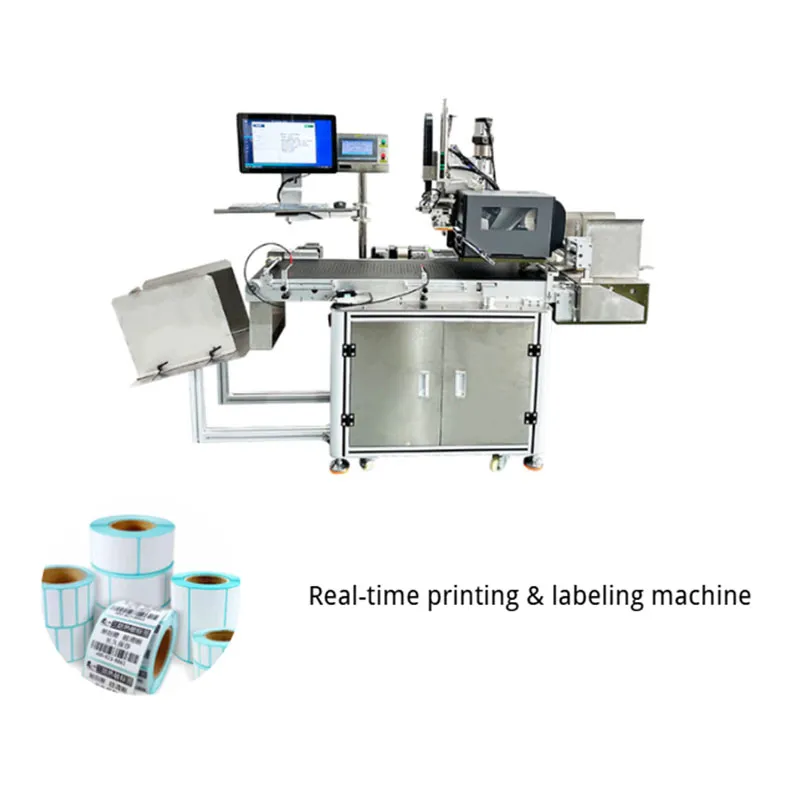
Each technology wins in a specific operational zone. A 20 to 120 W fiber laser is the undisputed choice for DPM direct part marking on bare carbon or stainless steel washers before bagging, while a 10 to 30 W cold-marking UV laser excels at marking white or color-patched LDPE polybag film without melting the polymer—paying back its higher upfront hardware cost within 14 months by eliminating ribbon consumables and ribbon-change stops.
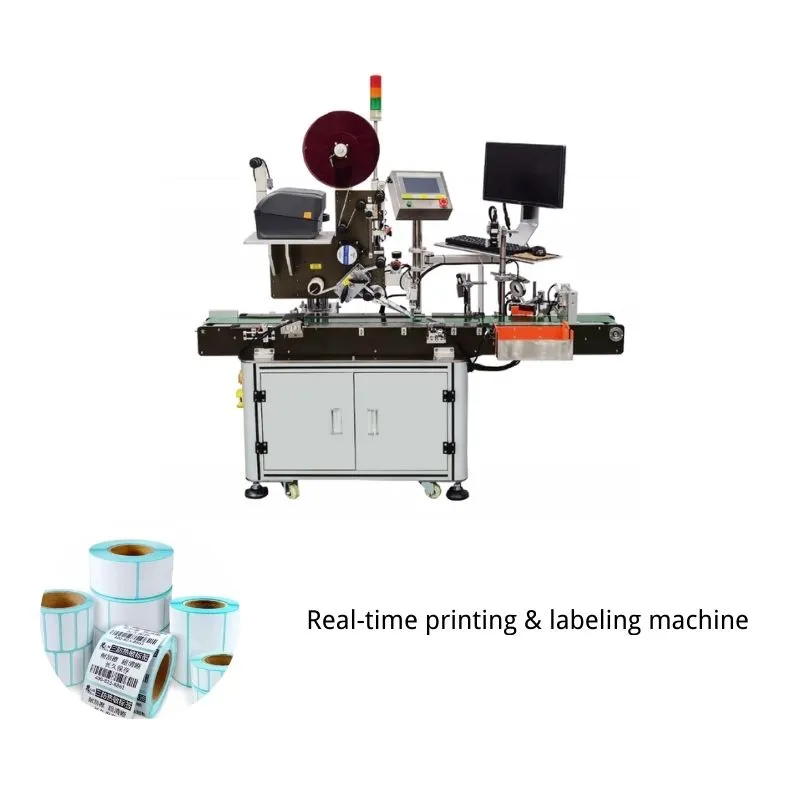
Digital TTO (thermal transfer overprinting) at 300 dpi and 300 to 600 mm/s print speed is the best fit for contract packagers and distributors who need to print large variable customer logos, hardware diagrams, and high-contrast black barcodes onto transparent film at lower upfront capital cost. Meanwhile, automatic print-and-apply pressure-sensitive labels belong strictly at Station 9 on corrugated master cartons, where porous cardboard requires a bright white paper label for long-range warehouse forklift scanning. On high-spec automotive lines, JOYDA frequently integrates all three: fiber laser DPM on the washer, UV laser or resin TTO on the primary bag, and print-and-apply GS1-128 labeling on the master box.
4. Five Capabilities You Must Demand From a Traceability Module Supplier
Do not buy a standalone laser marker or TTO printer that operates as a disconnected island. Before signing a purchase order, require your supplier to engineer these five turnkey capabilities into the line control architecture:
- Heat Batch Number Handling and Physical Hopper Purge Isolation: The system must enforce barcode-verified heat-number loading at the floor hopper and automatically execute a complete mechanical purge of the vibratory bowl, counting chute, and bucket conveyor whenever a steel heat lot changes—guaranteeing zero physical mixing between Heat Lot A and Heat Lot B.
- Native ERP/MES Integration With Automatic Work-Order Binding: Demand standard OPC-UA, Profinet, or Ethernet/IP communication protocols that bind your ERP work order directly to the laser, TTO, and bagger recipes. Embedding your coding stations into an Industry 4.0 small parts packing line ensures that operators never touch a keyboard or USB drive to set up a batch.
- Full Per-Bag Data Content and Multi-Standard Barcode Support: Verify that the marking controller dynamically populates at least 8 live fields per bag (heat/lot number, supplier code, date code, shift, operator ID, part number, exact piece count, and sequential line serial number) across DataMatrix ECC200, QR Code, Code 128, and 24-digit GS1-128 formats without slowing VFFS cycle speed.
- Closed-Loop Reject-to-Trace Linkage: Every time the pre-bagging optical gate or post-bagging dynamic checkweigher kicks out a non-conforming pack, the PLC must record that rejected bag’s exact serial number and heat lot in the defect log—ensuring that your sequential serialization has no unexplained gaps and that material defects are attributed to the exact raw steel batch.
- 7- to 10-Year Audit Log Retention and One-Click Compliance Export: To satisfy IATF 16949 and AS9100 record retention rules, the system must archive time-stamped batch logs—including camera barcode verification grades and operator sign-offs—for 7 to 10 years, with instant CSV/XML/PDF export for customer quality audits.
5. Traceability Module Configuration and Integration Cost Logic
When budgeting for a traceability module inside a turnkey flat washer packing production line, understanding what drives hardware and engineering costs prevents both under-specifying and overpaying. Total investment scales across seven configuration drivers:
| Cost Driver / Module Component | Engineering Specification | Typical Budget Range (USD) | When to Include It |
|---|---|---|---|
| 1. Primary Bag TTO Coding Station | 300 dpi digital TTO, 300-600 mm/s, clean-zone bracket, resin ribbon unwind | $4,500 to $7,500 per lane | Standard requirement for flexible multi-SKU bag coding and logos |
| 2. Primary Bag UV Laser Marker | 10 to 30 W 355 nm UV laser, fume extractor, safety enclosure, film stabilizer | $12,000 to $19,500 per lane | High-volume lines (>8M bags/yr) or heavy oil-mist environments |
| 3. Part-Level Fiber Laser DPM Cell | 20 to 120 W fiber laser, precision indexing dial/track, Class 1 enclosure | $16,000 to $28,000 per lane | Mandatory for AS9100 aerospace and critical structural washers |
| 4. Inline Barcode Grading Camera | High-speed smart camera, ISO/IEC 15415 grading, bad-print reject trigger | $3,200 to $5,500 per station | Required to prevent $15,000+ retail/OEM unscannable barcode fines |
| 5. Master Carton Print-and-Apply | Industrial thermal printer, pneumatic tamp/wipe arm, carton verifier | $8,500 to $14,000 per line | Lines automating secondary boxing at Station 8 and Station 9 |
| 6. Reject-to-Trace & Hopper Interlocks | Electromagnetic hopper locks, handheld industrial scanners, PLC tracking logic | $3,800 to $6,500 per line | Essential for strict heat-number isolation and zero lot mixing |
| 7. ERP/MES Middleware & FAT Setup | OPC-UA / Ethernet/IP mapping, 10-year historian DB, custom barcode templates | $4,500 to $9,000 per project | Required for automated work-order binding and audit readiness |
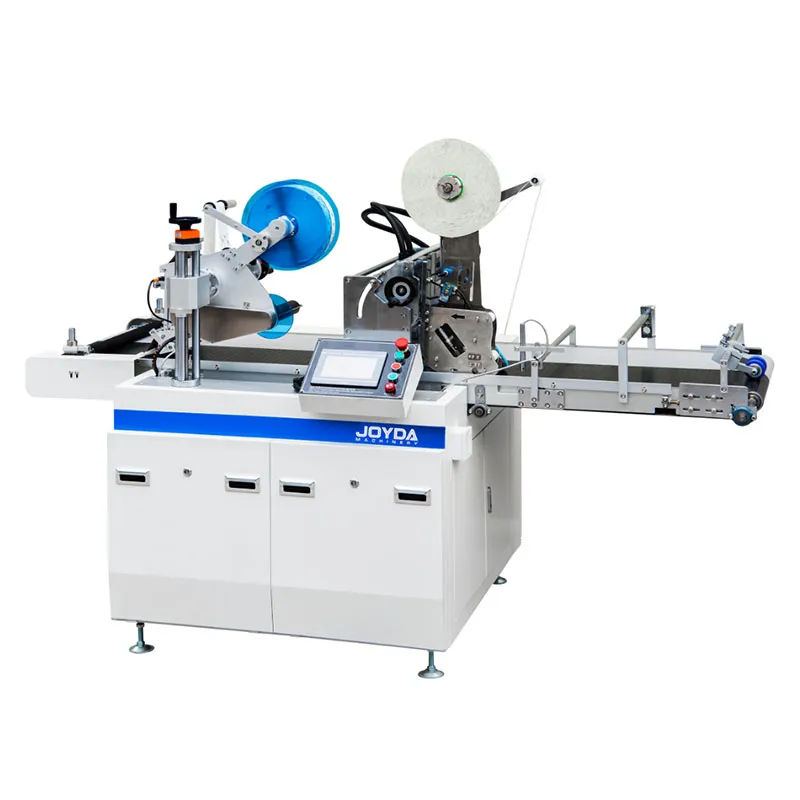
A practical commercial configuration for an automotive tier-1 supplier—combining hopper barcode interlocks, a 15 W UV laser or heavy-duty TTO on the VFFS bagger, inline ISO barcode camera verification, reject-to-trace PLC linkage, and ERP work-order integration—adds $16,000 to $34,000 to a line’s capital budget. Because preventing just one lot-quarantine dispute or winning a single automotive contract returns $40,000 to $150,000+ in year-one value, the traceability module typically achieves full capital payback in 3 to 7 months.
6. How This Connects to the Vision Quality Gate
Printing a crisp QR code on a bag is worthless if the washers inside the pouch are short-counted, double-shingled, or missing center holes. True compliance requires marrying your marking module directly to upstream vision inspection for fastener counting accuracy and downstream dynamic checkweighing.
When your optical vision camera and checkweigher are synchronized with the heat-lot traceability database via the master PLC, every quality event becomes attributed to a specific raw material batch and stamping run. If the Gate 1 vision camera suddenly kicks out 2.4% of washers from Heat Lot #8841 due to perimeter stamping burrs or out-of-spec outer diameters, the system automatically flags Heat Lot #8841 with a time-stamped defect Pareto report and camera snapshots.
Instead of absorbing that scrap loss internally, your procurement team can hand an indisputable, machine-generated inspection report back to your stamping subcontractor or steel mill to claim full material credit. Simultaneously, if the post-bagger barcode verification camera detects a smudged QR code or failed weight check at Station 7, the pneumatic reject pusher diverts that specific bag and commands the laser/TTO controller to regenerate that exact serial number on the very next good pouch—delivering 100% unbroken lot serialization inside every master carton.
7. Conclusion
Treating laser marking and barcode labeling as an afterthought—or buying a disconnected standalone marker from a generic laser vendor—leaves you locked out of automotive, aerospace, and medical contracts while exposing your business to $15,000 to $180,000 recall and claim penalties. Only a turnkey traceability module engineered directly into your packaging line binds hopper heat numbers, part-level DPM, smudge-proof bag QR codes, closed-loop vision rejection, and 10-year ERP audit logs into one bulletproof system.
As your dedicated one packaging partner and end-of-line solutions integrator, JOYDA configures, integrates, commissions, and supports complete flat washer packaging lines with turnkey compliance traceability built around your customers’ exact specifications. Send us your customer’s barcode standard, part dimensions, and lot traceability requirements today, and our engineering team will deliver a customized Compliance Traceability Module Proposal, line layout, and itemized quotation within 48 hours.
FAQ
Should I choose a fiber laser, a UV laser, or a TTO printer for flat washer packaging?
Choose a 20 to 120 W fiber laser if your customer requires Direct Part Marking (DPM) engraved directly onto bare steel or stainless washers. For primary polybag coding, choose a 10 to 30 W UV laser if you want zero ribbon consumables and 100% oil-proof permanence on PE film across high-volume runs, or choose a 300 dpi TTO (thermal transfer overprinter) with resin ribbons if you need lower upfront hardware cost and large variable graphics across frequent SKU changes.
How does the packaging line prevent operators from mixing two different steel heat numbers?
We equip the floor bulk hopper with an electromagnetic lid interlock and a wireless industrial barcode scanner. When a work order is active on the HMI, the hopper lid remains mechanically locked until the operator scans the raw material tote barcode matching the assigned heat number; when switching to a new heat number, the PLC automatically triggers pneumatic cleanout gates on the vibratory bowl and bucket conveyor before unlocking the hopper for the next batch.
Can laser marking or TTO printing keep up with a high-speed flat washer bagging machine?
Yes. Our integrated fiber and UV lasers mark at 30 to 120 characters per second (2,000 to 6,000 marks per hour), while our digital TTO units print at 300 to 600 mm/s during the intermittent or continuous film-advance cycle inside the VFFS bagger. Coding happens in parallel with washer counting and jaw sealing, resulting in zero reduction in bags per minute.
What happens to the serial number sequence when the checkweigher or vision camera rejects a bad bag?
Because the traceability controller and reject diverters share the same master PLC, the system tracks every bag’s serial number through the checkweigher and barcode grading camera. When a defective bag is pushed into the locked reject bin, the database logs that serial number as “Scrapped – Defect Code” Linked to its heat lot, and can either increment sequentially or automatically re-issue that serial number on the replacement bag to keep carton counts exact.
How do you stop stamping oil mist from ruining printed barcodes on polybags?
For TTO printing, we mount the printhead inside a positive-pressure clean film unwind cabinet upstream of the VFFS forming collar—printing onto clean, dry film before it ever contacts oily washers—and pair it with oil-resistant resin ribbons. Alternatively, a 355 nm UV laser alters the pigment inside the polyethylene film cold, creating an indelible mark that cannot be wiped off by stamping oils or solvents.
Which barcode standards and data fields can be integrated into the traceability module?
Our turnkey module supports 2D DataMatrix ECC200, QR Code, 1D Code 128, and 24-digit GS1-128 compliance formats. Each code can dynamically embed heat/lot number, supplier DUNS/vendor code, production date, VCI expiration date, shift ID, operator ID, customer part number, exact piece count, and unique bag serial number.
How long are traceability and defect records stored for IATF 16949 or AS9100 audits?
The local industrial PC historian stores complete batch records, barcode verification grades, and reject logs locally for immediate retrieval and automatically syncs via OPC-UA or Ethernet/IP to your plant ERP/MES server for 7- to 10-year archival retention, meeting full IATF 16949, AS9100, and ISO 13485 regulatory audit requirements.
What information do I need to send JOYDA to get a traceability module quotation?
Simply send us a sample or photo of your customer’s required bag/carton label specification (such as a tier-1 automotive GS1-128 or QR standard), your washer size range and surface oil condition, your packaging film material (e.g., 80-micron LDPE), and whether you need bag-only coding or metal DPM. We will return a complete technical proposal and quotation within 48 hours.