Choosing a flat washer packing machine comes down to seven engineering and commercial decisions made in a strict sequence—and getting that sequence wrong is why buyers either waste $15,000 on a standalone tabletop counter that cannot handle stamping oil or overspend $200,000 on a full turnkey line their shift volume cannot justify. Note from the outset that this how to choose washer packing machine buyer guide covers equipment for flat metal washers (ring-shaped hardware fasteners), never household laundry washing machines. By working through your part physics, line scope, counting technology, film mechanics, traceability tier, weighted supplier scorecard, and quotation audit in order—building on the architecture in our complete flat washer packing production line guide—you can lock in the lowest total cost of ownership before requesting a formal quote.
Table of Contents
- What Kind of Flat Washer Are You Actually Packing?
- Decision 1: Standalone Counter or Full Turnkey Line?
- Decision 2: Counting Technology
- Decision 3: Film, Bag Style, and Sealing
- Decision 4: Traceability and Coding
- Decision 5: Supplier Evaluation Scorecard
- Conclusion
1. What Kind of Flat Washer Are You Actually Packing?
Your first preliminary decision is defining the exact physical envelope of your hardware. In industrial B2B packaging, “washer” strictly means stamped or machined flat metal rings (DIN 125, ISO 7089, USS, and SAE flat washers), never domestic laundry appliances. Defining your metal composition, dimensional spread, and surface oil state first immediately eliminates 70% of unsuitable generic machines on the market.
Audit your SKU list across four hard physical parameters before speaking to any equipment vendor:
- Washer Material Composition: Carbon steel (magnetic), austenitic stainless steel 304 and 316 (non-magnetic or weakly magnetic), zinc-plated steel, hot-dip galvanized steel, brass/copper, and aluminum.
- Dimensional and Weight Envelope: Standard industrialsmall-parts systems handle M3 to M24 flat washers—spanning inner diameters (ID) of 3 to 24 mm, outer diameters (OD) of 6 to 48 mm, thicknesses of 0.5 to 8 mm, and individual part weights from 0.3 grams up to 60 grams.
- Surface Coating Condition: Dry tumbled, light volatile stamping oil, heavy rust-preventative oil, sticky wax topcoats, or flaky zinc/phosphate coatings.
- Thickness-to-Diameter Ratio: Ultra-thin shims and washers under 0.8 mm thick create intense capillary vacuum adhesion when coated in oil, requiring aggressive mechanical and pneumatic separation inside the feeder bowl.
Your washer material and surface state dictate the exact bulk elevating and orientation feeding hardware required at the front of the line:
| Washer Material & Surface State | Bulk Elevator Selection | Orientation Feeder Selection | Critical Engineering Requirement |
|---|---|---|---|
| Carbon Steel (Light or Heavy Stamping Oil) | Inclined magnetic belt elevator with bottom oil-drainage sump | Stepped vibratory bowl with 3 mm dimpled PU lining + dual 0.6 MPa air-knives | Dimpled polyurethane track breaks oil surface tension to stop shingling |
| Stainless Steel 304/316 (Non-Magnetic, Light Oil) | Cleated polyurethane or modular plastic link incline conveyor | Dimpled PU-lined vibratory bowl with mechanical tool-steel thickness wiper gate | Non-magnetic parts slide backward on smooth belts; positive cleats are mandatory |
| Zinc-Plated / Galvanized (Dry or Wax-Coated) | Cleated belt elevator with low-drop discharge chute | Wear-resistant PU-coated vibratory bowl with dust extraction port + <75 dB acoustic hood | Prevents zinc flake buildup from blinding optical sensors and protects thread/edge finish |
| Copper / Aluminum (Soft Non-Ferrous, Dry) | Low-angle cleated belt elevator with cushioned hopper baffle | Soft elastomer-lined vibratory bowl with reduced amplitude piezo drive | Eliminates edge nicking and surface denting on soft aerospace or electrical washers |
| Thick Structural Washers (Dry, >3 mm Thick, High Speed) | Heavy-duty bucket or magnetic elevator (500 to 1,000 kg hopper) | Centrifugal rotary feeder operating above 600 parts per minute | Centrifugal rotary disk delivers 2x speed on thick dry parts without vibration noise |
2. Decision 1: Standalone Counter or Full Turnkey Line?
Once your part feeding physics are locked in, your next commercial decision is matching machine scope to your daily shift volume, SKU changeover frequency, and local operator labor rates ($18 to $28 per hour fully burdened, or $37,000 to $58,000 per year per operator).
Use these three volume and operational thresholds to select the right automation tier:
- Under 5,000 Bags per Shift (Single or Simple SKU Runs): Choose a standalone counting and tabletop/semi-automatic bagging cell. One operator hand-loads pre-made polybags or tends a basic vertical bagger and packs finished bags into cartons manually.
- 5,000 to 15,000 Bags per Shift (3 to 10 Daily SKU Changeovers): Choose a dedicated flat washer counting and automatic VFFS (vertical form fill seal) bagging cell (Stations 1 to 7) with quick-release forming collars, an acoustic enclosure keeping noise sub-75 dB, and an inline dynamic checkweigher. This tier delivers the fastest capital payback—typically 4 to 9 months—by cutting manual count giveaway from 1%–2% down to <0.1% and replacing 2 to 3 manual packers.
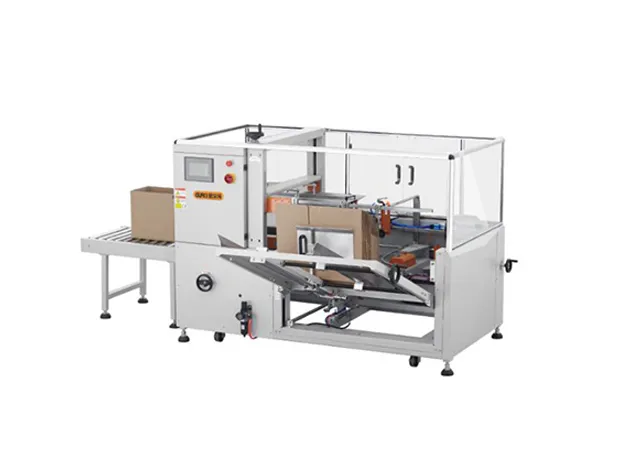
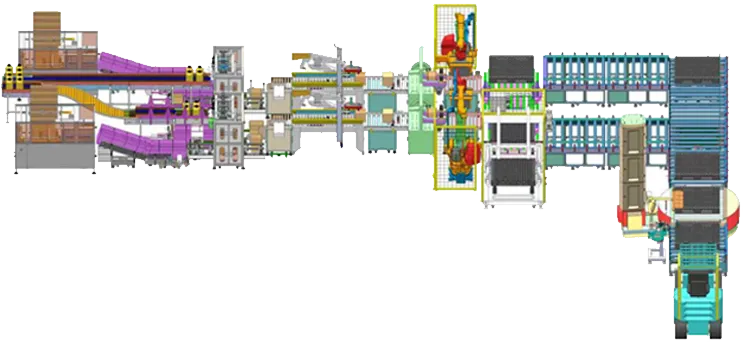
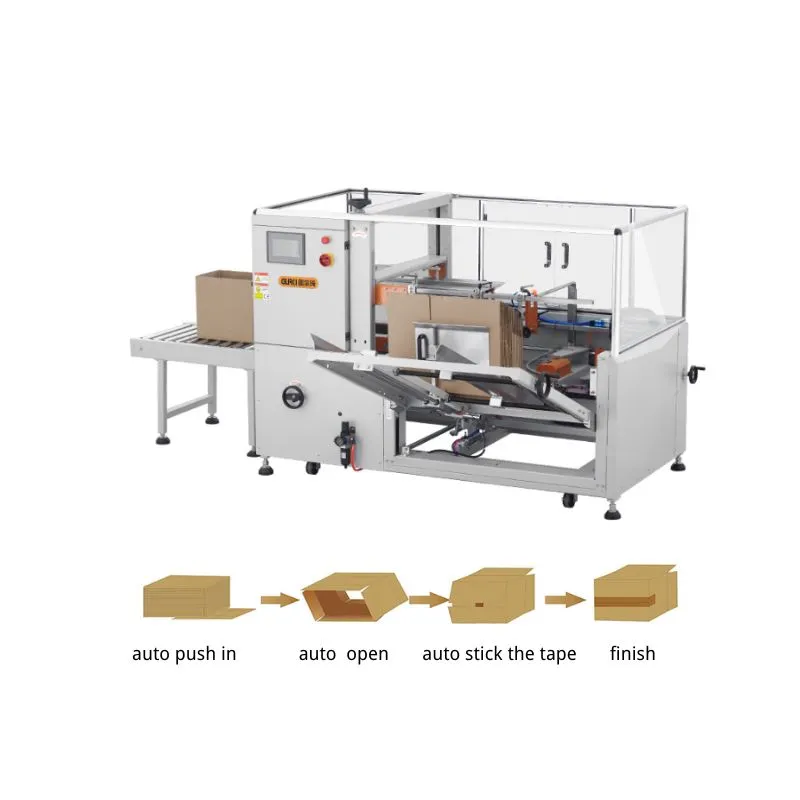
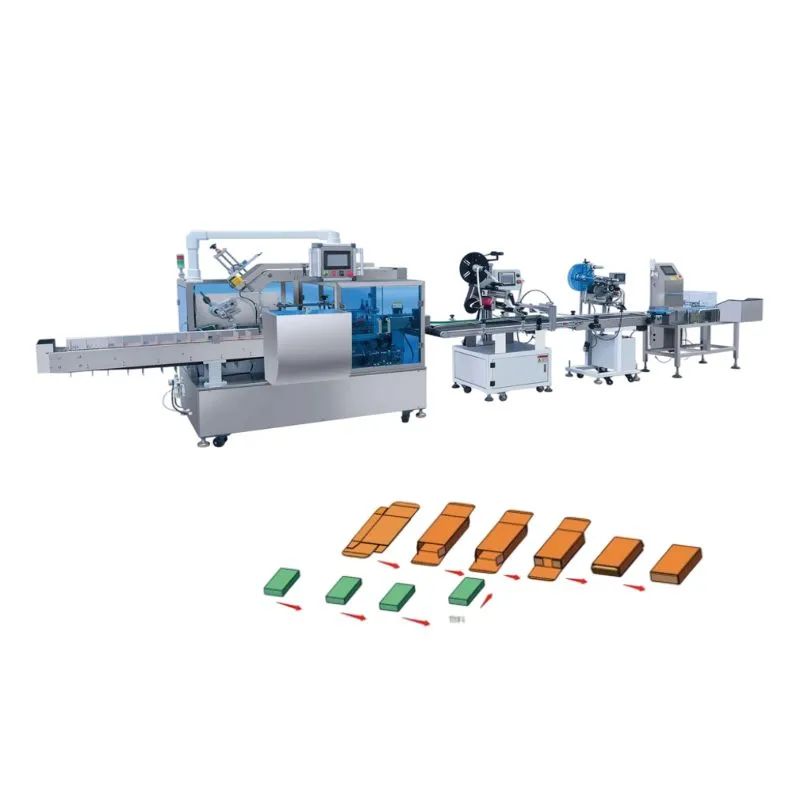
- Over 15,000 Bags per Shift or Mixed Multi-Fastener Kits: Choose a full 10-station turnkey line integrating bulk elevating, multi-bowl counting/weighing, VFFS bagging, checkweighing, automatic case erecting (6 to 12 cases/min), bag-in-box loading, strapping, and robotic palletizing (60 to 120 cartons/hour). Full turnkey lines achieve complete capital payback in 13 to 17 months across two-shift operations.
| Comparison Factor | Standalone Counter + Semi-Auto Bagger | Dedicated Counter + Automatic VFFS Cell (Stations 1 to 7) | Full 10-Station Turnkey Packing Line (Stations 1 to 10) |
|---|---|---|---|
| Optimal Shift Output | 1,500 to 5,000 bags per 8-hour shift | 5,000 to 15,000 bags per 8-hour shift | 15,000 to 50,000+ bags per 8-hour shift |
| Direct Labor Required | 1.5 to 2 operators per cell | 0.5 to 1 operator (tends 1 to 2 cells simultaneously) | 0.5 to 1 operator for entire end-of-line workflow |
| Floor Space Footprint | 2.0 m x 1.8 m | 3.5 m x 2.5 m | 12.0 m x 4.5 m (linear or U-shaped layout) |
| Power & Air Utilities | 3.5 kW, 220V; 200 NL/min at 0.6 MPa | 15 kW, 3-phase 380-480V; 600 NL/min at 0.6 MPa | 25 to 35 kW, 3-phase 380-480V; 1,200 NL/min at 0.6 MPa |
| SKU Changeover Time | 15 to 25 minutes (manual rail adjustment) | 5 to 10 minutes (quick-release bowls and collars) | 15 to 25 minutes (includes case erector and palletizer recipe) |
| Typical Delivery Lead Time | 25 to 35 days | 35 to 50 days (including sample FAT) | 60 to 85 days (full multi-station integration and FAT) |
| Expected ROI Payback | 8 to 14 months (limited by manual bagging speed) | 4 to 9 months (sweet spot for single-SKU washer runs) | 13 to 17 months (maximizes labor and carton savings at scale) |
To run your own plant numbers across operator wages, shift schedules, and giveaway waste before selecting a tier, plug your current production figures into our manual vs. automatic flat washer packing ROI model.
3. Decision 2: Counting Technology
Selecting the wrong metering technology is the primary cause of customer short-count claims and chronic inventory giveaway. In washer packing machine selection, you must choose between four distinct metering technologies based on whether your customer buys by exact piece count or by bulk bag weight:
| Metering Technology | Applicable Bag Size | Accuracy Tolerance | Cycle Speed | Relative Hardware Cost | Specific Condition to Choose This Option |
|---|---|---|---|---|---|
| Optical / CCD Vision Counter | 1 to 250 pieces (kits and retail packs) | +/- 0 pieces (with pre-bag reject gate) | 30 to 60 bags/min | Moderate (1.2x baseline) | Mandatory when customers require exact piece counts and washers are thin or coated in stamping oil |
| 10- or 14-Head Combination Weigher | 500 g to 5 kg bulk bags (200 to 2,000+ pcs) | +/- 1 to 3 grams (less than 1 piece on medium washers) | 35 to 60 bags/min | High (1.8x baseline) | Best for high-speed bulk bagging of medium/large washers sold by weight or high piece count |
| 2- to 4-Head Linear Weigher | 1 kg to 25 kg bulk bags or small boxes | +/- 2 to 5 grams | 20 to 40 bags/min | Low (1.0x baseline) | Entry-level choice for heavy bulk bags where +/- 1% weight tolerance is acceptable |
| Dynamic Checkweigher Only (Post-Bagger) | All bag sizes from 10 g to 5 kg | +/- 0.2 to 0.5 grams | Up to 120 bags/min | Add-on firewall (0.4x baseline) | Never use as a primary filler; combine with upstream optical counting to catch broken or half washers |
For kits and small polybags under 200 pieces, basic single-beam photo-eyes fail whenever two oily washers shingle together. Specifying CCD vision inspection for fastener counting accuracy paired with a pneumatic memory bucket diverter gives you +/- 0 piece accuracy at 30 to 60 bags per minute. Conversely, if you pack 2.5 kg bulk bags of M6 washers (roughly 1,800 pieces per bag), counting individual pieces optically takes too long; a 14-head combination weigher with reinforced urethane-lined hoppers hits 45 bags per minute at +/- 1 to 3 grams accuracy.
4. Decision 3: Film, Bag Style, and Sealing
Flat washers have sharp stamped perimeters and high bulk density (up to 60 grams per single M24 washer). A standard vertical snack-food bagger will suffer constant film punctures and torn bottom seams unless you match the bag format, polymer film, and VFFS tube geometry to hardware impact forces.
First, select your bag format based on downstream merchandising and box loading:
- Standard Pillow Bag: Lowest film consumption and highest VFFS cycle speed (25 to 80 bags/min); ideal for OEM assembly bags and inner carton packs.
- Side-Gusseted Bag: Folds side pleats into the pouch so heavy 1 kg to 5 kg washer charges sit flat inside master cartons without bulging.
- Euro-Slot or Round Hang-Hole Bag: Punches a reinforced header hole in the top seal for retail hardware pegboards.
Second, balance puncture resistance against packaging material cost across the three industrial film tiers:
| Film Material & Thickness | Puncture & Tear Resistance | Relative Cost Index | Best Application in Flat Washer Packaging |
|---|---|---|---|
| Co-Extruded LDPE (60 to 120 micron) | High elongation and superior edge-puncture absorption | 1.0 (Baseline lowest cost) | Industry standard for oily industrial washers from 100 g kits to 5 kg bulk bags |
| BOPP / CPP Laminate (50 to 70 micron) | High optical clarity and stiffness, but tears easily once nicked | 1.3 to 1.6x | Small, lightweight dry retail hardware kits (<250 g) requiring glossy shelf display |
| PET / PE Heavy Laminate (80 to 110 micron) | Maximum tensile strength, barrier protection, and hot-tack seal strength | 1.8 to 2.2x | Heavy sharp-edged structural washers (M16 to M24) and long-term VCI export storage |
Third, verify the mechanical sealing and drop geometry on your flat washer counting and bagging machine. For washers larger than M12 (or bag drops heavier than 500 grams), specify a 30- to 45-degree inclined VFFS forming tube to reduce vertical free-fall velocity by half, pneumatic under-bag support clamps to absorb kinetic drop shock before the sealing jaws open, and servo torque-protected anti-piercing jaws that automatically retract if a trailing washer catches in the seam.
5. Decision 4: Traceability and Coding
Your fourth decision determines whether your packaged washers qualify for high-margin automotive, aerospace, and big-box retail contracts. Choose your inline coding tier strictly by customer compliance mandate:
- No Inline Coding (or Pre-Printed Film Only): Acceptable only for single-SKU commodity bulk bags where lot tracking is unnecessary. Carrying pre-printed film rolls for 50+ washer sizes ties up $25,000+ in warehouse film inventory.
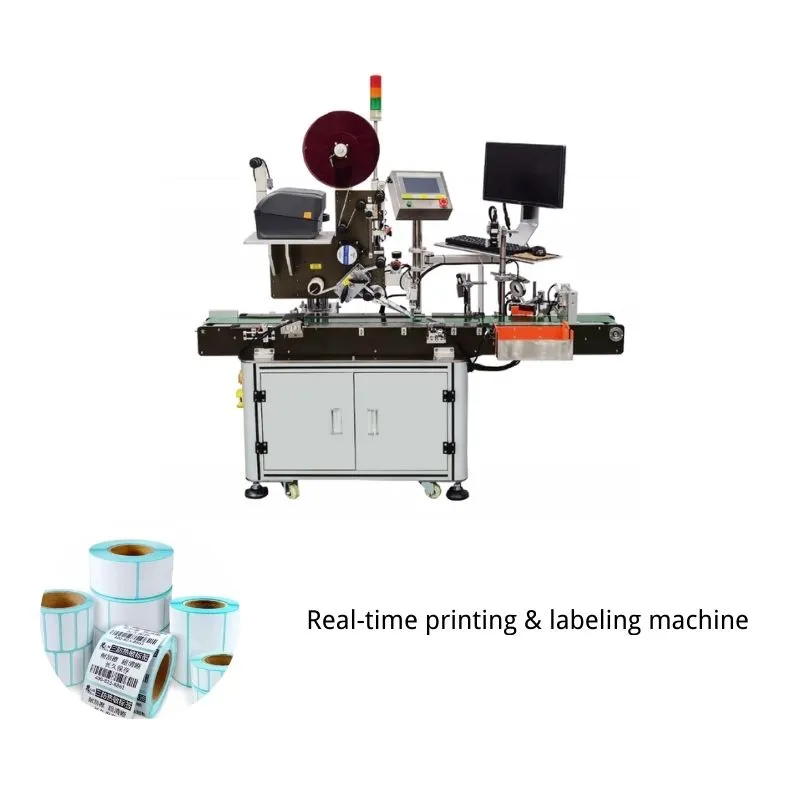
- Digital TTO (Thermal Transfer Overprinting): Prints crisp 300 dpi variable part numbers, client logos, and 1D/2D barcodes onto clear or white film inside a clean unwind cabinet using oil-resistant resin ribbons. Ideal for distributors and contract packagers running frequent SKU changes for retail and industrial buyers.
- UV / Fiber Laser Marking + QR Serialization + ERP Binding: Mandatory for automotive IATF 16949 and aerospace AS9100 suppliers requiring permanent steel heat-number tracking, smudge-proof 2D DataMatrix/QR codes in heavy oil-mist environments, and automated OPC-UA / Ethernet/IP work-order binding. Review our breakdown on fastener packaging traceability with laser and QR coding to scope exact laser power and MES historian requirements.
6. Decision 5: Supplier Evaluation Scorecard
Once your technical specification is fixed, use this weighted buying guide small parts packer scorecard to audit prospective suppliers. Never evaluate vendors on headline flat washer packing machine price alone; multi-vendor or poorly engineered machines run at 55% to 65% OEE (overall equipment effectiveness), whereas an integrated system from a single solutions partner operates at 80% to 88% OEE.
Score each vendor from 1 (Poor) to 5 (Verified Excellence) and multiply by the weight percentage:
| Evaluation Criterion | Weight | How to Score 5/5 (Verified Standard) | Supplier Red Flag (Score 1/5 – Walk Away) |
|---|---|---|---|
| 1. Anti-Overlap & Oil-Shingling Feeder Design | 15% | Dimpled 3 mm PU bowl lining, dual 0.6 MPa air-knives, and micrometer thickness gate included as standard | Quotes bare stainless bowls with no air separation for oily washers |
| 2. Counting Accuracy & Giveaway Guarantee | 15% | Written contract guarantee of +/- 0 pcs on vision kits and <0.1% good-pack false reject rate | Quotes vague “99% accuracy” without defining part thickness or oil state |
| 3. Pre-Shipment FAT With YOUR Oily Parts | 15% | Runs a continuous 2-hour video FAT using 50 to 100 kg of your actual oily production washers | Tests machine only with clean, dry sample washers or plastic beads |
| 4. Unified PLC Integration & OEE Controls | 10% | Single master PLC/HMI with Ethernet/IP or OPC-UA and guaranteed 80% to 88% line OEE | Separate control boxes on feeder, bagger, and weigher with no handshaking |
| 5. Changeover Time & Tool-Less Adjustments | 10% | Quick-release forming collars and digital rail micrometers enabling 5 to 10 min changeovers | Requires hex wrenches and 25 to 40 minutes of trial-and-error rail tuning |
| 6. Spare Parts Lead Time & Remote Support | 10% | 12-month wear-parts kit included; 48-hour dispatch on knives/belts; 4-hour remote VPN PLC support | No stocked wear parts list; requires waiting weeks for proprietary boards |
| 7. Verified Flat Washer Case References | 10% | Provides working videos and layouts of commissioned M3-M24 metal washer lines | Only shows food, candy, or generic plastic injection-molded part baggers |
| 8. Commissioning & Operator Training Scope | 5% | Turnkey on-site or structured AR/video commissioning with step-by-step maintenance SOPs | Ships crates to your dock with a poorly translated 20-page manual |
| 9. Total Cost of Ownership (TCO) Transparency | 5% | Itemizes power (15-35 kW), air (600-1,200 NL/min), film index, and 5-year wear part costs | Hides pneumatic air consumption, TTO ribbon yield, and bowl re-coating costs |
| 10. Guaranteed Lead Time & Milestone Terms | 5% | Fixed 35-50 day (cell) or 60-85 day (turnkey line) schedule tied to FAT sign-off | Demands final payment before shipping without running a sample-verified FAT |
That brings you to the final step of the framework: auditing the supplier’s quotation line by line before signing. When comparing an automatic flat washer packing production line quote, verify that every station’s utility load, mechanical speed buffer (downstream stations must run 15% to 20% faster than upstream counters), and safety guarding are explicitly priced. Before releasing a deposit, demand these 7 mandatory technical documents attached to the purchase contract:
- Dimensioned 2D CAD Floor Layout Drawing: Showing exact footprint (e.g., 3.5 m x 2.5 m cell or 12 m x 4.5 m turnkey line), operator clearances, hopper loading zones, and electrical/pneumatic drop points.
- SKU-by-SKU Speed and Accuracy Matrix: A binding table listing each of your washer sizes (M3 to M24), target bag count, guaranteed bags per minute (25 to 80 bpm), and maximum allowable count/weight tolerance.
- Component Brand and Electrical BOM Schedule: Listing the exact make and model of the master PLC, servo drives, pneumatic valves, load cells, vision cameras, and safety relays.
- Wear-Parts and Consumables Price List: Guaranteed unit pricing and recommended replacement intervals for cutoff knives, PTFE heating tape, timing belts, TTO printheads, and PU bowl linings.
- Quantitative Factory Acceptance Test (FAT) Protocol: Defining the exact 500-bag continuous trial run, seeded-defect rejection tests, timed 10-minute changeover check, and sub-75 dB noise verification required before crate release.
- Utilities and Facility Preparation Checklist: Specifying exact 3-phase voltage/amperage (15 to 35 kW at 380–480V), dry compressed air flow (600 to 1,200 NL/min at 0.6 MPa), and floor load ratings.
- After-Sales SLA and Warranty Certificate: Stating the 12- to 24-month hardware warranty, 4-hour remote PLC diagnostic response window, and on-site commissioning engineer daily rates.
7. Conclusion
Selecting the right flat washer packing system is never a gamble when you follow the seven decisions in sequence: lock down your washer material and oil state first, right-size your automation tier (standalone cell vs. 4-to-9-month payback dedicated counter vs. full turnkey line), match optical vision or combination weighing to your count tolerance, specify puncture-resistant 60 to 120 micron LDPE film with angled forming tubes, integrate laser/QR traceability for OEM compliance, grade vendors on the 10-point weighted scorecard, and enforce the 7 contract documents before signing.
As your dedicated one packaging partner and end-of-line solutions integrator, JOYDA configures, integrates, commissions, and supports complete flat metal washer packaging cells and turnkey lines tailored to your exact SKU list and floor layout. Contact our engineering team today to download the editable Flat Washer Packing Machine Selection Scorecard (Excel/PDF), fill in your washer specs and shift targets, and send it back to us to receive a matched line configuration, CAD layout, and itemized quotation within 48 hours.
FAQ
Does this buyer’s guide cover household washing machines or metal hardware washers?
This guide exclusively covers industrial packaging equipment for flat metal washers (ring-shaped hardware fasteners such as DIN 125, USS, SAE, fender, and structural washers ranging from M3 to M24). It does not cover appliances or household clothes washing machines.
What is the typical flat washer packing machine price range for a B2B plant?
A standalone single-bowl optical counting and bagging cell typically ranges from $18,000 to $38,000 depending on vision counting, inclined VFFS geometry, and TTO coding options. A mid-range multi-bowl or combination-weighing cell with dynamic checkweighing and accumulation runs $45,000 to $85,000, while a full 10-station turnkey line integrating automatic case erecting, bag-in-box loading, strapping, and palletizing ranges from $110,000 to $220,000+.
Can one flat washer bagging machine pack both M3 miniature washers and M24 heavy washers?
No single vibratory bowl track and VFFS forming collar can run both 0.3-gram M3 washers and 60-gram M24 structural washers efficiently. If your SKU catalog spans M3 to M24, the best configuration is pairing two interchangeable quick-release feeder bowls (one tuned for M3–M10, one tuned for M12–M24) with two quick-change forming collars on a heavy-duty inclined VFFS frame, allowing complete mechanical changeover in 5 to 10 minutes.
How do I stop oily flat washers from sticking together and causing over-count giveaway?
Require a three-stage separation package on the feeder and counter: (1) a 3 mm hot-cast dimpled polyurethane bowl lining that prevents vacuum suction under flat rings, (2) dual 0.6 MPa angled air-knife jets and a micrometer-adjustable tool-steel wiper blade set to 1.5x washer thickness, and (3) a high-speed CCD line-scan vision counter paired with a pre-bag pneumatic reject flap that diverts any overlapping pair before it enters the film tube.
When should I choose a 10/14-head combination weigher instead of an optical vision counter?
Choose an optical or CCD vision counter (+/- 0 piece accuracy) whenever you pack small hardware kits or bags under 200 pieces where customers prohibit a single missing washer. Choose a 10-head or 14-head combination weigher (+/- 1 to 3 g accuracy) when you pack bulk bags from 500 grams to 5 kg (250 to 2,000+ pieces per bag) at 35 to 60 bags per minute, where weight-based metering is twice as fast as single-file counting.
What plant utilities are required to install an automatic flat washer packing line?
A dedicated counting and VFFS bagging cell (Stations 1 to 7) requires a 3.5 m x 2.5 m footprint, 15 kW of 3-phase 380–480V electrical power, and 600 NL/min of clean, dry compressed air at 0.6 MPa. A full 10-station turnkey line with case packing and robotic palletizing requires a 12 m x 4.5 m footprint, 25 to 35 kW of 3-phase power, and 1,000 to 1,200 NL/min of compressed air.
Why does a turnkey line from one packaging partner achieve 80%–88% OEE while self-built lines stall at 55%–65%?
When buyers purchase a feeder bowl from one vendor, a bagger from a second, and a checkweigher or cartoner from a third, the individual PLCs lack synchronized speed buffers and unified fault recovery—causing upstream bowls to overflow whenever a downstream unit pauses. Working with a single solutions integrator like JOYDA ensures unified PLC handshaking, centralized HMI recipe control, and full-line pre-shipment FAT verification with your actual parts.
How do I get the downloadable Selection Scorecard and a 48-hour custom quotation from JOYDA?
Simply submit your contact details and basic washer range through our inquiry form to receive the editable Excel/PDF Supplier Evaluation Scorecard immediately. Once you enter your washer ID/OD/thickness range, surface oil condition, bag weights, and shift output target, return the sheet to our engineering team and we will deliver a tailored system layout and itemized quote within 48 hours.